
"The cure for baldness is always 5 years away." It's a joke every hair loss sufferer knows too well. But in 2025, the end of this cruel joke is finally in sight. Artificial Intelligence (AI) is exponentially accelerating drug discovery and ushering in an era of robotic hair restoration. Beyond the age of Minoxidil and Finasteride, we explore the new horizons of hair loss treatment opened by AI. Can we really look forward to a world without baldness?
1. AI Drug Discovery: Waking the Wnt Pathway
If past drug development was a labor-intensive process of testing tens of thousands of substances one by one, today's AI simulates billions of chemical combinations to pinpoint promising candidates. As of 2025, AI is particularly focused on the Wnt signaling pathway.
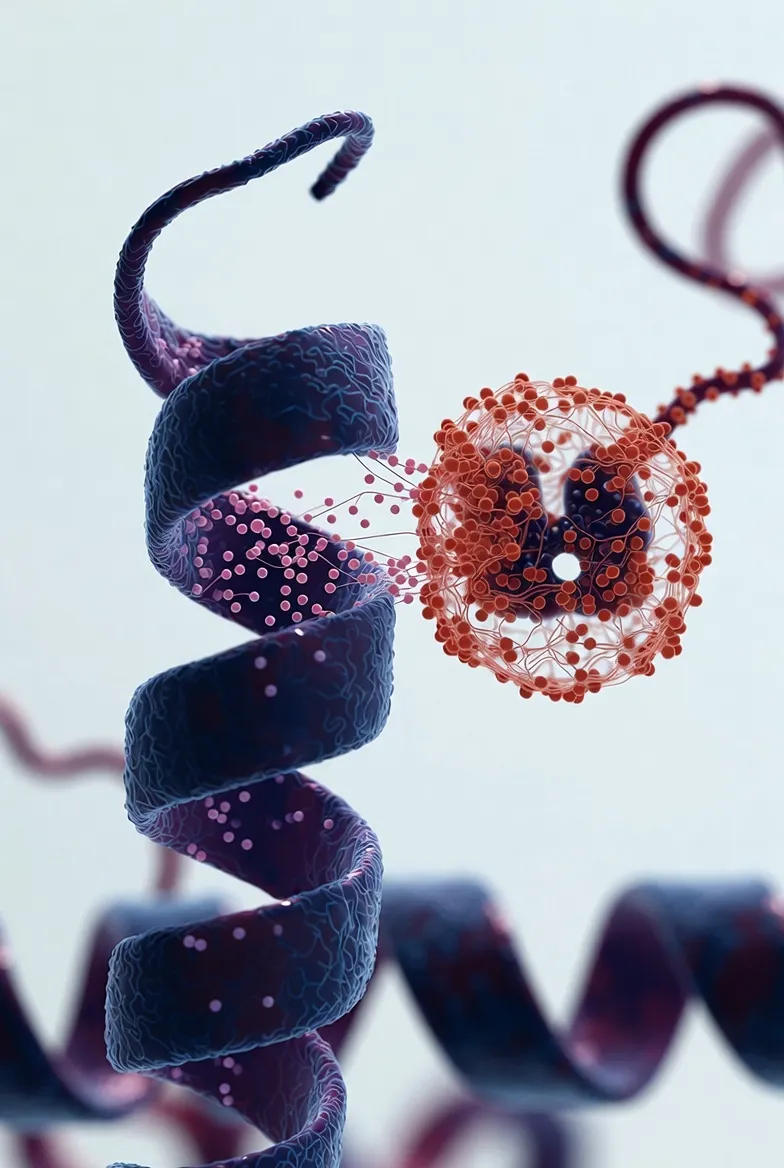
The Wnt pathway is a key switch that regulates follicle creation and growth. AI models, utilizing protein structure prediction (like AlphaFold), are identifying specific molecular structures that flip this switch. Areas previously considered "undruggable" due to side effects (e.g., potential cancer risk) are now being targeted by AI to design precise structures that maximize hair growth while minimizing risks.
Notable AI-Discovered Candidates
- SM04554 (Samumed Derivative): A Wnt pathway activator optimized via AI analysis. High expectations as Phase 3 clinical data accumulates.
- AI-Designed Peptides: AI is designing peptide structures with superior skin penetration compared to existing drugs, maximizing the efficacy of topical treatments.
"AI found a candidate in 3 months that would have taken us 10 years. The question is no longer 'what' to use, but 'how fast' we can clear clinical trials." – Biotech Startup CEO Interview
2. Evolution of Robotic Transplants: Beyond Human Hands
In hair transplantation, the most critical factor is the 'graft survival rate.' Healthy follicles must be harvested without damage and implanted at the precise depth and angle. Even for skilled surgeons, thousands of repetitive motions lead to fatigue. This is where AI robots step in.
Latest robotic systems like ARTAS iX use AI vision technology to calculate the angle of follicles beneath the scalp surface. They identify the healthiest grafts in real-time (Selection) and punch them precisely without damaging surrounding follicles (Harvesting).
| Feature | Human FUE | AI Robotic FUE (2025 Model) |
|---|---|---|
| Precision | Depends on surgeon skill | Micron-level consistency |
| Speed | ~500-1000 grafts/hour | ~1500-2000 grafts/hour |
| Transection Rate | Avg 3-10% (Fatigue factor) | < 1-3% (No fatigue) |
| Cost | Relatively affordable | Expensive due to equipment |
3. Personalized AI Diagnosis: Scalp as Data
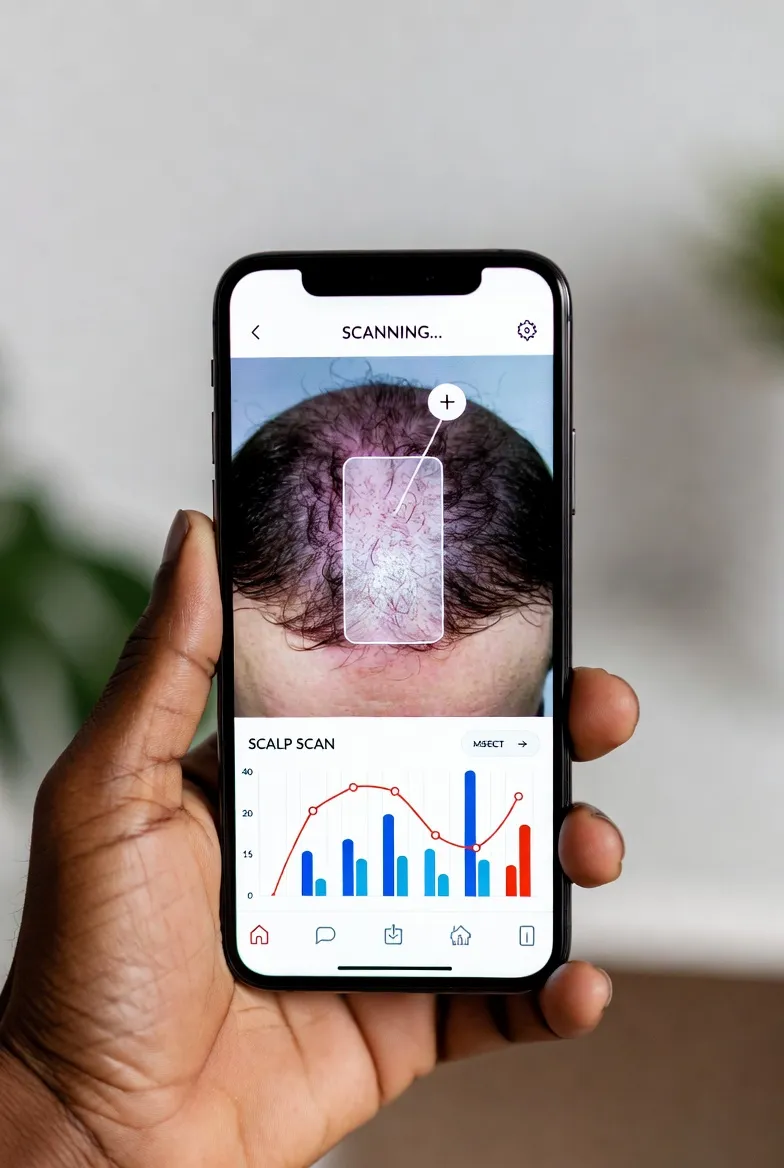
Gone are the days when you strictly needed a dermatologist visit for diagnosis. With just a high-res smartphone camera and a macro lens adapter, AI apps analyze hair density, thickness, and scalp inflammation.
It doesn't just say "You are balding." AI provides a '3-Year Progression Simulation'. This visual shock motivates early treatment. Furthermore, it tracks changes after using Minoxidil or Finasteride with quantitative data, allowing for quick pivots in treatment plans if there's no response.
4. Community Reactions and Reality Check
Despite technological advances, reactions in communities like Reddit's r/tressless remain a mix of hot enthusiasm and cold skepticism. Here are some real user sentiments.
👍 Hopeium (Optimism)
- "Did you see the GT20029 clinicals? AI-designed degradation of DHT without side effects sounds legit."
- "Just got a robotic transplant. Almost no scarring in the donor area. Tech is crazy."
- "It used to be a meme, but with the speed of AI trials, '5 years away' actually feels real now."
👎 Skepticism (Realism)
- "Cool story, but it only works on mice."
- "AI or not, the Big 3 (Fin/Min/Niz) are still king. New drugs will just be overpriced."
- "Until hair cloning works, everything else is just a band-aid."
The biggest criticisms are 'Cost' and 'Timeline'. AI-developed drugs are likely to carry high initial price tags, and robotic surgery remains expensive due to equipment costs. However, experts agree that the democratization of this technology is only a matter of time.
Key Takeaway
AI isn't a magic wand that conjures a cure instantly. However, it is a powerful accelerator that drastically reduces failure rates and research timelines. It's wise to stick to the current gold standard (Fin/Dut + Min) while waiting for the next level unlocked by AI.
5. Conclusion: Outlook Post-2026
As of late 2025, we are witnessing AI deeply penetrating healthcare. In the field of hair loss, AI paints the following future:
- Hyper-Personalized Medicine: Drugs with dosages and compounds adjusted by AI to fit your exact genome and hormone levels.
- Realization of Hair Cloning: Combining 3D bioprinting with AI structural design to usher in an era of unlimited grafts (still in research).
- Preventive Medicine: Before hair loss genes even express, AI predictive models will normalize preventive care and lifestyle corrections.
The magic spell for hair growth is being replaced by AI algorithm code. Hang in there a little longer. Science will find the answer. 👴➡️👨