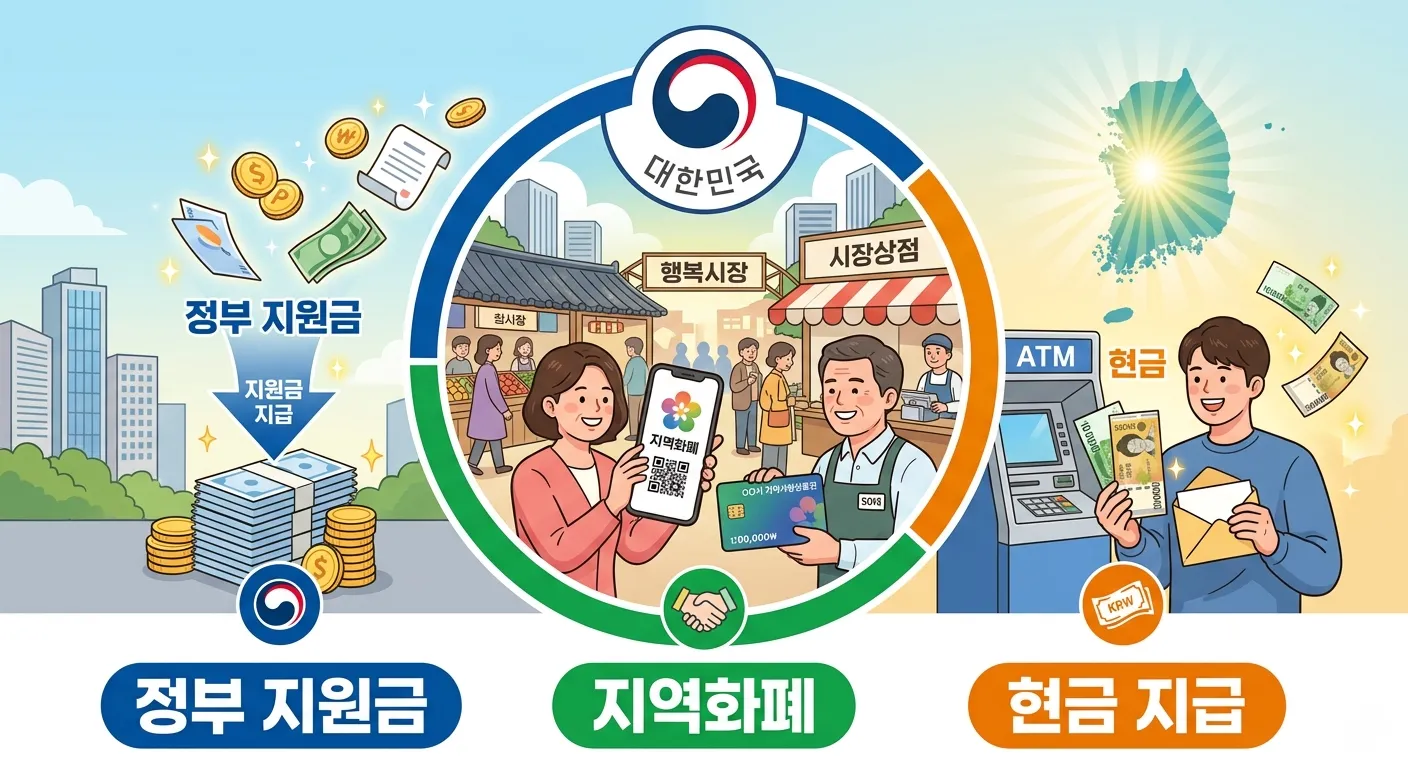
A supplementary budget of 26.2 trillion won has been approved to overcome the Middle East war crisis. Approximately 35.8 million people in the bottom 70% of income earners will receive 100,000 to 600,000 won per person in high oil price relief support. This comprehensive guide covers eligibility, amounts, application methods, payment schedules, and real community reactions in detail.
📑 Table of Contents
- 1️⃣ What is the War Supplementary Budget Living Subsidy? Key Summary
- 2️⃣ Support Amounts: How Much Can I Receive?
- 3️⃣ Eligibility: Income Criteria and Qualification Conditions
- 4️⃣ Application Methods: Online & Offline Application Guide
- 5️⃣ Payment Schedule: 1st & 2nd Payment Timeline
- 6️⃣ K-Pass Refund Rate Increase: Up to 83%
- 7️⃣ Community Reactions: Reddit, International Forums
- 8️⃣ Frequently Asked Questions (FAQ)
1️⃣ What is the War Supplementary Budget Living Subsidy? Key Summary 📊
✨ 2026 War Supplementary Budget Key Points
- Total Budget Scale: 26.2 trillion won (6th largest in history)
- Target Recipients: Bottom 70% of income earners (~35.8 million people)
- Support Amount: 100,000 ~ 600,000 won per person (tiered distribution)
- Payment Method: Local currency (to revitalize regional economies)
- Funding Source: Utilizing excess tax revenue (no government bonds issued)
- Main Purpose: Alleviate burden from high oil prices and inflation caused by Middle East war
On March 31, 2026, the South Korean government approved the 'Supplementary Budget for Overcoming the Middle East War Crisis' at a State Council meeting presided over by President Lee Jae-myung. This supplementary budget was urgently compiled to mitigate the impact of soaring oil prices and inflation resulting from the US-Iran war on household economies.
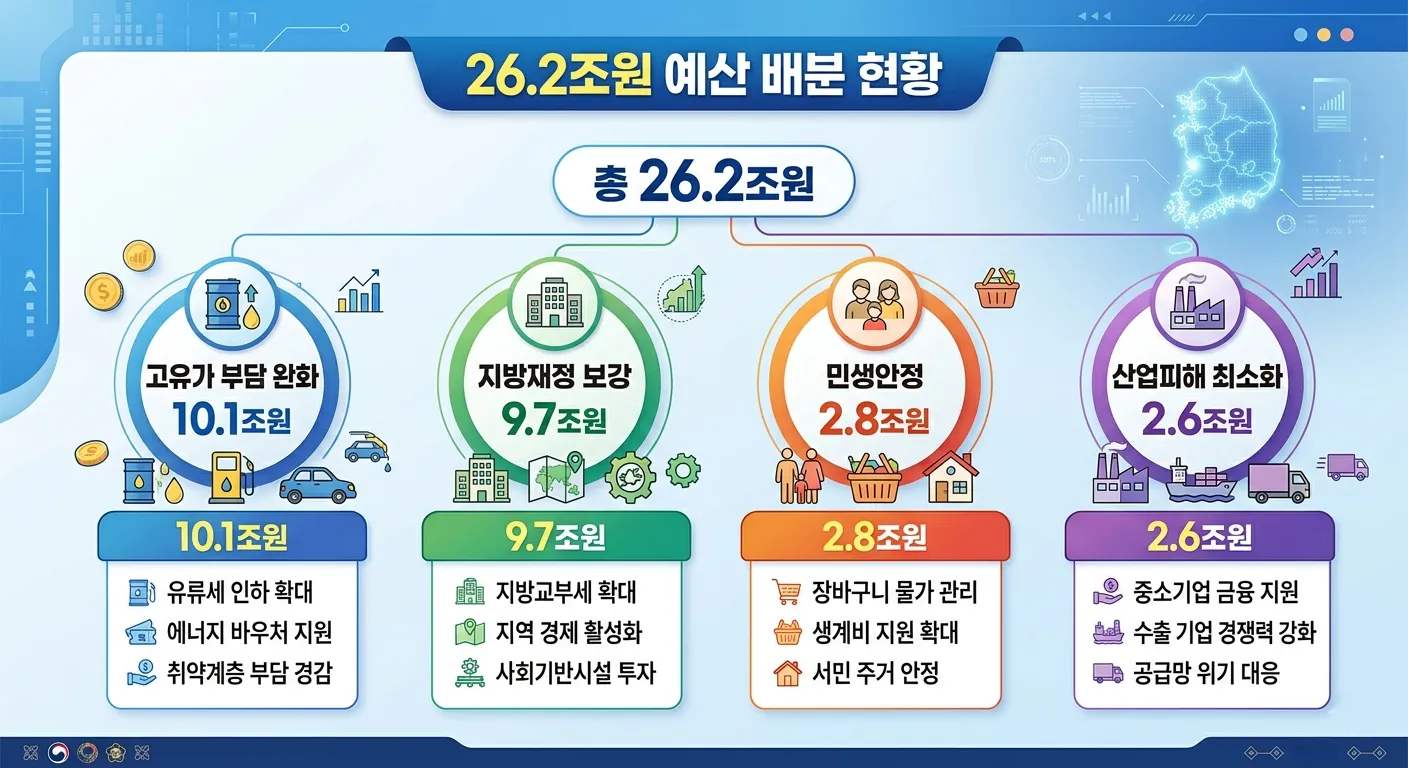
📌 Three Key Investment Areas
This war supplementary budget focuses on three major investment areas:
| Category | Budget Scale | Main Contents |
|---|---|---|
| High Oil Price Relief | 10.1 trillion won | Living subsidies, petroleum price cap system, energy vouchers |
| Livelihood Stabilization | 2.8 trillion won | Vulnerable group support, youth employment, small business assistance |
| Industrial Damage Minimization | 2.6 trillion won | Export vouchers, policy finance, supply chain stabilization |
💡 Key Point: The biggest feature of this supplementary budget is that it's a 'debt-free supplementary budget.' The entire amount was funded through excess tax revenue (25.2 trillion won) from improved semiconductor market conditions and fund internal resources (1 trillion won), without issuing government bonds.
2️⃣ Support Amounts: How Much Can I Receive? 💵
Support amounts vary based on region of residence and income level. The core principle is to provide more substantial support to rural areas and vulnerable groups.
🎯 1st Payment Target (Vulnerable Groups)
Basic livelihood recipients, near-poor households, and single-parent families will receive priority 1st payments. Amounts vary by region of residence:
1st Payment Amounts (Basic Livelihood Recipients & Near-Poor)
| Category | Non-Metropolitan Areas | Metropolitan Areas |
|---|---|---|
| Basic Livelihood Recipients | 600,000 won | 550,000 won |
| Near-Poor & Single-Parent Families | 500,000 won | 450,000 won |
* Metropolitan Areas: Seoul, Incheon, Gyeonggi / Non-Metropolitan: Other regions
🎯 2nd Payment Target (Bottom 70% Income)
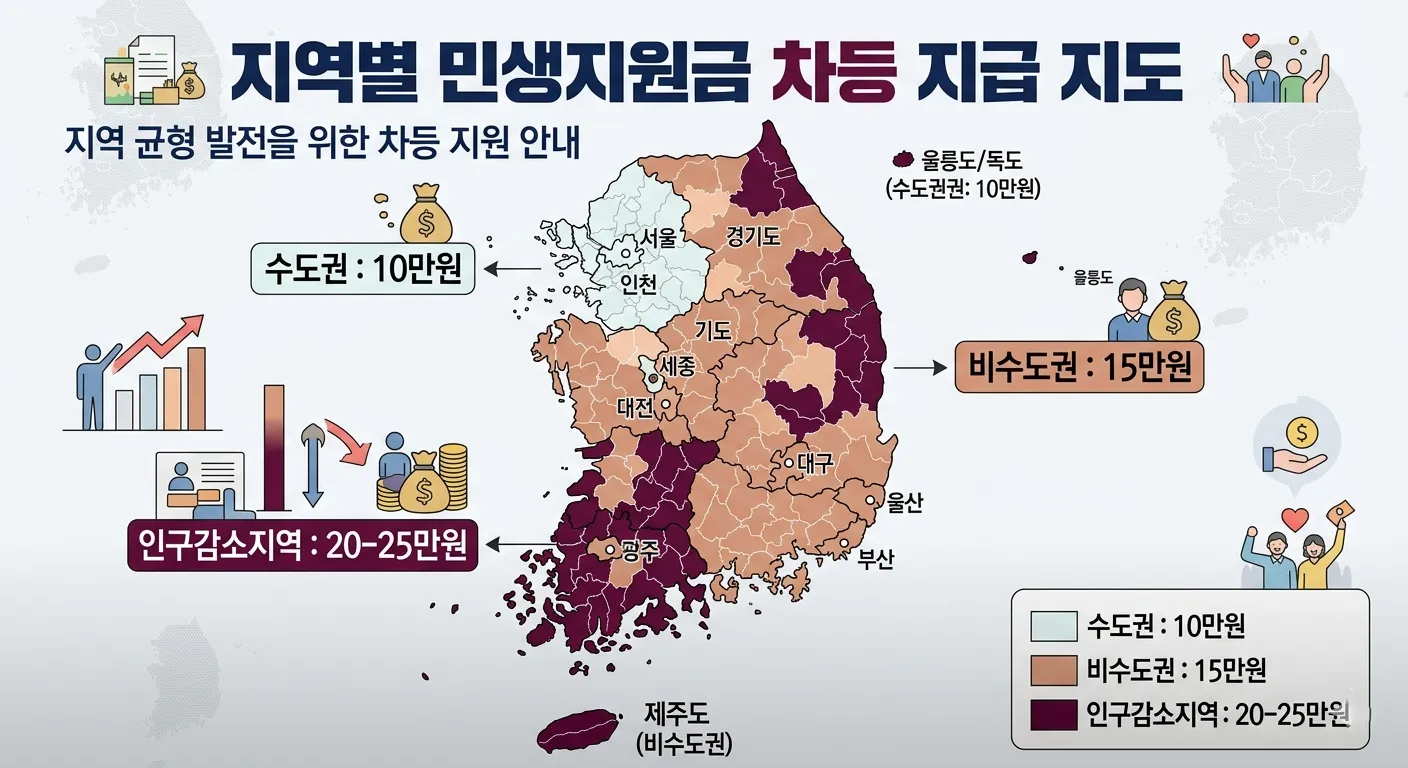
For those in the bottom 70% of income earners excluding 1st payment recipients, regionally differentiated support will be provided. Population-declining regions receive additional preferential treatment:
2nd Payment Amounts (Bottom 70% Income)
| Region Category | Support Amount | Example Regions |
|---|---|---|
| Metropolitan Areas | 100,000 won | Seoul, Incheon, Gyeonggi |
| Non-Metropolitan Areas | 150,000 won | Busan, Daegu, Gwangju, etc. |
| Population Decline Priority Regions | 200,000 won | Some county-level regions |
| Population Decline Special Regions | 250,000 won | Severely depopulated areas |
💰 Example: Total Household Support
If a 4-person household (couple + 2 children) resides in a non-metropolitan area and falls in the bottom 70% income bracket:
150,000 won × 4 people = 600,000 won in local currency.
If they are basic livelihood recipients:
600,000 won × 4 people = 2,400,000 won (non-metropolitan standard)
📊 Income Criteria (150% of Median Income)
The bottom 70% income threshold is based on 150% of median household income. The 2025 median income 150% thresholds are as follows:
| Household Type | Monthly Income Threshold (150%) | Annual Income Threshold |
|---|---|---|
| Single-Person Household | ~3.59 million won | ~43.08 million won |
| Two-Person Household | ~5.98 million won | ~71.76 million won |
| Three-Person Household | ~7.66 million won | ~91.92 million won |
| Four-Person Household (Dual-Income) | ~9.15 million won | ~109.8 million won |
⚠️ Important: In addition to income, real estate, financial income, and other assets are also considered. Therefore, even if you meet the income criteria, you may be excluded if you hold high-value assets. This follows a similar approach to last year's livelihood recovery consumption coupon distribution.
3️⃣ Eligibility: Income Criteria and Qualification Conditions ✅
✓ Eligibility Summary
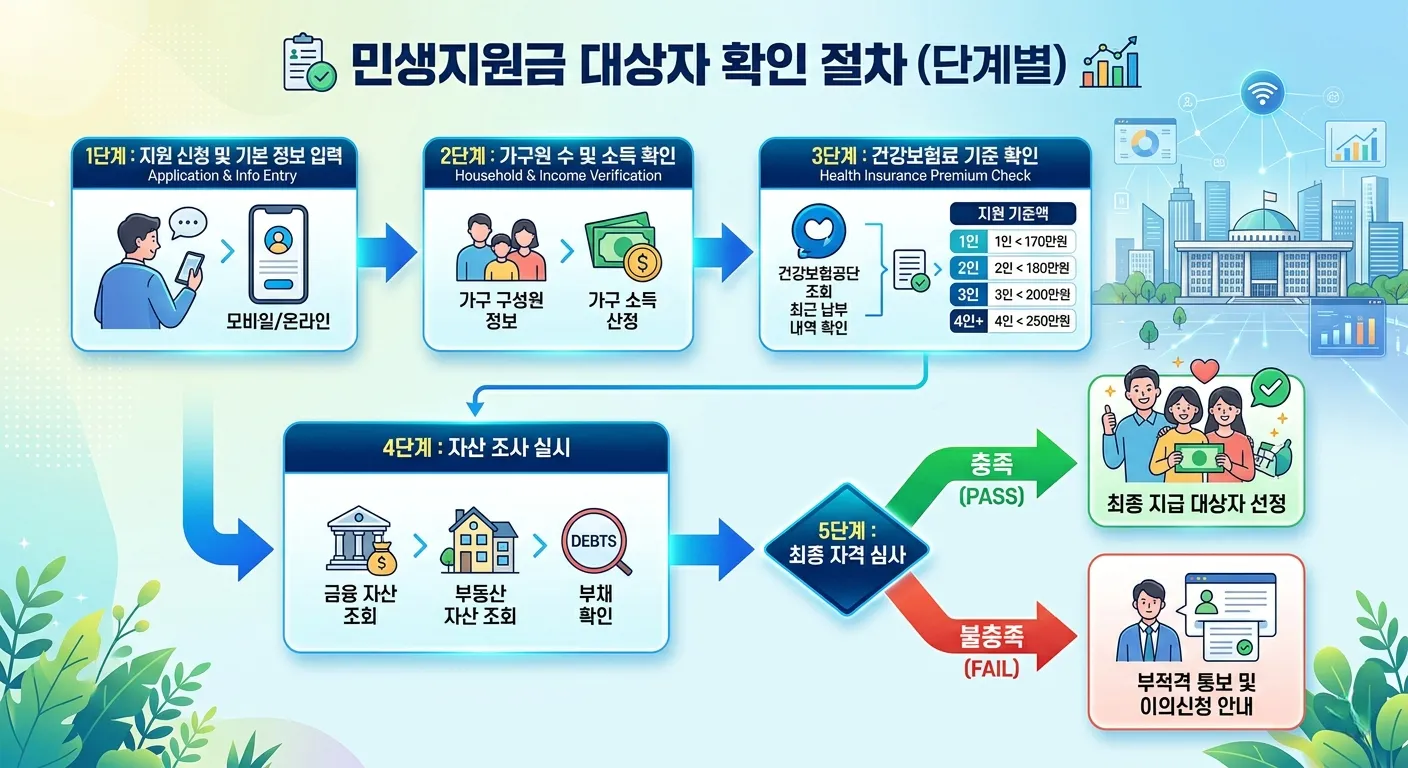
- Income Criteria: Bottom 70% of households based on National Health Insurance premium-based income recognition amount
- Total Eligible: Approximately 35.8 million people (~70% of population)
- Excluded: High-income earners, high-value asset holders
- Priority Groups: Basic livelihood recipients, near-poor, non-metropolitan residents, population-decline region residents
🔍 How to Check Eligibility
Eligibility is determined based on the following criteria:
1. Health Insurance Premium Standard
Income levels are assessed based on National Health Insurance premium payments. For workplace-based insured persons, premiums deducted from monthly salaries; for regional insured persons, premiums calculated comprehensively considering property, income, vehicles, etc.
2. Asset Investigation
Not only income but also real estate, financial assets, and vehicles are comprehensively evaluated. Those holding high-value real estate or financial assets may be excluded even if they meet income criteria.
3. Household Size Consideration
Income thresholds vary by household size (single, two-person, four-person households, etc.). Larger households have higher income thresholds for eligibility.
🎁 Priority Payment Groups (1st Round)
The following groups receive priority 1st payments:
- 💙 Basic Livelihood Recipients: Recipients of livelihood, medical, housing, or education benefits
- 💚 Near-Poor Households: Households at or below 50% of median income
- 💛 Single-Parent Families: Protected persons under the Single-Parent Family Support Act
📌 Automatic Payment Groups: Some vulnerable groups like basic livelihood recipients will receive payments automatically without separate application. However, the final list of eligible recipients will be confirmed by a related ministry TF after the supplementary budget passes the National Assembly.
4️⃣ Application Methods: Online & Offline Application Guide 📝
Living subsidy applications can be submitted both online and offline. While 1st payment recipients (basic livelihood recipients, etc.) receive automatic payments without separate application, 2nd payment recipients may need to apply.
🌐 Online Application (Recommended)
Online application is fastest and most convenient. You can use the following platforms:
Online Application Channels
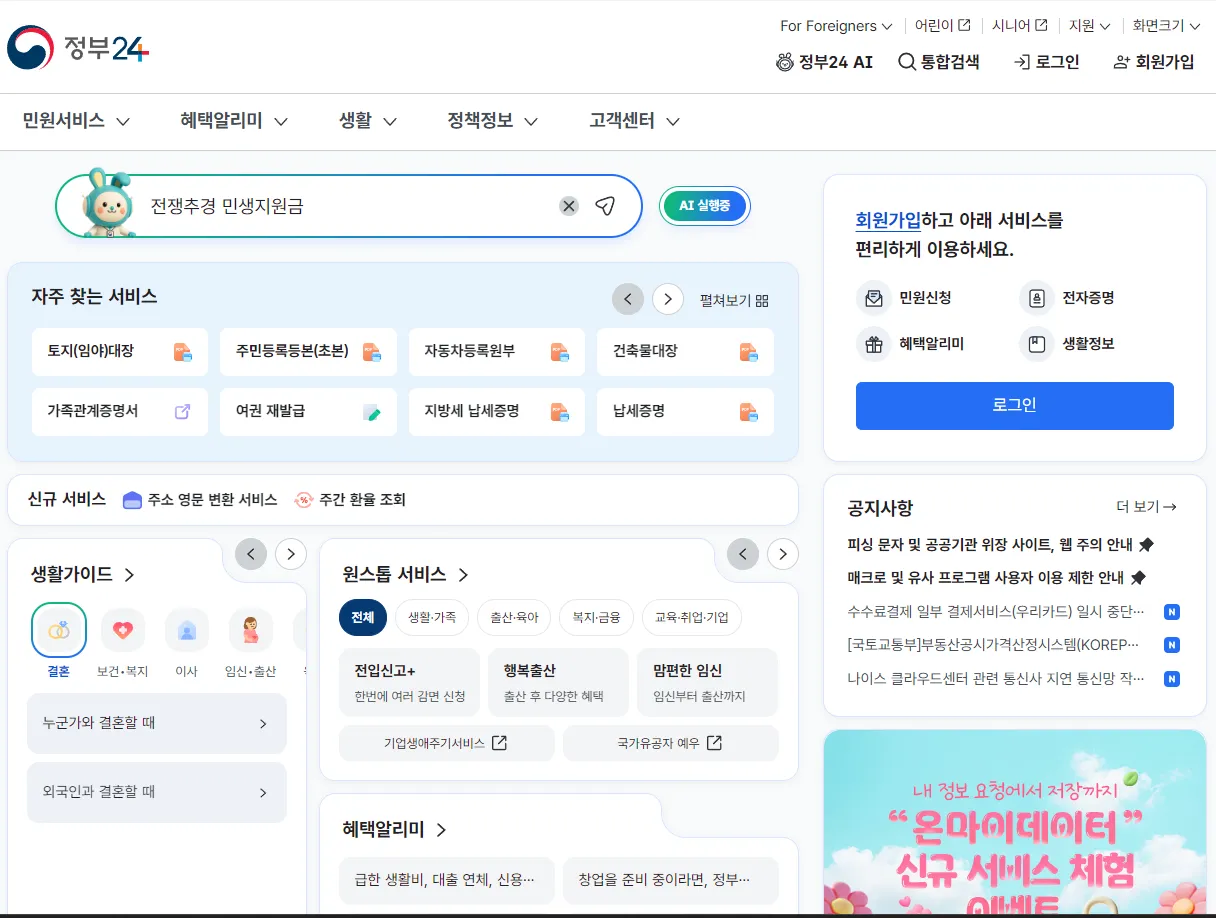
🏛️ Government 24 (www.gov.kr)
The most representative application channel. Log in with public certificate, financial certificate, or simple authentication (mobile phone) to apply.
📱 Bokjiro (www.bokjiro.go.kr)
Ministry of Health and Welfare's integrated welfare portal. Apply alongside various other welfare services.
🏘️ Local Government Websites
Applications also available through your local government (city/county/district) websites.
💳 Local Currency Apps
Applications may also be available through your local currency app (Zero Pay, Local Love Gift Certificates, etc.).
🏢 Offline Application
Those who have difficulty using online services can apply in person at:
-
📍 ·Myeon·Dong Administrative Welfare Centers (Resident Centers)
Visit with ID to complete application form -
📍 City/County/District Office Social Welfare Departments
More specialized consultation available
⚠️ Required Documents for Application
- ID: Resident registration card, driver's license, passport, etc.
- Public Certificate or Financial Certificate: Required for online application
- Mobile Phone: For simple authentication and SMS notifications
- Local Currency App: Pre-installation of your local currency app recommended for receiving payments
📱 Application Process (Online Standard)
Step 1: Access Government 24
Visit www.gov.kr and search for 'War Supplementary Budget Living Subsidy'
Step 2: Log In
Log in using public certificate, financial certificate, or simple authentication (mobile phone)
Step 3: Complete Application Form
Verify auto-filled basic information, then select your preferred local currency payment method
Step 4: Submit & Confirm
Submit application and check application status (processed within 2-3 days)
5️⃣ Payment Schedule: 1st & 2nd Payment Timeline 📅
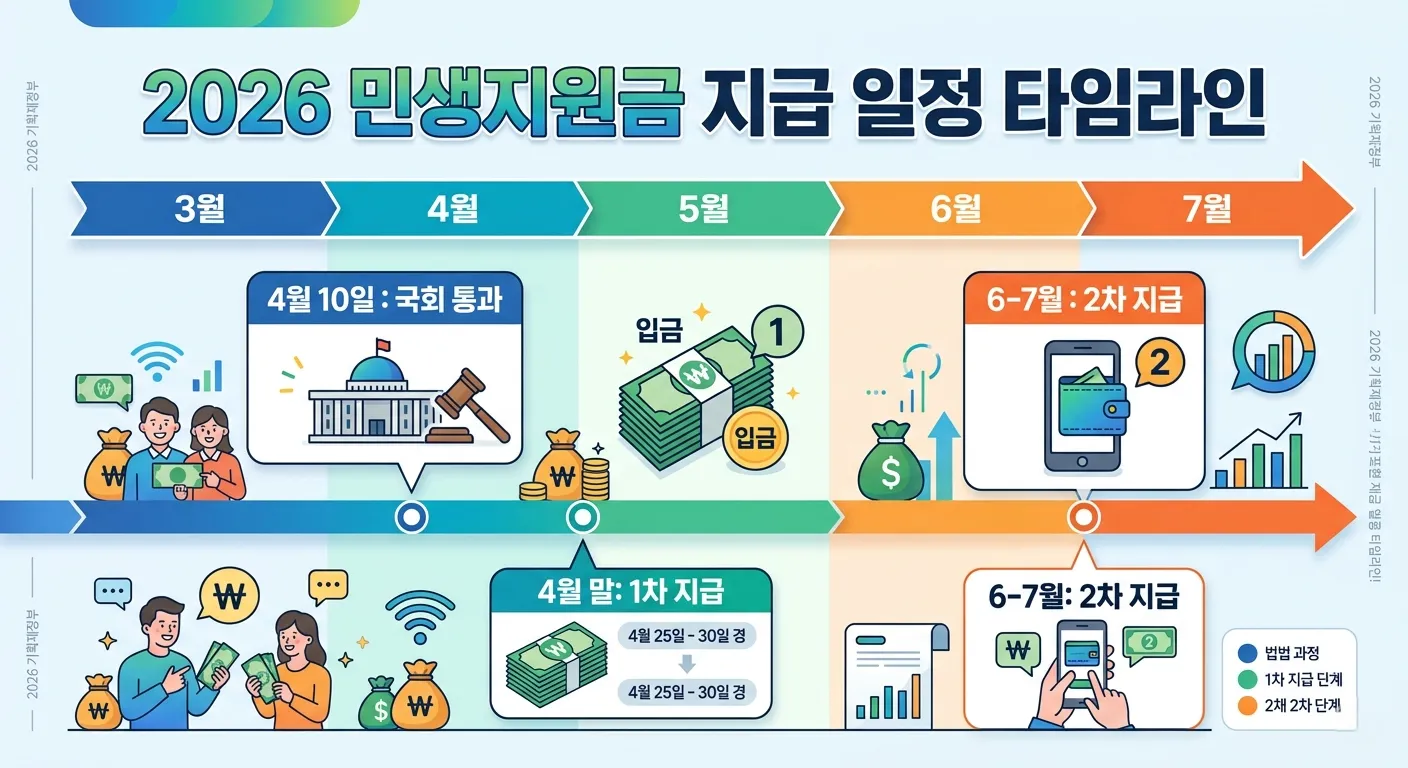
Living subsidies will be distributed in two phases. Specific dates will be determined based on when the supplementary budget passes the National Assembly.
📅 Expected Payment Schedule
National Assembly Supplementary Budget Processing: April 10, 2026 (plenary session agreement)
1st Payment: Within 17 days after National Assembly passage (expected late April)
2nd Payment: Within 80 days after National Assembly passage (expected late June-early July)
🎯 1st Payment (Priority for Vulnerable Groups)
1st Payment Target & Timing
| Category | Details |
|---|---|
| Target | Basic livelihood recipients, near-poor, single-parent families |
| Expected Timing | Late April 2026 (within 17 days after National Assembly passage) |
| Application Required | No separate application; automatic payment |
| Payment Method | Local currency (paid through existing receipt method) |
🎯 2nd Payment (Bottom 70% Income)
2nd Payment Target & Timing
| Category | Details |
|---|---|
| Target | Bottom 70% income earners (excluding 1st payment recipients) |
| Expected Timing | Late June-Early July 2026 (within 80 days after National Assembly passage) |
| Application Required | Online/offline application likely required (tentative) |
| Payment Method | Local currency (paid through selected method) |
💡 Note: Payment schedules may vary depending on National Assembly processing timeline and system preparation status. For the latest information, please check Government 24 or your local government website.
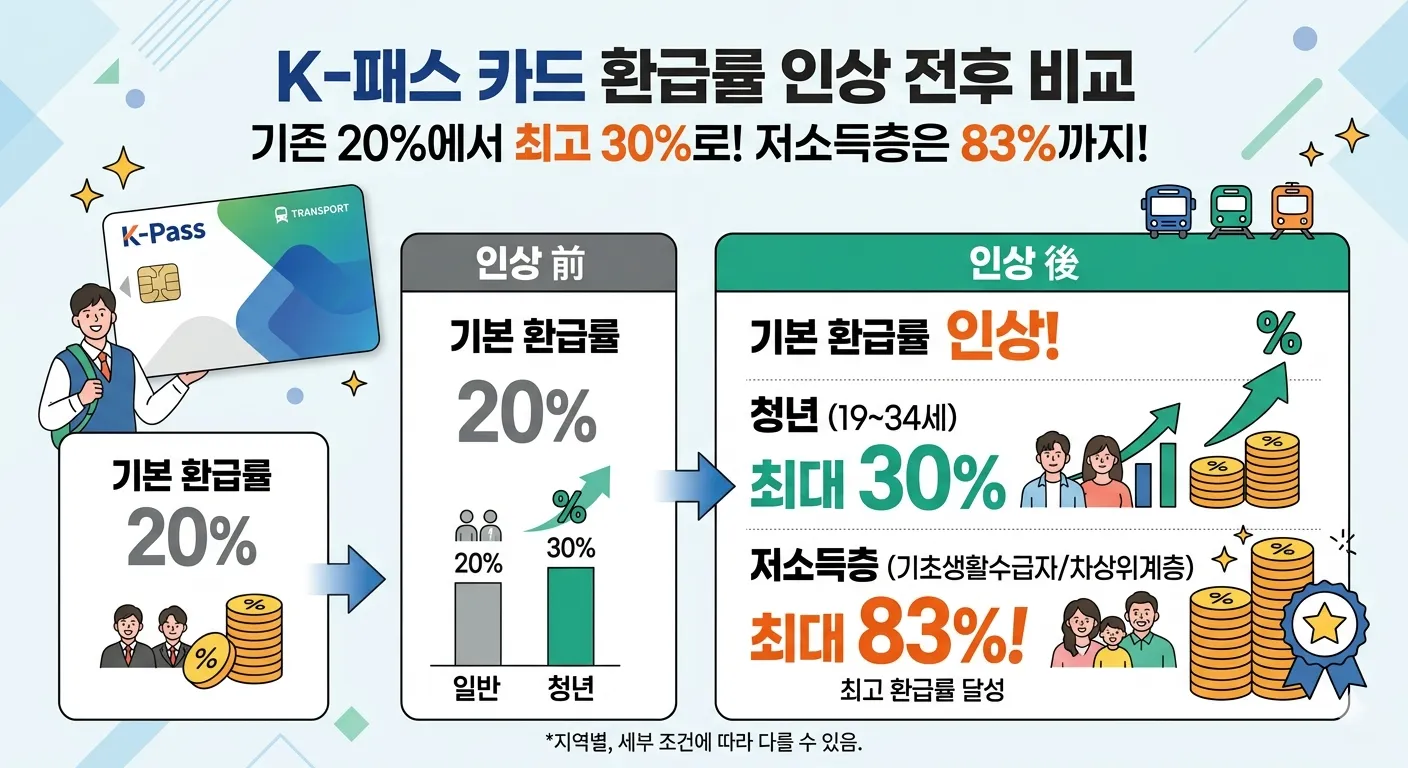
6️⃣ K-Pass Refund Rate Increase: Up to 83% 🚌
In addition to living subsidies, public transportation burden relief will be provided through a significant temporary increase in K-Pass refund rates.
K-Pass Refund Rate Increase (6 months after supplementary budget passage)
| Category | Previous Rate | Increased Rate |
|---|---|---|
| Low-Income | 53% | 83% |
| Youth/Seniors/2+ Children | 30% | 45% |
| 3+ Children | 50% | 75% |
| General (Ages 35-64) | 20% | 30% |
📊 K-Pass Refund Amount Examples
Expected refund amounts when using K-Pass 15+ times per month:
| Category | Monthly Transportation Cost | Previous Refund | After Increase Refund | Increase |
|---|---|---|---|---|
| General (Ages 35-64) | 100,000 won | 20,000 won | 30,000 won | +10,000 won |
| Youth/Seniors | 100,000 won | 30,000 won | 45,000 won | +15,000 won |
| Low-Income | 100,000 won | 53,000 won | 83,000 won | +30,000 won |
✅ Existing K-Pass Subscribers: Benefits applied automatically without separate application.
🆕 New Subscribers: Register at
K-Pass Website and start using
🚇 How to Use K-Pass
- Get K-Pass Card: Issue through credit card companies (Samsung, Hyundai, Shinhan, etc.) or debit card
- Register on K-Pass Website/App: www.kpass.kr or mobile app
- Use Public Transportation: Subway, bus, KTX, SRT, etc. (15+ times per month)
- Automatic Refund Payment: Deposited to card company account around 15th of following month
7️⃣ Community Reactions: Reddit, International Forums 💬
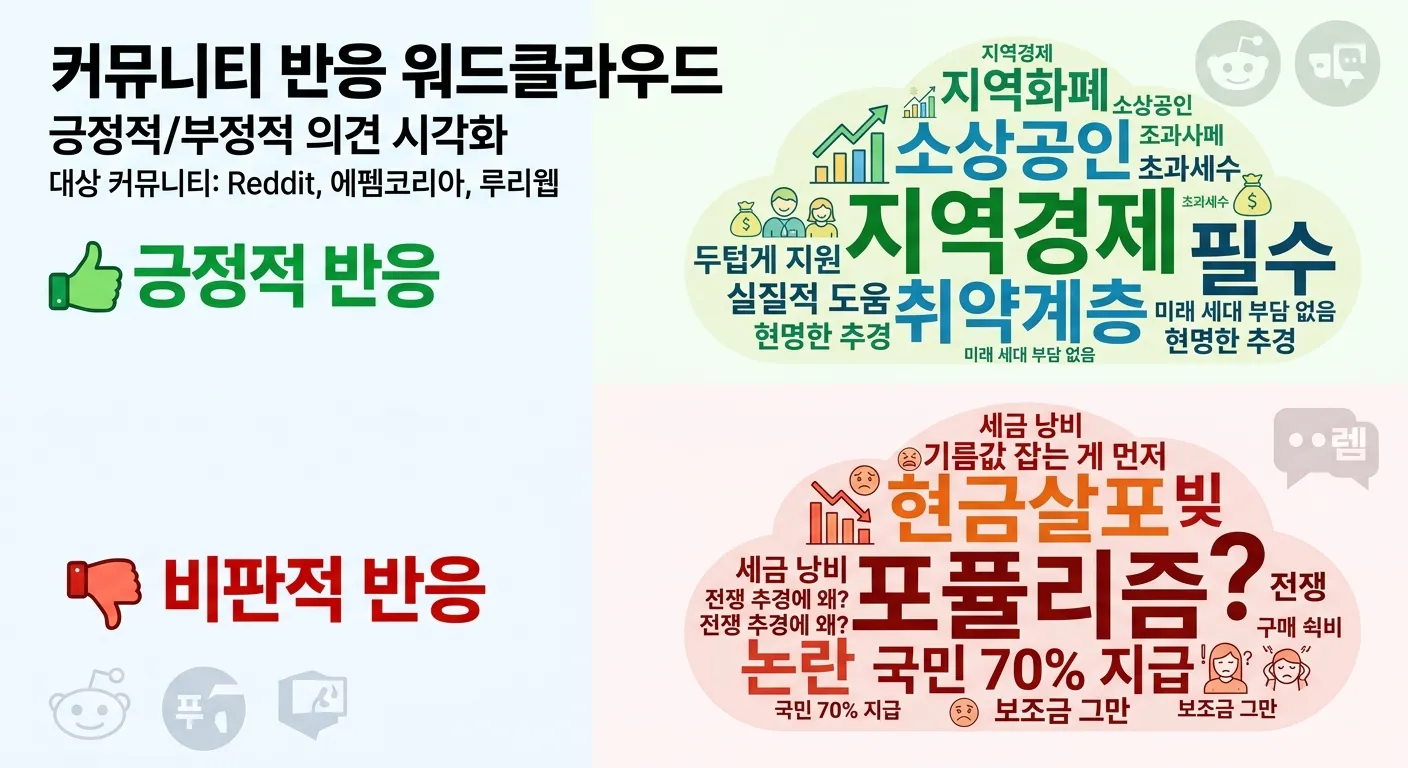
Following the announcement of the war supplementary budget living subsidy, heated discussions have continued across various online communities. Both positive reactions and critical opinions coexist.
👍 Positive Reactions
Supportive Opinions
-
"Substantial support for vulnerable groups is good"
- Up to 600,000 won for basic livelihood recipients provides real assistance -
"Expect regional economic revitalization through local currency"
- Spending within regions provides direct help to small businesses -
"Using excess tax revenue without bonds is wise"
- Debt-free supplementary budget means no burden on future generations
👎 Critical Reactions
Critical Opinions
-
"Isn't this populism?"
- Reddit: "Why include living subsidies in a 'war supplementary budget'?" -
"Cash handout controversy"
- International media: "26 trillion 'war supplementary budget'... controversy over 'cash handouts' to 70% of citizens" -
"Should focus on controlling oil prices first"
- Forum comment: "They should focus on stabilizing fuel prices instead" -
"Waste of tax money"
- Comment: "Stop distributing subsidies... taxes are debts we all have to repay eventually"
📊 Major Community Reactions by Platform
Key Comments by Platform
| Platform | Key Reactions |
|---|---|
| Reddit (r/korea) | "War response budget but why living subsidies?" "Seems like they're waiting to see market reaction" |
| International Forums | "When did eating chicken cure depression?" "Should focus on oil prices first" |
| Financial Media | "President distributing free money with national taxes" "Stop the subsidy distribution" (comments) |
| Threads/X | "Additional support for vulnerable groups and population-decline regions is positive" |
📈 Public Opinion Analysis: Generally positive toward vulnerable group support, but there's also criticism that support for 70% of the population is 'populism'. Questions are also being raised about including living subsidies under the 'war supplementary budget' name.
8️⃣ Frequently Asked Questions (FAQ) ❓
Top 10 FAQ
Q1. I'm a dual-income 4-person household with monthly income of 9 million won. Am I eligible?
A. Yes, you likely qualify. The 150% median income threshold for a 4-person dual-income household is approximately 9.15 million won, so you meet the criteria. However, you must also pass the comprehensive asset investigation including real estate and financial assets.
Q2. Do I need to apply to receive the subsidy?
A. 1st payment recipients (basic livelihood recipients, etc.) will receive payments automatically without separate application. 2nd payment recipients may need to apply, so please check Government 24 announcements.
Q3. Can I receive cash instead of local currency?
A. No, this living subsidy will be distributed only as local currency. This is a policy decision to revitalize regional economies.
Q4. I moved from metropolitan to non-metropolitan area. Which standard applies?
A. Your registered residential address is the standard. The determination will be based on your address on the payment reference date (TBD), so if you're planning to move, complete your address change registration promptly.
Q5. I'm a college student living separately from my parents. Do we receive separately?
A. Yes, if you are a separate household, you will be recognized as a single-person household and receive support individually.
Q6. Are foreigners eligible?
A. Foreigners are excluded from eligibility. Only Korean nationals are eligible for this support.
Q7. Is there an expiration date for using the local currency?
A. Generally, local currency must be used within 1-2 years from issuance. Usage periods vary by local government, so please confirm when you receive it.
Q8. Can I receive both K-Pass and living subsidy?
A. Yes, you can receive both simultaneously. K-Pass is a separate public transportation refund program and can be used independently of the living subsidy.
Q9. My income is borderline. How can I check eligibility?
A. Government 24 or Bokjiro will provide an 'Eligibility Inquiry' service for easy verification. You can also visit your local resident center for consultation.
Q10. What impact will this supplementary budget have on the economy?
A. The government expects this supplementary budget to increase GDP growth by 0.2 percentage points. Additionally, the national debt-to-GDP ratio is expected to improve from 51.6% to 50.6%, a 1 percentage point improvement.
📝 In Conclusion
The 2026 War Supplementary Budget Living Subsidy is an emergency measure to mitigate the impact of high oil prices and inflation caused by the Middle East war. Approximately 35.8 million people in the bottom 70% of income earners will receive 100,000 to 600,000 won per person in local currency.
Particularly, the principle of 'priority for rural areas and vulnerable groups' is applied, providing more substantial support to vulnerable groups and non-metropolitan residents. K-Pass refund rates will also increase up to 83%, significantly reducing public transportation burden.
Subsidy applications are expected to begin in April, so please regularly check Government 24 and your local government websites. We hope this support provides some relief during these challenging economic times.