
This article is written for general health and lifestyle information purposes only and cannot replace professional medical diagnosis, treatment, or care. If you have specific health conditions or symptoms, please consult with qualified healthcare professionals.
According to research by the U.S. EPA (Environmental Protection Agency), indoor air pollution levels can be 2 to 5 times higher than outdoor levels, and in certain situations, can spike up to 100 times higher. In modern society where we spend over 90% of our time indoors, ventilation has become a necessity rather than a choice. Let's explore scientifically validated ventilation methods that go beyond simply opening windows.
1. Why Ventilation Matters: The Hidden Dangers of Indoor Air
Research from Harvard Medical School's School of Public Health has shown that when indoor carbon dioxide levels exceed 1,000 ppm, cognitive function significantly decreases. This particularly affects students' learning abilities and office workers' productivity.
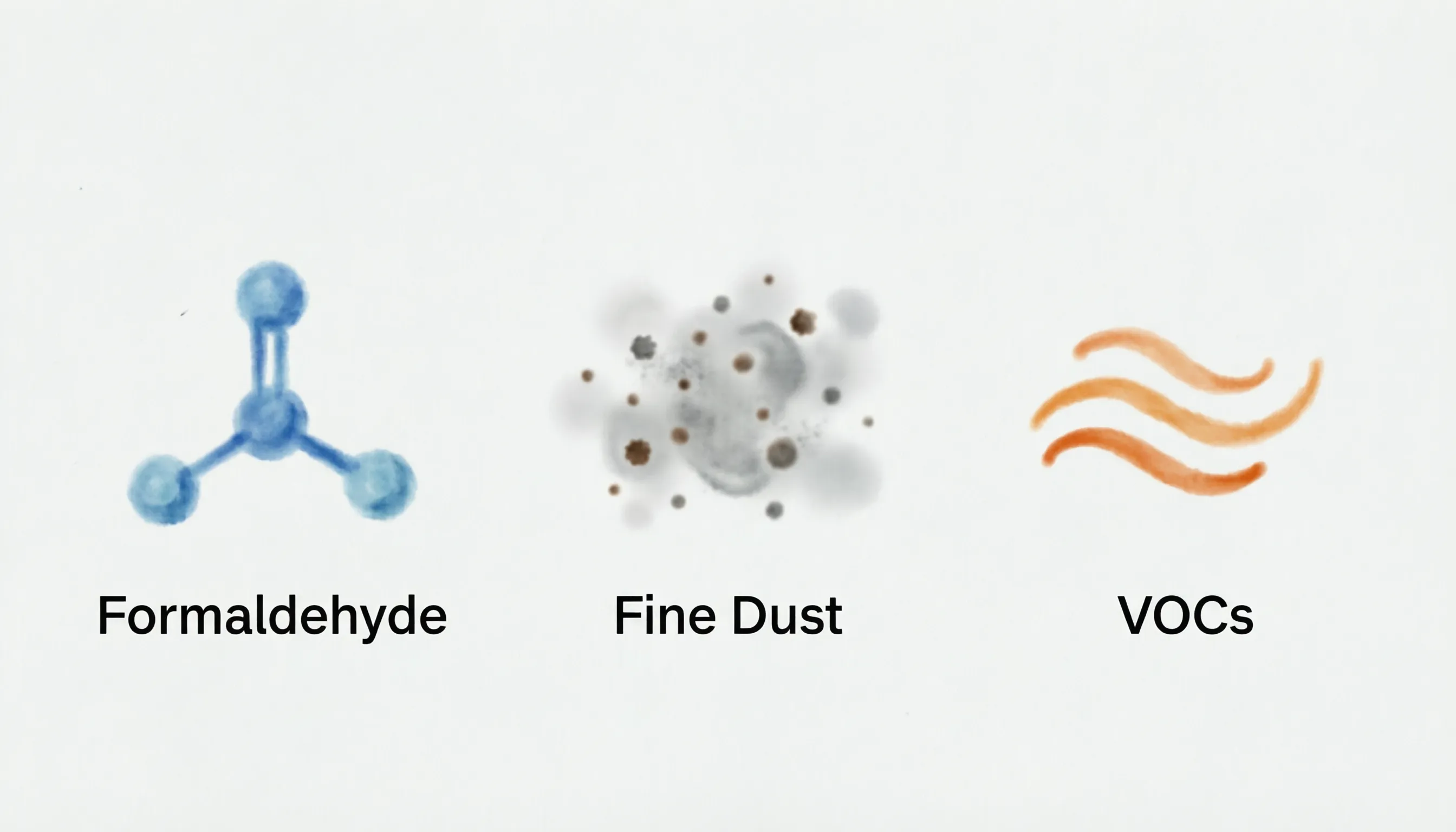
Various invisible pollutants exist in our homes:
- Formaldehyde: A Group 1 carcinogen released from new furniture, composite wood, and adhesives
- Volatile Organic Compounds (VOCs): Respiratory irritants from detergents, air fresheners, and cosmetics
- Particulate Matter (PM2.5): Cardiovascular risk factors from cooking, cleaning, and external sources
- Radon: A radioactive gas from building materials and a major cause of lung cancer
2. Seven Science-Backed Health Benefits of Proper Ventilation
A study published in the Environmental Health Perspectives journal reported that proper ventilation provides the following effects:
Seven Scientific Benefits of Ventilation
- Enhanced Cognitive Function: 10-15% improvement in concentration and memory from reduced CO2
- Improved Sleep Quality: Maintained oxygen levels maximize deep sleep effects
- Respiratory Disease Prevention: 30% reduction in asthma and allergy symptoms
- Fatigue Recovery: Reduced stroke risk and improved blood circulation
- Infection Control: Over 50% reduction in airborne virus concentration (including COVID-19)
- Mental Health Benefits: Reduced depression and anxiety through humidity control
- Increased Productivity: 6-9% boost in work efficiency in ventilated offices
Particularly following the pandemic, the WHO and CDC have positioned indoor air quality management as a core strategy for infection prevention. As of 2025, ventilation standards for schools and offices have been strengthened by more than double previous requirements.
3. When and How to Ventilate: A Time-Based Guide
Ventilation isn't as simple as "just open the windows." Effectiveness varies significantly based on timing and method.
Optimal Ventilation Times
| Time Slot | Characteristics | Recommendation |
|---|---|---|
| 10 AM - 12 PM | Lower ozone concentration, relatively low pollen | ⭐⭐⭐⭐⭐ |
| 2 PM - 4 PM | Temporary decrease in outdoor fine dust | ⭐⭐⭐⭐ |
| 5 AM - 7 AM | Good air quality due to minimal traffic | ⭐⭐⭐ |
| 7 AM - 9 AM | Poor air quality due to rush hour exhaust | ⭐⭐ |
| After 10 PM | Risk of condensation due to high humidity and low temperature | ⭐⭐ |
Key Point: Ventilation Time Calculation
To completely replace indoor air, you need 5-6 times the room's volume in fresh air. For example, a 710 sq ft (66㎡) apartment requires at least 10-15 minutes of ventilation with windows fully open to be effective.
4. Seasonal Ventilation Strategies and Precautions
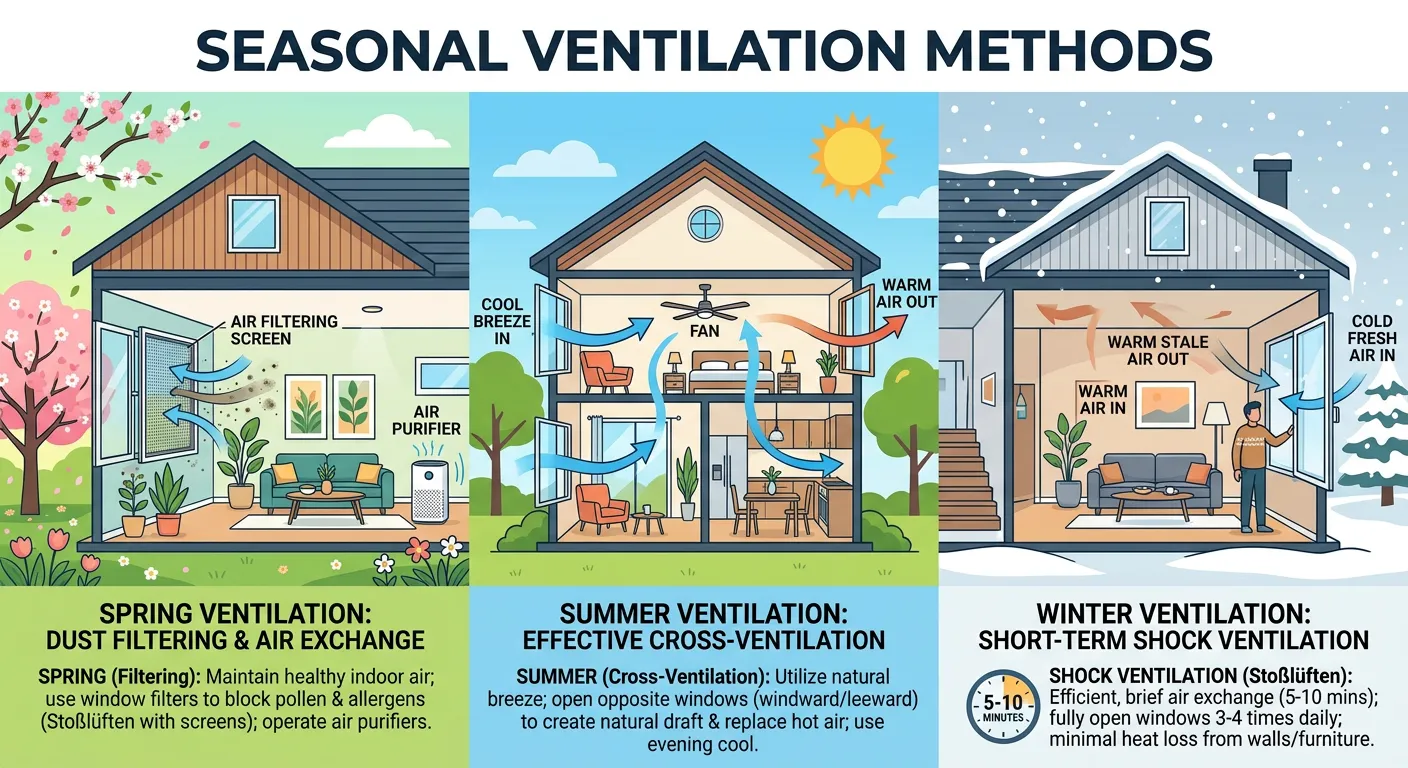
Spring/Fall (Mild Seasons)
The most ideal time for ventilation. However, be cautious of spring yellow dust and autumn dryness.
- Check fine dust forecasts before ventilating
- Use humidifiers during dry weather
- Allergy sufferers should avoid afternoon hours during high pollen season
Summer
Balance between air conditioning and ventilation is crucial. Ventilating while AC is running wastes energy.
- Concentrate ventilation before 7 AM or after 7 PM
- Utilize cross-ventilation based on window orientation
- Regular ventilation essential when using dehumidifiers
Winter
The dilemma of cold vs. ventilation. Short-term ventilation methods are most effective.
- Short-term Ventilation: Open windows completely for 5-10 minutes for rapid air exchange
- Crack ventilation wastes energy with minimal air exchange
- Ventilate briefly before leaving home
5. Common Myths vs. Facts About Ventilation
Misconceptions about ventilation can actually harm your health.
| Myth | Fact | Risk Level |
|---|---|---|
| "Don't ventilate on high pollution days" | When indoor CO2 exceeds 1000ppm, it's more dangerous. Short evening ventilation is necessary | Caution |
| "Air conditioning provides ventilation" | AC only circulates indoor air, not fresh outdoor air | High Risk |
| "Running an exhaust fan is enough" | Exhaust fans only circulate indoor air. Fresh outdoor air requires window opening | Caution |
| "Cracked windows are sufficient" | Crack ventilation has extremely low air exchange rates with minimal effect | Caution |
| "Rainy days have good air, no need to ventilate" | While post-rain air improves, fine dust can increase during rain | Acceptable |
6. Smart Home Ventilation Tips and Checklist
Modern technology enables smart ventilation using IoT devices.
Smart Ventilation Items
- CO2 Monitor: Real-time indoor carbon dioxide monitoring (alerts when exceeding 1000ppm)
- Air Quality Sensor Windows: Automatic opening/closing based on fine dust and CO2 levels
- Heat Recovery Ventilation (HRV): Fresh air intake without energy loss
- Window Ventilators: Ventilation with filters to block fine dust
Daily Ventilation Checklist
- 10 minutes after waking (focus on bedroom)
- Kitchen ventilation within 30 minutes after cooking
- Complete bathroom drying after shower (mold prevention)
- 10 minutes before bedtime (for better sleep)
- 5 minutes ventilation when leaving home
Ventilation is the most affordable and effective way to protect our health. If 30 minutes of attention daily can safeguard your family's health, there's no better investment.