
Did you know that those brief moments when you open your window each morning could fundamentally transform your health? As groundbreaking research on indoor air quality continues to emerge, simple 'ventilation' is revealing itself as one of the most powerful forms of preventive medicine. In this comprehensive guide, we'll walk you through scientifically proven benefits of ventilation and proper practices based on the latest studies from Harvard T.H. Chan School of Public Health and the World Health Organization (WHO).
Why Ventilation is Essential: The Hidden Dangers of Indoor Air
We spend over 90% of our day indoors. Yet while most people are sensitive to outdoor air pollution, they remain surprisingly unaware of the dangers lurking in the air they breathe inside their homes. According to research by the U.S. Environmental Protection Agency (EPA), indoor air pollutant concentrations can be 2 to 5 times higher than outdoor levels—and in extreme cases, up to 100 times higher.
The Main Culprits Polluting Your Indoor Air
- Carbon Dioxide (CO₂) Exhaled with every breath; concentrations above 1,000ppm cause decreased concentration, increased fatigue, and headaches
- Volatile Organic Compounds (VOCs) Released from furniture, paint, and cleaning products; long-term exposure can trigger respiratory diseases and allergies
- Particulate Matter (PM2.5 & PM10) Generated from cooking, cleaning, and outdoor infiltration; penetrates deep into lungs, increasing chronic disease risk
- Mold Spores & Bacteria Thrive in humid environments; worsen asthma and allergic rhinitis
The importance of indoor ventilation has become even more prominent since the COVID-19 pandemic. A research team from Imperial College London experimentally demonstrated that proper ventilation can reduce airborne virus concentrations by more than 70%. In other words, ventilation is not just about refreshing the air—it's a critical tool in preventing infectious diseases.
5 Science-Proven Health Benefits of Proper Ventilation
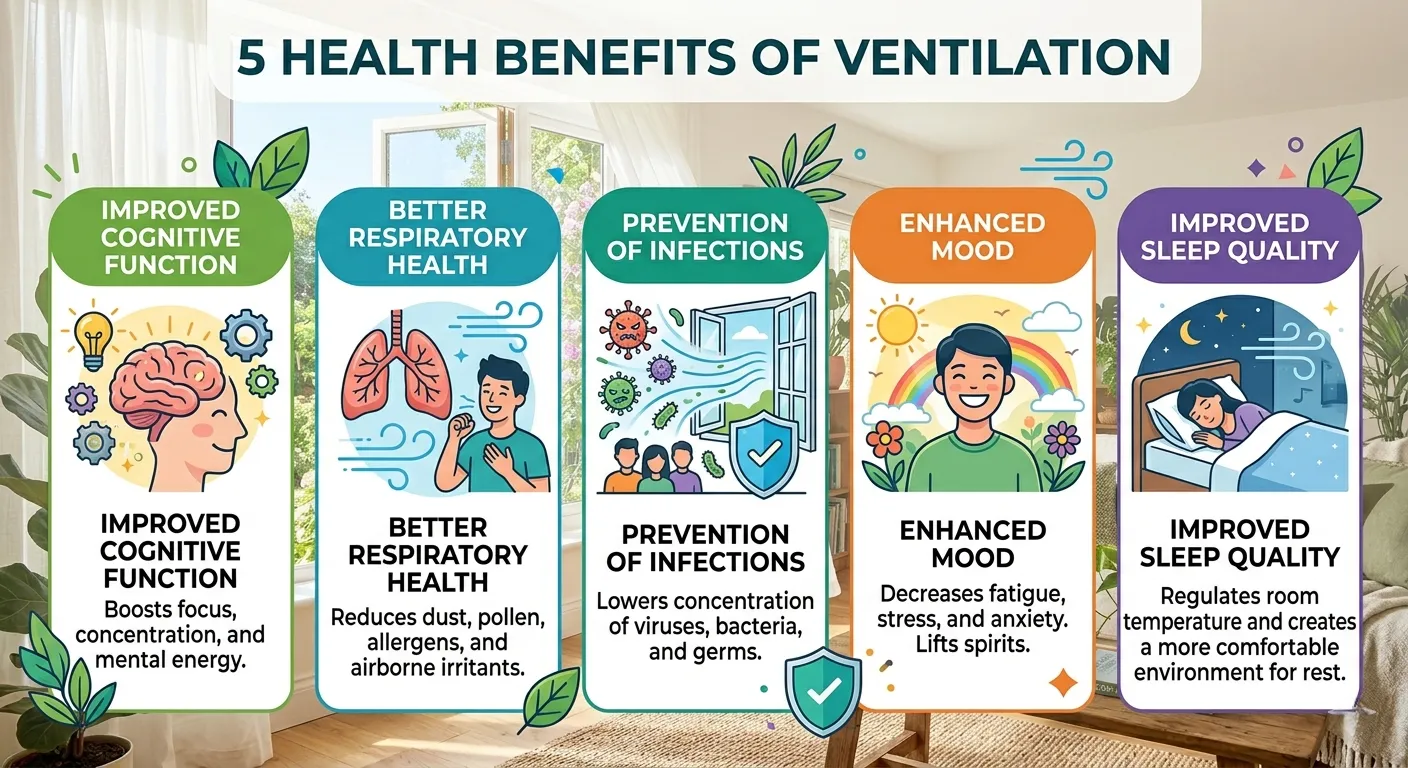
According to a 2023 study published by Harvard T.H. Chan School of Public Health, reducing indoor CO₂ levels through proper ventilation can improve cognitive function by up to 61%. This means ventilation goes far beyond providing "fresh air"—it has tangible effects on brain function and overall health.
-
Enhanced Cognitive Function & Productivity
Decision-making ability is more than doubled when indoor CO₂ levels are at 600ppm compared to 2,500ppm. This is especially critical in offices and learning environments. -
Improved Respiratory Health
The World Health Organization (WHO) explicitly states that proper ventilation helps alleviate symptoms of asthma, allergies, and chronic obstructive pulmonary disease (COPD). -
Reduced Infectious Disease Transmission
Dilutes airborne virus and bacteria concentrations, lowering the risk of transmitting colds, flu, and COVID-19. -
Better Sleep Quality
A 10-minute ventilation before bedtime optimizes indoor temperature and oxygen levels, promoting deeper sleep. -
Mood Enhancement & Stress Reduction
Fresh air promotes serotonin release and reduces stress hormones accumulated indoors.
Interestingly, ventilation also plays a crucial role in regulating indoor humidity. According to a report by the Korea Institute of Civil Engineering and Building Technology, ventilating three times a day for just 10 minutes each time can maintain indoor humidity at the optimal 40-60% range, which is critical for suppressing mold and dust mite proliferation.
The Perfect Ventilation Guide: When, How, and How Long?
You might think, "Can't I just open the window?" But effective ventilation requires a scientific approach. Let's examine the ideal ventilation methods recommended by the National Institute of Environmental Research, step by step.
| Situation | Recommended Duration | Frequency | Method |
|---|---|---|---|
| After Waking Up | 10-15 minutes | Daily | Cross-ventilation (open windows on both sides) |
| After Cooking | 15-20 minutes | After each meal | Kitchen hood + window simultaneously |
| After Cleaning | 10 minutes | Every cleaning session | Open windows after dust settles |
| Before Bedtime | 5-10 minutes | Daily | Slightly open bedroom window |
| During Remote Work | 5 minutes | Every hour | Short & frequent (reduce CO₂ levels) |
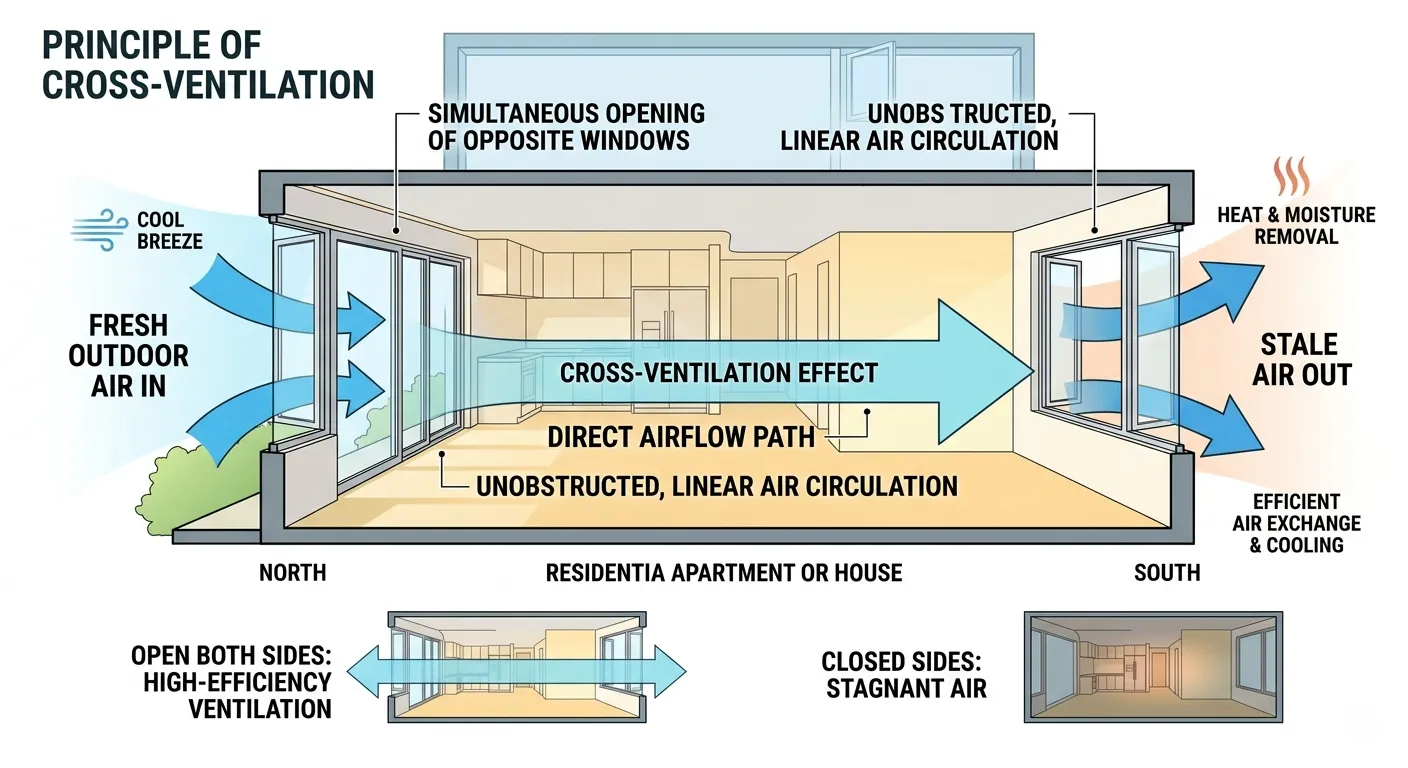
Most Effective Method: Cross-Ventilation
Opening windows on opposite sides creates a straight airflow, achieving air circulation 3 times faster than opening just one side. If you only have one window, open interior doors to create airflow.
- Step 1: Open as many windows and doors as possible throughout the house
- Step 2: Allow strong airflow for 10-15 minutes
- Step 3: Close windows and let indoor temperature recover
9:00 AM - 11:00 AM and 2:00 PM - 5:00 PM are when air pollution levels are lowest. Conversely, avoid rush hours (8-9 AM, 6-8 PM) when particulate matter concentrations are highest.
Critical Warnings: What You Should Never Do When Ventilating
While ventilation is undoubtedly beneficial for health, improper methods can actually cause harm. Here are critical ventilation prohibitions you must follow.
When NOT to Ventilate
- During Fine Dust Warnings or Alerts When particulate matter exceeds 50㎍/m³, close windows and run air purifiers. Ventilation will worsen indoor air quality.
- During Pollen Season (Spring & Fall) When pollen counts are high (5-10 AM), keep windows closed. If you must ventilate, do so briefly after 4 PM.
- During Yellow Dust Events During yellow dust alerts, completely seal windows and avoid going outside. If ventilation is absolutely necessary, limit it to under 3 minutes.
- Avoid "Half-Ventilation" to Save Heating Costs Opening windows just 5cm is nearly ineffective. Even 10 minutes of full ventilation is more energy-efficient and effective.
According to research by the Korea Energy Agency, ventilating 3 times daily for 10 minutes each increases heating costs by less than 3%. Meanwhile, never ventilating can lead to health problems from poor indoor air quality that cost far more.
Seasonal & Situational Ventilation Strategies
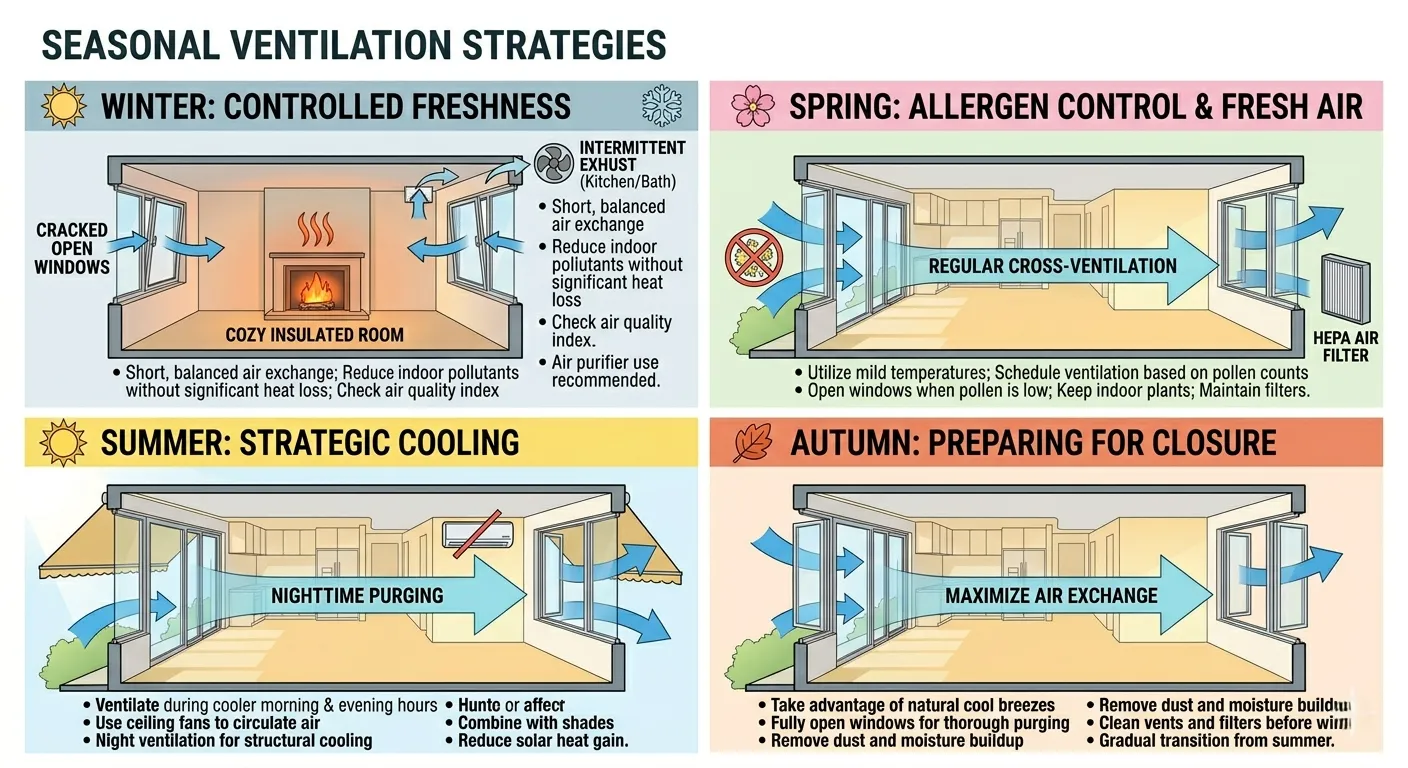
Ventilation isn't one-size-fits-all; it requires flexible adaptation to seasons and lifestyle patterns. Here are optimal ventilation strategies for each situation.
Winter Ventilation
- Frequency: 3-4 times daily (morning, noon, evening, before bed)
- Duration: 5-10 minutes (short & intense)
- Tip: Temporarily turn off heating during ventilation to minimize heat loss. Restart heating immediately after.
Summer Ventilation
- Frequency: 2-3 times daily
- Timing: 7-9 AM, after 7 PM (when temperatures are cooler)
- Tip: While using air conditioning, ventilate for 5 minutes every 2 hours to reduce CO₂ levels.
New Construction / After Remodeling
- Frequency: As often as possible (5-6+ times daily)
- Duration: 20-30 minutes each time
- Critical: Intensive ventilation for at least 6 months is necessary to remove VOCs like formaldehyde from new furniture and paint.
Households with Infants & Young Children
- Frequency: 4-5 times daily
- Timing: When children are in other rooms or outdoors
- Caution: Infants have sensitive respiratory systems. Always move children to another room before ventilating, and don't let them enter the ventilated room for at least 30 minutes.
Key Takeaways & Action Guide
- At least 3 times daily, 10+ minutes each—open windows fully for cross-ventilation.
- 9-11 AM & 2-5 PM are optimal ventilation times with lowest air pollution.
- During fine dust/yellow dust/pollen alerts, avoid ventilation and use air purifiers instead.
- After cooking, cleaning, and before bed—make ventilation a non-negotiable habit.
- During remote work, ventilate for 5 minutes every hour to maintain cognitive function.
Final Thoughts:
Ventilation is the most powerful preventive medicine that costs nothing. The small habit of opening your window today could be the first step in protecting your and your family's health. Rather than complex health management methods, start with something simple: letting fresh air in every morning.