
This article is intended to provide general health and lifestyle information and is not a substitute for professional medical diagnosis, treatment, or care. If you have specific health concerns or symptoms, please consult with a qualified healthcare provider.
Do you crave a cup of coffee as soon as you wake up? While billions of people worldwide start their day with morning coffee, do you know when and how to drink it for optimal health? We've conducted an in-depth analysis of the science-backed approach to morning coffee consumption based on the latest research.
Is Morning Coffee Really Healthy?
While many people view morning coffee as simply a beverage of choice, it's actually a powerhouse of antioxidants. According to research from the U.S. Department of Agriculture (USDA), coffee is one of the largest sources of antioxidants in the modern diet.
Remarkable Health Benefits of Coffee
- Enhanced Cognitive Function: Focus and memory improve by up to 20% within 20-45 minutes of caffeine consumption.
- Metabolism Boost: Coffee can increase basal metabolic rate by 3-11%, potentially aiding in weight management.
- Liver Health: Studies show that consuming 2-3 cups daily can reduce the risk of cirrhosis by up to 80%.
- Type 2 Diabetes Prevention: Regular coffee consumption improves insulin sensitivity and reduces diabetes risk by 23-50%.
A large-scale cohort study from Harvard Medical School reported that people who drank 3-5 cups of coffee per day had significantly lower mortality rates from heart disease, Parkinson's disease, and Alzheimer's disease. However, this doesn't mean "the more, the better."
The Relationship Between Cortisol and Coffee Timing
Drinking coffee immediately upon waking isn't always optimal. Understanding your body's cortisol rhythm is essential.
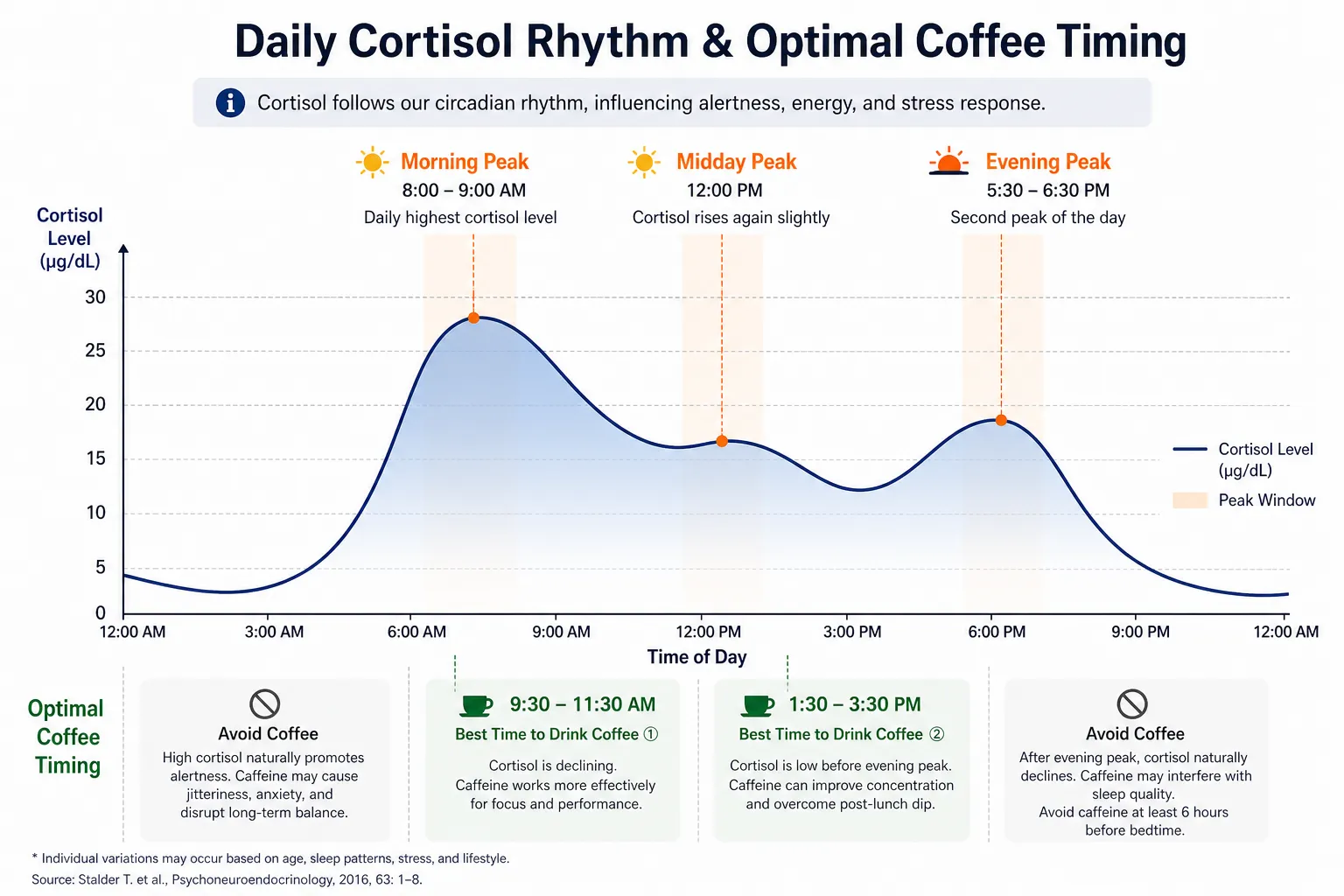
⏰ Cortisol Peak Times
During these times, cortisol levels are naturally high, putting you in an alert state. Drinking coffee then may reduce its effectiveness and build tolerance.
Optimal Coffee Timing
According to research by neuroscientist Dr. Steven Lambert, coffee is most effective when consumed during periods when cortisol levels drop:
- 9:30-11:30 AM (After the morning cortisol peak)
- 1:30-5:00 PM (After the noon peak)
Drinking coffee immediately upon waking can build cortisol resistance, and afternoon caffeine may overstimulate cortisol production, triggering stress responses.
Nutritional Components and Health Benefits
A cup of black coffee (240ml) contains surprising nutrients.
| Nutrient | Content | % Daily Value |
|---|---|---|
| Riboflavin (Vitamin B2) | 0.3mg | 11% |
| Pantothenic Acid (Vitamin B5) | 0.6mg | 6% |
| Manganese | 0.1mg | 3% |
| Potassium | 116mg | 3% |
| Magnesium | 7mg | 2% |
| Niacin (Vitamin B3) | 0.5mg | 2% |
Key Bioactive Compounds
-
Chlorogenic Acid
A powerful antioxidant that helps regulate blood sugar and reduce inflammation. Research published in international nutrition journals indicates chlorogenic acid is effective in improving insulin sensitivity.
-
Caffeine
Stimulates the central nervous system for alertness and promotes dopamine and norepinephrine release. The recommended limit is 400mg or less per day (approximately 4 cups).
-
Melanoidins
Antioxidants formed during coffee roasting that contribute to gut health and have antimicrobial effects.
Side Effects and Contraindications
While coffee offers many health benefits, it's not suitable for everyone. Caution is needed in the following cases.
⚠️ Side Effects of Excessive Consumption
- Insomnia and sleep disturbances (especially when consumed after 2 PM)
- Anxiety, restlessness, increased heart rate
- Digestive issues, heartburn, acid reflux
- Headaches and caffeine withdrawal symptoms
- Increased calcium excretion (osteoporosis risk)
When to Avoid Coffee
- Pregnant Women: Limit to 200mg or less per day (1-2 cups). Excessive consumption may increase the risk of low birth weight.
- Insomnia Sufferers: Caffeine's half-life is 3-7 hours, so avoid afternoon consumption.
- Gastrointestinal Issues: Coffee may worsen symptoms in those with stomach ulcers or acid reflux disease.
- Anxiety Disorders: Caffeine can exacerbate anxiety symptoms and requires caution.
- Those Taking Certain Medications: May interact with antibiotics, asthma medications, and antidepressants.
💊 Drug Interactions
Coffee may interact with the following medications, so consult your doctor if you're taking any:
- Alendronate (osteoporosis medication)
- Clozapine (antipsychotic medication)
- Ephedrine (decongestant)
- Lithium (bipolar disorder treatment)
Expert-Recommended Optimal Consumption
A practical guide to healthy coffee habits.
✅ Best Practices for Morning Coffee
- Avoid on an empty stomach: Rather than drinking immediately upon waking, wait 1-2 hours after breakfast to reduce stomach burden.
- Water first: Drink 200ml of water before coffee to prevent dehydration.
- Black coffee is best: Adding sugar, syrup, or cream significantly increases calories and reduces health benefits.
- 2 PM cutoff: Switch to decaf after 2 PM to maintain sleep quality.
- Use paper filters: Paper filters remove cafestol (a cholesterol-raising compound) better than metal filters.
Caffeine Content by Coffee Type
| Coffee Type | Caffeine Content (per 240ml) |
|---|---|
| Drip Coffee | 95mg |
| Espresso (1 shot) | 63mg |
| Instant Coffee | 62mg |
| Decaf | 2mg |
| Cold Brew | 200mg |
🌟 Healthy Coffee Recipes
Cinnamon Latte (Sugar-Free):
- 1 cup black coffee
- 100ml unsweetened almond milk
- A pinch of cinnamon powder (blood sugar control)
Butter Coffee (Ketogenic):
- 1 cup black coffee
- 1 tablespoon unsalted butter
- 1 tablespoon MCT oil (sustained energy)
Conclusion: Building Healthy Coffee Habits
Morning coffee can be more than just a habit—it can be a powerful tool for health when consumed correctly. The key is moderation and timing.
📝 Key Takeaways
- Avoid cortisol peak times (8-9 AM); drink after 9:30 AM
- Limit to 3-4 cups (400mg caffeine) per day
- Black coffee is healthiest; avoid sugar and cream
- Switch to decaf after 2 PM
- Pregnant women, those with GI issues, and insomnia sufferers should exercise caution
While coffee isn't a "cure-all," it's undeniably a beverage with scientifically proven health benefits. Enjoy coffee smartly according to your health status and lifestyle patterns.
This article is intended to provide general health and lifestyle information and is not a substitute for professional medical diagnosis, treatment, or care. If you have specific health concerns or symptoms, please consult with a qualified healthcare provider.