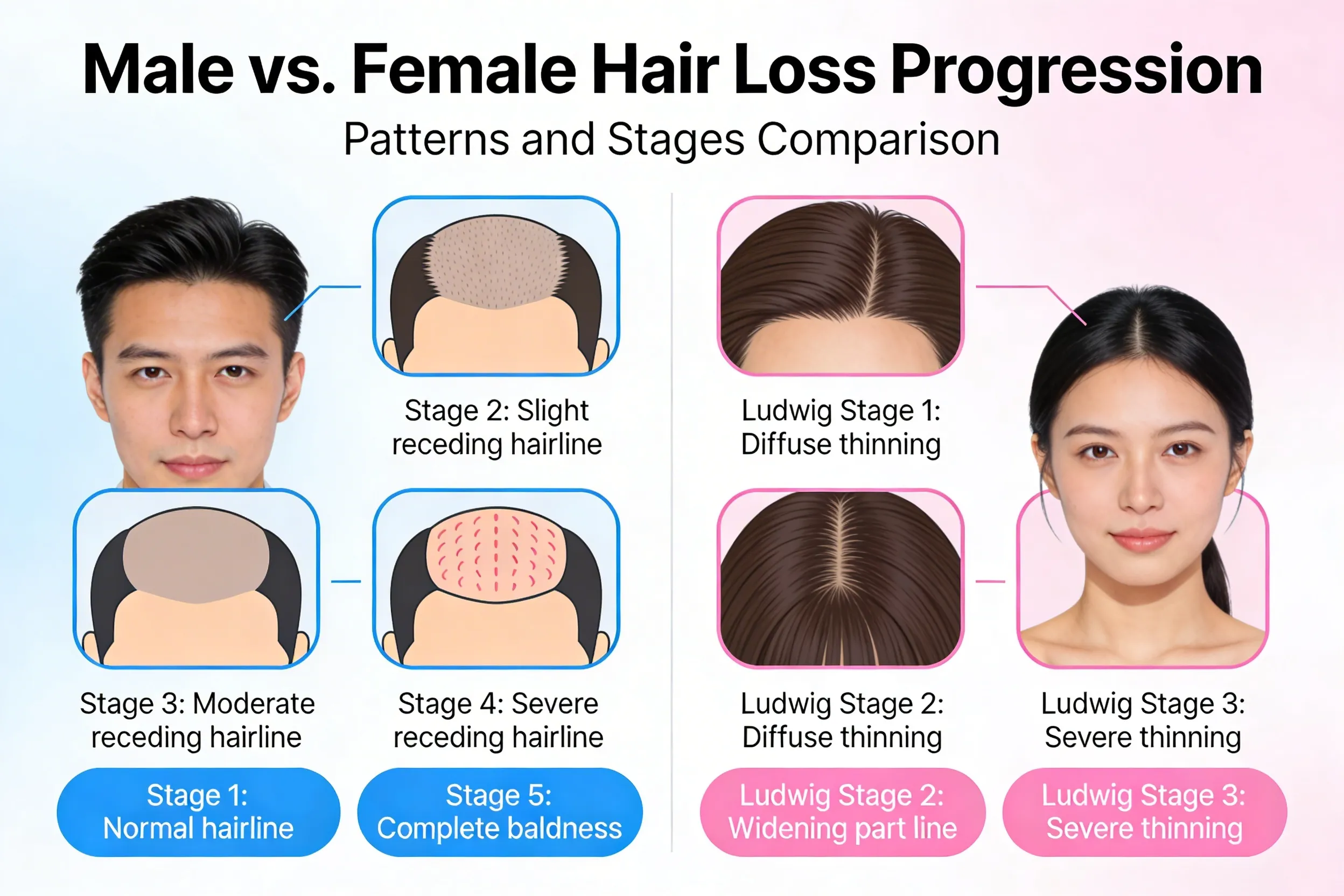
You, who sigh every morning finding fallen hairs on your pillow. You, who feel anxious watching your hairline recede in the mirror. Hair loss is not just an appearance issue. It's a quality of life issue affecting self-esteem, relationships, and professional life. In 2026, it's time to win the war against hair loss. From new understandings of minoxidil and finasteride to AI-designed hair transplants and next-generation stem cell treatments. This article compiles every method to reclaim your hair.
1. The Reality of Hair Loss: The Truth We Face in 2026 🎯
Hair loss is no longer exclusive to middle-aged men. As of 2026, approximately 50% of men and 25% of women worldwide experience hair loss during their lifetime, with Korea having one of the highest rates of hair loss among OECD countries. Statistics show that over 40% of Korean men already experience hair loss symptoms in their 30s, and the female hair loss population is increasing by 15% annually.
Key Point
Hair loss is a combination of genetic factors (80%) and acquired factors (20%). The important thing is early detection and proactive response. Starting preventive measures from the late 20s to early 30s can yield over 70% effectiveness.
But there's hopeful news. Between 2025 and 2026, the hair loss treatment field is undergoing revolutionary changes. New FDA-approved drugs are emerging, particularly Oxitone (approved April 2025) and similar oral medications that surpass the limitations of existing treatments. Additionally, AI-integrated hair transplant surgery has raised success rates to over 95%.
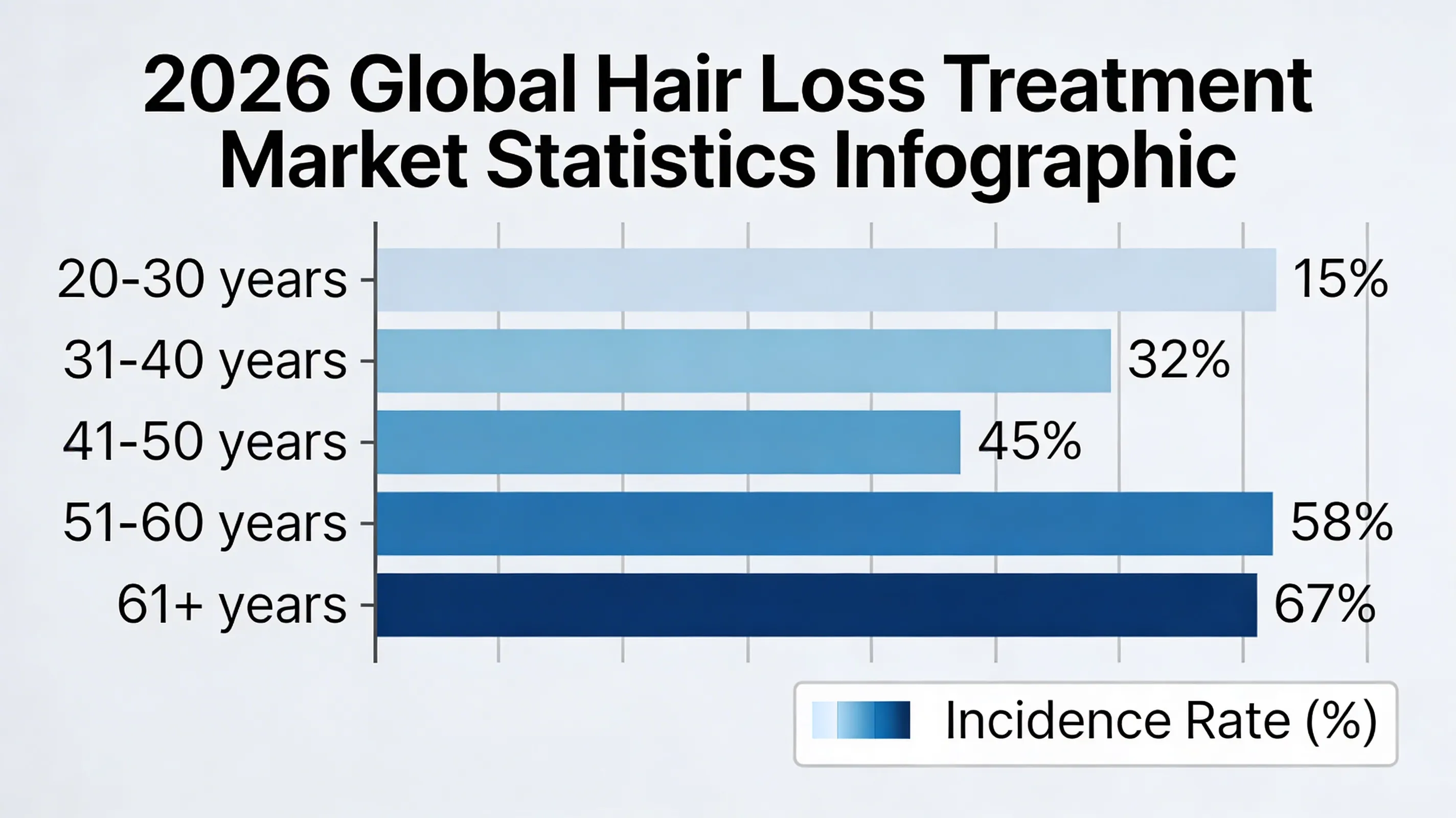
On online communities like Reddit's r/tressless (370,000 members) and Korea's DC Inside Hair Loss Gallery, thousands of treatment reviews are shared daily, providing faster information than actual clinical trials. Particularly since 2025, personalized treatments through genetic testing have become commercially available, allowing optimal treatment selection based on individual genetic characteristics.
2. The Science of Hair Loss: Why Do We Lose Hair? 🔬
2.1 DHT: The Main Culprit
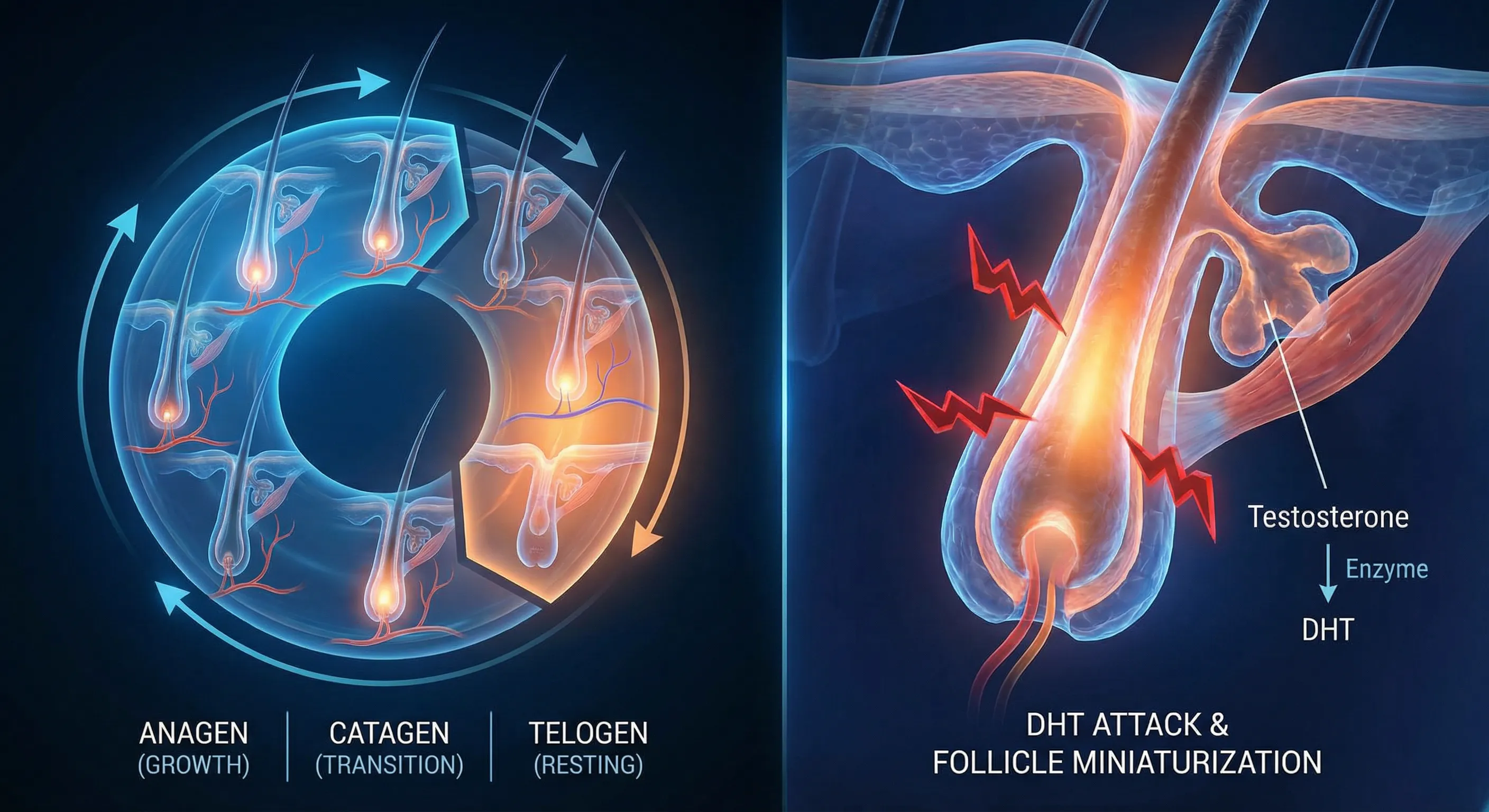
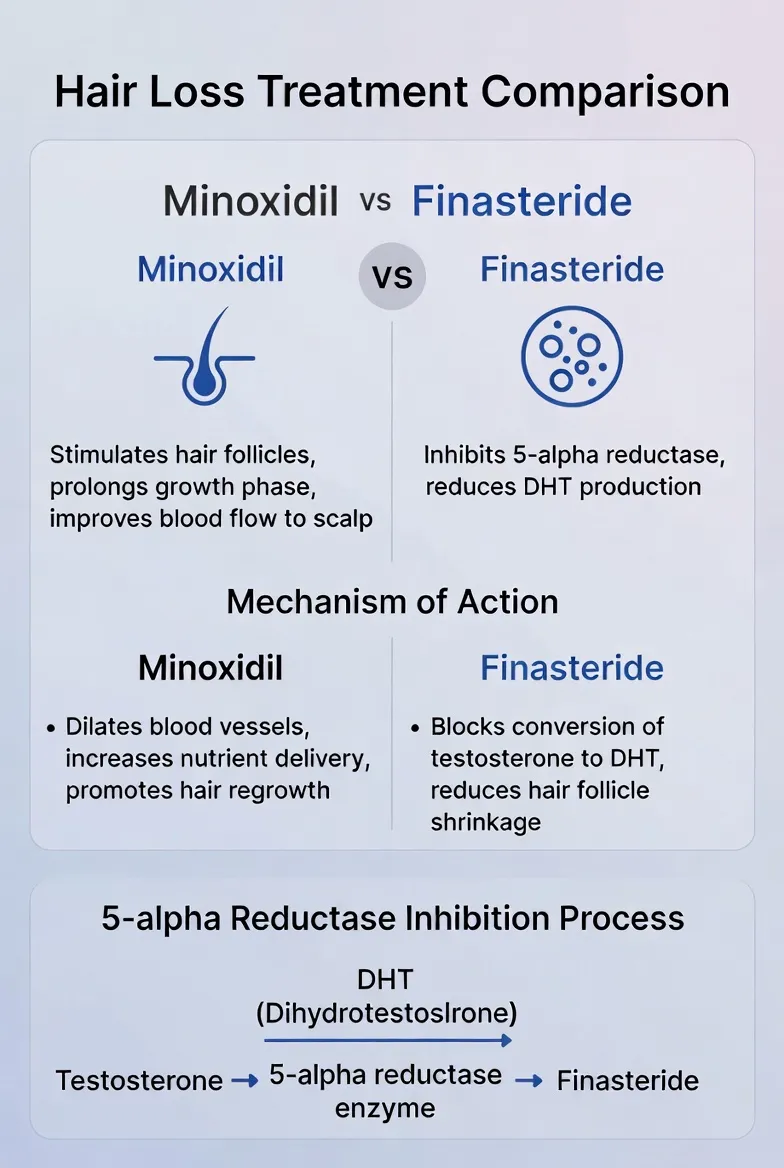
The cause of most male pattern hair loss (androgenetic alopecia) is the hormone dihydrotestosterone (DHT). DHT, converted from testosterone by the enzyme 5-alpha reductase, attacks hair follicles, making hair thinner and eventually stopping growth.
Testosterone → [5-alpha Reductase] → DHT → Follicle Shrinking → Growth Phase Shortening → Hair LossInterestingly, DHT doesn't affect all follicles equally. Follicles in the back and sides of the head are resistant to DHT, which is the scientific basis for hair transplantation. These "safe zone" hairs have the characteristic of never falling out throughout life.
2.2 The Secret of Hair Growth Cycle
Our hair repeats a cycle of Anagen (growth phase, 2-7 years) → Catagen (transition phase, 2-3 weeks) → Telogen (resting phase, 3-4 months). Normally, 50-100 hairs enter the telogen phase and fall out daily, but when the growth phase shortens due to DHT influence, more hairs enter the resting phase simultaneously, which is the mechanism of hair loss.
2.3 Specifics of Female Hair Loss
Female hair loss has a different mechanism than male hair loss. PCOS (Polycystic Ovary Syndrome), hypothyroidism, anemia, and postpartum hormonal changes are major causes. Especially according to 2025 research, chronic stress in women increases cortisol hormone, which suppresses hair follicle stem cells.
3. Types of Hair Loss and Diagnosis: What's Your Type? 🔍
3.1 Androgenetic Alopecia (Male Pattern Hair Loss)
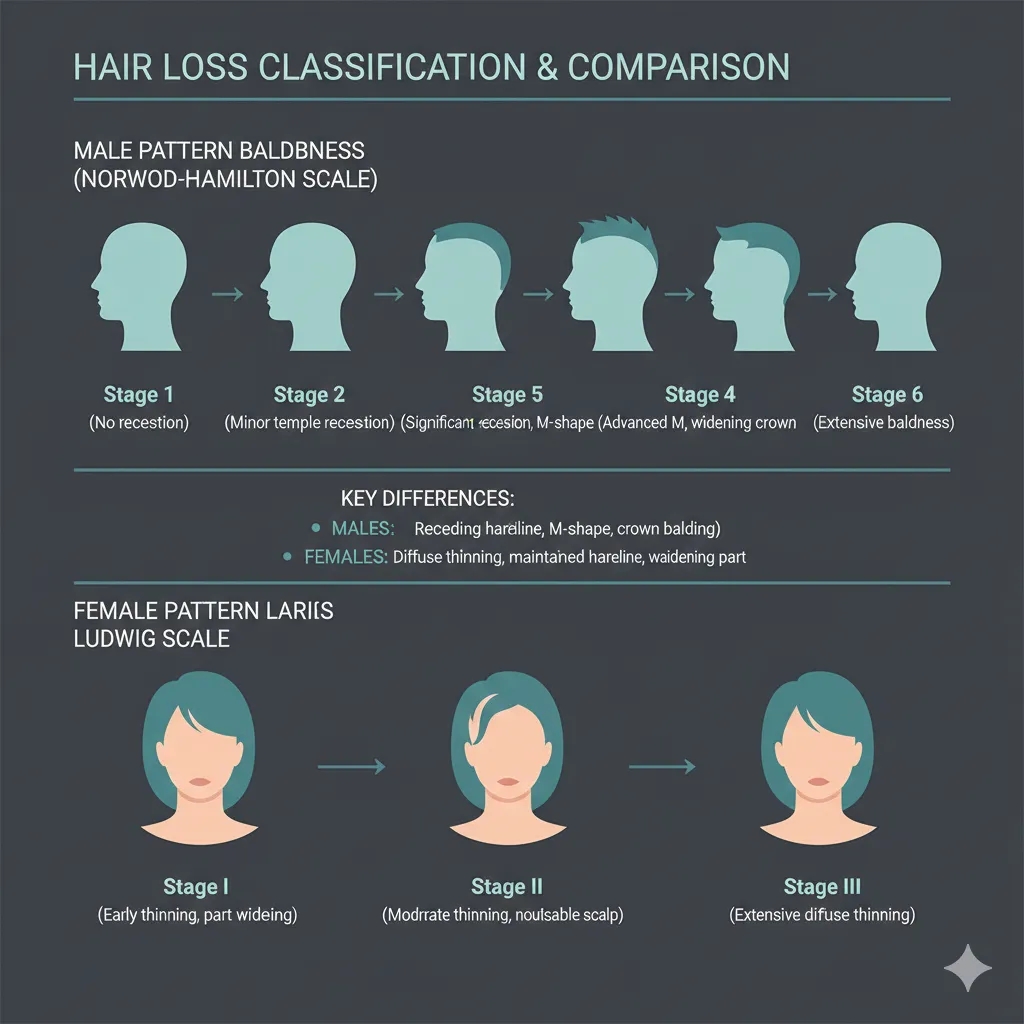
The most common type of hair loss progresses as receding hairline (M-shape), crown baldness (O-shape), or a combination of both (U-shape). As of 2026, AI-based diagnostic apps have emerged that can identify hair loss progression stages with 95% accuracy using just a smartphone camera.
| Stage | Characteristics | Recommended Treatment | Expected Effect |
|---|---|---|---|
| Stage 1-2 (Early) | Slight hairline recession, widening part | Minoxidil 5%, lifestyle improvements | 90%+ effectiveness |
| Stage 3-4 (Moderate) | Distinct M-shape, crown thinning | Minoxidil + Finasteride combined, LLLT | 70-80% effectiveness |
| Stage 5-7 (Advanced) | Most of crown bald, only back remains | Consider hair transplant surgery | Restorable through surgery |
3.2 Female Pattern Hair Loss
Women show a diffuse pattern with widening of the frontal and crown areas. Classified into 3 stages by the Ludwig Scale, it often progresses rapidly after menopause.
3.3 Alopecia Areata
An autoimmune disorder where coin-sized circular bald patches appear suddenly. Eli Lilly's Olumiant (baricitinib), FDA-approved in 2024, shows over 80% effectiveness for moderate-to-severe alopecia areata, and its application has expanded to mild cases by 2026.
3.4 Latest Diagnostic Techniques in 2026
The latest clinics offer the following precise diagnostics:
- Trichoscope: Measures follicular unit count, hair thickness, and scalp condition at 50-200x magnification
- Genetic Testing: Analyzes 20+ hair loss-related genes to predict prognosis and select optimal treatment
- Blood Tests: Measures iron, vitamin D, thyroid hormones, and DHT levels
- AI Scalp Analysis: Deep learning predicts hair loss progression 3 months ahead
4. Evolution of Drug Treatment: Deep Dive into Minoxidil and Finasteride 💊
4.1 Minoxidil: 40 Years of Trust
Since FDA approval in 1988, minoxidil has been the standard for hair loss treatment for 40 years. It dilates blood vessels to supply oxygen and nutrients to follicles and regulates cell cycles to extend the growth phase.
New Understanding of Minoxidil Use in 2026
According to latest research, applying 10% minoxidil once daily is more effective than applying 5% twice daily. Additionally, new formulations using nanoparticle technology reduce scalp irritation by 60% while increasing absorption rate by 3x.
Minoxidil effects generally appear after 3-6 months, with 60-70% of users showing effectiveness after 12 months of use. The important point is that once started, it must be used for life. Discontinuing will return to the original state within 3-6 months.
Side Effects and Management
4.2 Finasteride: Powerful Weapon Against DHT Blocking
An oral medication that inhibits 5-alpha reductase to reduce DHT production by 60-70%. At 1mg/day, over 90% of men show DHT reduction, and 5-year long-term studies show 90% stopped or improved hair loss progression.
4.3 2025-2026 New Drug Pipeline
| Drug Name | Mechanism | Features | Status |
|---|---|---|---|
| Oxitone | Oral 5-AR inhibitor | Higher DHT selectivity than finasteride, fewer side effects | FDA Approved (Apr 2025) |
| Klothynol | Hair follicle stem cell activation | Oral, 30% hair density increase in 6 months | Phase 3 Clinical |
| Finasteride+Minoxidil Combo | Dual action | Once-daily dosing improves compliance | Launch Expected (H2 2026) |
5. Latest Non-Surgical Treatments in 2026 ✨
5.1 LLLT (Low Level Laser Therapy): The Power of Light
Low-power lasers at 650-680nm wavelength activate mitochondria in hair follicle cells to promote ATP production. In the latest 2026 meta-analysis, 39% showed increased hair density with LLLT alone, and effects doubled when combined with minoxidil.
At-home helmet devices (Capillus, iRestore, etc.) are FDA-cleared, recommended for use 3 times a week for 20-25 minutes. 2025's new devices scan scalp condition with AI to automatically adjust optimal laser output.
5.2 PRP (Platelet Rich Plasma): Regeneration from Your Own Blood
A method of extracting platelets from your own blood and injecting them into the scalp. Growth factors (PDGF, VEGF, etc.) activate hair follicles. As of 2026, one session costs $200-400, with initial 3 sessions at 3-month intervals, followed by maintenance every 6 months recommended.
It's been 6 months since my 3rd PRP session, and the gap at my crown has definitely narrowed. I saw almost no effect with minoxidil alone for 2 years, but combining treatments finally showed change. It's expensive but definitely effective.
— DC Inside Hair Loss Gallery, November 20255.3 Stem Cell Therapy: Next-Generation Revolution
In 2025, Korea's Ministry of Food and Drug Safety officially approved adipose-derived stem cell treatment for hair loss, leading to full commercialization. Cultured mesenchymal stem cells (MSCs) extracted from adipose tissue regenerate blood vessels around hair follicles and suppress inflammation when injected into the scalp.
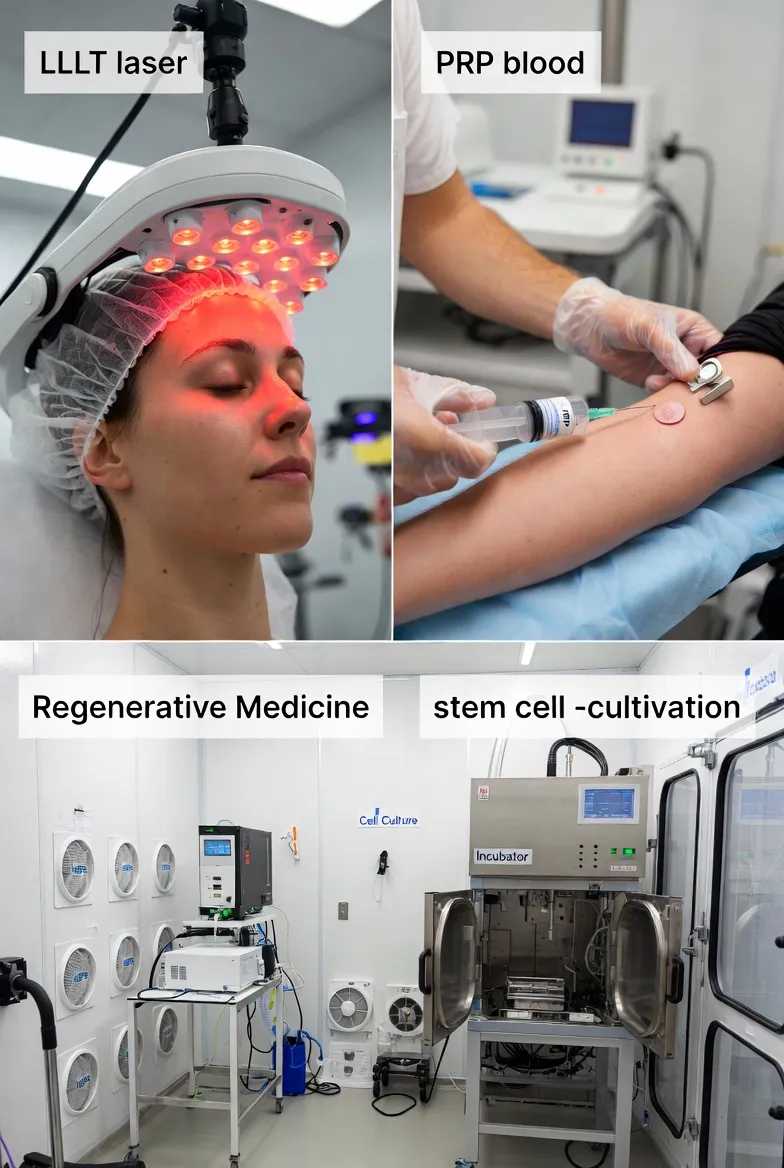
Clinical results showed average 23% increase in hair density after 6 months, particularly effective for patients unresponsive to conventional drug therapy. However, at $1,500-4,000 per session it's expensive, and long-term safety data is still limited.
5.4 Scalp Microneedling
A physical treatment using 0.5-2.5mm micro-needles to create micro-channels in the scalp, increasing minoxidil absorption by 5x and triggering growth factor secretion during wound healing. 2025 research showed microneedling + minoxidil group achieved effects 4x faster than minoxidil alone.
6. The Revolution in Hair Transplantation: FUE, FUT, and AI Robotics 🏥
6.1 FUE vs FUT: Which Method to Choose?
| Aspect | FUE (Follicular Unit Extraction) | FUT (Follicular Unit Transplantation) |
|---|---|---|
| Extraction Method | Individual follicles extracted 1-4 at a time with circular incision | Strip of scalp tissue harvested from back of head |
| Scarring | Dot scars (virtually invisible) | Linear scar (10-25cm length) |
| Max Grafts per Session | 2,000-4,000 hairs | 2,500-5,000 hairs |
| Recovery Time | 3-5 days | 2+ weeks |
| Cost | $4-12 per graft | $2.5-6 per graft |
| Recommended For | Short hair preference, scar concerns | Large volume needed, long hair to cover scar |
6.2 2026 AI Robotics Hair Transplantation
AI robots like ARTAS are revolutionizing follicle extraction with precision. AI analyzes follicle angle, direction, and depth in real-time to achieve over 95% survival rates. The 9th generation system released in 2025 can extract 2,000 grafts per hour, reducing surgery time by 50%.
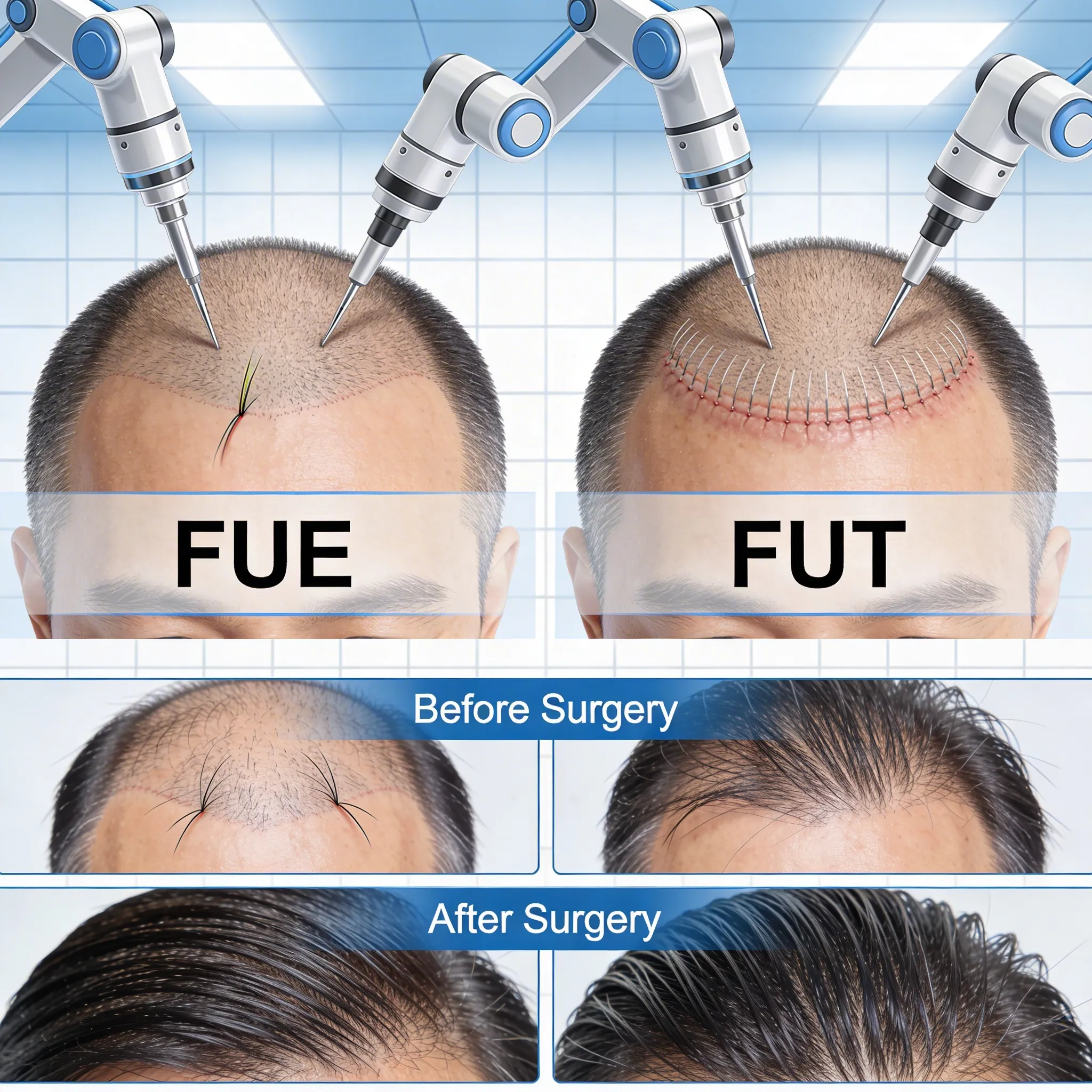
Real Success Story: 32-year-old male, AI FUE 3,200 grafts
"My crown was clearly visible 6 months ago, but now I can confidently part my hair. Thanks to the AI robot, follicle damage was minimal with 98% survival rate. I returned to daily life just 3 days after surgery."
— Naver Cafe 'Hair Transplant Reviews', September 2025
6.3 Hair Transplant Costs and Selection Guide
2026 hair transplant costs in Korea are as follows:
- Major Hospitals: $7-12 per graft (total $15,000-40,000)
- Specialized Clinics: $3.5-6 per graft (total $7,500-20,000)
- AI Robotics: $5.5-9 per graft (total $12,000-30,000)
Hair Transplant Selection Checklist
✓ Verify doctor's specialist certification (Dermatology or Plastic Surgery)
✓ Check actual surgery cases and 1-year post-op photos
✓ Confirm follicle survival rate guarantee policy
✓ Verify inclusion of post-surgery care programs
7. Hair Loss Prevention: 10 Methods to Practice Daily 🛡️
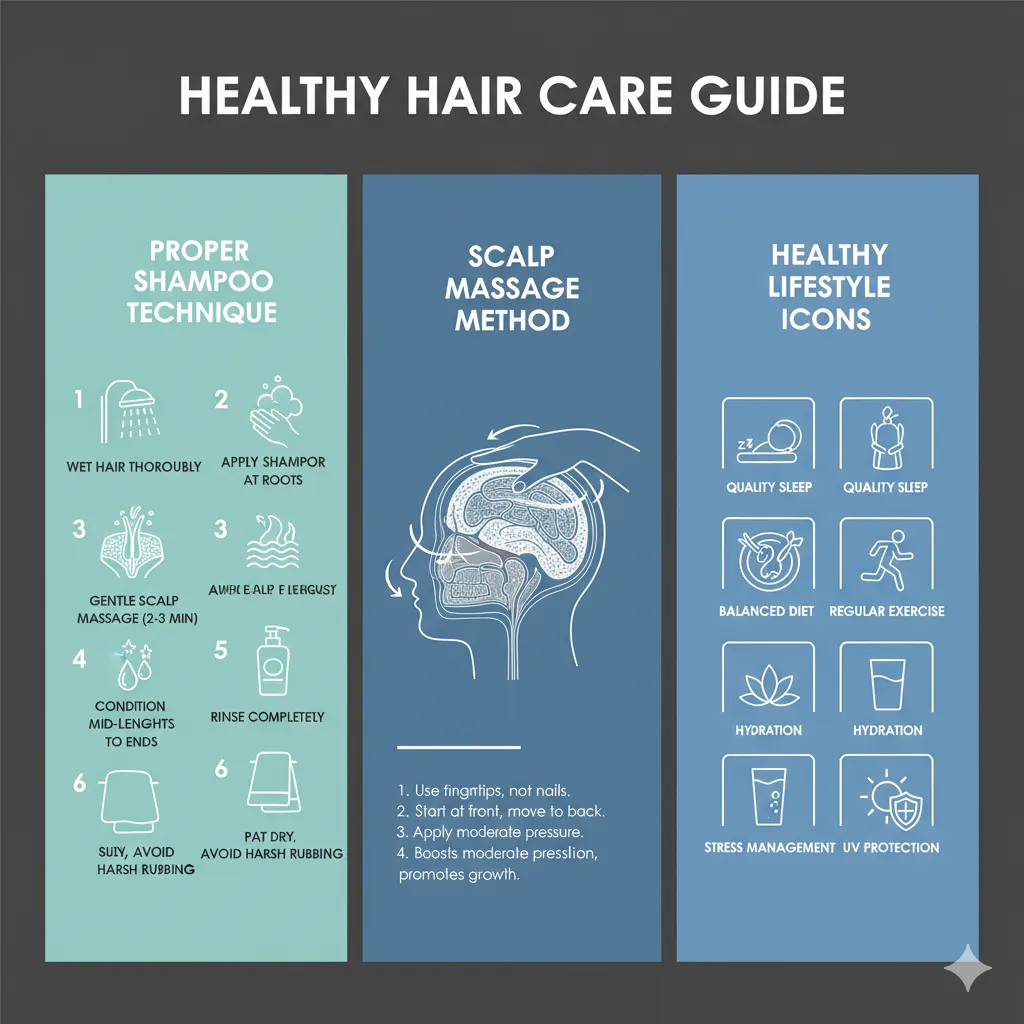
Preventing hair loss is much easier and more effective than treating it. Especially practicing these methods from late 20s to early 30s can delay hair loss onset by over 70%.
7.1 Basics of Scalp Care
7.2 Lifestyle Improvements
7.3 Hair Handling Precautions
8. Nutrition and Diet: Superfoods for Your Hair 🥗
Hair is one of the fastest-growing tissues in our body, requiring sufficient nutrient supply. Especially protein, iron, zinc, biotin, and vitamin D are essential for hair health.
8.1 Essential Nutrients for Hair Growth
| Nutrient | Role | Recommended Intake | Rich Food Sources |
|---|---|---|---|
| Protein | Keratin (hair protein) synthesis | Body weight (kg) × 1.2-1.6g | Eggs, fish, chicken breast, legumes |
| Iron | Oxygen supply to follicles | Men 8mg, Women 18mg | Beef liver, spinach, lentils, dark chocolate |
| Zinc | Follicle cell division, DHT inhibition | 11mg (men), 8mg (women) | Oysters, walnuts, pumpkin seeds, beef |
| Biotin | Keratin production promotion | 30-100mcg | Egg yolks, almonds, avocado |
| Vitamin D | Follicle cycle regulation | 600-800 IU | Salmon, mushrooms, sun exposure |
| Omega-3 | Scalp inflammation reduction, circulation | 1-2g EPA+DHA | Mackerel, sardines, chia seeds, walnuts |
8.2 Recommended 2026 Hair-Healthy Diet
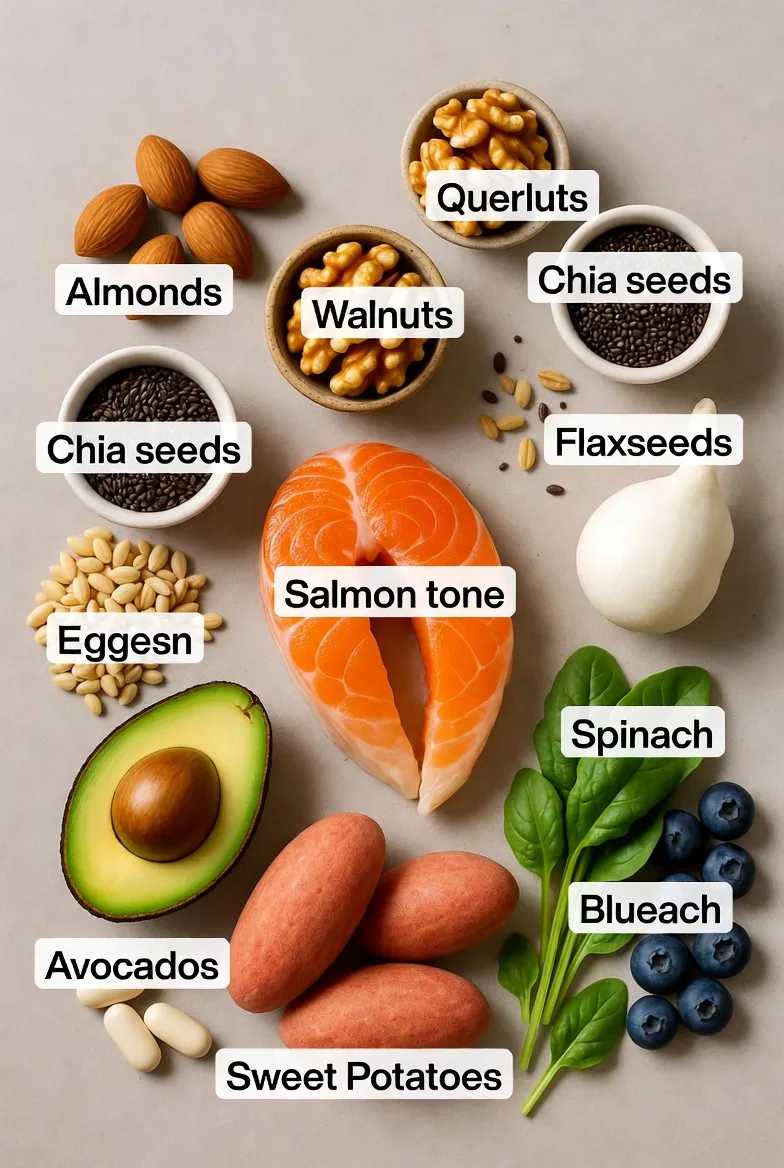
Breakfast: Scrambled eggs rich in biotin + oatmeal with avocado and walnuts. A glass of chia seed water packed with omega-3.
Lunch: Salad with iron-rich beef liver or lentils + pumpkin seed topping high in zinc.
Dinner: Protein-rich salmon or chicken breast + broccoli rich in vitamin C (promotes iron absorption).
8.3 Foods to Avoid
• Refined Sugar: Insulin spikes promote DHT production (soda, snacks)
• Trans Fats: Cause scalp inflammation (fried foods, processed foods)
• Excessive Alcohol: Blocks zinc and B vitamin absorption
• High-Mercury Fish: Mercury accumulation damages follicles (limit tuna, swordfish)
9. Shampoo and Hair Care: How to Choose Wisely 🧴
9.1 The Science of Shampoo Ingredients
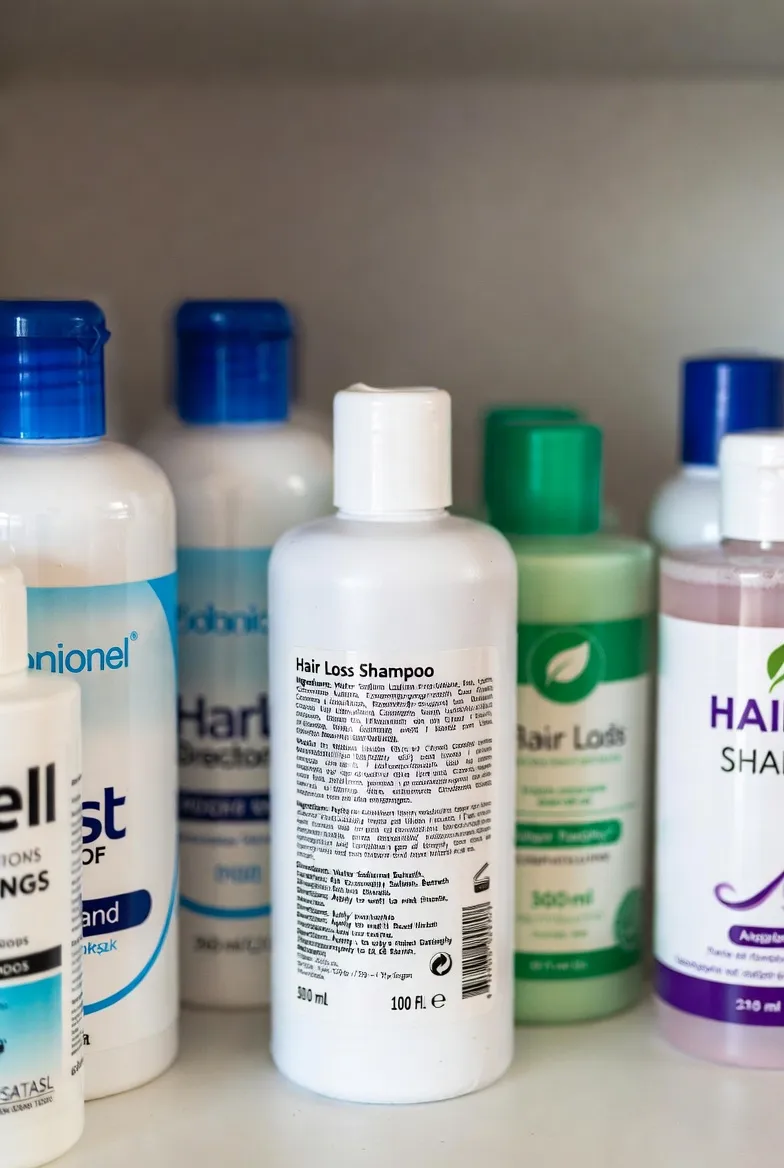
Effective hair loss shampoos should contain the following ingredients:
9.2 2026 Recommended Hair Loss Shampoo Comparison
| Product | Key Ingredients | Features | Price Range |
|---|---|---|---|
| Nizoral | Ketoconazole 2% | Pharmacy-grade, anti-fungal + anti-inflammatory + DHT inhibition | $12-16 |
| Alpecin Caffeine Shampoo | Caffeine 0.2% | German-made, DHT blocking, promotes hair growth | $10-14 |
| Labo-H Hair Loss Shampoo | Pyrithione Zinc + Caffeine | Korea's #1, excellent scalp soothing effects | $20-28 |
| Polycure Hair Loss Shampoo | Nanoparticle Minoxidil | Latest technology, 3x absorption rate | $32-48 |
9.3 The Truth About Conditioners and Treatments
Many people misunderstand this. Conditioner should only be used on hair ends, not scalp. Applying conditioner to scalp clogs pores and worsens hair loss. Hair tonics or essences for hair loss should be applied directly to towel-dried scalp after shampooing.
I used expensive hair loss shampoo for 3 years with no effect. Turns out I wasn't properly massaging my scalp during shampooing - I was just washing my hair. Saw results within 3 months of changing my shampooing technique. Technique matters more than shampoo!
— Clien Health Board, August 202510. Stress Management and the Importance of Sleep 😴
10.1 The Vicious Cycle of Stress and Hair Loss
According to research published in Nature in 2025, chronic stress causes the adrenal glands to secrete cortisol, which suppresses hair follicle stem cells. This causes temporary hair loss (telogen effluvium) and accelerates the progression of genetic hair loss in the long term.
More serious is trichotillomania, a compulsive disorder where people pull out their hair when stressed. This requires psychiatric treatment.
10.2 Effective Stress Management Methods

10.3 Methods to Improve Sleep Quality
Sleep quality is as important as quantity. Try these methods:
- Melatonin Supplements: 0.5-3mg improves sleep quality (consult doctor before use)
- Magnesium: 300-400mg promotes relaxation and improves sleep
- Blue Light Blocking: Avoid smartphones and computers 2 hours before bed
- Room Temperature: 64-68°F (18-20°C) is optimal for sleep
11. Real Community Reviews and Expert Advice 💬
11.1 Insights from Reddit r/tressless Community
Major trends from 2025-2026 in the world's largest hair loss community with 370,000 members:
Fin 1.25mg + Minoxidil 5% + Dermaroller 1.5mm once a week for 1 year 3 months. Hairs are starting to grow where there were none before on my hairline. Started at 30, feel like I'm back to looking 25. Key is consistency and patience.
— Reddit r/tressless, December 2025 (Upvotes 2.3k)8 months post hair transplant. Had 3,500 grafts implanted with current survival rate over 95%. Most important thing is post-op care. Didn't stop minoxidil for 1 year, had 3 PRP sessions. Worth every penny.
— Reddit r/hairtransplant, October 2025 (Upvotes 1.8k)11.2 Real Cases from Domestic Communities
I'm a woman in my 30s and my crown suddenly started thinning. Diagnosed with PCOS at OB/GYN and started hormone treatment - hair loss stopped within 6 months. Ladies, don't just go to dermatologists - get checked at OB/GYN too.
— Naver Cafe 'Female Hair Loss', July 20251 year LLLT helmet review. First 6 months almost no effect, almost gave up, but peach fuzz started appearing at 9 months. Now at 1 year 3 months, definite increase in hair density. LLLT is a long game.
— DC Inside Hair Loss Gallery, November 2025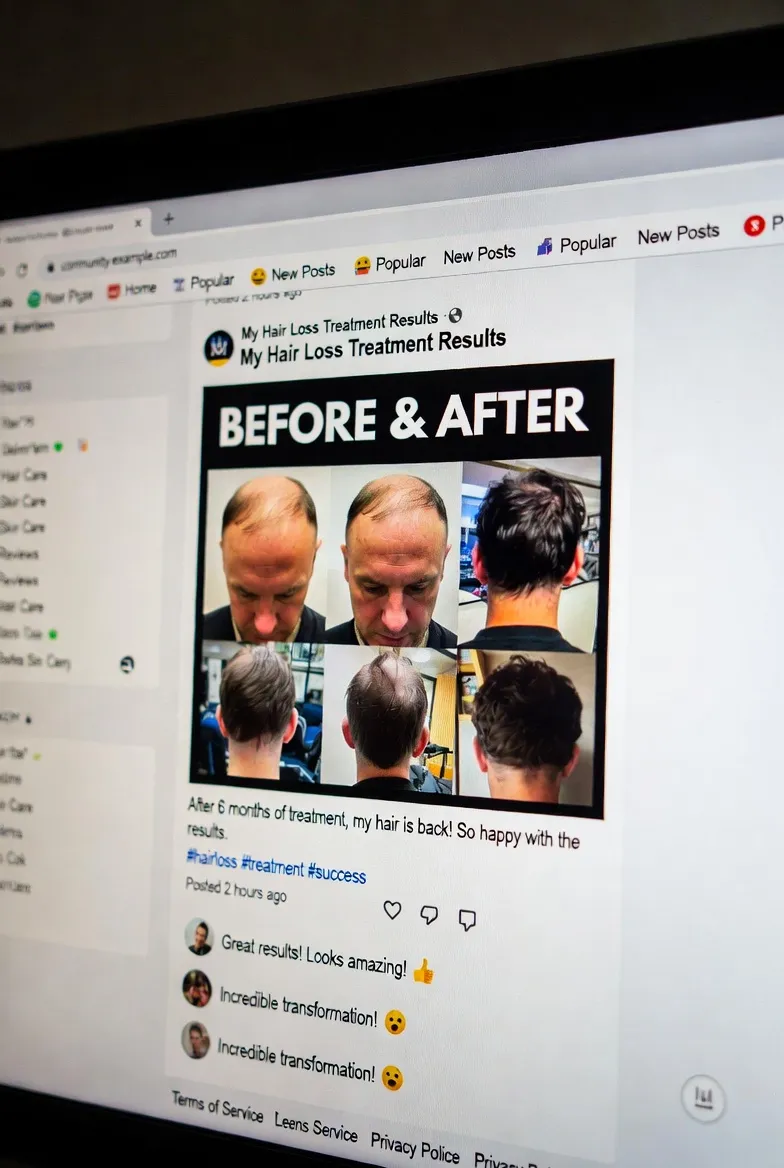
11.3 Advice from Dermatology Specialists
Advice from Dr. Kim, Seoul National University Hospital Dermatology
"The biggest mistake patients make is not starting treatment early. Hair loss is a progressive disease - once a follicle dies, it cannot be revived. If you notice your hairline receding or your part widening, see a specialist immediately. Starting preventive treatment in your late 20s can maintain full hair into your 40s."
12. Future Hair Loss Treatments: Stem Cells and Hair Cloning 🚀
12.1 iPSC Stem Cell Therapy
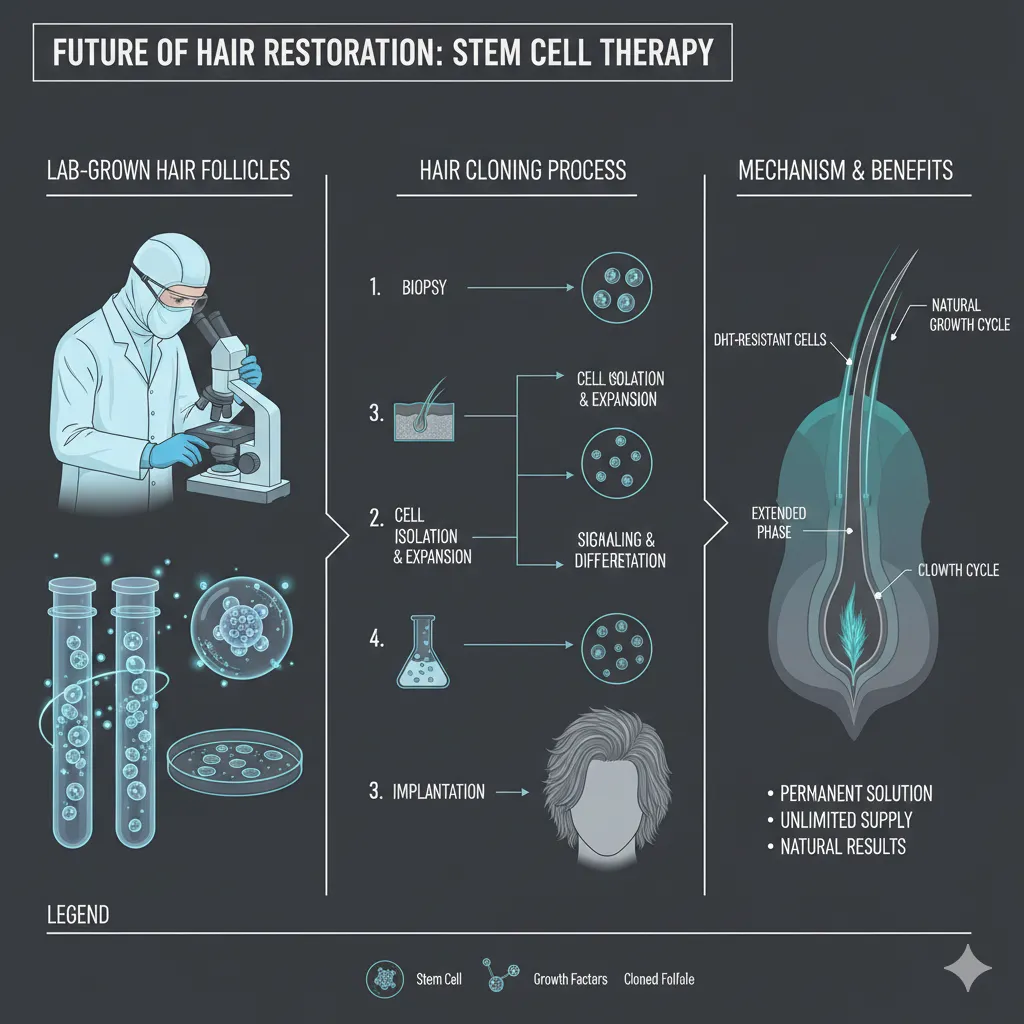
Japan's Samumed began clinical trials in 2025 for hair loss treatment using iPSCs (induced pluripotent stem cells). This method reprograms patient skin cells into iPSCs, differentiates them into follicle cells, and implants them into the scalp. Theoretically capable of creating unlimited follicles, it could completely cure hair loss.
12.2 Hair Cloning
UK's HairClone is developing technology to harvest follicles from the back of the head, culture them, and multiply them tens of thousands of times. Currently in Phase 2 trials as of 2026, commercialization would offer hope to severe hair loss patients with insufficient donor hair.
12.3 3D Bioprinting Follicles
A research team at Columbia University in the US successfully reproduced the complex structure of follicles using 3D bioprinters. Successfully created functional follicles in animal experiments in 2025, with human application targeted for 2028-2030.
2026
Launch of new oral drugs like Oxitone, popularization of AI robotics hair transplantation
2027-2028
Significant cost reduction in adipose-derived stem cell therapy, expanded insurance coverage
2029-2030
Commercialization of iPSC stem cell therapy, practical application of hair cloning technology
Post-2030
3D bioprinting follicle transplantation, complete cure era for hair loss
13. Conclusion: Personalized Solutions for You 🎯
In 2026, hair loss is no longer an incurable disease. The important thing is to accurately identify your hair loss type and progression stage, and choose the optimal treatment accordingly.
Personalized Treatment Guide
| Stage/Situation | Recommended Treatment | Estimated Cost (Monthly) | Expected Effect |
|---|---|---|---|
| 20s Prevention | Hair loss shampoo + lifestyle improvements | $25-40 | Delay hair loss onset by 10 years |
| Early Hair Loss (Stage 1-2) | Minoxidil 5% + Pyrithione shampoo | $40-80 | 90%+ effectiveness, improvement within 6 months |
| Moderate Hair Loss (Stage 3-4) | Minoxidil + Finasteride + LLLT | $120-240 | Progression stopped, 30-50% improvement |
| Advanced Hair Loss (Stage 5-7) | Hair transplant surgery + drug maintenance | Surgery $15,000-40,000 | Complete restoration possible |
| Female Hair Loss | OB/GYN diagnosis + Minoxidil 2% + iron | $80-160 | 70-90% improvement depending on cause |
Final Advice: Golden Rules of Hair Loss Treatment
1. Early Detection: Consult a specialist immediately if your part widens or hairline recedes
2. Consistency: Hair loss treatment requires at least 6 months to show effects
3. Combined Approach: Medication + lifestyle + nutrition is most effective
4. Realistic Expectations: Dead follicles cannot be revived. Focus on preserving remaining hair
Your hair is your self-esteem and a barometer of your health. Win the war against hair loss using the science and technology of 2026. Starting now will change you 10 years from now.
"Hair loss can be stopped. Giving up is the only defeat." — Gardenee Blog