This article is intended to provide general health and lifestyle information and cannot replace professional medical diagnosis, treatment, or advice. If you have specific health conditions or symptoms, please consult with qualified healthcare professionals.
Do you reach for your smartphone the moment you wake up, check social media during meals, and stare at screens until you fall asleep? Did you know that on average, you spend 4–6 hours daily on digital devices? According to recent research from Stanford University, excessive digital device use can actually change our brain structure, leading to decreased concentration, increased anxiety, and sleep disorders. But there's hope. Neuroscientific studies have proven that just 7 days of digital detox can initiate brain recovery.
The Scientific Impact of Digital Overuse on the Brain 🔬
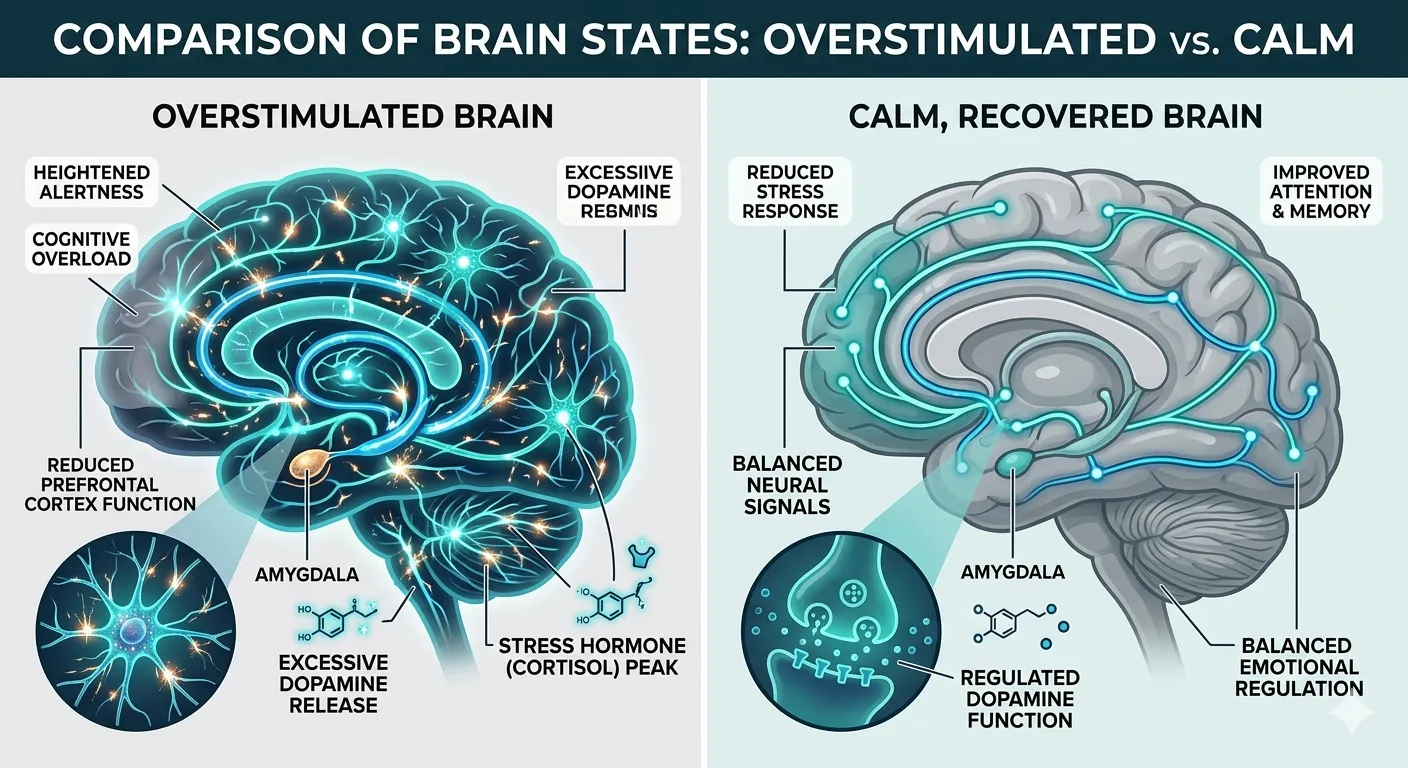
The Dopamine Addiction Cycle
Every time our smartphone notification chimes, our brain experiences a small dopamine release. According to research from UC Irvine, people check their digital devices every 6 minutes and 30 seconds on average, fragmenting our attention. The problem is that this frequent stimulation changes our brain's reward system, making us crave more and more digital input.
| Research Item | Findings | Source |
|---|---|---|
| Average Daily Screen Time | 7 hours 4 minutes (adults) | Nielsen 2025 |
| Attention Span | 12 seconds (2000) → 8 seconds (2025) | Microsoft Research |
| Nomophobia Symptoms | 79% of smartphone users experience | Journal of Behavioral Addictions |
| Sleep Quality Decline | 50% melatonin reduction with blue light | Harvard Medical School |
Nomophobia Phenomenon
Short for 'No Mobile Phone Phobia,' this refers to the anxiety felt when without a smartphone. According to a UK Post Office survey, 53% of smartphone users reported experiencing severe anxiety when their battery dies or there's no signal. This suggests we've moved beyond simple habit into the realm of dependency.
5 Core Benefits of Digital Detox ✨
Improved Focus
Just 3 days of digital detox can improve prefrontal cortex function and restore deep thinking abilities. University of Sussex research showed a 23% improvement in working memory after digital detox.
Better Sleep Quality
Stopping screen use 2 hours before bed normalizes melatonin production, increasing sleep efficiency by 35%. Experience deeper sleep and faster sleep onset.
Reduced Anxiety
University of Pennsylvania research found that after one week of social media detox, depression and anxiety decreased by 18% and 15% respectively.
Eye Health Recovery
Digital Eye Strain symptoms improve, along with reduced dry eyes and blurred vision.
Enhanced Real Relationships
As digital time decreases, face-to-face communication increases, promoting oxytocin release and improving relationship satisfaction.
The Power of Neuroplasticity
The fascinating fact is that our brains have remarkable recovery capabilities. Neuroscientists at Johns Hopkins School of Medicine scanned participants' brains with fMRI after 5 days of digital detox and found increased gray matter density and improved Default Mode Network connectivity. This indicates enhanced creativity and self-reflection abilities.
7-Day Digital Detox Implementation Guide 📅
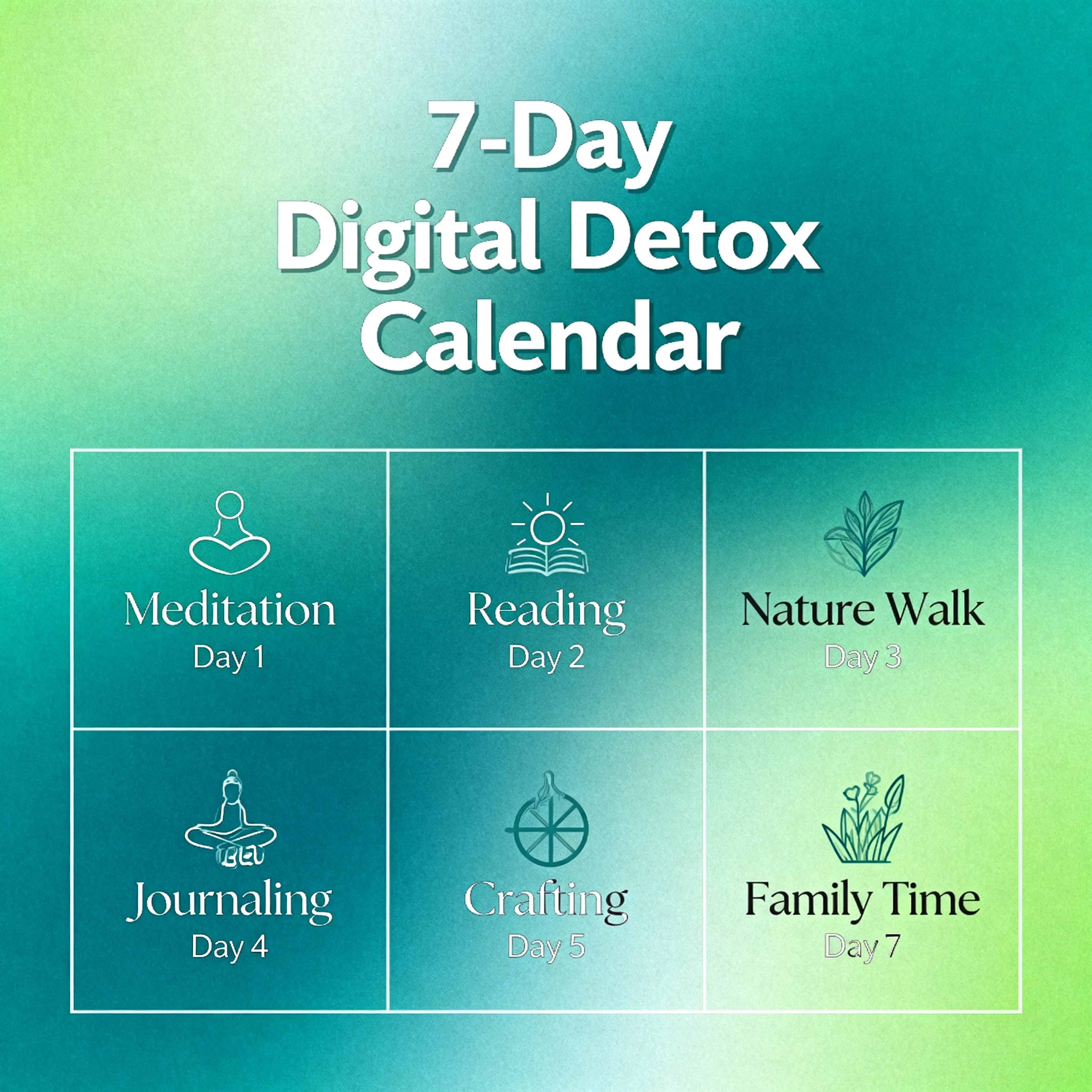
Day 1–2: Awareness
Goal: Understand your digital usage patterns
- Check actual usage time with Screen Time app
- Record which apps consume most time
- Observe when and why you reach for your phone (hunger? boredom? anxiety?)
- Turn off all notifications (except essential ones)
Day 3–4: Creating Space
Goal: Physical and temporal distance
- No smartphones in bedroom (use alarm clock)
- Meal times are complete No-Phone zones
- No screens for first hour after waking, 2 hours before bed
- Designate 'Digital-Free Zones' at home (e.g., study, dining table)
Day 5–6: Replacement Activities
Goal: Replace digital time with meaningful activities
- Read physical books (30+ minutes daily)
- Practice meditation or yoga
- Face-to-face meetings or phone calls with real people
- Creative hobbies (writing, drawing, playing instruments)
- Nature walks (without phone!)
Day 7: Integration & Planning
Goal: Design sustainable digital habits
- Record changes noticed over 7 days (sleep, mood, focus)
- Select 3 rules to maintain going forward
- Plan a weekly 'Digital Sabbath' (complete offline day)
- Keep only essential apps on home screen, hide others in folders
📊 Expected Changes After 7 Days
- ✅ Feeling more refreshed when waking up
- ✅ Ability to focus on one task for 30+ minutes
- ✅ Reduced time to fall asleep (avg. 15 min → 8 min)
- ✅ Decreased compulsive need to 'check phone'
- ✅ Restored awareness of surroundings and nature
Practical Digital Minimalism Strategies 🎯
Complete digital abstinence isn't realistic. Instead, intentional use is key. Here are practical strategies based on Cal Newport's 'Digital Minimalism' philosophy.
1. Establish Technology Operating Principles
- • Check work messages only 9AM–6PM
- • Social media: 2 times daily, 15 minutes each
- • YouTube for learning only — no unlimited entertainment scrolling
- • Email batch processing 3 times daily (morning, afternoon, evening)
2. Optimize App Environment
| Setting | Recommended | Effect |
|---|---|---|
| Screen Color | Grayscale | 60% reduction in visual appeal |
| Notifications | Calls & texts only | 80% reduction in distraction |
| Home Screen | 1 page, essential apps only | Reduced unconscious app opening |
| App Timer | Social media 30 min/day limit | 40% time reduction |
3. Digital Sabbath
Practice complete digital detox one day per week (e.g., Sunday). It may feel uncomfortable at first, but after 3–4 weeks, you'll actually look forward to it. Activities for this time:
- Face-to-face time with family and friends
- Reading, journaling
- Cooking, gardening
- Exercise, hiking
- Meditation, religious activities

Precautions & Success Tips ⚠️
- Sudden digital cessation can cause withdrawal symptoms (anxiety, restlessness, insomnia) in some people. Gradual reduction is recommended.
- If digital access is essential for work, focus on 'intentional use.'
- If you have depression or anxiety disorders, consult with a professional before starting.
5 Tips to Increase Success Rate
🤝 Find a Partner
Challenge digital detox with family or friends. Mutual encouragement and accountability triples success rates.
📝 Keep Records
Daily record your mood, sleep time, and focus level. Visual feedback provides lasting motivation.
🎁 Reward System
Give yourself small rewards for 3-day and 7-day milestones (books, a nice meal out, etc.).
🔄 Environmental Redesign
Keep smartphones out of sight. The principle 'out of sight, out of mind' really works.
💭 Mindset
Perfection isn't necessary. If you slip, simply start again. Progress matters more than perfection.
Frequently Asked Questions (FAQ)
Q: I need to check my smartphone constantly for work. What should I do?
A: Use 'batch processing.' Instead of checking every hour, check at set times every 2–3 hours for 10 minutes. Set up phone calls only for genuine emergencies.
Q: I'm afraid I'll return to old habits after digital detox.
A: This is natural. Apply the 80/20 rule — use intentionally 80% of the time and allow 20% flexibility. Perfectionism is usually what drives relapse.
Q: Do children need digital detox too?
A: Yes, especially important. The American Academy of Pediatrics recommends 1 hour daily for ages 2–5, and family-agreed rules for ages 6+. Parents modeling the behavior is the single most effective strategy.
Conclusion: Your Brain Can Recover 🌱
Digital devices are essential in modern life, but they shouldn't control us. The fact that you've read this article means you've already taken the first step toward change.
Remember:
- Your attention is your most valuable asset
- Your brain has remarkable recovery capabilities
- Small changes make big differences
- Consistency is more important than perfection
"Technology is a wonderful servant but a terrible master." – Christian Lous Lange
Start today. Put down your smartphone right now and look out the window. Your brain will thank you. 😊