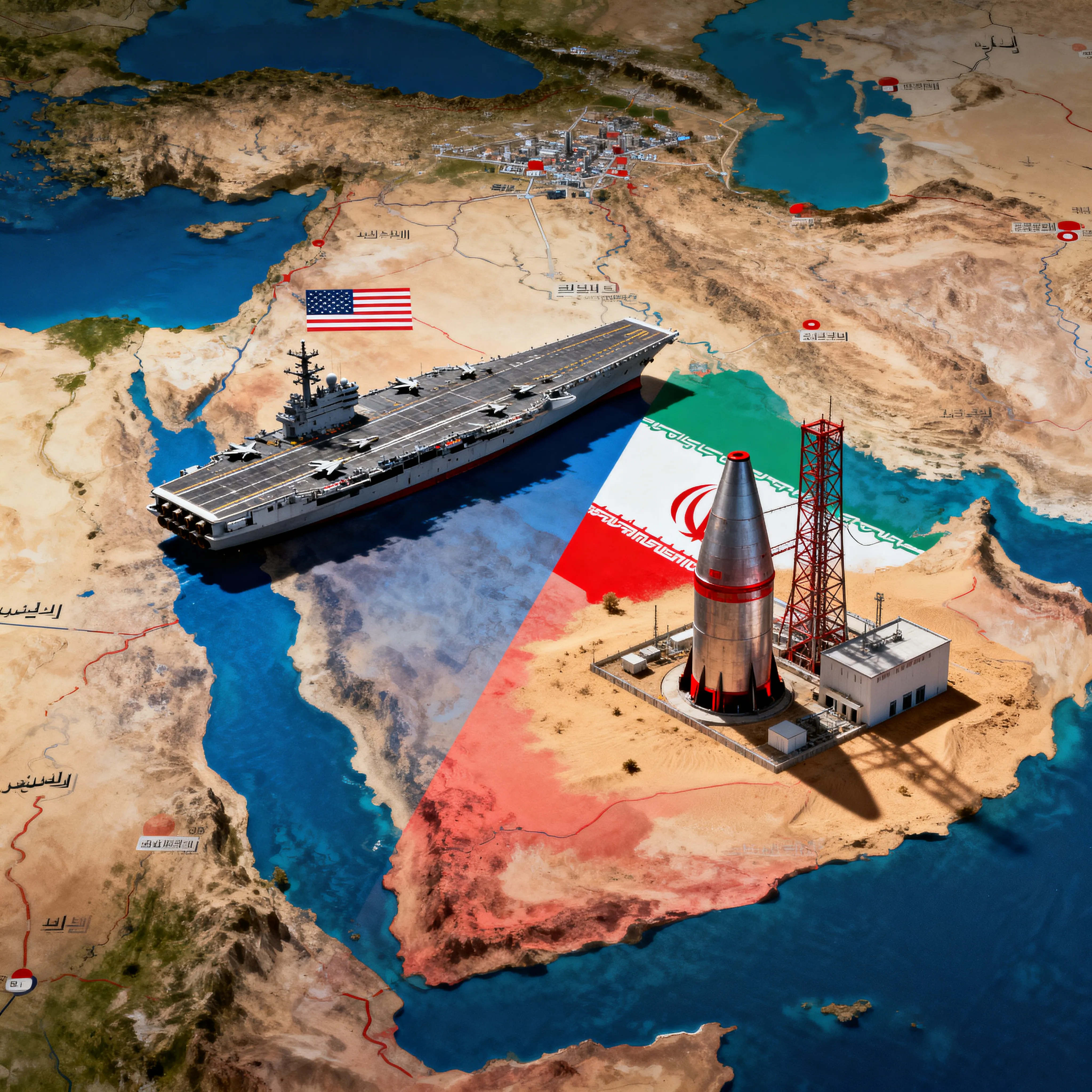
In June 2025, Israel's strikes on Iranian nuclear facilities and subsequent US intervention pushed the Middle East to the brink of all-out war. After nearly a year of negotiations, the US and Iran met again in Geneva in February 2026. Yet Trump's demand for "complete nuclear dismantling" and Khamenei's insistence on "non-negotiable enrichment rights" remain irreconcilable. In this article, we delve deep into the historical background of US-Iran relations, the sticking points of the latest nuclear negotiations, the current state of military tensions, and the future of Middle East geopolitics.
1. The Storm of 2025: The Outbreak and Escalation of the 12-Day War ⚔️
On April 12, 2025, the United States and Iran began indirect talks in Muscat, Oman. Facilitated by a letter from President Donald Trump to Iran's Supreme Leader Ali Khamenei, these negotiations aimed for a 60-day timeline. The US sent Special Envoy Steve Witkoff, while Iran dispatched Foreign Minister Abbas Araghchi, with Oman's Foreign Minister serving as mediator.
The first round was described as "constructive," leading to a second meeting in Rome on April 19. A third round on April 26 included expert-level talks. Iran proposed a three-phase nuclear agreement seeking gradual sanctions relief, while the US demanded cessation of uranium enrichment and transfer of high-enriched uranium stockpiles.
However, negotiations reached an impasse. On May 7, the Trump administration announced plans to rename the Persian Gulf as the "Arabian Gulf," sparking strong Iranian backlash. The fourth round on May 11 failed to resolve the core issue of uranium enrichment rights. The fifth round on May 23 also ended without breakthrough.
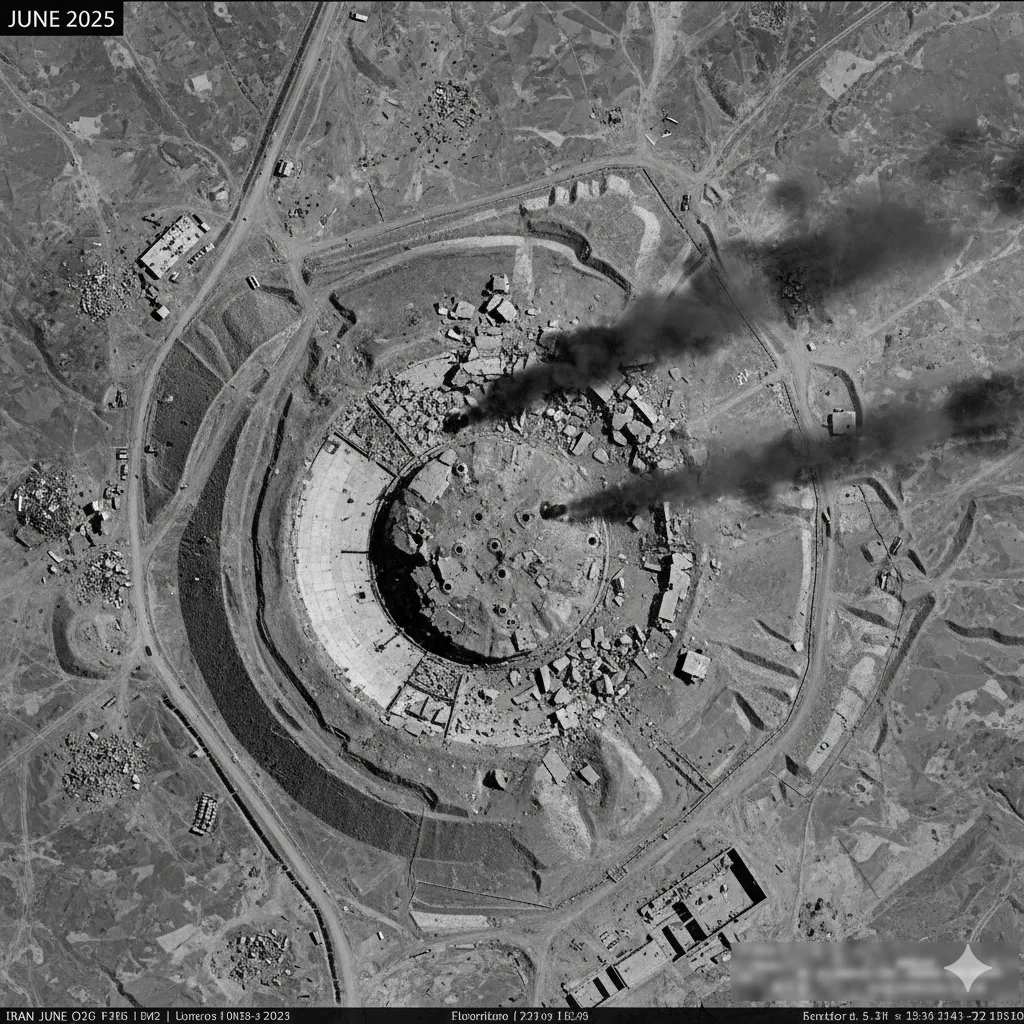
On June 13, 2025, Israel launched surprise strikes on Iranian nuclear facilities. Iran retaliated, sparking full-scale war. President Trump expressed support for Israel's military operation, and on June 21, the US directly struck Iran's Fordow nuclear facility. This 12-day conflict became one of the most intense military confrontations in Middle East history.
The war ended in Iran's crushing defeat. Iran's nuclear infrastructure suffered severe damage, and numerous high-ranking Revolutionary Guard commanders were killed. Yet Iran did not abandon its nuclear program. Instead, by early 2026, Iran began "fortifying" and rebuilding its nuclear facilities damaged in the US strikes. Research institutes report that Iran is concealing its entire facility in a "sarcophagus"-like structure, making external surveillance impossible.
"They seem to want to make a deal."
President Trump's statement on February 17, 2026, ahead of the Geneva talks. Yet his demands remained unchanged: complete dismantlement of Iran's nuclear program.
2. The 2026 Geneva Negotiations: Crossroads of Hope and Frustration 🕊️
On October 13, 2025, President Trump expressed optimism about reaching a deal with Iran. Foreign Minister Araghchi also responded positively, stating Iran would review a "fair and balanced" US proposal. Yet no substantive negotiation framework was presented.
On February 6, 2026, the US and Iran met again in Muscat, Oman. This negotiation included Special Envoy Witkoff, Jared Kushner, and CENTCOM Commander Brad Cooper for the US side. Iran was represented by Foreign Minister Araghchi and Ali Larijani, among others. Qatar, Egypt, and Turkey also joined mediation efforts.
February 6, 2026
First meeting in Muscat, Oman. Secretary Rubio expressed skepticism: "I don't know if we can make a deal with these guys"
February 13, 2026
Trump confirmed deployment of USS Gerald R. Ford to Middle East, stating it would be needed "if a deal isn't reached"
February 17, 2026
Second meeting held in Geneva. Araghchi mentioned progress on "guiding principles" but Khamenei rejected negotiation conditions
February 18, 2026
US State Department announced additional visa sanctions on 18 Iranian regime officials and telecom industry leaders for suppressing freedom of expression
The US assessed the Geneva talks as having made "progress but with many details still to discuss." Iran promised to bring concrete proposals to resolve differences in open positions within the next two weeks. Yet fundamental issues remained unresolved.
Key Point: The Negotiation Dilemma
The US demands complete dismantlement of Iran's nuclear program, while Iran maintains that uranium enrichment rights are non-negotiable. The atmosphere of distrust created by the June 2025 military strikes hangs over the entire negotiation process, further hardening both sides' red lines.
3. Core Issues of Nuclear Negotiations: The Rich yet Dangerous Structure of Conflict ⚛️
The core sticking points of US-Iran nuclear negotiations are clear. The US demands that Iran completely abandon uranium enrichment, transfer high-enriched uranium stockpiles to third countries, halt its ballistic missile program, and stop supporting regional proxy forces. Iran, meanwhile, insists on its right to peaceful nuclear use under the NPT, maintaining that enrichment is not subject to negotiation.
| Issue | US Position | Iranian Position |
|---|---|---|
| Uranium Enrichment | Complete dismantlement demanded. May not even allow 3.67% commercial enrichment agreed in 2015 JCPOA | Enrichment rights non-negotiable. 3.67% commercial enrichment is an NPT right |
| High-Enriched Uranium Stockpiles | Immediate transfer to third countries demanded | Domestic storage principle. Proposes phased processing |
| Ballistic Missiles | Must be included in negotiations | Red line. Not subject to negotiation |
| Regional Proxies | Demands cessation of support for Hamas, Houthis, Hezbollah | Expressed willingness for some diplomatic solutions but difficult to abandon military assets |
| Sanctions Relief | Gradual relief after agreement | Demands immediate and comprehensive sanctions removal |
The nuclear proposal presented by President Trump on May 16, 2025, centered on Iran abandoning enrichment, which Supreme Leader Khamenei rejected as "excessive and ridiculous." He denounced Trump as lying about wanting peace and declared the proposal not worth responding to.
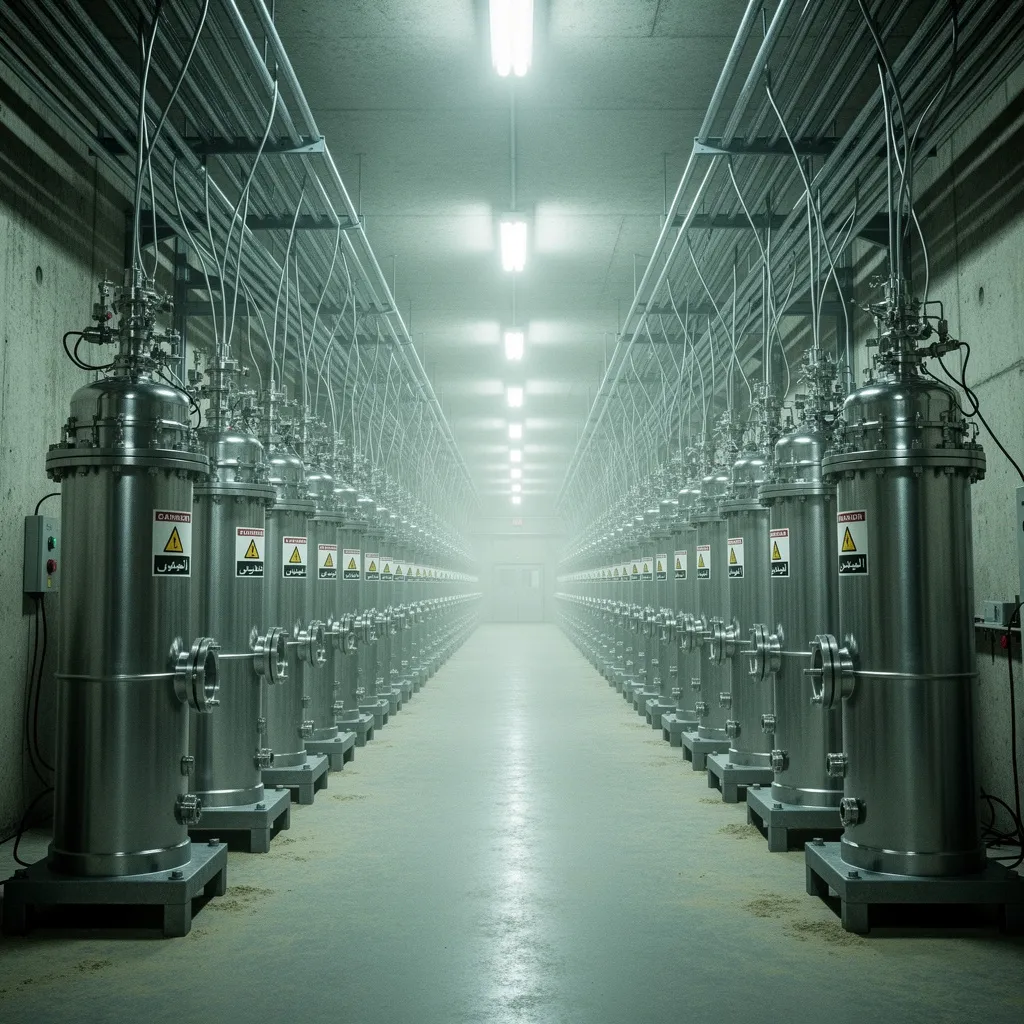
On June 12, 2025, the IAEA announced for the first time that Iran was violating its nuclear obligations, stating that Iran had failed to fully answer questions about undeclared nuclear materials and activities. Iran dismissed the resolution as politically motivated and announced plans to build new enrichment facilities and install advanced centrifuges.
"The United States could be hit so hard that it could not get back up."
– Ali Khamenei, Supreme Leader of Iran, February 2026
4. Escalating Military Tensions: 3 Aircraft Carriers and the Strait of Hormuz 🚢
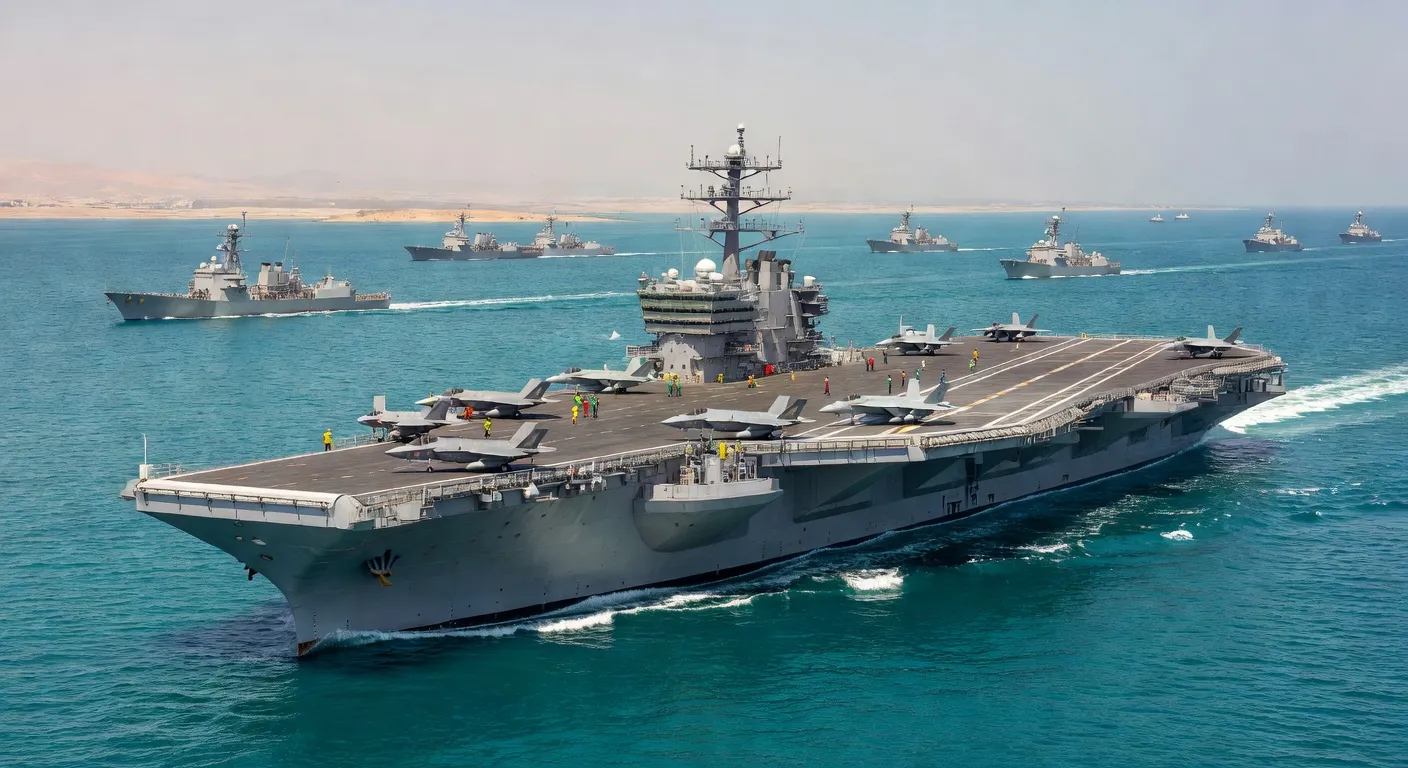
While negotiations proceed, the US has deployed unprecedented military force to the Middle East. The USS Abraham Lincoln is operating in the Arabian Sea, where F-35 fighters recently shot down an Iranian Shahed-139 drone. The USS Gerald R. Ford is heading to the Middle East, and the USS George H.W. Bush is also preparing for emergency deployment.
The US is deploying Patriot and THAAD missile defense systems at bases in Qatar and Saudi Arabia. RAF Lakenheath in the UK hosts an F-35A Lightning II squadron, while Muwaffaq Salti Air Base in Jordan houses F-15E Strike Eagles and A-10 Thunderbolts.
A senior commander of Iran's Revolutionary Guard Navy declared readiness to blockade the Strait of Hormuz if ordered. This strategic waterway sees one-fifth of world oil supply pass through it; a blockade could shock global energy markets.
Iran is also preparing militarily. China's YLC-8B UHF-band 3D long-range stealth surveillance radar is reported to have been deployed in Iran, and Iran is rebuilding its nuclear facilities damaged in the strikes into "fortresses." Research institutes analyze that Iran is concealing its facilities in "sarcophagus" form to block external surveillance.
5. International Response and Geopolitical Implications 🌍
The US-Iran conflict is not simply a bilateral issue. It affects the entire Middle East security architecture, world energy markets, and the future of the nuclear non-proliferation regime.
France has warned that if no agreement is reached on Iran's nuclear program, it is prepared to trigger the JCPOA snapback mechanism to restore UN sanctions. The UK and Germany concur. However, Foreign Minister Araghchi has repeatedly warned that snapback sanctions would seriously harm negotiations.
Russia has promised to fund the construction of Iran's nuclear reactors, and China, Russia, and Iran held a joint meeting on Iran's nuclear program with the IAEA. China is expanding its role as Iran's key nuclear energy supplier and regional strategic partner.
The International Community's Dilemma
European nations want to restore the nuclear deal but find themselves in a difficult position between the US hardline stance and Iran's uncooperative attitude. Meanwhile, China and Russia are seeking to expand their influence as US influence in the Middle East wanes.
On February 18, 2026, the US State Department announced additional visa sanctions on 18 Iranian regime officials and telecom industry leaders for violence and suppression against peaceful protesters during nationwide demonstrations in December 2025 and January 2026. This brings the total number of individuals sanctioned under this policy to 58.
6. Perspectives from Communities and Experts 💬
Discussions about US-Iran relations on online communities like Reddit are heated. Particularly in AMA (Ask Me Anything) sessions with non-proliferation experts, the complex aspects of negotiations have been explored.
"The JCPOA was not a perfect document. Neither side got everything they wanted, but both sides' red lines were largely respected. This means there is wiggle room. Ultimately, if the deal is properly implemented and both sides get what they signed up for, they'll be in a better position than when they started."
– Ariane Tabatabai, Senior Fellow at CSIS Non-Proliferation Program
Experts warn of the dangers of unilateral US withdrawal from the agreement. Sharon Squassoni noted that "there is no better deal, and if the US withdraws, it won't find partners for a new deal." She also expressed concern that unilateral US withdrawal would severely damage American credibility and cause the US to lose initiative in future similar negotiations.
Opinions within Iran on negotiations are also divided. Hardliners are criticizing the negotiations, opposing the government's proposal to dilute the remaining 60% enriched uranium instead of demanding comprehensive sanctions relief. Meanwhile, voices within Iran are appealing to Trump and Western governments not to negotiate with the Iranian government but to support the "national struggle for freedom and democracy."
Among some Iranian dissidents and social media users, speculation circulates that the US Embassy in Tehran, occupied since 1979, could be returned to the US. This is seen as a symbolic gesture if negotiations succeed.
7. Future Outlook: War or Peace? 🔮
As of February 20, 2026, US-Iran relations stand on the thinnest boundary between war and peace. Despite "progress" in the Geneva talks, the red lines of both sides remain irreconcilable.
President Trump has optimistically predicted that negotiations "will be resolved very quickly next month," but Vice President JD Vance expressed diplomatic frustration that "the Supreme Leader is not participating in negotiations." Secretary Rubio also showed skepticism, stating "I don't know if we can make a deal with these guys."
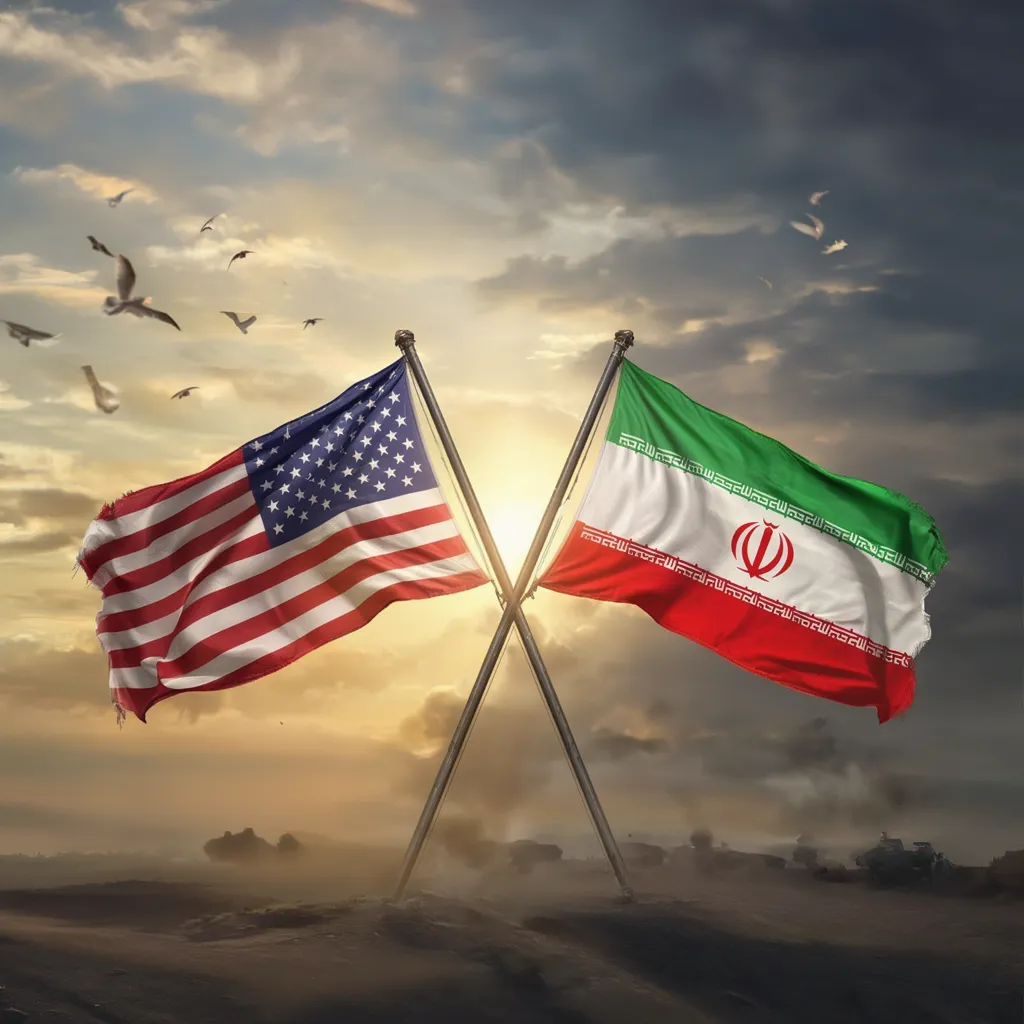
Experts present three scenarios:
| Scenario | Likelihood | Description |
|---|---|---|
| Limited Nuclear Deal | Medium | Iran temporarily maintains 3.67% commercial enrichment in exchange for partial sanctions relief. Missile and proxy issues deferred to separate negotiations |
| Negotiation Collapse and Limited Military Action | High | Failure to reach agreement followed by limited US strikes, Iranian retaliation, but avoiding full-scale war |
| Full-Scale War | Low but Dangerous | Regional all-out war caused by Strait of Hormuz blockade or large-scale US strikes |
An Axios analysis on February 18, 2026, assessed that "with no breakthrough signs in negotiations, war appears to be the most likely option." Yet history often brings unexpected turns. The 2015 JCPOA was itself an example of a seemingly impossible negotiation that succeeded.
"Negotiations are merely a delay until the Islamic state is established."
– Ali Khamenei, Supreme Leader of Iran, message to supporters
The future of US-Iran relations is not simply a technical nuclear issue. It is a complex political problem entangled with 45 years of hostility, regional power struggles, and deep mutual distrust. The coming weeks of 2026 will determine the fate of the Middle East.