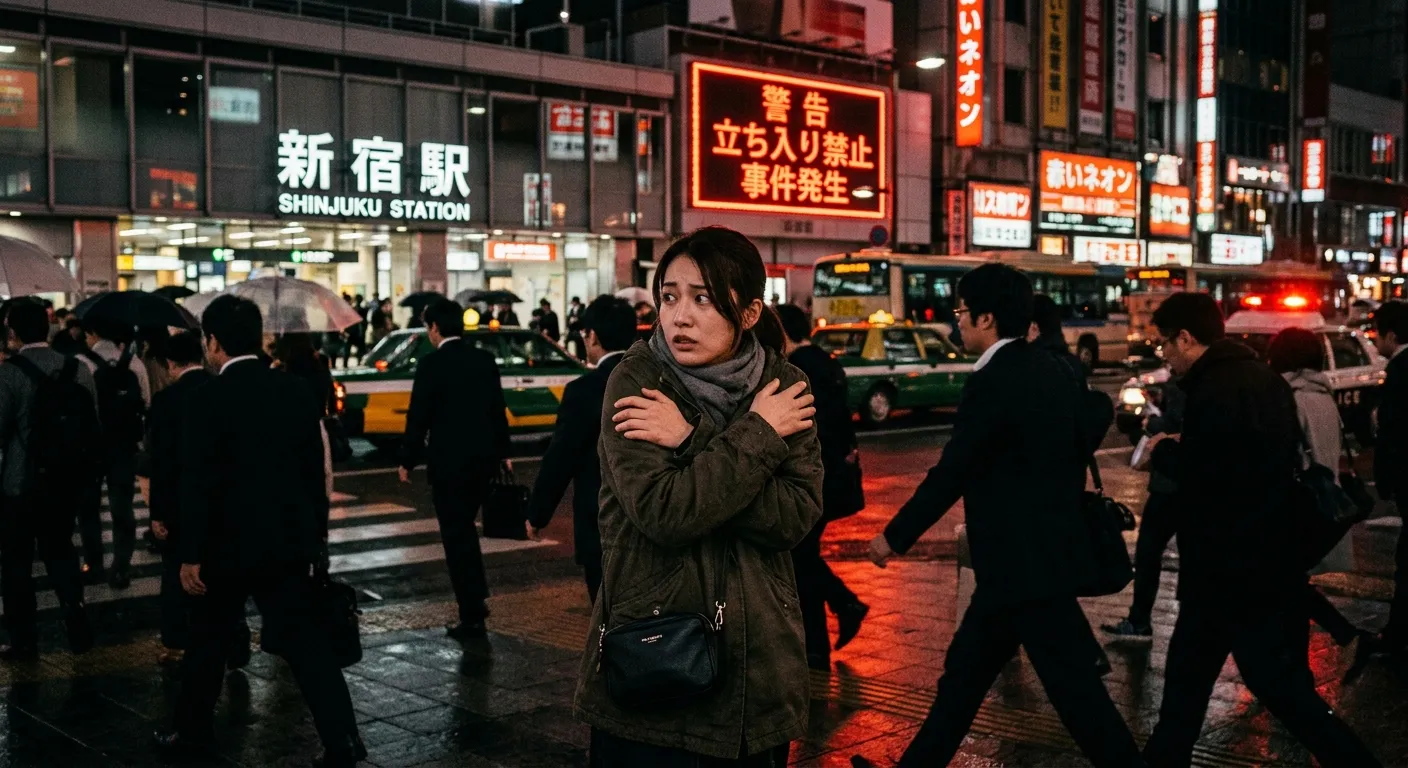
🚨 "Someone intentionally slammed into my shoulder. It was deliberate." The 'shoulder assault' crime targeting women and children is surging across Japan. What started as online mockery has evolved into indiscriminate terror filled with hatred and discrimination. Korean tourists are also becoming victims. We uncover the reality of this threat.
1. The Rise of Bukkari: When 'Shoulder Checks' Became a Social Crisis 🎯
In the fall of 2024, a new term emerged from Japan's infamous internet forum '5channel (5ch)' that would soon spark nationwide terror. The word was 'Bukkari' (肩ぶつかり) — deliberately bumping into someone's shoulder. What began as internet slang quickly evolved into a serious social problem shaking Japanese society.
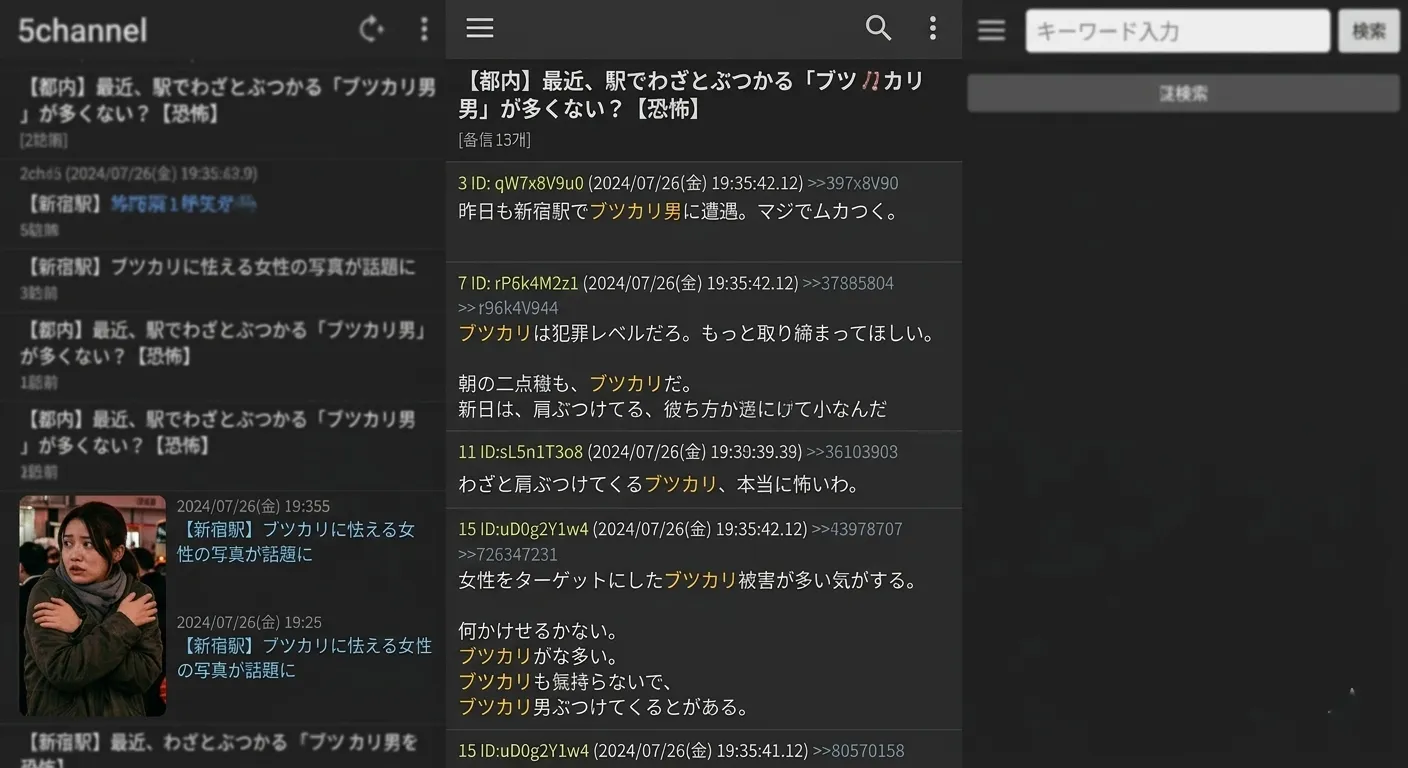
The defining characteristic of Bukkari is its clear targeting. Perpetrators specifically choose those who cannot fight back — short women, children, the elderly. This is not accidental collision but calculated 'bullying of the weak.' So-called 'hunting' occurs in busy downtown areas, subway stations, and shopping malls in major cities like Tokyo, Osaka, and Nagoya.
⚡ Three Characteristics of Bukkari
- Selective Targeting: Attacking only women, children, and the vulnerable
- Intentionality: Clear intent for physical collision
- Flight: Immediate departure from the scene, avoiding responsibility
Japanese media has labeled this phenomenon a 'public safety crisis'. Particularly in 2025, both the frequency and severity of crimes have increased, with cases going beyond simple collision to include verbal abuse and additional violence after the shoulder bump. 'Shoulder checks' have become an essential risk factor for travel to Japan.
2. Why Only Women and Children? Psychological Analysis of the Crime 🧠
To understand Bukkari, we must examine the psychological motivations of perpetrators. Criminologists classify this as 'Weakness-Oriented Aggression Expression' — a cowardly crime type where aggressors only express violence toward those weaker than themselves.
Particularly, young men's social frustration from Japan's 'Lost 30 Years' and the expansion of non-regular employment is cited as a background factor. This is a 'Minimum Resistance Path' attack pattern where perpetrators transfer their incompetence onto women and children.
"Among Japanese men, the perception that 'it's okay because women are weaker than men' is spreading. This isn't just crime—it's an expression of structural hatred." — Reddit r/japanlife, February 2025
Professor Takashi Sawamura, a renowned Japanese sociologist, has termed this phenomenon 'Sociopathic Routinization' — where individuals who have lost social empathy consume others' pain as 'entertainment' or 'stress relief' in daily life. This is not merely an individual problem but an indicator of Japan's overall mental health crisis.
3. The 2024-2025 Surge: Fear by the Numbers 📊
The reality of Bukkari crime is most clearly shown through statistics. According to data from Japan's National Police Agency and regional police headquarters, a sharp increase is evident from 2024 to 2025.
2024 Increase Rate
(of all reports)
(ages 10-19)
(Extremely low investigation results)
According to the Tokyo Metropolitan Police Department's 2024 Public Safety Report, 'physical collision' related reports surged 340% year-over-year. The increase was particularly concentrated in areas with high foreign tourist traffic such as Shinjuku, Shibuya, and Ikebukuro.
| Area | 2023 Reports | 2024 Reports | Increase | Risk Level |
|---|---|---|---|---|
| Shinjuku | 142 | 487 | +243% | 🔴 Highest |
| Shibuya | 98 | 356 | +263% | 🔴 Highest |
| Ikebukuro | 76 | 298 | +292% | 🟠 High |
| Osaka Namba | 54 | 201 | +272% | 🟠 High |
| Kyoto Station Area | 23 | 89 | +287% | 🟡 Caution |
Most shocking is the arrest rate. Over 90% of all reports are closed as 'suspect unknown,' with very few resulting in actual prosecution. Perpetrators immediately flee the scene and commit crimes where CCTV is absent. This environment of 'perfect crime' is accelerating the spread of Bukkari.
Key Point
Bukkari is a crime without arrest. Even if victimized, finding the perpetrator is difficult, and even if found, most result in minor fines for 'simple injury.' Prevention is the only solution.
4. Korean Tourist Victims: We're Targets Too 🇰🇷
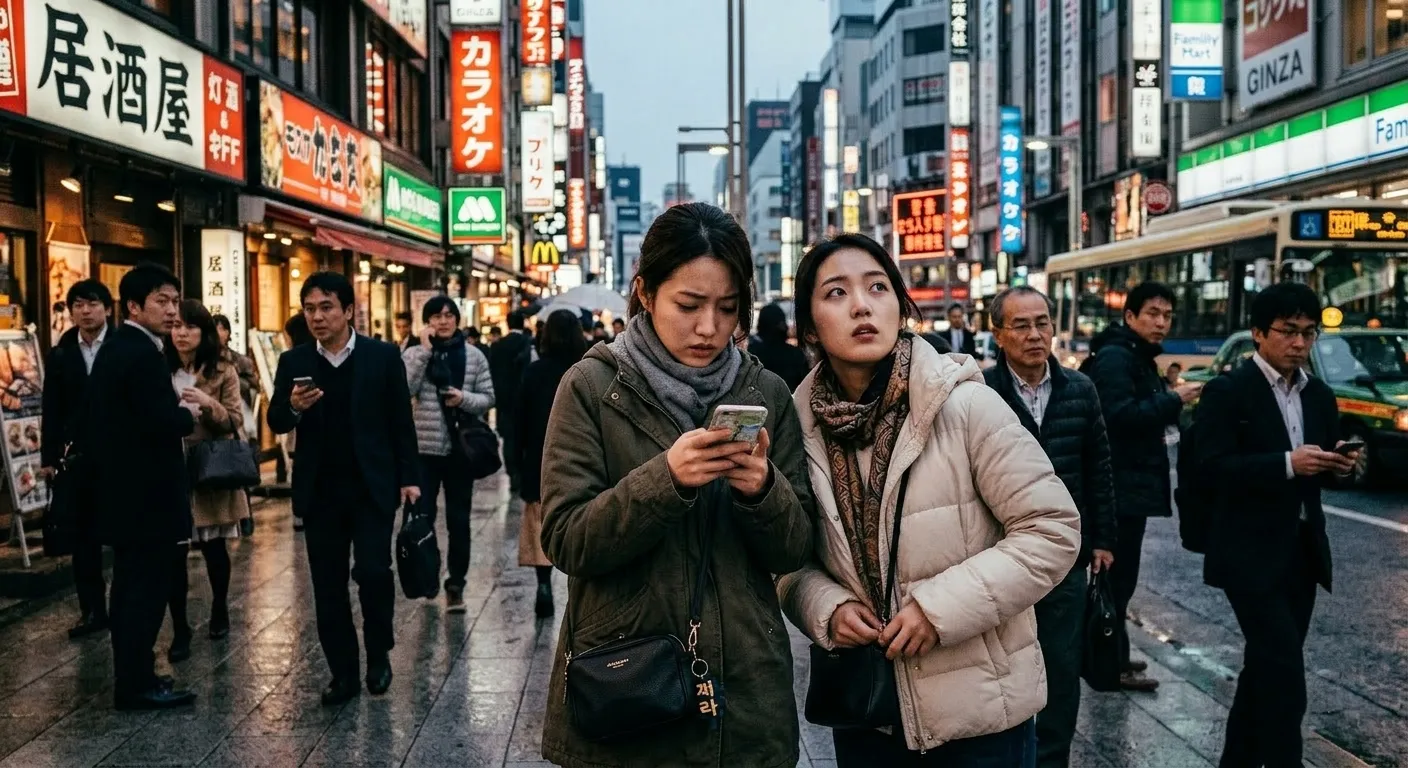
In 2024, approximately 8.5 million Korean tourists visited Japan. This recovered to pre-COVID levels, making Japan once again the 'closest overseas destination' for Koreans. But as the Bukkari threat grows, it may become the 'most dangerous destination.'
Major Korean travel communities and social media are seeing a surge in reports of Bukkari victimization after Japan visits. Women in their 20s and 30s are the primary targets, with some reporting additional sexual harassment or physical contact following the shoulder collision.
"A man slammed into my shoulder like a body check while I was shopping in Shibuya, Tokyo. It was clearly intentional, but when I turned around, he was already gone. I reported it to police but they said there was no CCTV in that area... Now I only go out with my boyfriend." — Naver Travel Cafe 'Japan Travel', January 2025
Korean victims particularly struggle with language barriers and complex procedures. Reporting at Japanese police stations is much more cumbersome than in Korea, with limited translation support and lengthy processing times. Many victims give up reporting because it's 'too bothersome' or knowing it 'won't be resolved during their trip.'
📱 Essential Apps for Korean Tourists
- Japan Safety: Official Japanese government disaster and safety info app
- Google Translate: Real-time conversation translation (essential for police reports)
- MySOS: Immigration procedures and emergency contact management
- Embassy Contact: +81-3-3452-7611 (Tokyo)
Japanese Korean-language tourism sites and social media channels have begun including 'Shoulder Check Warnings' as basic guidance. The Japan National Tourism Organization has also made 'personal safety' a core message of its 'Safe Travel' campaign since 2025, but substantive public safety improvements remain slow.
5. Government Response: Is It Enough? 🏛️
As Bukkari crime spread as a social problem, the Japanese government and police have responded. However, experts and citizens agree the response is 'insufficient.'
Current Response Measures
- Enhanced Patrols: Increased police patrols around major stations (from April 2024)
- CCTV Expansion: Additional surveillance cameras in high-crime areas
- Simplified Reporting: Digital reporting system for '110' emergency dial
- Legal Reform Review: Discussion of stricter penalties for 'simple injury' (in Diet 2025)
However, these measures fail to address fundamental problems. Particularly, the inadequacy of legal punishment encourages repeat offenses. Under current Japanese criminal law, 'shoulder collision' alone rarely constitutes assault, and even with proven injury, most cases result in fines under 100,000 yen (approx. $670) for minor penalties.
"Japanese police close most reports citing 'lack of evidence.' Without CCTV, investigations don't proceed based on victim statements alone. This is a systemic failure." — Reddit r/Tokyo, February 2025
In early 2025, the Japanese civic group 'Creating Safe Streets' launched a national petition demanding special legislation for Bukkari crimes. The petition gathered 150,000 signatures in four months but remains at the discussion stage in the Diet. Legal reform cannot keep pace with the speed of crime expansion.
⚖️ The Vicious Cycle of Legal Limitations
Problems with Current Japanese Law:
- Physical collision alone doesn't meet assault crime requirements
- Even with injury proof, fines are the norm
- No separate regulations for repeat offenders
- Inadequate translation and legal support for foreign victims
These legal loopholes foster perpetrators' 'low-risk perception.'
6. Survival Guide: Essential Safety Rules for Japan Travel 🛡️
Prevention is the best and only strategy against Bukkari crime. Here's a practical safety guide for Koreans visiting or living in Japan.
🎯 Situational Response Strategies
🚨 If Victimized: Immediate Response Checklist
- Move to a safe location immediately
Enter a nearby store or police station as the perpetrator may follow. - Secure evidence
Remember the perpetrator's appearance (height, build, clothing color, features). Check for nearby CCTV. - Report immediately (110)
Japan's emergency number is 110. Say "Katafuku saremashita" (I was shoulder-checked). - Contact Korean Embassy
Contact immediately if you need ID assistance or legal support. - Obtain medical records
Get a diagnosis from a hospital if injured. Essential for legal response.
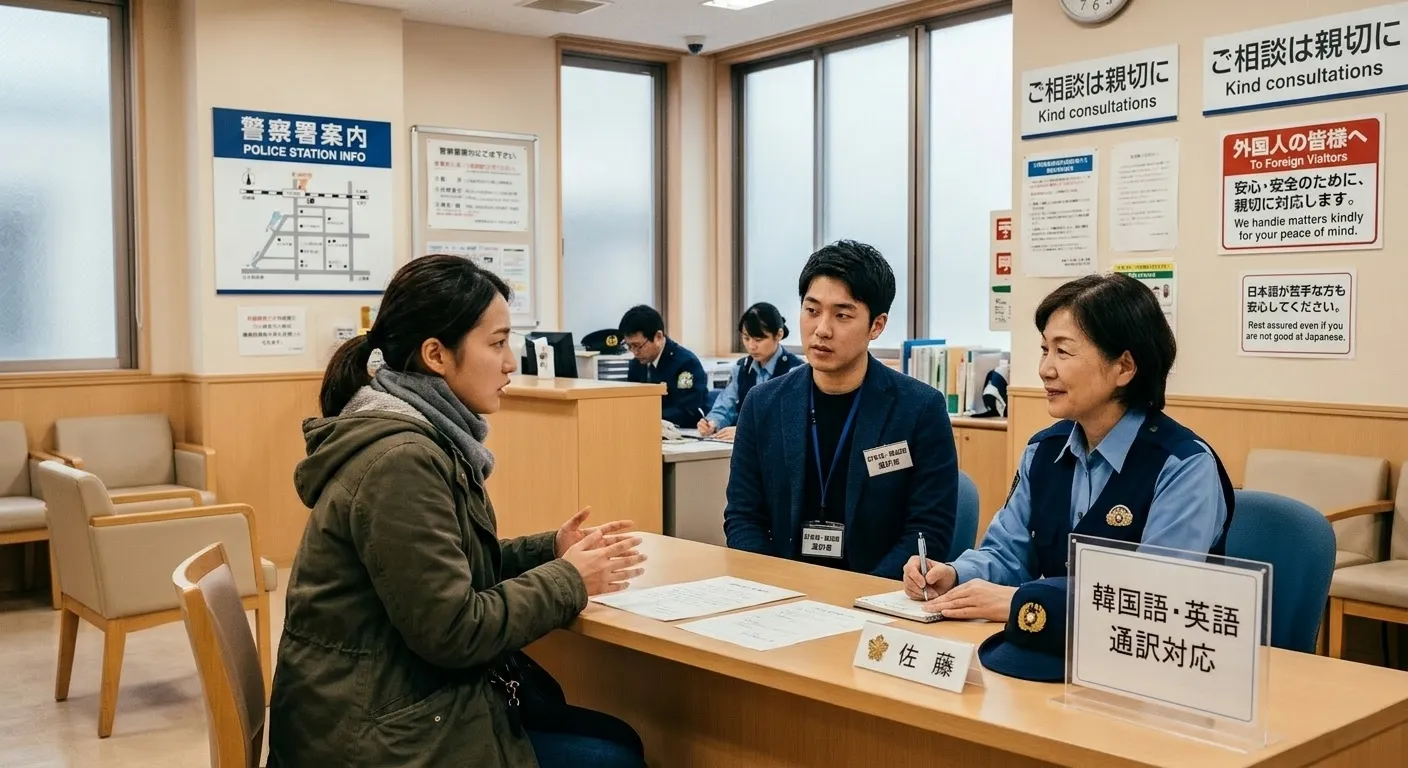
When reporting, emphasize 'intentionality' is crucial. Explain specifically that "the shoulder collision was intentional and the perpetrator fled afterward," not simply "we collided." If Japanese is difficult, use Google Translate's real-time conversation feature or ask for help from those around you.
7. Conclusion: Recommendations for Safe Travel ✈️
Bukkari represents a crack in Japan's 'safety myth.' Long considered one of the 'world's safest countries,' Japan now faces a new type of urban danger. This may be a harbinger of a global 'urban safety' crisis, not just Japan's problem.
Korean tourists must no longer move under the naive assumption that 'nothing will happen' when visiting Japan. Preventive vigilance and Situational Awareness have become essential virtues of modern travel.
Until the Japanese government addresses Bukkari crime through legal and institutional improvements, we must protect our own safety. We hope this article serves as a small guide for safe travel for all Koreans visiting Japan.
"Japan is still a beautiful country. But beauty doesn't guarantee safety. Be a wise traveler and secure both enjoyment and safety." — Reddit r/JapanTravelTips, March 2025
🌸 Safe travel creates true memories
— Gardenee Blog