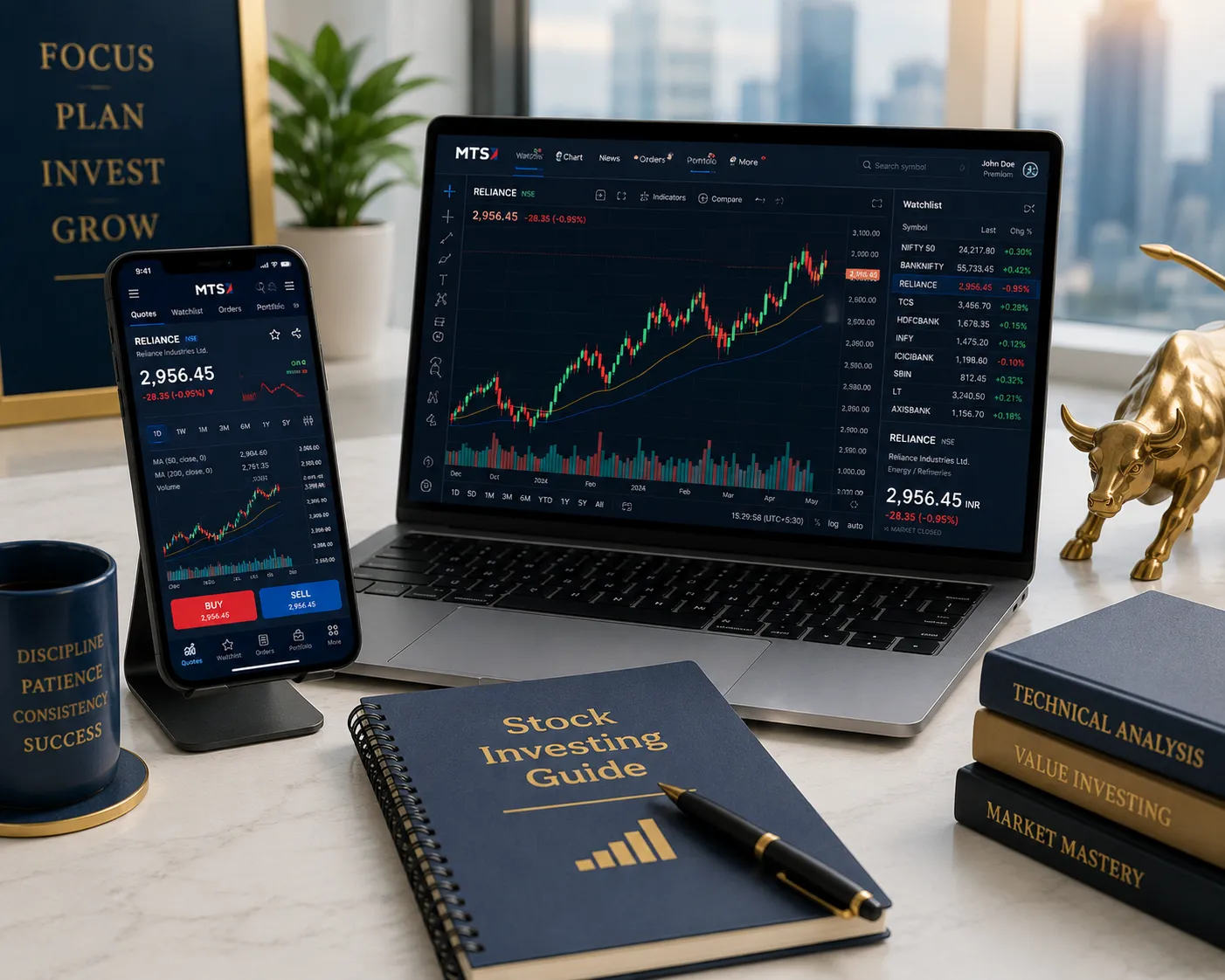
Every day the financial news throws terms at you — "KOSPI surges past 2,900", "institutional net buying", "P/E ratio undervalued", "golden cross signal" — and if you have no idea what any of it means, you are absolutely not alone. The truth is, the barrier to stock investing isn't money or intelligence. It's jargon. And once you crack the language, everything else becomes much more manageable.
This guide was written for people who are brand-new to stock investing — or who've tried before but got lost in the terminology. Instead of dry textbook definitions, we focus on the words you'll actually encounter when you open a brokerage app for the first time. And we go beyond just definitions: we'll also walk through what a smart beginner investing strategy looks like in 2026, given current market conditions.
📌 Disclaimer: This article is for educational purposes only and does not constitute financial advice or a recommendation to buy or sell any specific security. All investment decisions involve risk and are your sole responsibility.
1️⃣ Stock Market Basics — What It Means to Own a Share
Before you place your first trade, it helps to understand what you're actually doing when you buy a stock. The mechanics are simple once you understand the core concept.
📌 What Is a Stock?
A stock is a certificate of ownership in a company. When a company needs capital to grow, it can sell pieces of itself to the public. If a company divides itself into 1 million shares and you buy 10 of them, you own 0.001% of that company. When the company prospers, your shares appreciate in value. When it pays dividends, you receive a portion of the profits. When it struggles, your shares may lose value. That's the fundamental logic of stock investing.
If you're investing in Korea, open an ISA (Individual Savings Account / 개인종합자산관리계좌) before you start trading. It gives you a tax-free allowance of up to ₩2M (general type) or ₩4M (low-income type) annually on investment gains from stocks, ETFs, and funds. Always check current tax rules with your brokerage.
2️⃣ Essential Trading Terms — Buy, Sell, Quotes & Orders
These are the words you'll see the moment you open a brokerage app. Mastering them means you can place your first trade with confidence.
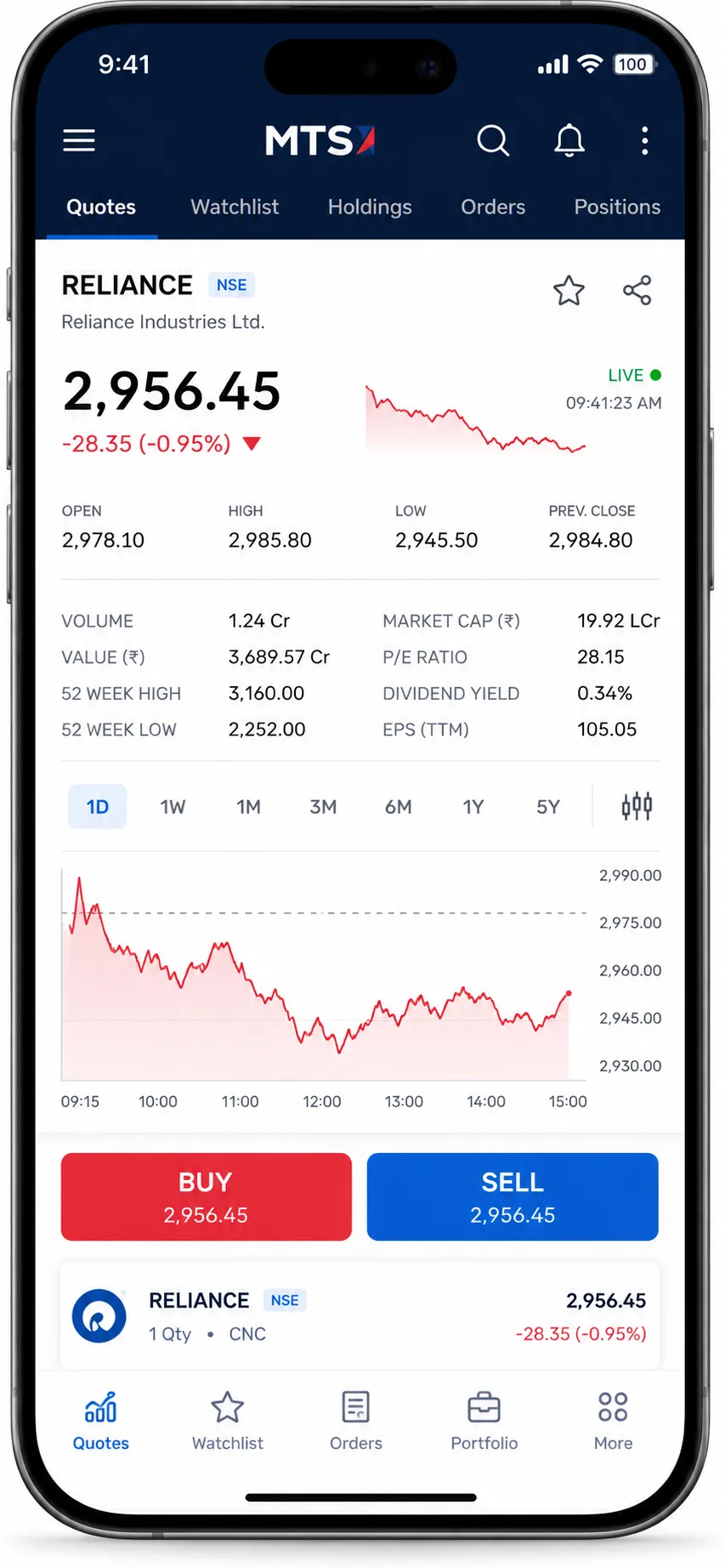
| Term | Korean | Meaning | Beginner Note |
|---|---|---|---|
| Buy (Long) | 매수 (Maesu) | Purchasing shares | Red button in most Korean apps |
| Sell | 매도 (Maedo) | Selling shares you own | Blue button in most Korean apps |
| Market Order | 시장가 주문 | Execute immediately at current market price | Fast fill, but no price guarantee |
| Limit Order | 지정가 주문 | Set your own price; only fills at that price or better | Price control, but may not fill |
| Order Book / Quotes | 호가창 (Hogachang) | List of all pending buy and sell orders at each price | Shows supply & demand in real time |
| Execution / Fill | 체결 (Cheolgyeol) | Order successfully completed | You'll get a notification when filled |
| Pending Order | 미체결 (Micheolgyeol) | Order placed but not yet executed | Common with limit orders when price isn't reached |
| Opening Price | 시가 (Siga) | First trade price of the day (9:00 AM KST) | Used to identify "gap up" or "gap down" opens |
| Closing Price | 종가 (Jongga) | Last trade price of the day (3:30 PM KST) | Becomes tomorrow's reference price |
| High / Low | 고가 / 저가 | Day's highest / lowest traded price | Shown as the upper/lower wicks on a candlestick |
| Upper / Lower Limit | 상한가 / 하한가 | Korean market rule: max ±30% move per day | Doesn't exist in US markets — they can fall 80%+ in a day |
| Volume | 거래량 (Georaeryang) | Number of shares traded during the day | Spike in volume = strong market interest |
| Market Cap | 시가총액 | Share price × total shares outstanding | The most basic measure of a company's total value |
※ Korean market hours: weekdays 9:00 AM – 3:30 PM KST. Pre-market and after-hours sessions also available.
"The four most dangerous words in investing are: 'This time it's different.'" – Sir John Templeton, legendary investor
Use a market order when speed matters and you don't care about a small price difference. Use a limit order when you have a specific target price and can wait. For beginners, practicing with limit orders first helps you develop price discipline — and prevents the surprise of "why did my order fill at a price I didn't expect?" (known as slippage).
3️⃣ Market Indices — KOSPI, NASDAQ & S&P 500 Explained
When the news says "markets fell today," they're talking about indices. An index is a basket of stocks used to measure overall market health. Here are the ones you'll hear most often.
Why Do Indices Matter for Your Portfolio?
If the KOSPI drops 5% on a given day, most Korean stocks will fall too. If your stock also falls 5%, that's not necessarily your stock's fault — it's market-wide selling. But if your stock falls 15% while KOSPI is only down 3%, that means something specific is wrong with that company. Understanding index moves helps you separate "the market is down" from "this particular stock is in trouble." Always compare your holdings against the relevant benchmark.
4️⃣ Fundamental Analysis — P/E, P/B, ROE & Dividends
Fundamental analysis is about evaluating whether a stock is cheap, fairly priced, or expensive — and whether the underlying company is financially healthy. These six ratios are the foundation of that analysis.
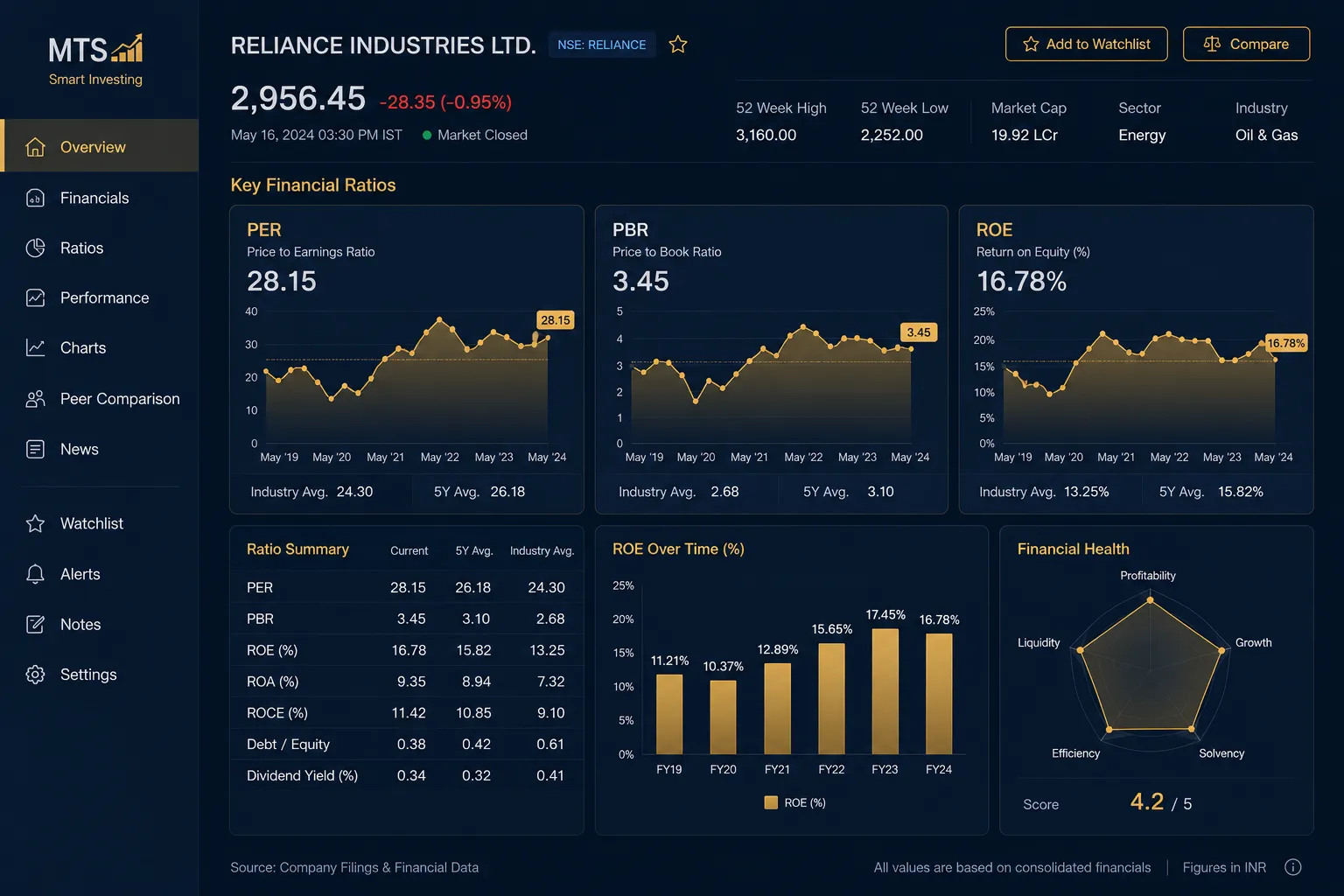
| Ratio | Formula | What It Measures | Good Signal | Watch Out For |
|---|---|---|---|---|
| P/E Ratio (Price-to-Earnings) |
Share Price ÷ EPS | How much you pay per dollar of earnings | Lower P/E than industry peers | Compare within the same industry. Growth stocks can have P/E of 50–100+ |
| P/B Ratio (Price-to-Book) |
Share Price ÷ BPS | Market value vs. accounting book value | P/B below 1 = potentially undervalued | Low P/B can mean cheap — or a struggling company |
| EPS (Earnings Per Share) |
Net Income ÷ Shares Outstanding | Profit generated per share | Consistently growing EPS year over year | Watch for one-time gains distorting EPS |
| ROE (Return on Equity) |
Net Income ÷ Equity × 100 | How efficiently a company uses shareholder capital | Generally >15% is considered strong | High debt can inflate ROE artificially |
| Dividend Yield | Annual Dividend ÷ Share Price × 100 | Income return from dividends alone | Higher than savings interest rate | Unsustainably high yields may signal dividend cuts ahead |
| Debt-to-Equity | Total Debt ÷ Equity × 100 | Financial leverage and solvency risk | Below 200% for most non-financial companies | Banks and construction firms naturally carry higher D/E |
🇰🇷 Korea Discount & the Valuation Uplift Program
One striking fact about Korean stocks: the average P/B ratio of the KOSPI is around 0.9–1.1x — dramatically lower than the S&P 500's 4x+. This structural gap is called the "Korea Discount," attributed to historically low shareholder returns, complex conglomerate (chaebol) governance, and geopolitical risk. The Korean government launched a "Corporate Value-Up Program" in 2024–2026 to pressure low-P/B companies into increasing dividends and buybacks. Financial stocks and automakers are among the expected beneficiaries.
A low P/E doesn't automatically mean a stock is a bargain. It could mean the market expects earnings to fall — so a low P/E is actually a high P/E on future earnings. Always combine P/E with P/B, ROE, growth outlook, industry context, and management quality before making a judgment. No single ratio is sufficient on its own.
5️⃣ Technical Analysis Intro — Candlesticks, MAs, RSI & MACD
Technical analysis uses historical price and volume data to forecast future price movements. It won't make you a perfect trader, but it helps you identify when to enter or exit a position — a useful complement to fundamental analysis.
🟢 Green / Red Bullish Candle: Close > Open → price rose during the period
🔴 Red / Black Bearish Candle: Close < Open → price fell during the period
The thin lines above and below the body are called wicks (shadows): upper wick = high; lower wick = low. A long upper wick signals selling pressure at higher levels; a long lower wick signals buying support at lower levels.
• 5-day MA: Short-term trend (this week's average)
• 20-day MA: Medium-term trend (monthly average)
• 60-day MA: Intermediate trend (quarterly)
• 200-day MA: Long-term trend (widely watched by institutional traders)
When price is above its MA: uptrend. When below: downtrend.
Death Cross: Short-term MA crosses below a long-term MA → bearish signal, potential sell opportunity
The most watched is when the 50-day MA crosses the 200-day MA. Important caveat: these signals often lag actual price moves. Use them alongside other indicators, not in isolation.
• RSI > 70: Overbought → possible near-term pullback
• RSI < 30: Oversold → possible rebound
• RSI ~50: Neutral
RSI divergence (price making new highs but RSI failing to do so) is considered one of the more reliable reversal signals. Never use RSI alone; check it alongside price action and volume.
MACD (Moving Average Convergence Divergence): Tracks the relationship between two exponential moving averages. When the MACD line crosses above the signal line → buy signal. When it crosses below → sell signal. The histogram shows the gap between the two lines.
Resistance: A price level where selling pressure is strong enough to stop further advance. The price tends to "stall" at resistance.
When a support level breaks downward, it can become new resistance. When a resistance level is broken upward, it can become new support. These levels often correspond to round numbers, prior highs/lows, and moving averages.
No technical indicator is right 100% of the time. The best traders use technical analysis to identify probabilities, not certainties. Combine chart signals with fundamental research — a bullish RSI bounce means more when the company also has strong earnings. Start by paper-trading (hypothetical trades) to practice reading charts before putting real money on the line.
6️⃣ Key Investment Strategies — ETFs, Diversification, Stop-Loss & More
These strategy terms define how you invest. Understanding them will save you from common costly mistakes — and the most important concept here, for any beginner, is the ETF.
🗂️ ETF (Exchange-Traded Fund) — The Beginner's Best Friend
An ETF is a basket of stocks traded on an exchange like a single stock. Buy one share of an S&P 500 ETF and you own a tiny slice of 500 American companies simultaneously. Low fees, instant diversification, real-time trading — it's why ETFs have become the dominant vehicle for retail investors worldwide.

| ETF | Tracks | What You Get | Best For |
|---|---|---|---|
| KODEX 200 | KOSPI 200 | Korea's top 200 large-cap stocks in one share | Korean market beginners |
| TIGER US S&P500 | US S&P 500 | 500 top US companies — Apple, NVIDIA, etc. | US market beginners |
| TIGER US Nasdaq100 | NASDAQ 100 | Top 100 US tech giants concentrated | Growth-focused investors |
| KODEX Semiconductor | KRX Semiconductor | Samsung, SK Hynix + Korean chip supply chain | AI/chip sector exposure |
| SOL US Dividend Dow Jones | US Dividend index | High-quality US dividend payers (SCHD-style) | Income-seeking investors |
| SPY / QQQ | S&P 500 / Nasdaq 100 | Direct US market exposure (for US brokerage accounts) | US account holders |
⚖️ Essential Strategy Vocabulary
7️⃣ What Should Beginners Buy? — 2026 Starter Investment Strategy
Here's the honest answer: there's no universally "correct" stock to buy. Anyone confidently telling you otherwise is either selling something or dangerously overconfident. But there are well-established frameworks that consistently outperform most beginner strategies. Here's what actually works.
🥇 Step 1: Start with ETFs — The Evidence-Based Choice
🇰🇷 Korean Stock Strategy (KOSPI)
- KODEX 200 or TIGER KOSPI200 — DCA monthly: The simplest Korean market exposure. Set up automatic monthly purchases and stop thinking about it.
- Watch the Valuation Uplift Program: Government pressure on low-P/B companies to boost shareholder returns. Korean financials and auto stocks are primary beneficiaries. Look for stocks with P/B below 1 and improving dividend policies.
- Samsung Electronics / SK Hynix: If you want individual stocks, these are Korea's most liquid, most researched names. Still buy in tranches, not all at once.
🇺🇸 US Market Strategy
- S&P 500 ETF — monthly DCA: The cleanest long-term wealth-building strategy available to most investors globally. TIGER 미국S&P500 in Korea, SPY or VOO for US brokerage accounts.
- NASDAQ 100 ETF: If you believe in tech's long-term growth, the Nasdaq 100 (QQQ or equivalent Korean ETF) gives you concentrated exposure. Higher risk, higher historical returns vs S&P 500.
- Currency note: Korean residents investing in US assets face KRW/USD exchange risk. Long-term investors generally prefer un-hedged ETFs; short-term investors might consider hedged versions.
| Investor Profile | Risk Tolerance | Suggested Core Portfolio |
|---|---|---|
| Safety-First | Low | 60% Korean/US dividend ETF + 40% bond ETF |
| Balanced | Medium | 50% S&P 500 ETF + 30% KOSPI ETF + 20% individual large-caps |
| Aggressive Growth | High | 50% NASDAQ ETF + 30% AI/semiconductor ETF + 20% individual growth stocks |
Every long-term investor will experience a 20–50% portfolio decline at some point. The data is clear: investors who sold during the 2008 crash, the 2020 COVID crash, and the 2022 rate-hike selloff locked in their losses while those who held (or bought more) recovered fully and then some. Your ability to not panic-sell during a crash is worth more than any technical analysis skill.
8️⃣ 2026 Hot Sectors & The 5 Biggest Beginner Mistakes
📡 Sectors to Watch in 2026
Knowing which sectors are in focus helps you contextualize market news — and make more informed ETF or individual stock choices. Remember: by the time a sector is "hot news," it may already be priced in.

💬 What Real Investors Are Saying (Community Voices)
"I opened my first brokerage account and just bought Samsung based on the news — had no idea what P/E or PBR meant. Turned out I bought right near the peak. I wish I'd done even two hours of basic education first. Would have saved myself a lot of stress."
— Korean investor community forum"I bought an inverse KOSPI ETF thinking the market would fall. The market rallied instead. Inverse and leveraged products are completely unpredictable in the short term. I learned that lesson expensively."
— Personal finance community"Three years of S&P 500 DCA. Up 42%. Friends who spent the same time stock-picking are mostly flat or down. The boring strategy really does work. I don't even check my portfolio weekly anymore."
— Long-term investor review"Reddit r/personalfinance says it every week: 'Time IN the market beats timing the market.' I kept waiting for the perfect entry point and missed two full years of gains. Now I just auto-invest every month regardless."
— Reddit r/investing community🚫 The 5 Biggest Mistakes Beginner Investors Make
-
1🚀 Chasing stocks after they've already surged (FOMO buying)When a stock is on every news channel and has already doubled, you're probably the last buyer. The people who made money got in early. By the time it's on your radar as a "hot stock," much of the upside may be gone — and the downside is near.
-
2💸 Going all-in on a single stock (concentration risk)No matter how certain you are, putting everything into one stock violates the most basic rule of risk management. Enron employees who held all their 401k in Enron stock lost everything. Even great companies face unexpected disasters.
-
3😭 Refusing to cut losses (stop-loss paralysis)"It'll come back eventually" is the mantra of investors who turn 10% losses into 60% losses. Some stocks never recover. Define your maximum acceptable loss before you buy — and honor it. Cutting a 10% loss is painful; cutting a 60% loss is catastrophic.
-
4📱 Blindly following social media, YouTube, or "signal" groupsMany paid "stock tip" services and Telegram channels are pump-and-dump operations. The promoters buy first, promote to followers, then sell into the buying frenzy. Check official DART filings, company earnings reports, and trusted analyst research instead.
-
5🔄 Overtrading — paying fees and taxes to break evenEvery trade incurs brokerage fees on both sides, plus securities transaction tax on sales. Frequent traders often find that even when they "make money," their after-fee returns are negative. Patience and infrequent trading dramatically improve net returns.
🎯 The Golden Rules of Beginner Investing — Commit These to Memory
- 1. First, do no harm: Protecting your capital is more important than chasing returns. A -50% loss requires a +100% gain just to break even.
- 2. Start with ETFs, expand with knowledge: Begin with index ETFs, learn the fundamentals, then gradually incorporate individual stocks as your confidence and knowledge grow.
- 3. Diversification + time = your real edge: Spreading across assets and holding long-term consistently outperforms most active trading strategies.
- 4. Never stop learning: Reading this guide puts you ahead of most first-time investors. Keep educating yourself — one year of consistent study transforms how you see markets.
- 5. Emotions are your biggest enemy: Panic selling in downturns and FOMO buying at peaks are the most reliable ways to destroy returns. Build a plan and stick to it through volatility.
Investing is a marathon, not a sprint. You don't need to memorize every term in this guide today. Start by buying one ETF, watching how it moves, and asking yourself why each day. A year from now, you'll look back at these terms and they'll feel obvious. Every seasoned investor started exactly where you are right now. 💚