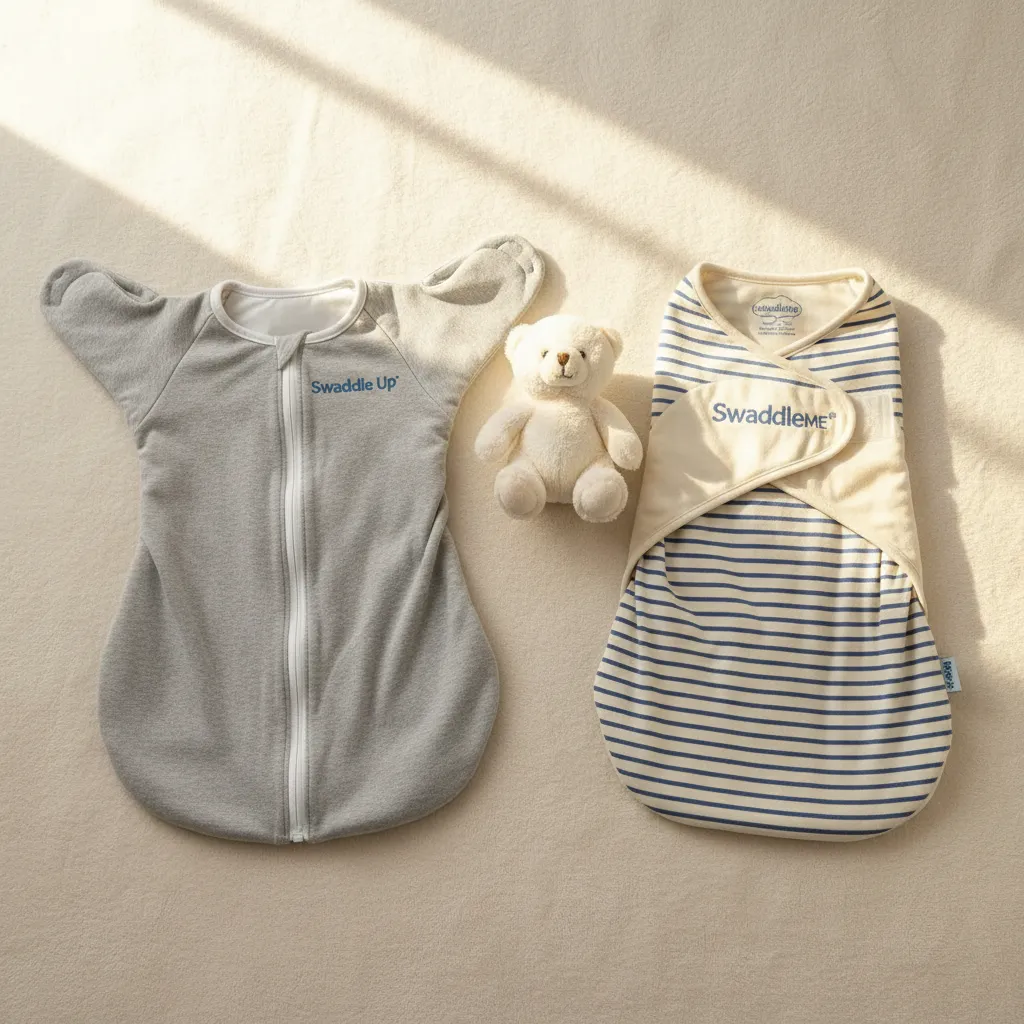
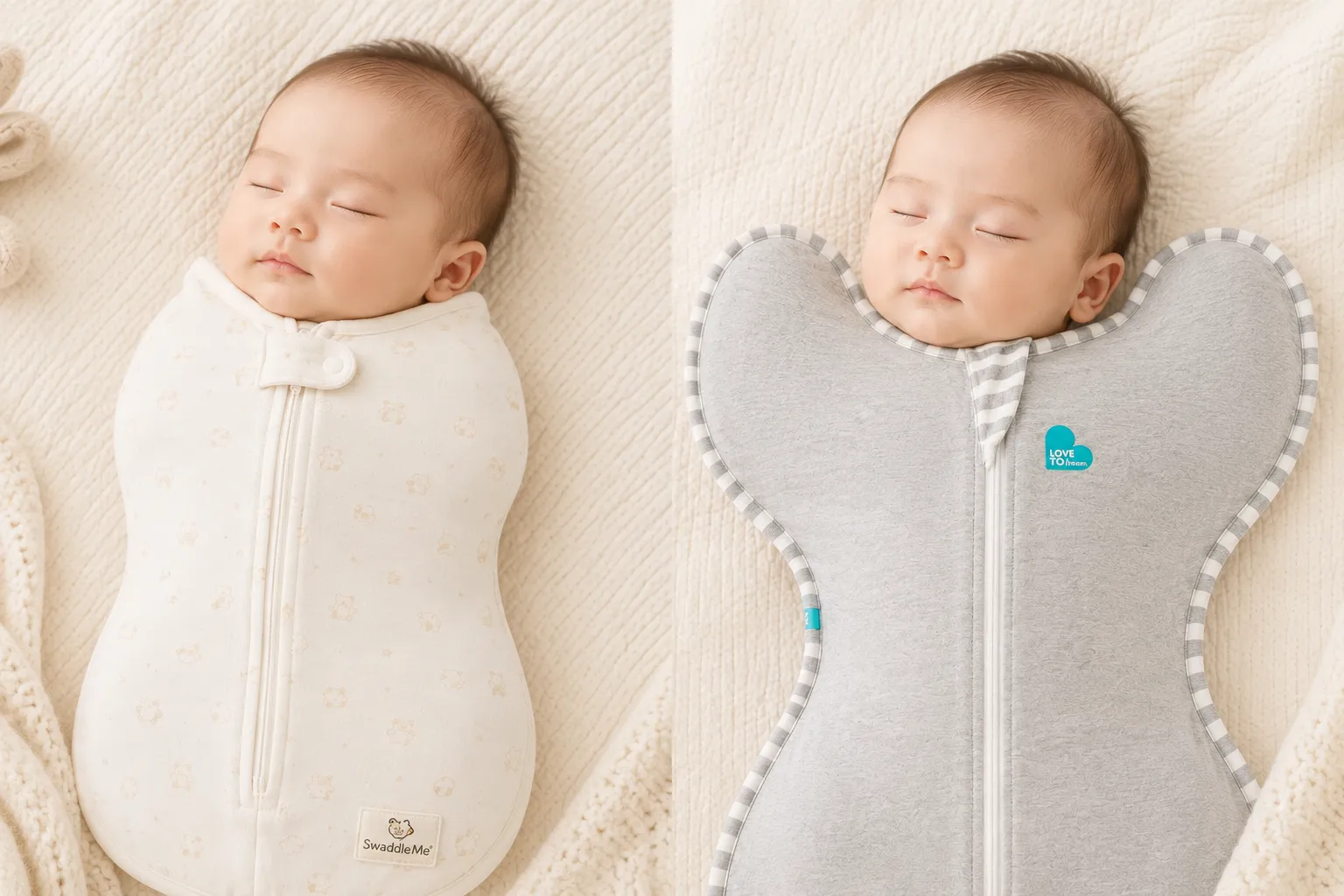
It's 3 a.m. You finally got your newborn to sleep twenty minutes ago. Then — arms fly up, back arches, and the Moro reflex launches your baby from deep sleep into full-volume screaming. Sound familiar? Every new parent has lived this particular flavor of exhausted despair. The good news: two products have changed the game for millions of families worldwide — SwaddleUp (Love to Dream) and SwaddleMe (Ingenuity). Both are called "miracle swaddles," but they work in fundamentally different ways. This guide breaks down every difference so you can make the right call for your baby — tonight.
(Love to Dream, founded 2009)
(months of age)
Love to Dream (brand research)
1. Why Swaddle? The Moro Reflex Explained 🔬
You've probably noticed your newborn doing it: arms suddenly fling outward, back arches, and they let out a startled cry — all while completely asleep. This is the Moro Reflex, also called the startle reflex. It's a primitive neurological response hardwired into every healthy newborn from birth. Evolutionarily, it's thought to be a remnant of our primate ancestors' instinct to grab onto their mother when feeling unstable. Useful in the jungle — not so much in your nursery at 2 a.m.
The Moro reflex persists until roughly 3–4 months of age, gradually fading as the nervous system matures. During those months, the reflex is activated by sounds, sudden movements, temperature changes, or even the sensation of falling when being laid down. The problem, of course, is that babies frequently startle themselves awake from sleep — which means shorter naps, more night waking, and one very exhausted set of parents.
🧬 The Science: Swaddling works by gently restraining the arms to prevent the sudden arm extension of the Moro reflex. It also recreates the snug, contained feeling of the womb — what the "fourth trimester" concept describes as essential comfort for brand-new babies. Multiple studies support swaddling as a tool for reducing arousal frequency and increasing total sleep duration in newborns. The American Academy of Pediatrics (AAP) acknowledges that when done correctly, swaddling can be a safe and effective sleep tool.
Why Not Just Use a Muslin Blanket?
A traditional muslin swaddle is a perfectly valid choice — but mastering the hospital-style wrap takes real practice. Most new parents find it impossible to replicate the maternity nurse's tight, escape-proof fold in those first foggy postpartum days. The blanket unravels. The arms escape. Baby wakes up. This is exactly why zip-up and velcro swaddle products like SwaddleMe and SwaddleUp have become mainstream solutions. They remove the skill barrier entirely.
2. SwaddleMe Deep Dive — Everything You Need to Know 💛
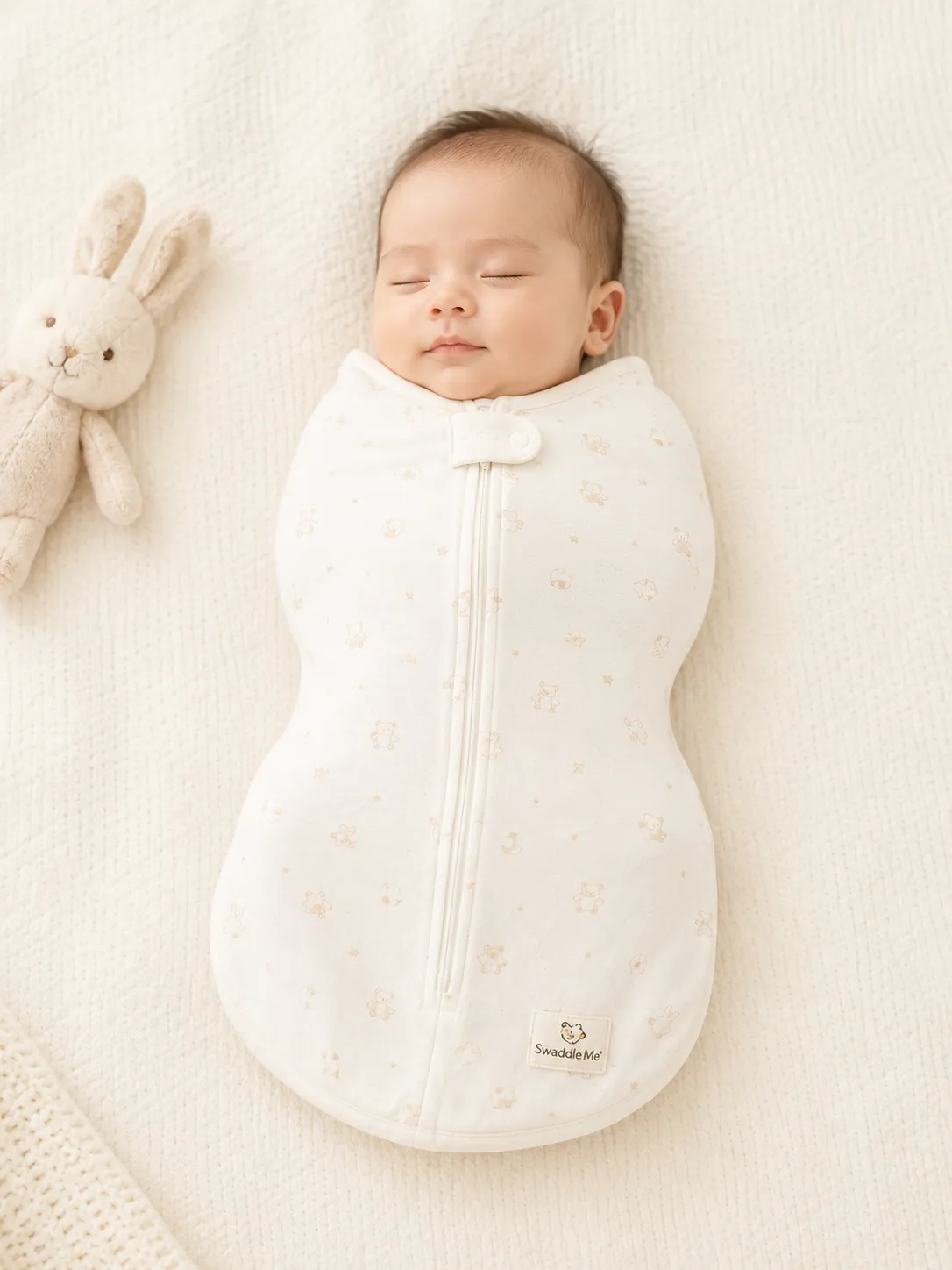
Brand Background: Summer Infant / Ingenuity
SwaddleMe was originally developed by Summer Infant and is now marketed under the Ingenuity brand. It has been a standard recommendation in U.S. hospitals and parenting circles for decades. The core innovation is simple: take the traditional blanket swaddle technique and encode it into a velcro-wing garment with a foot pocket — removing the need for any folding skill whatsoever.
SwaddleMe at a Glance
SwaddleMe (by Ingenuity)
Summer Infant / Ingenuity | The arms-down classic
How It Works
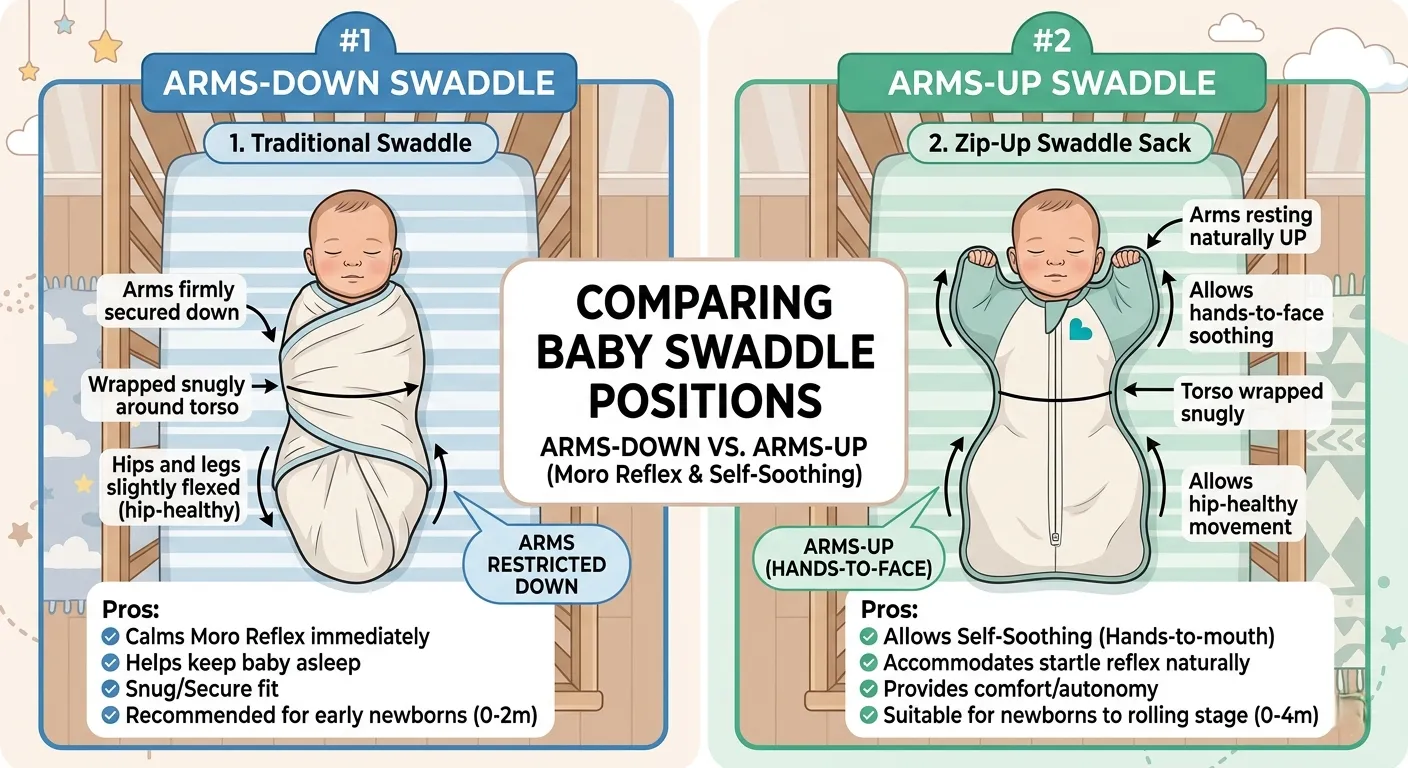
SwaddleMe consists of three main elements: a foot pocket that contains the legs and lower body; two velcro wing panels that cross over the chest; and a bottom flap that can be opened for diaper changes without fully unwrapping the baby. The wings cross left over right and secure with velcro, pressing the baby's arms down alongside the body in the classic arms-down position.
SwaddleMe Size Guide
| Size | Weight (lbs) | Weight (kg) | Age Range |
|---|---|---|---|
| Small/Medium (S/M) | 7–14 lbs | 3.2–6.4 kg | 0–3 months |
| Large (L) | 14–18 lbs | 6.4–8.2 kg | 3–6 months |
Pros of SwaddleMe
- Superior containment: Even the strongest, most determined little escapees struggle to break free. Ideal for the first 0–6 weeks when the Moro reflex is at its most violent.
- Budget-friendly: One of the most affordable swaddle options available. Three-packs run about $20–$28 USD — you can stock up without breaking the bank.
- Easy diaper changes: The bottom flap opens without disrupting the torso wrap. A genuine lifesaver during those 2 a.m. diaper emergencies.
- Womb-like compression: Babies who prefer a snug, all-around squeeze often calm immediately when wrapped in a SwaddleMe.
- Machine washable: 100% cotton, throw it in the wash. Durable through dozens of laundry cycles.
- Wide design variety: Dozens of patterns and colorways available, making it a popular gift item.
Cons of SwaddleMe
- Velcro noise: That unmistakable RRRIP sound when opening the velcro has woken countless sleeping babies mid-diaper-change. Parents learn quickly to peel it back slowly and carefully.
- Escape artists will prevail: Strong babies with impressive upper-body strength can work their arms free, especially from 6–8 weeks onward.
- Arms-down constraint: Newborns naturally want to bring their hands to their face. Locking arms down against the sides can frustrate babies who rely on hand-to-mouth self-soothing. Some babies protest vigorously.
- No built-in transition system: When it's time to graduate, you're on your own — there's no "next stage" product designed to ease the transition.
- Overheating risk in summer: The snug wrap reduces airflow. Choose muslin or mesh fabric versions in hot weather and always monitor for overheating signs.
"SwaddleMe is our go-to for the first 6 weeks. The velcro holds even our strong little guy who's been trying to Houdini his way out since day one." — Reddit user, r/beyondthebump
3. SwaddleUp Deep Dive — The Arms-Up Revolution 💜
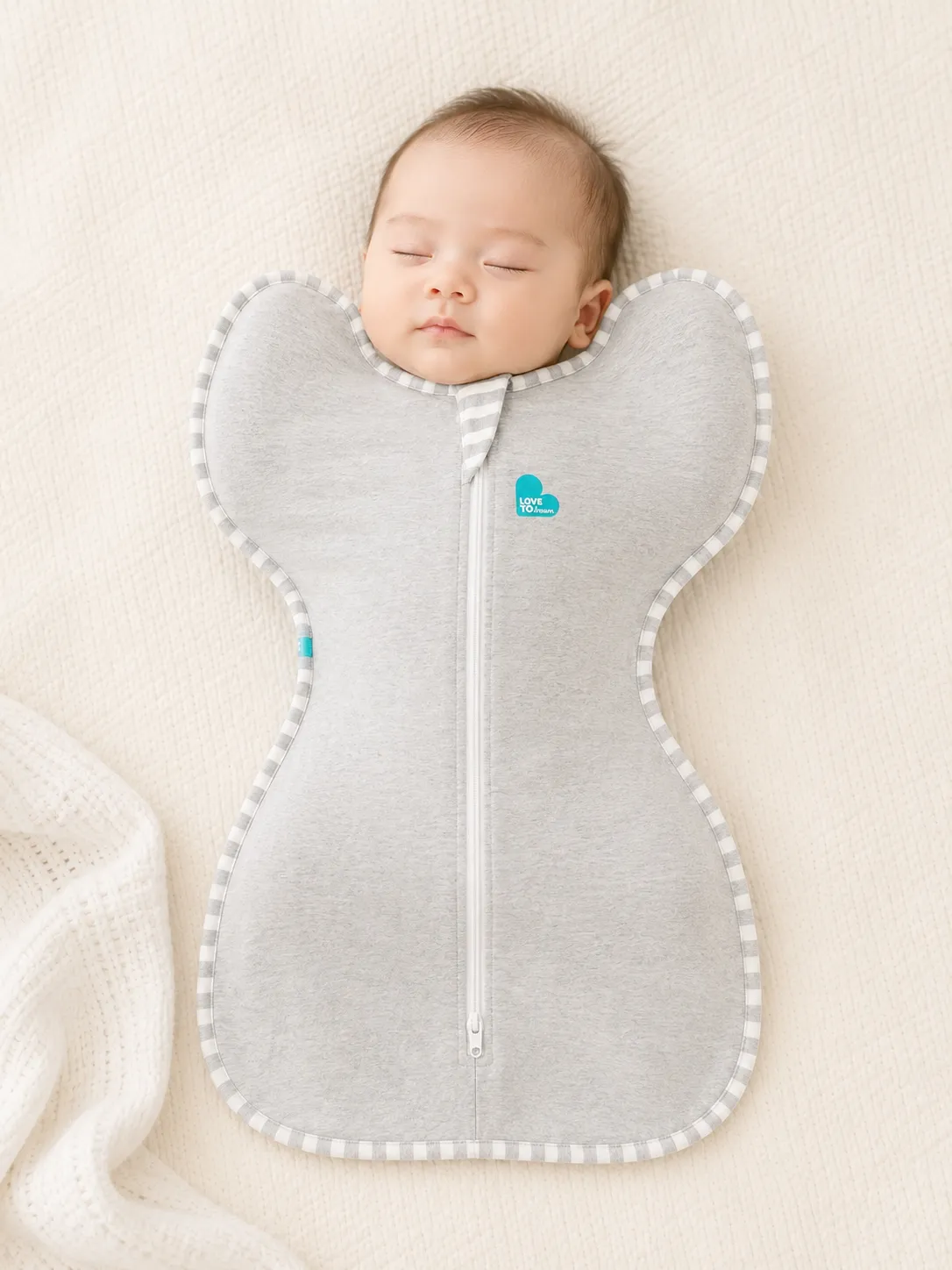
Brand Background: Love to Dream (Australia)
SwaddleUp is made by Australian brand Love to Dream, founded in 2009 by Hana-Lia Krawchuk. The origin story is endearing: Krawchuk noticed that her baby constantly tried to bring hands up toward the face while swaddled, fighting the traditional arms-down position. Her insight was that babies have a natural, preferred sleep posture — arms up in a "W" shape beside the head — and that a properly designed swaddle could honor that posture while still suppressing the startle reflex. The result changed bedtime for millions of families across 40+ countries.
SwaddleUp at a Glance
SwaddleUp (Love to Dream)
Love to Dream, Australia | The arms-up pioneer
How It Works
SwaddleUp uses a two-sided wing pocket design: each arm slots into a separate stretchy fabric wing that holds it in the elevated, face-level position. A central zipper secures the body from bottom to top, with a safety flap at the top that prevents the zipper pull from contacting the baby's chin or face. The entire product requires exactly one action to put on or take off — zip or unzip. That's it.
The Stage System — A Roadmap to Swaddle Graduation
One of SwaddleUp's biggest differentiators is its intentional three-stage system, designed to take babies from birth all the way through independent sleeping without a jarring transition.
SwaddleUp TOG Guide — Matching to Temperature
TOG (Thermal Overall Grade) is a standardized measurement of thermal resistance — higher TOG = warmer product. SwaddleUp's range covers every season.
SwaddleUp Size Guide
| Size | Weight (lbs) | Weight (kg) | Age Range |
|---|---|---|---|
| Newborn (NB) | 5–8.5 lbs | 2.3–3.9 kg | 0–6 weeks |
| Small (S) | 8–13 lbs | 3.6–6.0 kg | 0–3 months |
| Medium (M) | 13–19 lbs | 6.0–8.7 kg | 3–6 months |
| Large (L) | 19–24 lbs | 8.7–11 kg | Transition/Sleep Suit |
Pros of SwaddleUp
- One-handed, one-second operation: A single zipper — that's the entire process. Critically important at 3 a.m. with half-open eyes and a screaming baby.
- Respects natural arm position: Babies who self-soothe by bringing hands to mouth can continue doing so within the wing pockets, resulting in longer and more settled sleep for hand-to-face babies.
- Built-in graduation pathway: The Stage 1→2→3 system removes the guesswork from swaddle weaning. This alone is worth a premium for many parents.
- Hip-healthy: The generous lower-body pocket allows the natural "frog-leg" hip flexion and abduction that healthy hip joint development requires. Several versions are certified by the International Hip Dysplasia Institute (IHDI).
- Full TOG range: 0.2 through 2.5 TOG means you can match the product precisely to your home's temperature year-round.
- Zipper safety flap: Prevents metal zipper hardware from contacting delicate newborn skin — a small but thoughtful design detail.
Cons of SwaddleUp
- Higher price point: Typically $35–$55 USD per unit, compared to $10–$16 USD for a SwaddleMe — roughly 2–3× more expensive.
- Not all babies tolerate arms-up: Babies who want tight, all-around compression may resist the less constrictive arms-up design and escalate to screaming when swaddled in it.
- Lower absolute containment than SwaddleMe: A very strong baby can eventually work arms out of the wing pockets, particularly as they approach the transition stage.
- Rolling hazard if Stage 1 is used too long: If baby begins rolling while both arms are still pocketed, the restricted arm position makes it much harder to push up and clear the airway — a serious safety risk.
4. SwaddleUp vs SwaddleMe: Head-to-Head Comparison 📊
| Feature | 💛 SwaddleMe | 💜 SwaddleUp |
|---|---|---|
| Arm Position | Arms Down — alongside body | Arms Up — W-shape near face |
| Closure | Velcro wing panels (cross-wrap) | Single central zipper + wing pockets |
| Containment | ★★★★★ Strongest | ★★★★☆ Strong (slightly less than SwaddleMe) |
| Ease of Use | ★★★☆☆ Moderate | ★★★★★ Extremely Easy (one zip) |
| Diaper Changes | ★★★★☆ Easy (bottom flap opens) | ★★★☆☆ Requires full unzip |
| Price (USD) | ~$10–28 (singles, 3-packs) | ~$35–55 per unit |
| Material Options | Cotton, Muslin, Organic Cotton | Cotton, Bamboo, Light Mesh, Fleece |
| Temperature Range | Limited (depends on fabric choice) | Excellent (0.2–2.5 TOG line) |
| Graduation System | None (external transition needed) | Yes (Stage 1 → 2 → 3) |
| Hip Safety | Moderate (proper fit essential) | Strong (wide lower pocket, IHDI approved versions) |
| Brand Origin | Summer Infant / Ingenuity (USA) | Love to Dream (Australia) |
| Best Baby Type | Strong startlers, compression-loving babies | Hand-to-mouth self-soothers, easy-going babies |
The Core Philosophical Difference
SwaddleMe says: "Hold the arms still, stop the startle, force sleep." SwaddleUp says: "Work with the baby's natural instincts; let them self-soothe, earn the sleep." Neither philosophy is universally better. Your baby's temperament and preferred comfort style will determine which approach yields that precious 4-hour stretch you're desperately chasing.
5. Which Swaddle Suits Your Baby's Personality? 🎯
The Strong Escaper
Breaks free from blanket swaddles in under 5 minutes. Violent startle reflex. Exceptional upper body strength for a being who was inside a person two weeks ago.
→ SwaddleMe recommendedThe Self-Soother
Constantly trying to get hands to mouth. Sucks on fingers or backs of hands. Gets more agitated when arms are pinned down and denied access to the face.
→ SwaddleUp recommendedThe Compression Seeker
Calms immediately when held tightly. Loves being bounced while firmly swaddled. Responds to the "womb pressure" sensation above all other soothing techniques.
→ SwaddleMe recommendedThe Hot Baby
Rosy cheeks, sweaty neck, spiky hair after every nap. Born in summer or lives in a warm climate. Overheating is a genuine concern.
→ SwaddleUp 0.2 TOG recommendedThe "Graduation Anxiety" Baby
Parents worried about creating a swaddle dependency. Baby who will need a gradual, low-drama transition out of swaddling.
→ SwaddleUp Stage system recommendedThe Budget-Conscious Family
Multiple babies, twins, or simply making smart spending decisions in a year of very high baby expenses. Want the most reliable solution per dollar.
→ SwaddleMe (best value) recommended💡 Pro tip from experienced parents: If you're genuinely unsure, buy one SwaddleMe first (it's cheaper to test). If your baby loves it, stock up on multipacks. If baby resists the arms-down position after a week of trying, switch to SwaddleUp. The lower cost of SwaddleMe makes it the lower-risk first experiment.
6. How to Use Each — Step-by-Step + Safety Rules 🛡️
How to Use SwaddleMe — Step by Step
How to Use SwaddleUp — Step by Step
Swaddle Safety Non-Negotiables
- Always place baby on their back (never tummy-down while swaddled)
- Two-finger clearance at the chest — never too tight
- Stop immediately when rolling signs appear
- Face must remain fully uncovered at all times
- Hips must be able to flex and abduct naturally
- Match TOG to room temperature — overheating is dangerous
- Always monitor swaddled baby — no unattended swaddled sleep in unsafe spaces
- Keep sleep space free of pillows, toys, and loose bedding
7. When to Stop Swaddling & How to Transition 🦋
The most common swaddle-related question parents ask after "which product?" is "when do I stop?" The answer isn't purely age-based — it's developmental milestone-based. Specifically: rolling.
Stop Swaddling When You See These Signs
- Rolling attempts: Baby twisting hips sideways, pushing off with legs, or managing to get partway onto their side — stop immediately.
- Routine arm escapes: Baby consistently breaking free and continuing to sleep with arms out — their body is telling you something.
- Active refusal: Baby who used to love being swaddled now screams harder when wrapped than when unwrapped — time to reassess.
- Age checkpoint: If your baby is approaching 4 months, even without clear rolling, proactively planning the transition is wise.
The Gradual Method — One Arm at a Time
Cold turkey swaddle removal often triggers several rough nights as the baby readjusts. The gentler approach:
- One arm free at naps first: Start with daytime naps — one arm out, one arm wrapped. Three to four days of this.
- Both arms free at naps: Once naps are stable, both arms out at naptime. Another few days.
- Apply to nights: Transition nighttime sleep the same way, with a sleep sack for warmth and the familiar fabric feel.
SwaddleUp's Stage 2 Transition product makes this process nearly effortless — the wing pockets literally zip off one at a time. SwaddleMe users typically transition directly to a traditional sleep sack (like HALO SleepSack) and use the gradual arm-release method manually.
🌙 Sleep Association Warning: Swaddling can become such a powerful sleep cue that baby truly cannot settle without it. This is called a sleep association. To avoid painting yourself into a corner, try doing 1–2 naps per week unswaddled from around 6–8 weeks onward. The variety keeps baby flexible and makes graduation far less catastrophic.
8. Real Parent Reviews — Reddit & Community Voices 💬
"Love to Dream Swaddle Up changed our lives. Our baby was waking up every 45 minutes until we tried this. Now she sleeps 4–5 hour stretches. The arms-up design seemed weird to me at first but she absolutely loves having her hands near her face. Worth every penny."
"SwaddleMe is our go-to for the first 6 weeks. The velcro holds even our strong little guy who's been trying to Houdini his way out since day one. After 6 weeks we start transitioning to the Swaddle Up. Best combo approach we've found — use both!"
"Tried both. SwaddleMe works great but the velcro RIPS so loud when you undo it and wakes baby every single time. Swaddle Up is quieter but harder to get a tight wrap. Both have their place. SwaddleMe early on when startle is crazy strong; Swaddle Up after."
"Baby doesn't sleep without the Swaddle Up!! When baby sleeps, mommy sleeps!! 10 stars!!"
"Honest review after using SwaddleMe for 2 months: it works brilliantly but be aware — that velcro is a hazard during night diaper changes. We've woken our baby at least a dozen times from the ripping sound alone. Still worth it, just go SLOW when opening."
"My strong baby broke out of the Swaddle Up within 10 days — she had her arm completely out of the wing pocket. Switched to SwaddleMe and it was like putting a tiny escape artist in a straitjacket (lovingly!). Different babies really do need different things."
9. Sizing & Season Selection Guide 🌡️
Temperature-to-TOG Quick Reference
| Season | Room Temp | SwaddleMe Fabric | SwaddleUp TOG |
|---|---|---|---|
| ☀️ Summer | 75°F+ / 24°C+ | Muslin (thin cotton) | 0.2 TOG |
| 🌸 Spring / Fall | 68–75°F / 20–24°C | Standard cotton | 0.5–1.0 TOG |
| ❄️ Winter | 61–68°F / 16–20°C | Thick cotton / fleece | 2.5 TOG |
How to Tell If Baby Is the Right Temperature
The most reliable temperature check on a swaddled baby is the back of the neck or the chest (not hands or feet, which run naturally cooler). If the neck feels warm and slightly moist — the room is too hot or the TOG is too high. If the chest feels cool to the touch — add a layer. If it feels warm and dry — perfect.
📏 Size Selection Tip: When in doubt between two SwaddleUp sizes, size up rather than down. The wing pockets have stretch built in and a slightly roomier fit around the body is safer than a too-snug chest. The critical sizing factor is never weight alone — it's whether baby shows rolling signs. A 15-pound baby who is rolling needs to graduate, regardless of whether they technically "fit" the garment.
10. Frequently Asked Questions ❓
Yes — both SwaddleMe and SwaddleUp can be used from birth. Many hospitals now use these products in the nursery. SwaddleUp's Newborn size (2.3 kg / 5 lbs) accommodates even smaller babies. For premature infants, consult your neonatologist before using any swaddle product.
Generally, no — unwrap or at least loosen the swaddle during feeds. Free arms allow baby to signal hunger cues, latch more effectively for breastfed babies, and help both parent and baby during burping. Re-swaddle when settling back to sleep.
Consistency helps — swaddling for all sleep periods reinforces the association between the swaddle and sleep. That said, leaving 1–2 naps per week unswaddled from about 6–8 weeks prevents over-dependence and makes eventual graduation easier. Importantly, any time baby is swaddled and sleeping, a caregiver should be monitoring — especially in the early weeks.
Absolutely — many parents use SwaddleMe in the early newborn weeks for maximum containment, then switch to SwaddleUp as the startle reflex lessens. Others keep both and use one when the other is in the wash. The key is maintaining a consistent sleep environment so baby is not confused about sleep cues.
Always wash with the velcro tabs fastened (to prevent them snagging other items and collecting lint). Air dry or tumble dry low with tabs open. Avoid fabric softeners, which reduce velcro grip. When the velcro noticeably loses holding power, it's time to replace the product — a loose swaddle is unsafe.
First, try the other style — some babies who resist arms-down (SwaddleMe) love arms-up (SwaddleUp), and vice versa. If your baby consistently rejects all swaddling and sleeps just as well without it, you don't have to force it. A subset of babies truly prefer free movement from the start. In that case, transition directly to a sleep sack for warmth and safe sleep.
SwaddleUp Stage 1 (both arms in pockets) is NOT safe once rolling begins. With arms elevated and contained, a baby who rolls to their stomach has limited ability to push up and clear the airway. This is why you must move to Stage 2 (one or both arms free) the moment rolling signs appear — or stop swaddling entirely. Stage 2 is safer because free arms allow defensive push-up, but monitoring remains important.
11. Final Verdict: Which One Should You Buy? 🎀
💛 SwaddleMe
- ✓ Baby has an explosive startle reflex
- ✓ Baby loves being tightly compressed
- ✓ Budget is a priority
- ✓ You want easy overnight diaper changes
- ✓ You have twins or need multiple units
💜 SwaddleUp
- ✓ Baby's a hand-to-mouth self-soother
- ✓ Ease of use is your #1 priority
- ✓ You want a built-in graduation system
- ✓ Temperature management matters (TOG)
- ✓ Baby runs hot or sweats easily