This article is intended to provide general health and lifestyle information and cannot replace professional medical diagnosis, treatment, or care. If you have specific health concerns or symptoms, please consult with qualified healthcare professionals.
Do you make ear cleaning with ear picks a daily habit after showering? If you clean your ears every day for that refreshing feeling, you need to read this article right now. We reveal the hidden dangers of ear cleaning warned by ENT specialists and the surprising reasons why you shouldn't remove earwax, backed by scientific evidence.
Deadly Risks of Ear Pick Use on Hearing 🚨
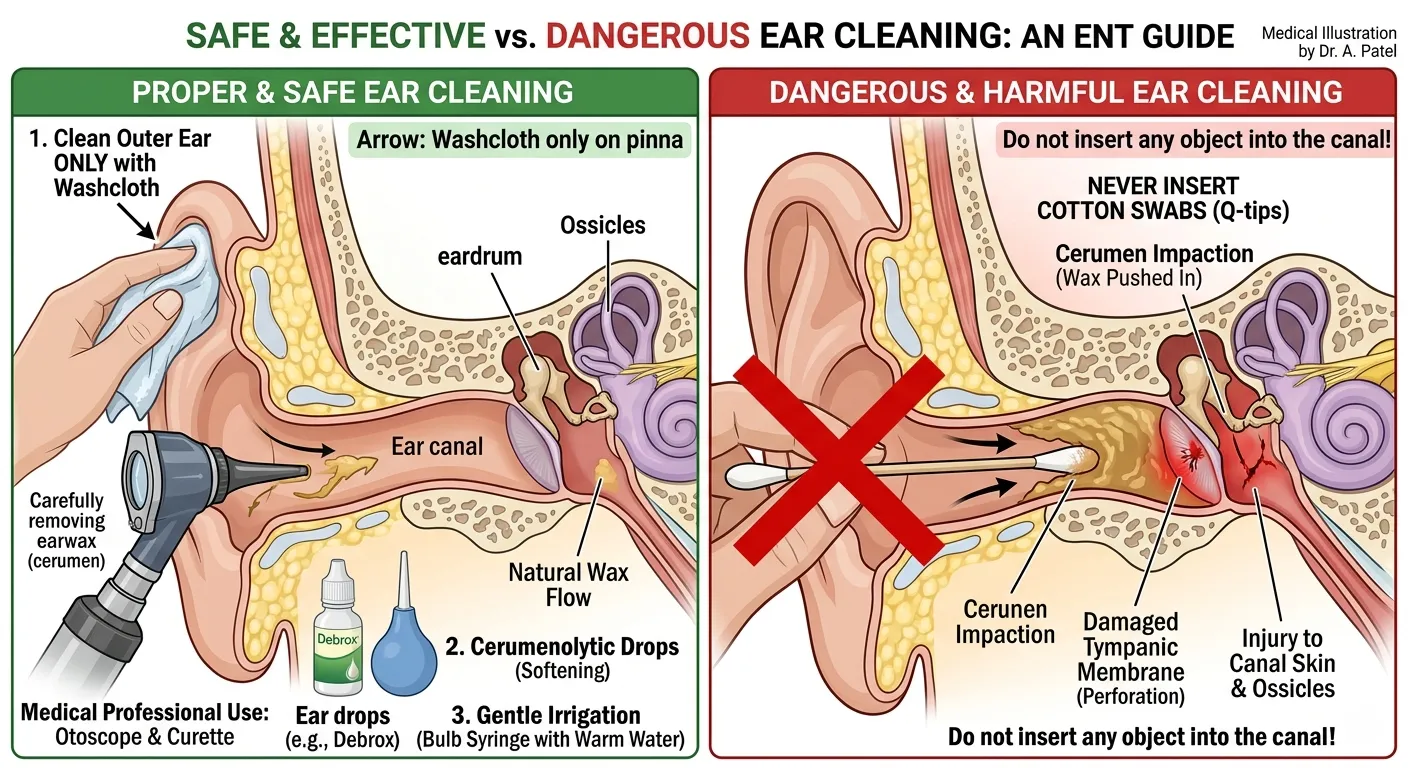
If you have a habit of cleaning your ears with an ear pick every day, pay attention to these statistics. According to research by the American Academy of Otolaryngology-Head and Neck Surgery (AAO-HNS), more than 12 million adults annually experience external ear canal damage while attempting to remove earwax, with a significant portion related to cotton swab or ear pick use.
4 Major Risks of Ear Pick Use
- Eardrum Perforation: Pushing earwax can puncture the eardrum, potentially requiring surgery in severe cases
- Otitis Externa: Micro-wounds on ear skin can lead to bacterial infections
- Earwax Impaction: Actually pushes earwax deeper, causing hearing loss
- Tinnitus: Continuous irritation can cause chronic ringing in the ears
A recent study from Seoul Asan Medical Center's ENT Department found that people who use ear picks more than 3 times a week had 4.2 times higher incidence of otitis externa compared to those who don't. Did you know that the 'refreshing feeling' may actually be the process of causing micro-damage to your ear skin?
Amazing Functions of Earwax: Why You Shouldn't Remove It 🛡️
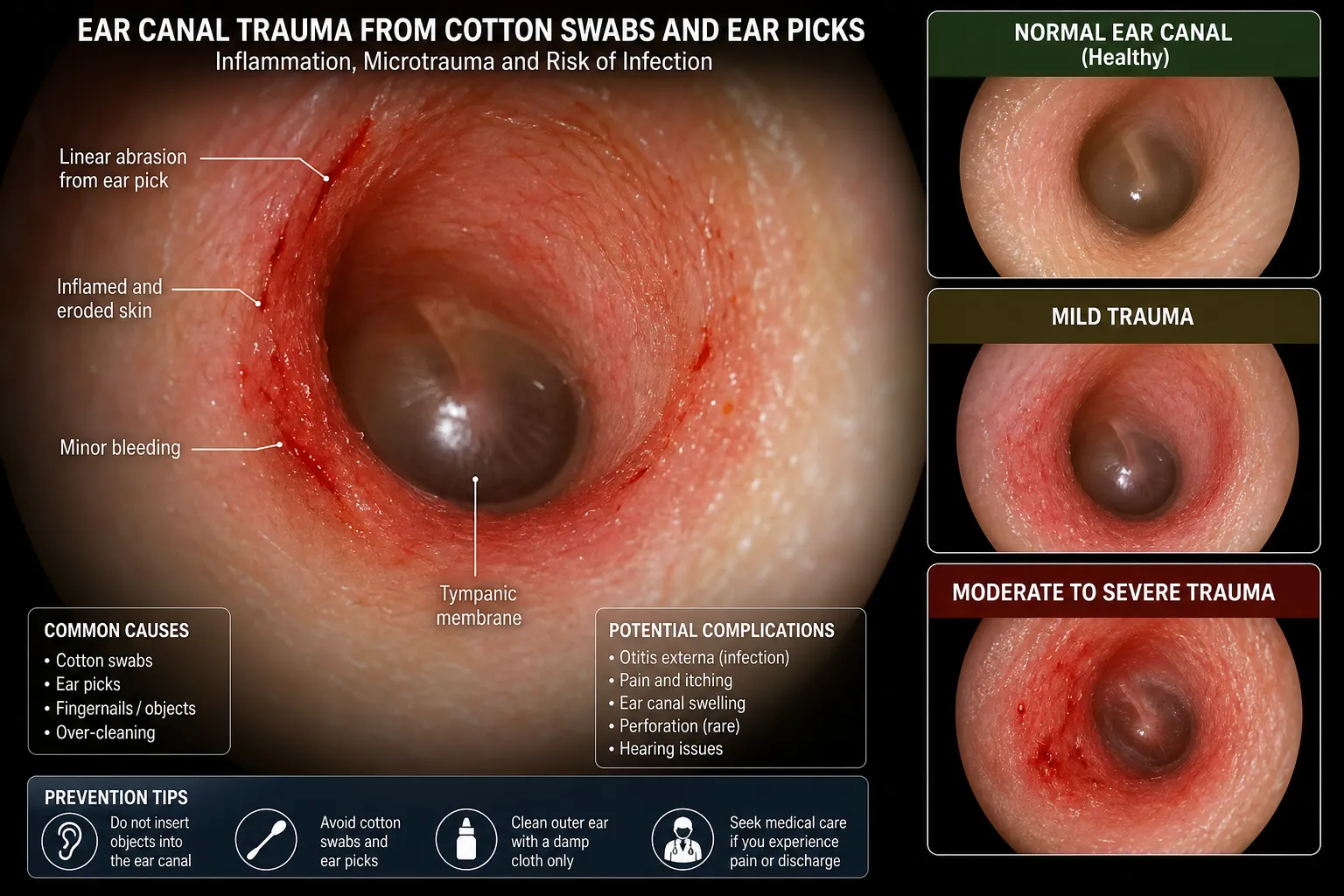
While most people think of earwax as 'dirty waste,' it's actually a natural defense system that protects your ears. Harvard Medical School ENT researchers have revealed that earwax is not just a secretion but performs multiple essential functions for ear health.
5 Core Functions of Earwax
| Function | Mechanism | Importance |
|---|---|---|
| Antibacterial | Contains lysozyme, immunoglobulins | Prevents bacterial/fungal infections |
| Moisturizing | Prevents ear canal skin dryness | Prevents itching and inflammation |
| Dust Barrier | Traps and removes foreign particles | Protects eardrum |
| Shock Absorption | Cushions external impact | Prevents eardrum damage |
| Self-Cleaning | Natural expulsion system | Automatic cleaning function |
Particularly noteworthy is that earwax maintains acidity (pH 5.0–5.7) to inhibit bacterial and fungal growth. According to research from the UK's National Health Service (NHS), people who excessively remove earwax have more than 3 times higher rates of external ear infections than normal individuals.
"Earwax is not dirt; it's the ear's immune system. Most people don't need to remove earwax, and doing so can actually be harmful." – Dr. Seth Schwartz, American Academy of Otolaryngology
Earwax naturally moves outward, and old earwax naturally falls out when you move your jaw (talking, chewing, etc.). As long as this self-cleaning system works normally, ear cleaning is not only unnecessary but can be harmful.
Safe Ear Care Methods from ENT Specialists ✅
So how should you care for your ears? Based on the Ear Health Care Guidelines published by Yonsei University's ENT Department faculty, we introduce safe methods.
Safe Ear Cleaning Methods
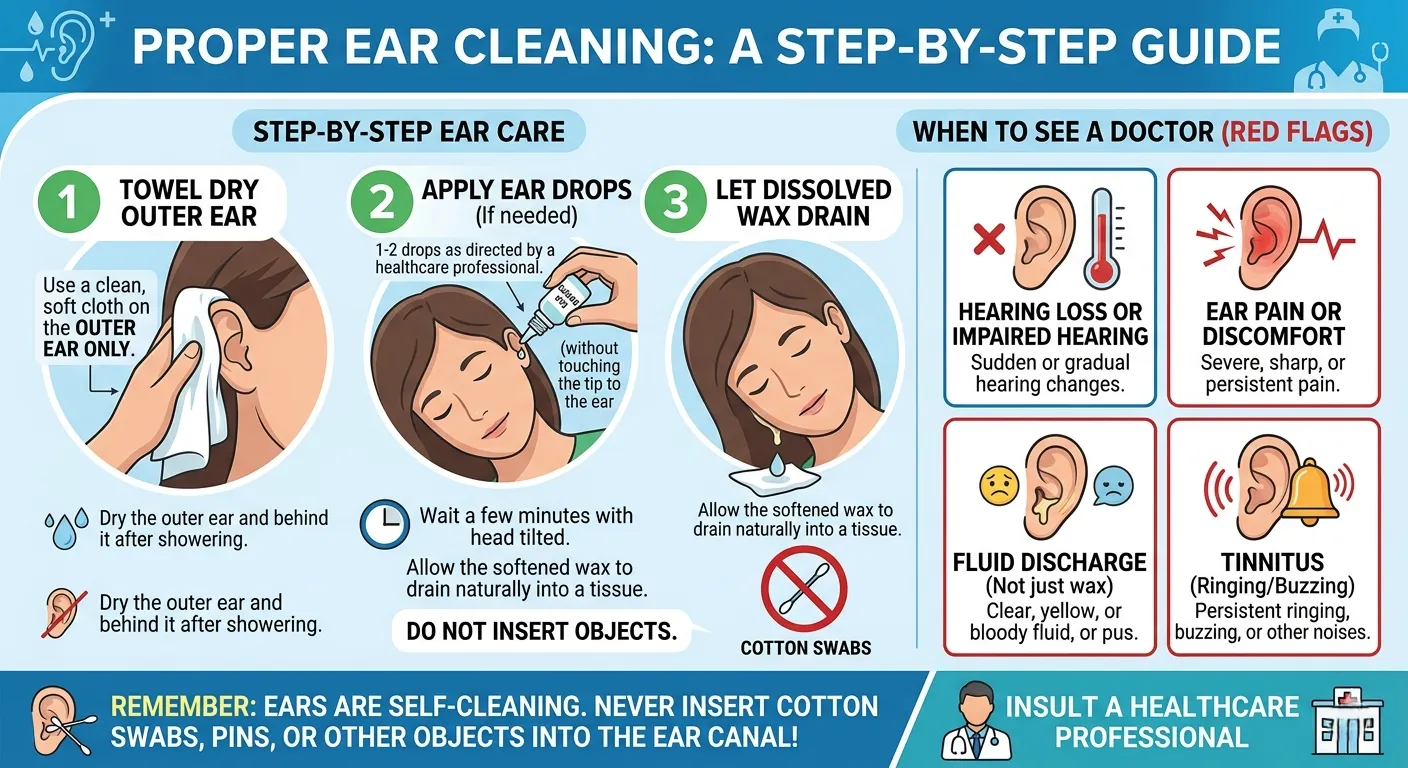
- Wipe only the outer ear: After showering, gently wipe only the outer part of the ear with a soft towel
- Use warm water: When washing around the ear, use lukewarm water and be careful not to let water enter the ear
- Use earwax softeners: If earwax has hardened, use earwax softeners available at pharmacies
- Consult a professional: If your ear feels blocked, visit an ENT specialist for professional removal
Actions You Should Never Do
- Inserting ear picks, cotton swabs, pins, etc. into the ear
- Using ear candles — not proven effective and carries a real burn risk
- Scratching inside the ear with objects (keys, pens, etc.)
- Excessive water use — water trapped in the ear increases infection risk
- Overusing earwax softeners
Especially ear candles are thought by many to be a natural remedy, but the US FDA and Health Canada have warned they are not safe. Cases of burns and hot wax dripping into the ear during ear candle use are frequently reported.
Proper Response When Earwax Builds Up Excessively 🏥
Of course, not everyone's ears self-clean perfectly. When earwax builds up excessively (cerumen impaction), proper management is necessary.
Symptoms of Earwax Impaction
- Feeling of blocked ear (hearing loss)
- Tinnitus (ringing in the ears)
- Dizziness
- Ear pain
- Coughing (due to nerve connection between the ear and throat)
If you have these symptoms, never try to remove it yourself. According to Johns Hopkins Medical School research, 35% of patients who visited hospital for earwax impaction had worsened symptoms from trying to remove it at home with cotton swabs or ear picks.
Medical Earwax Removal Methods
| Method | Suitable For | Duration |
|---|---|---|
| Irrigation | Soft earwax | 10–15 minutes |
| Instrument Removal | Hard earwax | 5–10 minutes |
| Suction | Sensitive ears | 10 minutes |
At ENT clinics, doctors examine the inside of the ear with an otoscope and safely remove earwax using the most appropriate method. Health insurance often applies, making it much safer and more economical than risky attempts at home.
Daily Practice Guide for Ear Health 👂
Ear health is difficult to regain once lost. According to the World Health Organization (WHO), 1.5 billion people worldwide suffer from hearing loss, and 60% of these cases stem from preventable causes.
7 Habits for Ear Health
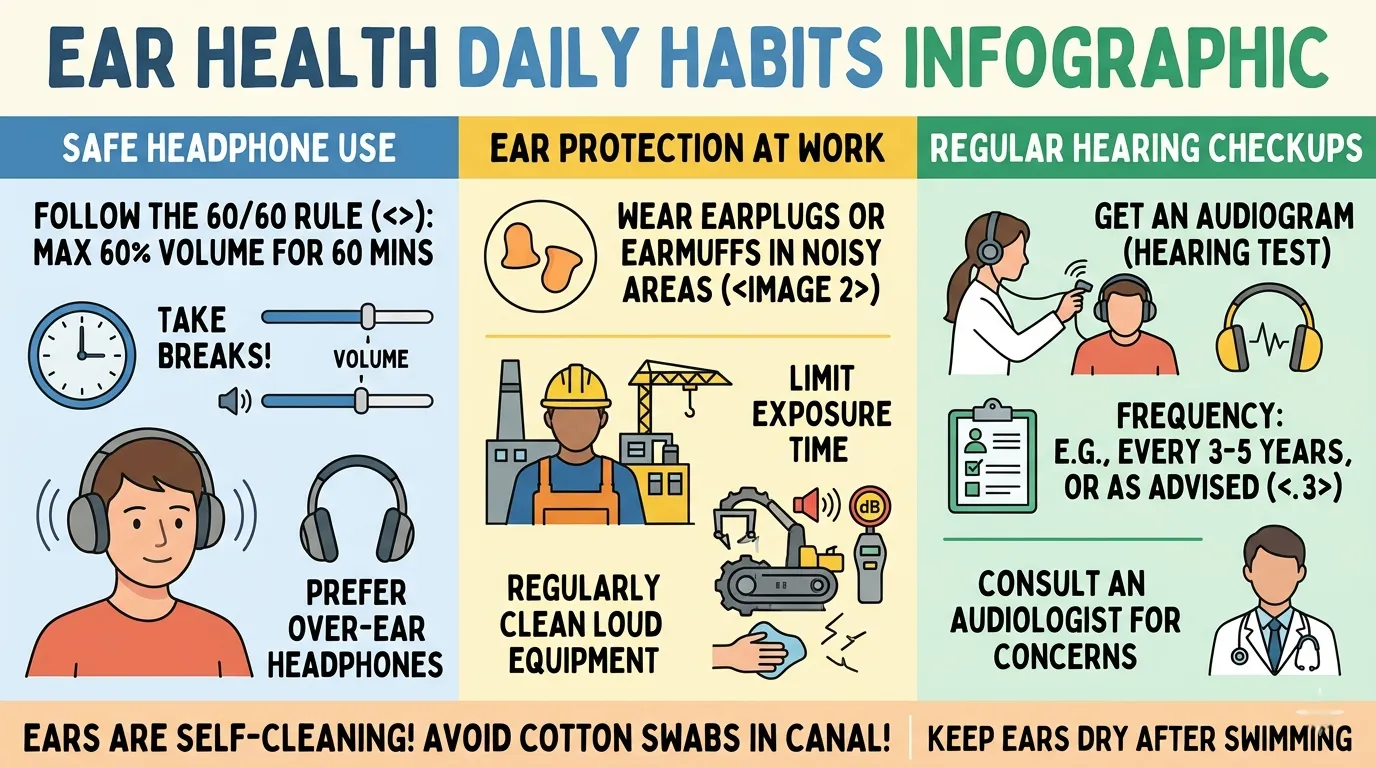
- Headphone volume control: 60/60 rule — max 60% volume for no longer than 60 minutes
- Use noise-canceling headphones: Maintain lower volume even in noisy environments
- Regular hearing tests: Annually for those over 40, every 3 years for others
- Wear ear protection: Always use in noisy work environments
- Manage colds and allergies: Maintain nasal health to prevent otitis media
- Quit smoking: Smoking reduces inner ear blood flow, accelerating hearing loss
- Don't ignore ear pain: Visit a doctor immediately if it lasts more than 24 hours
People Who Need Special Attention
The following individuals should pay extra attention to their ear health:
- Diabetes patients (increased infection risk)
- Those taking immunosuppressants
- Hearing aid users (risk of earwax accumulation)
- People with naturally narrow ear canals
- Those with previous ear surgery history
Conclusion: Not Touching Your Ears is the Best Protection
Using ear picks may provide temporary relief, but long-term it can cause serious problems including hearing loss, infections, and eardrum damage. Earwax is a natural protective barrier for your ears, and in most cases it expels itself naturally — so no separate cleaning is needed.
If your ear feels blocked or painful, don't try to solve it at home — always seek examination from an ENT specialist. Ear health is difficult to regain once lost. From today, put down the ear pick and trust your ear's natural function. 🎵