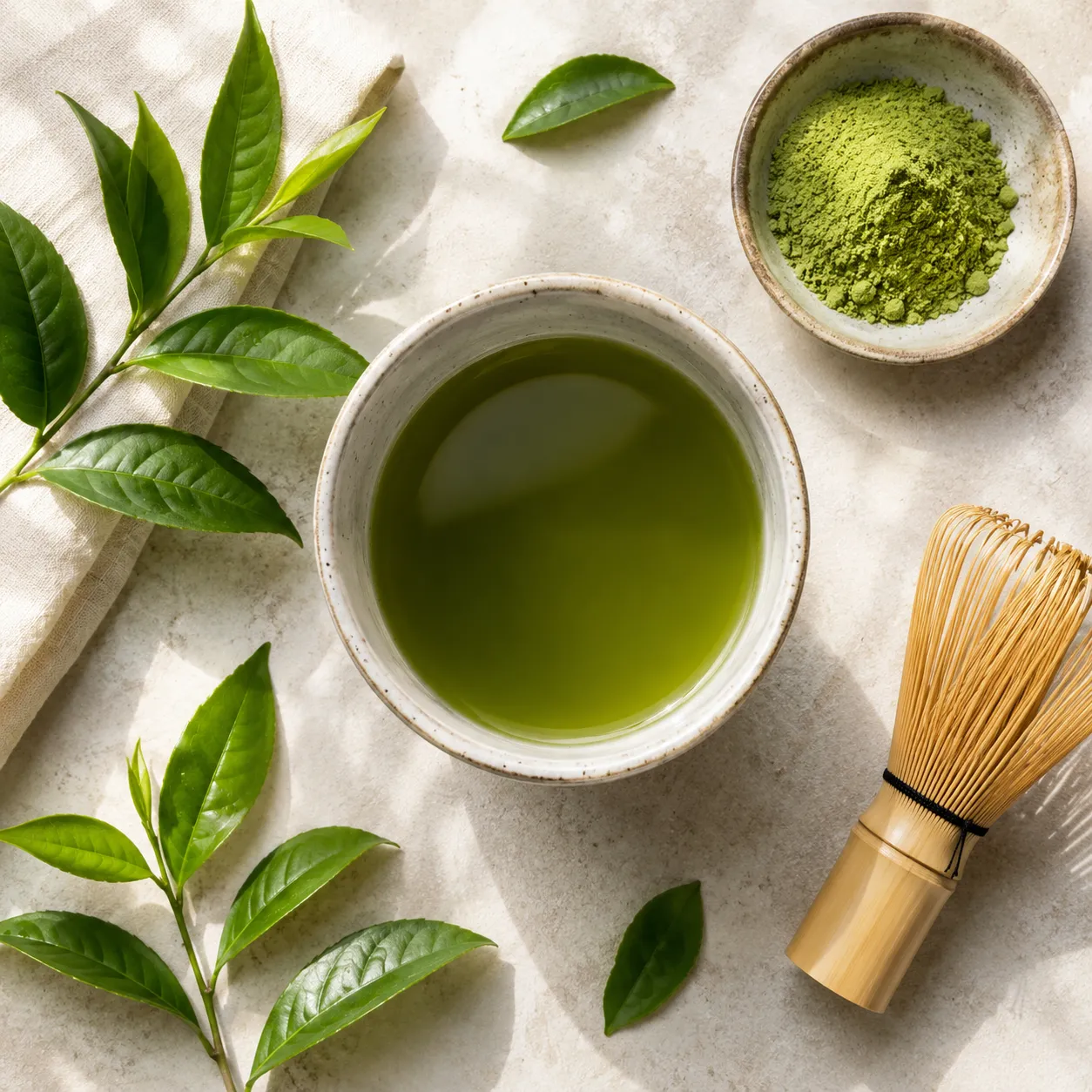
Legend has it that a Chinese emperor first discovered tea when leaves drifted into his boiling water nearly 5,000 years ago. Japanese Zen monks later used it to stay alert yet calm during long meditation sessions. Today, modern science is methodically confirming what those early drinkers sensed intuitively: green tea is considerably more than a pleasant beverage. Here's what the research actually says — no hype, no miracle claims, just the evidence.
What Is Green Tea? The Science of Camellia sinensis 🌿
Green tea, black tea, oolong, and white tea all come from the same plant — Camellia sinensis. The difference lies in processing. Green tea leaves are heat-treated almost immediately after harvest (either steamed in the Japanese style or pan-fired in the Chinese tradition), which halts oxidation and locks in the plant's original chemical profile. The result is a remarkably rich cocktail of bioactive compounds that other teas — processed further — partially lose.
Global production of green tea exceeds three million metric tonnes annually, and consumption is spreading rapidly beyond its East Asian heartland into Europe and North America. That expansion is driven not just by taste, but by a growing body of peer-reviewed evidence that fills databases like PubMed with thousands of entries.
Key Compounds: EGCG and Its Partners 🔬
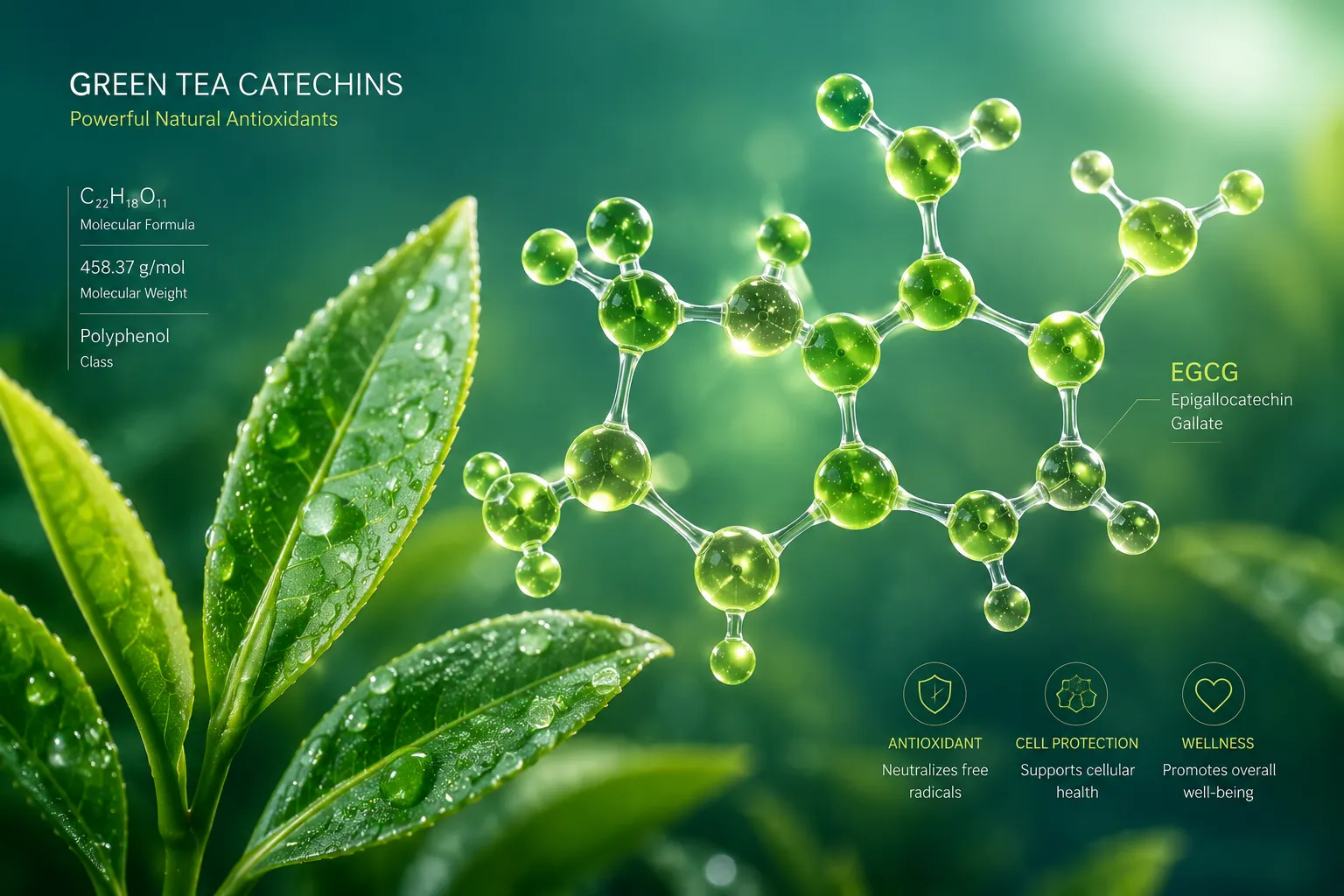
The star of the show is EGCG (epigallocatechin gallate), the most abundant and biologically active catechin in green tea. It can make up as much as 15% of the dry weight of tea leaves. But EGCG doesn't work alone — the synergy between catechins, L-theanine (a unique amino acid almost exclusive to tea), and caffeine is what makes green tea distinctly different from a simple caffeine fix.
| Compound | Type | Content | Primary Function |
|---|---|---|---|
| Catechins | EGCG, EGC, ECG, EC | ~15% | Antioxidant, anti-inflammatory, under cancer research |
| L-Theanine | Amino acid | ~3% | Relaxed focus, buffers caffeine jitters |
| Caffeine | Alkaloid | ~2–3% | Alertness, concentration, exercise support |
| Flavonoids | Quercetin, Kaempferol | Trace | Antioxidant, vascular protection |
| Vitamins C & E | Ascorbic acid, Tocopherol | Trace | Immune support, antioxidant |
| Minerals | Manganese, Potassium, Fluoride | Micro | Bone health, dental enamel protection |
The L-theanine–caffeine pairing is particularly worth noting. As reviewed by the European Food Safety Authority (EFSA), L-theanine promotes alpha-wave brain activity, producing a state of calm alertness without the jitteriness or crash that pure caffeine can bring. Many people describe this as the reason they "think more clearly" after green tea compared to coffee — and the neuroscience backs that up.
7 Evidence-Based Health Benefits ✅
Drawing from decades of epidemiological studies and clinical trials, here are the seven health benefits for which the evidence base is most robust.
Powerful Antioxidant Activity
Research suggests EGCG may be up to 25 times more potent as an antioxidant than vitamin E. By neutralising free radicals that damage cells and DNA, regular intake may help slow the biological markers of aging.
Cardiovascular Health Support
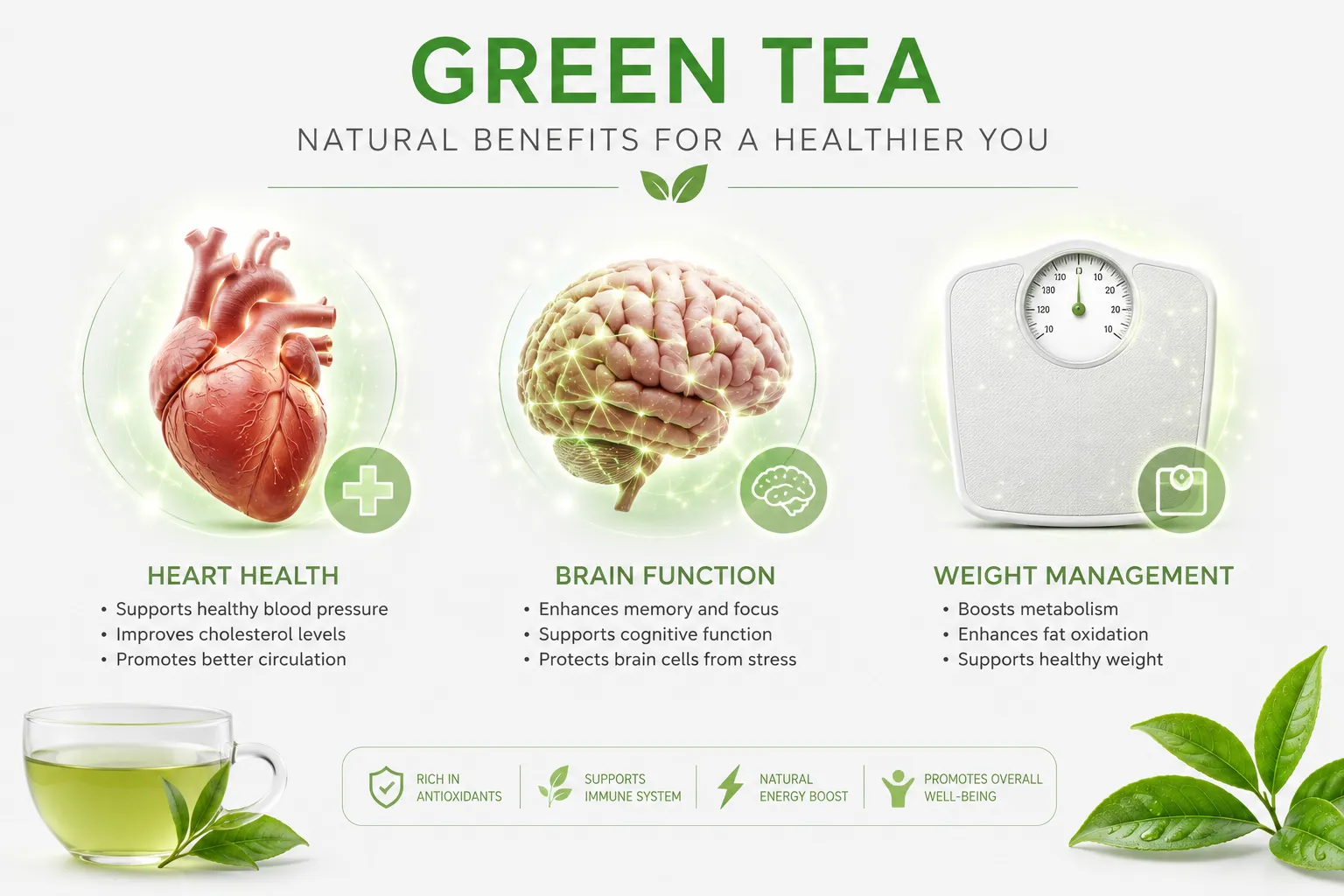
A landmark cohort study from Tohoku University tracking roughly 40,000 Japanese adults found significantly lower cardiovascular disease risk among those drinking three or more cups daily — a finding frequently cited in nutritional cardiology.
Brain Function & Mood
The L-theanine + caffeine duo raises alpha-wave activity, promoting calm focus. Longer-term, emerging research is examining potential associations between regular green tea consumption and reduced age-related cognitive decline.
Weight & Fat Management Support
Catechins have been shown to modestly increase fat oxidation and metabolic rate. This effect is real but incremental — it complements a balanced diet and regular exercise; it does not replace them.
Blood Sugar Regulation
Multiple meta-analyses report that green tea polyphenols can help blunt post-meal blood glucose spikes. Researchers are also investigating potential improvements in insulin sensitivity with consistent intake.
Oral Health
Catechins exhibit antimicrobial activity against Streptococcus mutans, the primary bacterial driver of tooth decay. Green tea's fluoride content also supports enamel mineralisation, making it a surprisingly tooth-friendly beverage.
Anti-Inflammatory Properties
Chronic low-grade inflammation underlies many modern diseases. EGCG modulates key inflammatory signalling pathways — a finding repeatedly demonstrated in cell and animal studies, with human clinical trials ongoing.
"Green tea represents one of the rare dietary examples where multiple compounds interact synergistically to support several physiological systems simultaneously." — Summary from a 2023 review in the Journal of Nutritional Biochemistry
Key Takeaway
Green tea's benefits arise from the synergy of catechin complexes + L-theanine + caffeine — not EGCG alone. Brewed whole-leaf tea tends to deliver a more balanced nutritional profile than high-dose EGCG supplements, and avoids the liver toxicity risks that have been associated with concentrated extracts.
How to Brew Green Tea for Maximum Benefit 🍵
How you brew matters just as much as how much you drink. Studies show that brewing method can affect catechin extraction by a factor of two to three. Here's the practical guide:
Boiling water (100°C) degrades delicate catechins and over-extracts bitter tannins. The 70–80°C range is the sweet spot for both EGCG yield and balanced flavour.
Two minutes allows sufficient catechin extraction. Beyond three minutes, caffeine and tannins become dominant, increasing bitterness and the stimulant load. Use a timer.
That's roughly one teaspoon. Too little and you miss the bioactive threshold; too much pushes caffeine intake higher than intended.
Drinking on an empty stomach can irritate the gastric lining. Post-meal timing takes advantage of any glucose-blunting effects and reduces the chance of nausea.
Most cohort studies showing health associations used 2–4 cups (240 ml each) per day as the relevant exposure. If you're caffeine-sensitive, avoid late-afternoon cups to protect sleep quality.
Who Should Be Cautious: Side Effects & Contraindications ⚠️
Green tea is safe for most healthy adults, but certain groups need to be mindful.
⛔ Situations Requiring Caution
- Pregnancy & breastfeeding: Caffeine crosses the placenta. Most guidelines recommend keeping total daily caffeine under 200 mg (roughly 2 cups of green tea). Always consult your obstetrician.
- Iron deficiency / anaemia: Catechins can inhibit absorption of non-haem (plant-based) iron. Separate green tea from iron-rich meals by at least an hour.
- Blood thinners (e.g. warfarin): Green tea's vitamin K content can interact with anticoagulant therapy. Medical consultation is essential.
- Liver conditions: High-dose green tea extract supplements have been associated with rare cases of liver toxicity in the literature. Brewed tea at normal volumes is generally safe, but those with hepatic conditions should consult a physician.
- Caffeine sensitivity: Palpitations, insomnia, or anxiety are signs to switch to decaffeinated green tea or a herbal alternative.
- Sensitive stomach: If you experience nausea or discomfort, drink only after meals and consider reducing the strength of the brew.
Wrap-Up: One Smart Cup a Day 🌱
Thousands of years of tradition and thousands of peer-reviewed papers point in the same direction. Green tea is not a cure-all. It will not reverse disease, melt fat overnight, or substitute for medical care. What the evidence does support, convincingly, is that regular, well-brewed green tea can be a meaningful contributor to long-term health — across antioxidant protection, cardiovascular wellness, cognitive function, and beyond.
The best health investments are often the simplest ones. A cup of green tea brewed at the right temperature, taken mindfully after lunch, costs almost nothing and asks only that you slow down for a few minutes. That sounds like a very good deal.
📋 Today's Key Takeaways
- EGCG, green tea's primary catechin, is one of the most potent natural antioxidants studied to date.
- The L-theanine + caffeine combination uniquely promotes calm, focused alertness.
- 2–4 cups daily is the intake range most associated with health benefits in large epidemiological studies.
- Brew at 70–80°C for 2–3 minutes to maximise catechin extraction without over-extracting bitterness.
- Pregnant women, those on blood thinners, and people with liver conditions should consult a doctor before increasing intake.