Itching between your toes, peeling skin, or a nail that's turning yellow and thickening — if any of this sounds familiar, you've probably had athlete's foot. Known medically as tinea pedis, it's one of the most common fungal infections in the world, affecting an estimated 15–25% of the global population at any given time. The good news: the right athlete's foot medicine, used correctly, resolves most cases within a few weeks. The bad news: a lot of people choose the wrong product, use it for too short a time, and end up in a frustrating cycle of relapse. This guide cuts through the confusion — covering every type of antifungal, the science behind the active ingredients, and the practical steps that actually lead to lasting relief.
This article is intended to provide general health information only and is not a substitute for professional medical advice, diagnosis, or treatment. If you have persistent symptoms, a compromised immune system, or are taking other medications, always consult a qualified healthcare provider before starting any treatment — especially oral antifungal medications, which require a prescription.
What Is Athlete's Foot? Causes & Risk Factors
Athlete's foot is a superficial fungal infection caused by dermatophytes — a group of fungi that digest keratin, the protein that makes up your skin, hair, and nails. The most common culprit, responsible for 60–80% of cases, is Trichophyton rubrum. These organisms thrive in warm, moist environments, which makes the inside of a shoe after a long day on your feet practically a fungal resort.
Contrary to the name, you don't need to be an athlete to get it. The "athlete" reference comes from the historical association with locker room floors, pool decks, and communal showers — all places where walking barefoot means coming into contact with fungal spores shed by infected individuals. Direct skin-to-skin contact is another route, but less common than environmental exposure.
- Tinea pedis (athlete's foot): Soles, sides of feet, between toes
- Tinea unguium (nail fungus / onychomycosis): Toenails, fingernails
- Tinea cruris (jock itch): Groin, inner thighs — often spread from feet by touching
- Tinea corporis (ringworm): Body, arms, legs — ring-shaped lesions
- Tinea capitis: Scalp — mostly in children
If you scratch an infected foot and then touch your groin, you can easily develop jock itch from the same fungus. Always use separate towels for different body areas.
Who's Most at Risk?
- Excessive sweating (hyperhidrosis)
- Diabetes — elevated blood sugar fuels fungal growth
- Weakened immune system (HIV, post-transplant, chemotherapy)
- Older age — reduced skin barrier function
- Family members with athlete's foot (shared towels/bathroom)
- Non-breathable synthetic footwear
- Wearing damp socks for extended periods
- Going barefoot in public facilities
- Occupations requiring shoes all day
- Hot, humid climates or summer months
Types of Athlete's Foot: How to Tell Them Apart
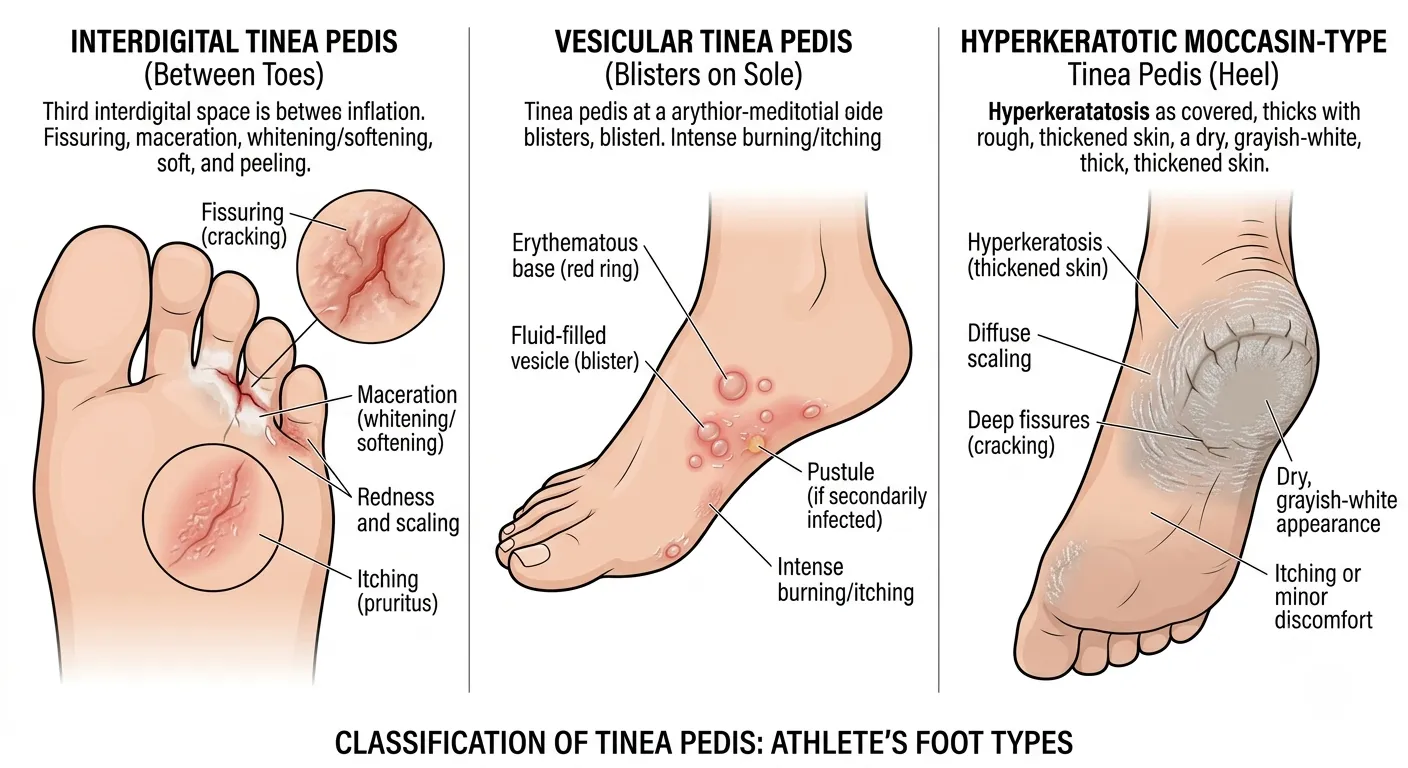
Not all athlete's foot looks the same. There are three main clinical presentations, and identifying the type helps guide the right treatment choice. Toenail fungus (onychomycosis) is classified separately but frequently co-exists with foot infections.
| Type | Location | Key Symptoms | Frequency |
|---|---|---|---|
| Interdigital | Between toes (4th–5th most common) | Maceration, fissuring, odor, intense itching, whitened soggy skin | Most common form |
| Vesicular | Sole and edges of foot | Small fluid-filled blisters (vesicles), itching, peeling when blisters burst | Second most common |
| Hyperkeratotic (Moccasin) | Entire sole, heel | Thickened, scaling, dry skin; minimal itching; chronic course | Less common; found in chronic cases |
| Onychomycosis (Nail Fungus) |
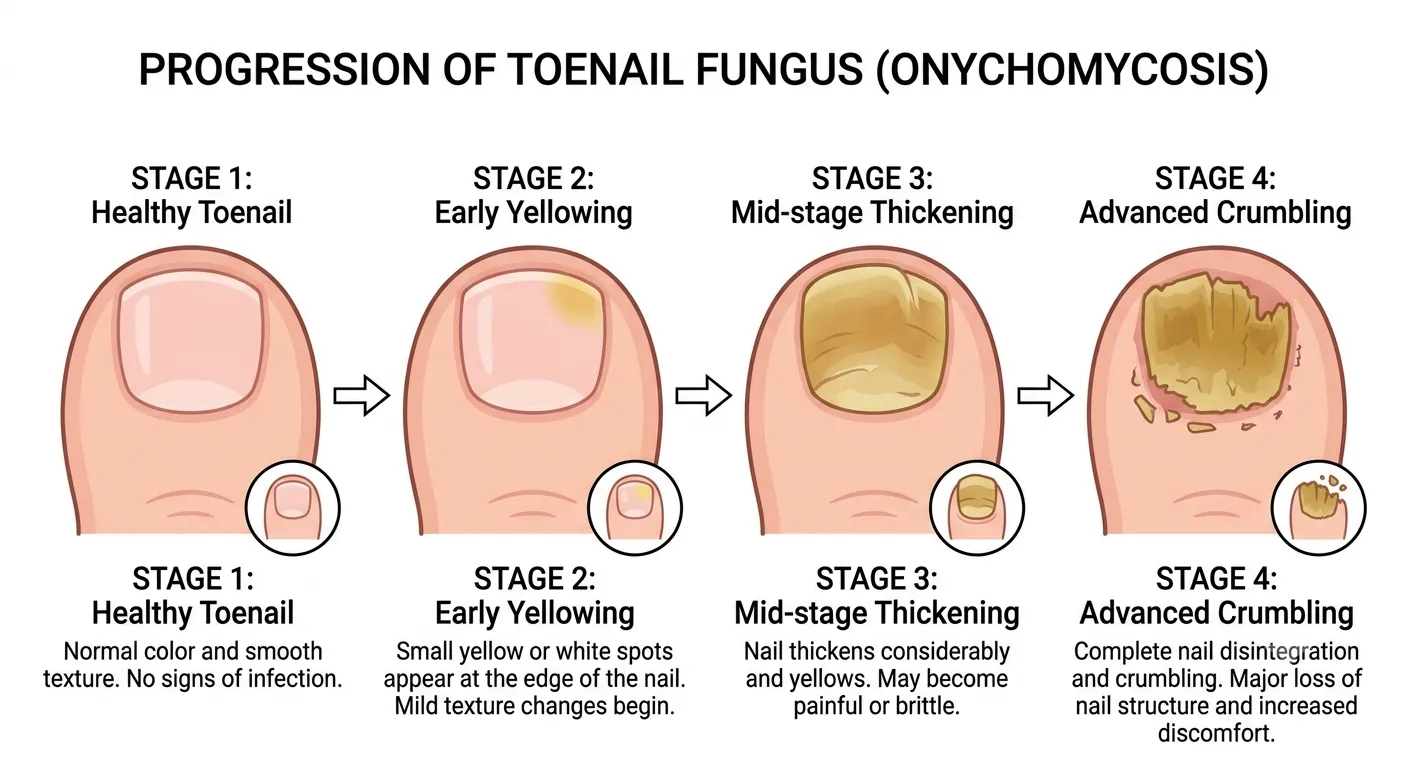
Toenails (big toe most common) | Thickened, yellow-brown or white discoloration, crumbling nail | Affects 30–40% of tinea pedis patients |
Key Point: Is It Really Athlete's Foot?
Itching alone doesn't confirm athlete's foot. Eczema, psoriasis, and contact dermatitis can look similar. In a clinic, a KOH (potassium hydroxide) prep test or fungal culture can confirm the diagnosis within 1–2 weeks. Using a steroid cream on fungus — or an antifungal on eczema — will both make things worse. If you're not sure, get tested before committing to a treatment.
Athlete's Foot Medicine: A Complete Breakdown
Antifungal medications fall into two main categories: topical (applied to skin) and systemic/oral (taken by mouth). For most cases of uncomplicated athlete's foot, an over-the-counter topical antifungal is all you need. Nail involvement or widespread infection typically requires a prescription oral antifungal.
1. Topical Antifungals (Over-the-Counter)
Topical antifungals come in creams, gels, sprays, powders, and lacquers. The active ingredient is what matters most — different compounds have different mechanisms and treatment durations.
Terbinafine
1st Choice- Class: Allylamine
- Action: Fungicidal (kills fungus)
- Brand examples: Lamisil AT, Terbix
- Duration: 1–2 weeks (shortest)
- Forms: cream, gel, spray
- Best for: interdigital, vesicular types
Clotrimazole
Broad Spectrum- Class: Azole
- Action: Fungistatic (stops growth)
- Brand examples: Lotrimin AF, Canesten
- Duration: 4–6 weeks
- Forms: cream, solution, powder
- Best for: all types; budget-friendly
Miconazole
Dual Action- Class: Azole
- Action: Fungistatic + antibacterial
- Brand examples: Daktarin, Micatin
- Duration: 4–6 weeks
- Forms: cream, powder, spray
- Best for: interdigital with bacterial co-infection
Butenafine
Fast Course- Class: Benzylamine
- Action: Fungicidal (kills fungus)
- Brand examples: Mentax, Lotrimin Ultra
- Duration: 1 week (once daily)
- Forms: cream
- Best for: interdigital, convenient dosing
Ketoconazole
Anti-Inflammatory- Class: Azole
- Action: Fungistatic + anti-inflammatory
- Brand examples: Nizoral cream
- Duration: 4 weeks
- Forms: cream (topical only — oral form withdrawn)
- Best for: fungal infection with seborrheic component
Ciclopirox
Resistant Strains- Class: Hydroxypyridone (unique mechanism)
- Action: Fungicidal; also antifungal nail lacquer
- Brand examples: Loprox, Penlac (nail)
- Duration: 4 weeks (cream); 6–12 months (nail)
- Forms: cream, solution, nail lacquer
- Best for: resistant infections; mild nail fungus
2. Prescription Oral Antifungals
When topical treatment isn't enough — in cases of nail fungus, widespread moccasin-type infection, or treatment failure — a dermatologist may prescribe an oral antifungal. These are more powerful but come with more significant side-effect profiles and drug interactions, making medical supervision essential.
| Drug | Brand Names | Dosing (Nail Fungus) | Duration | Key Cautions |
|---|---|---|---|---|
| Terbinafine | Lamisil (oral) | 250 mg once daily | 12 wks (toenail) 6 wks (fingernail) |
Monitor liver enzymes; avoid in liver disease |
| Itraconazole | Sporanox, Onmel | 200 mg twice daily, 1 wk on / 3 wks off (pulse) | 3–4 pulses | Contraindicated in heart failure; many CYP3A4 drug interactions |
| Fluconazole | Diflucan | 150–300 mg once weekly | 9–12 months | QT prolongation risk; numerous drug interactions |
3. Choosing by Formulation
- Cream/Gel: Best general choice for most foot infections. Good skin contact, easy to apply, comes with moisturizing benefit for dry cracked skin.
- Powder: Ideal for sweaty feet and interdigital maceration. Absorbs moisture to deny fungi their preferred environment. Also great for preventive use inside shoes.
- Spray: Convenient for hard-to-reach areas (sole edges, around nails), or when you prefer not to touch affected skin. Good for shoe treatment too.
- Solution/Tincture: Penetrates narrow spaces between toes well. May sting on cracked or broken skin.
- Nail Lacquer: For mild-to-moderate nail fungus (amorolfine, ciclopirox). Long treatment (6–12 months) but avoids systemic side effects.
Active Ingredient Comparison Table
| Ingredient | Class | Mode of Action | Typical Duration | Notes |
|---|---|---|---|---|
| Terbinafine | Allylamine | Fungicidal | 1–2 weeks (topical) | Fastest topical treatment |
| Butenafine | Benzylamine | Fungicidal | 1 week | Similar to terbinafine |
| Clotrimazole | Azole | Fungistatic | 4–6 weeks | Wide availability, low cost |
| Miconazole | Azole | Fungistatic | 4–6 weeks | Dual antibacterial action |
| Ketoconazole | Azole | Fungistatic | 4 weeks | Anti-inflammatory bonus |
| Ciclopirox | Hydroxypyridone | Fungicidal | 4 wks (cream); 6–12 mo (nail) | Works on resistant strains |
| Econazole | Azole | Fungistatic | 4 weeks | Anti-inflammatory properties |
"Allylamines like terbinafine are fungicidal — they kill the fungus directly by depleting ergosterol. Azoles like clotrimazole are primarily fungistatic — they inhibit ergosterol synthesis to stop growth. This mechanistic difference explains why allylamine-based treatments typically require shorter courses." — American Academy of Dermatology Guidelines Reference
Toenail Fungus: A Tougher Battle
Onychomycosis (nail fungus) is significantly harder to treat than skin infection. The nail plate is a dense keratin structure that resists topical drug penetration. Studies from major dermatology journals estimate topical-only success rates for toenail fungus at around 35–50% for mild cases, dropping lower for more severe involvement. This is why most guidelines recommend oral antifungals for moderate-to-severe nail involvement.
Severity-Based Treatment Approach
- Mild (<25% nail involvement): Topical nail lacquer (amorolfine or ciclopirox) is a reasonable first attempt. Success rates are modest (35–50%) and treatment runs 6–12 months.
- Moderate (25–75%): Oral antifungal (terbinafine or itraconazole) is recommended. Combined oral + topical lacquer improves cure rates by approximately 10–15 percentage points.
- Severe (>75% or diffuse thickening): Oral antifungal required. Partial nail avulsion (removal) may be considered to improve drug access to the nail bed.
- Matrix involvement: When infection reaches the nail root, complete cure is difficult regardless of medication. Long-term management rather than cure may be the realistic goal.
3 Things That Actually Improve Nail Fungus Outcomes
- File the nail down: Before starting oral medication, filing/trimming the infected nail as thin and short as possible improves drug penetration to the nail bed.
- Combination therapy: Using oral medication alongside a topical nail lacquer consistently outperforms either approach alone in randomized trials.
- Complete the full course: Even when the nail looks "normal" before the prescription ends, stopping early is the most common cause of relapse. The fungus often remains in the nail matrix.
How Long Until the Nail Looks Normal?
* Even after the fungus is eliminated, the nail continues growing out at its natural pace. A big toenail takes 12–18 months to fully regenerate, so residual discoloration may persist well after treatment ends.
How to Use Antifungals Correctly
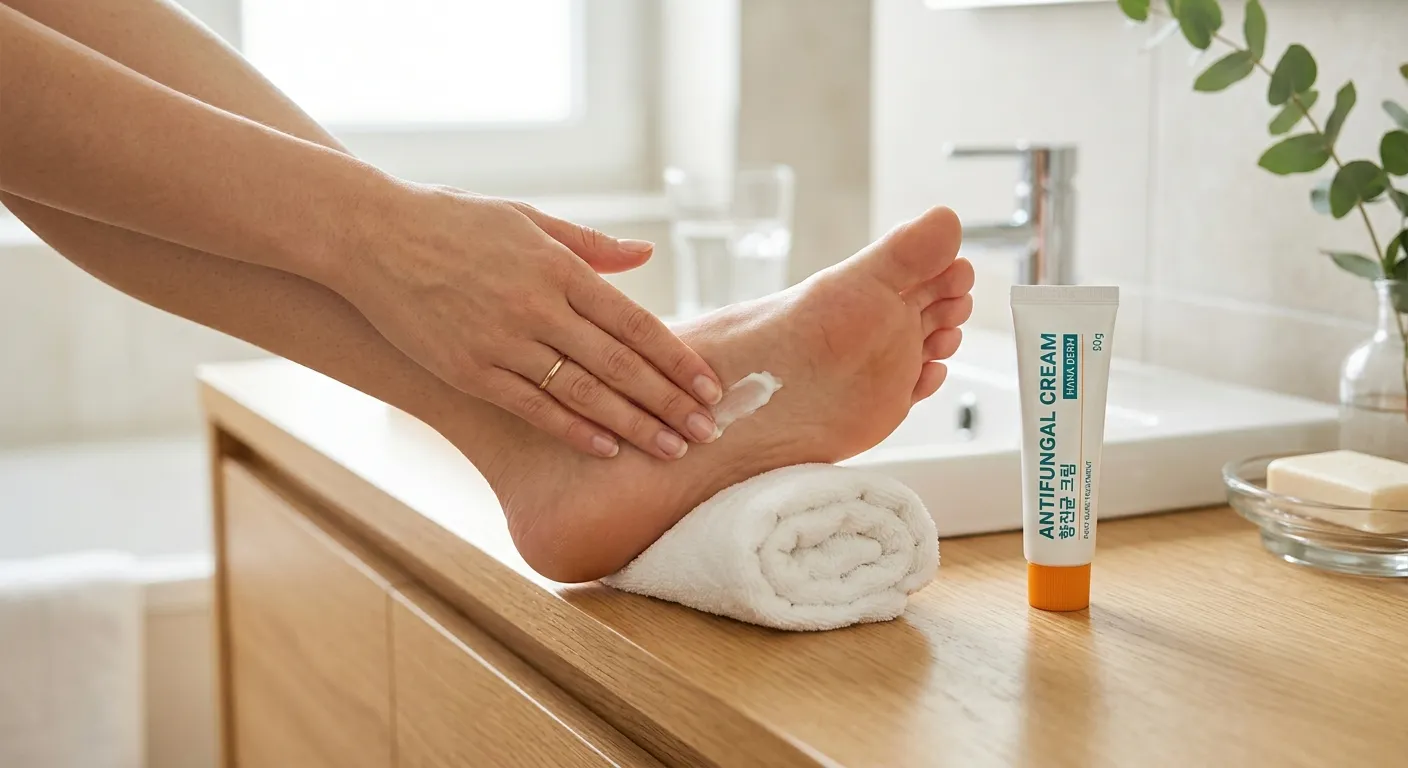
The medicine is only half the equation. Using it correctly — the right technique, the right frequency, and especially for the full prescribed duration — determines whether you get lasting relief or a relapse in three months.
-
1
Wash and thoroughly dry your feet before applying
Remove dead skin and debris with a gentle cleanser. Dry between every toe — completely. Residual moisture blocks drug absorption and provides fungi with exactly the environment they love. A hair dryer on the lowest setting is surprisingly effective at getting between the toes.
-
2
Apply to the affected area plus 2–3 cm of surrounding skin
Don't just treat where it visibly looks infected. Fungal hyphae (root-like filaments) extend into apparently healthy skin. Covering a margin of normal-looking skin around the lesion is standard dermatology practice and significantly reduces recurrence.
-
3
Follow the application frequency on the label
Terbinafine and butenafine creams are typically once or twice daily. Clotrimazole and miconazole are usually twice to three times daily. More frequent application doesn't increase efficacy and may cause skin irritation. Consistency at the recommended interval is what matters.
-
4
Complete the full course — even when symptoms disappear
This is the single most important rule. Symptoms resolve before the fungus is fully eliminated. Surviving fungal elements in the deeper stratum corneum will repopulate as soon as treatment stops. For interdigital types, continue 1–2 weeks beyond symptom resolution. For hyperkeratotic/moccasin type, 6+ weeks is often needed even after visible resolution.
-
5
Keep feet dry and ventilated throughout treatment
Wearing moisture-wicking socks and rotating shoes gives the antifungal medicine a better chance to work. Treating your feet but wearing the same saturated shoes every day essentially undermines the therapy.
Recommended Treatment Duration by Type
| Type | First-Line Topical | Duration | When to Consider Oral Meds |
|---|---|---|---|
| Interdigital | Terbinafine or clotrimazole | 1–4 weeks | No response after 4 weeks |
| Vesicular | Terbinafine gel/cream | 2–4 weeks | Repeated relapse |
| Hyperkeratotic (Moccasin) | Clotrimazole or miconazole | 6–12 weeks | May warrant oral from the start |
| Nail Fungus (Mild) | Ciclopirox or amorolfine lacquer | 6–12 months | No improvement at 6 months |
| Nail Fungus (Moderate–Severe) | Oral terbinafine (Rx) | 12 weeks | Start oral immediately |
Prevention & Stopping Recurrence
Athlete's foot is notorious for coming back. Published data from dermatology journals suggests recurrence rates of 40–70% within one year of successful treatment. The reason is almost always environmental recontamination — from infected shoes, shared surfaces, or untreated family members — combined with the same risk factors that caused the initial infection.
- Wash and dry feet thoroughly, especially between toes
- Wear moisture-wicking or cotton socks
- Change socks at least once daily (more if sweaty)
- Rotate between two or more pairs of shoes
- Wear flip-flops in communal showers and pool areas
- Use antifungal powder in shoes preventively
- Keep separate towels, bath mats, and slippers from family members
- Wearing damp socks for hours
- Tight, non-breathable synthetic shoes all day
- Barefoot walking in gyms, pools, locker rooms
- Borrowing someone else's footwear
- Sharing towels or bath mats with infected family members
- Putting shoes on damp feet
- Stopping treatment when symptoms fade (top cause of relapse)
Don't Forget to Treat Your Shoes
Most people focus on treating the feet but forget that the inside of a shoe — warm, dark, and moist after a day's wear — is essentially a fungal incubator. Recontamination from an untreated shoe is one of the most overlooked reasons athlete's foot keeps coming back.
- Antifungal spray: Spray the inside of each shoe once or twice a week with a terbinafine or miconazole-based shoe spray
- UV shoe sanitizer: UV sanitizing devices achieve 95%+ reduction in fungal and bacterial counts within 15–30 minutes
- Alternate shoes: Never wear the same pair two days in a row — give each pair 24–48 hours to fully dry
- Silica gel packs: Insert moisture-absorbing sachets into stored shoes to prevent build-up
- Machine wash when possible: Sneakers and fabric shoes should be washed and dried in direct sunlight regularly
When to See a Doctor
Most cases of athlete's foot respond well to self-treatment with over-the-counter antifungals. But there are situations where professional evaluation and prescription treatment is necessary — and waiting too long can let the infection worsen or spread.
- OTC treatment for 2–4 weeks shows no improvement
- The foot becomes swollen, red, hot to the touch, or develops painful blisters (signs of secondary bacterial infection or cellulitis)
- Infection spreads to the upper foot, ankle, or leg
- You have toenail involvement (oral antifungal prescription needed)
- You have diabetes, peripheral vascular disease, or a compromised immune system
- You're uncertain whether the diagnosis is athlete's foot, eczema, psoriasis, or contact dermatitis
- Symptoms worsen rapidly or are accompanied by fever
- You're pregnant or breastfeeding and need treatment
Frequently Asked Questions
Key Takeaways — The 3 Principles of Effective Athlete's Foot Treatment
① Match the medicine to your type. Interdigital and vesicular types respond well to terbinafine cream in 1–2 weeks. Hyperkeratotic/moccasin type needs 4–12 weeks. Nail fungus almost always needs oral antifungals or months-long nail lacquer treatment.
② Finish the full course, no matter what. Stopping when symptoms improve is the #1 cause of relapse. The fungus is still there, just quiet. Complete every day of your prescribed treatment.
③ Fix the environment, not just the foot. Treating your shoes, staying dry, and stopping barefoot walking in public spaces is the only way to stop the cycle of reinfection.
This article provides general health information only and is not a substitute for professional medical advice, diagnosis, or treatment. If you have a specific health condition, are immunocompromised, or are taking other medications, consult a licensed healthcare provider before starting any antifungal treatment — particularly oral antifungals, which require a prescription.