
You glance into the toilet and see something red that shouldn't be there — and your stomach drops a little. It's a moment almost everyone has had at least once. Most of the time the cause is something manageable, like hemorrhoids. Occasionally, though, it's a signal that deserves a closer look. Searching online tends to make things worse, mixing harmless explanations with worst-case scenarios in the same results page. This guide walks through what the color can tell you, the medical terms that tend to confuse people, common causes and rarer ones, how the picture shifts by age, what you can do at home, and exactly when it's time to stop guessing and see a doctor. It's a longer read than most health posts, but once you've gone through it, you'll have a much clearer sense of whether to simply watch and wait or head to a doctor right away.
A note before you read on: This article is intended to provide general health and lifestyle information and is not a substitute for a medical diagnosis, examination, or treatment from a licensed physician. If you have a specific condition or symptom, please consult a qualified healthcare professional.
What the Color Suggests
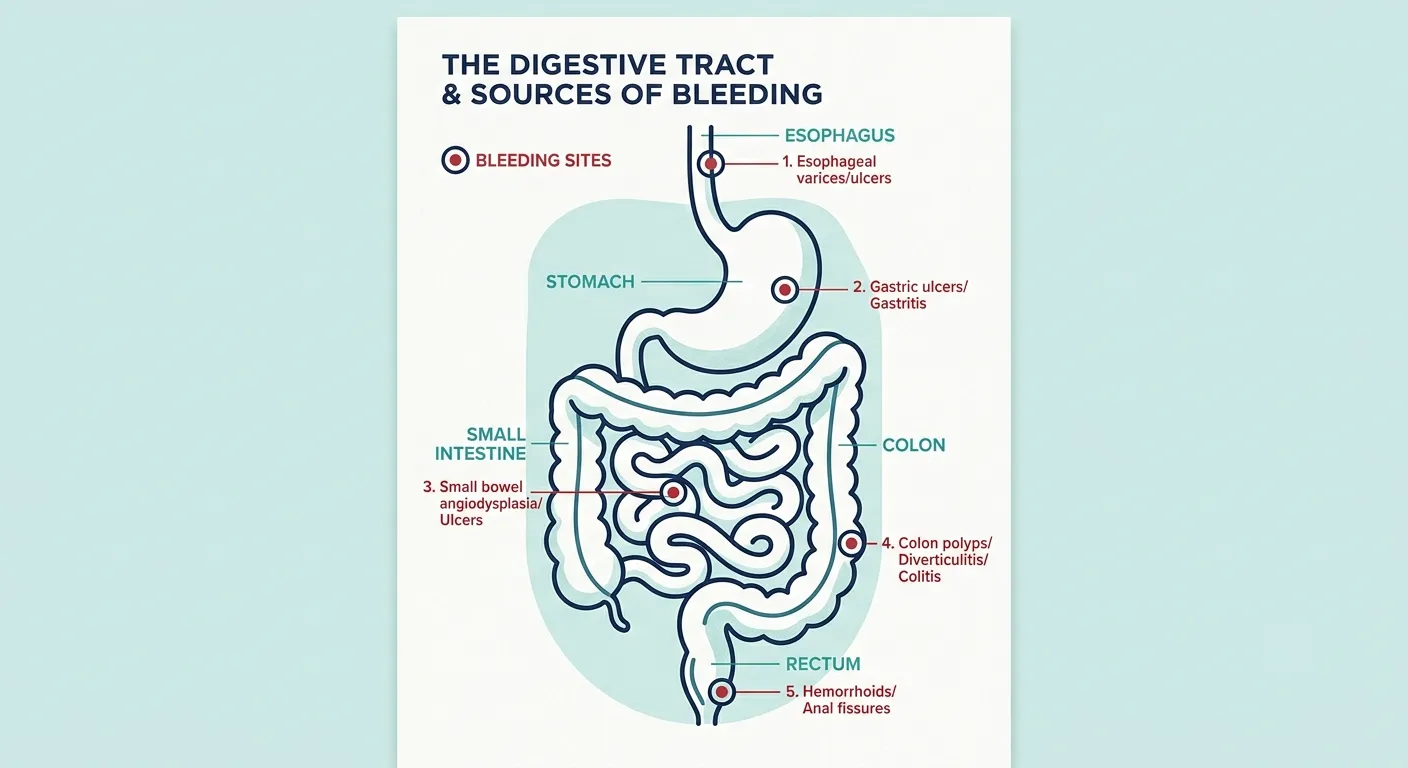
Blood in stool can offer a rough clue about where in the digestive tract the bleeding started. The gut runs roughly seven to nine meters from the mouth to the rectum, so depending on how far the blood travels — and how long that takes — its color shifts along the way. When bleeding starts higher up, digestive enzymes and gut bacteria break down hemoglobin, turning the blood dark and sticky by the time it exits. Bleeding near the anus, on the other hand, usually shows up looking fresh and bright red. This is exactly why a doctor's first question is often simply, "what color was it?"
Food typically takes 24 to 72 hours to travel from mouth to anus, and that transit time is the key variable behind the color. Heavy bleeding or faster-than-usual bowel movements can make even upper-tract bleeding look closer to bright red, while slow transit or constipation can darken blood from a lower source. In other words, color is a genuinely useful first clue — just not an absolute one.
Bright Red
Often seen on the surface of the stool or on toilet paper, sometimes turning the toilet water pink. This usually points to bleeding near the anus, rectum, or lower colon.
Dark Red or Clotted
When blood is mixed into the stool and looks darker, it may have started higher up in the colon and had time to change color — and sometimes clot — on its way out.
Black, Tarry Stool (Melena)
A shiny, sticky black stool with a distinctly strong odor can suggest bleeding higher up — the stomach or small intestine.
| Color | Likely Source | Typical Pattern |
|---|---|---|
| Bright red | Anus, rectum, lower colon | Pain during a bowel movement, blood on tissue |
| Dark red / clotted | Mid to upper colon | Mixed throughout the stool |
| Black, tarry stool | Esophagus, stomach, small intestine | Thick, sticky texture and strong odor |
| Occult (not visible) | Anywhere in the GI tract | Often discovered later through fatigue or anemia |
"Color alone shouldn't be used to rule a cause in or out — symptoms, age, and family history all matter, and getting evaluated is always the safer path." – Colorectal specialist
Why Color Alone Isn't Enough
Despite the usefulness of the color clues above, doctors never rely on color alone to settle on a diagnosis. Here's why.
- Bleeding volume and gut transit speed both change the color. The same amount of blood from the same source can look different depending on how fast things are moving through the gut.
- Sudden and gradual bleeding don't look the same. A bleed that starts abruptly behaves very differently from one that's been building slowly over time.
- More than one source can bleed at once. Someone with hemorrhoids can also have a colon polyp — assuming a single cause can mean missing the other one.
- Food and medication can mimic real bleeding. We'll cover this in more detail later on.
- Small amounts of blood may not change the color at all. This kind of hidden bleeding only shows up on a stool test, and is often caught later through fatigue or anemia.
In the end, color is just one of several clues for deciding whether to see a doctor. Accompanying symptoms, how long it's lasted, age, and family history all need to be weighed together to get the full picture.
A Quick Glossary of Confusing Terms
Reading up on blood in stool means running into a lot of unfamiliar medical terms fast. Knowing a few of them ahead of time makes the conversation with your doctor much smoother.
| Term | What It Means |
|---|---|
| Hematochezia | The general term for bright red to dark red blood passed in the stool. |
| Melena | Black, tarry stool typically caused by bleeding higher up in the digestive tract. |
| Occult blood | Bleeding too small to see with the naked eye, detectable only through testing. |
| FOBT / FIT | Stool tests that chemically or immunologically detect trace amounts of blood; widely used in screening programs. |
| Diverticulosis | Small pouches in the colon wall, often present without causing any symptoms. |
| Diverticulitis | Inflammation or infection of those pouches, which can cause pain and fever. |
| Polyp | A growth on the lining of the colon; some types carry a risk of becoming cancerous over time. |
| IBD | Inflammatory bowel disease, an umbrella term covering ulcerative colitis and Crohn's disease. |
| Biopsy | Removing a small tissue sample to examine under a microscope. |
| Ligation | A non-surgical procedure that uses a rubber band to cut off blood flow to a hemorrhoid. |
| Adenoma | A type of colon polyp that can progress to cancer over time if left untreated. |
| Hemostasis (endoscopic) | Stopping bleeding directly during an endoscopy, using clips or injected medication. |
Knowing these terms means you won't have to ask "wait, what does that mean?" when your results come back — and it lets you ask sharper, more specific questions instead of just searching anxiously online afterward.
9 Common Causes
Plenty of things can cause blood in stool, and most are far less alarming than people fear. In many cases the underlying cause turns out to be hemorrhoids or a small anal fissure — but age and accompanying symptoms can shift that picture, which is exactly why a proper workup matters.
| Cause | Key Features | Notes |
|---|---|---|
| Hemorrhoids | Bright red blood during bowel movements, itching, swelling | One of the most common causes overall |
| Anal fissure | Sharp pain plus bleeding during a bowel movement | Often linked to constipation or hard stool |
| Diverticular bleeding | Sudden, often heavy bleeding with little pain | More common after middle age |
| Colon polyps | Usually no symptoms; occasional light bleeding | Some types can progress to cancer if untreated |
| Inflammatory bowel disease | Mucus-streaked blood, cramping, recurring diarrhea | Includes ulcerative colitis and Crohn's disease |
| Infectious colitis | Fever, diarrhea, abdominal pain | Usually resolves within days |
| Medication-related | Aspirin, anticoagulants, or NSAID use | Never adjust these medications without medical guidance |
| Colorectal cancer | Change in bowel habits, weight loss, anemia | Outcomes are much better with early detection |
| Ischemic colitis | Sudden abdominal pain along with bleeding | More common in older adults with cardiovascular disease |
Hemorrhoids
The single most common cause: swollen blood vessels around the anus. Internal hemorrhoids sit inside the anal canal and often cause painless bright red bleeding, which is part of why they sometimes go unnoticed longer. External hemorrhoids tend to cause pain along with a noticeable lump near the anus. Pregnancy, chronic constipation, long hours sitting, and excess weight all raise the risk, and mild cases often improve with lifestyle changes alone.
Anal Fissure
A small tear in the lining of the anus, usually caused by passing hard stool. The hallmark is a sharp, burning pain that can linger well after the bowel movement itself, and it's common after childbirth or with chronic constipation. The pain often leads people to delay their next bowel movement, which only hardens the stool further and feeds the cycle — early management matters here.
Diverticular Bleeding
Diverticulosis — small pouches that form in the colon wall — becomes increasingly common with age and usually causes no symptoms at all. But if a blood vessel within one of these pouches ruptures, it can produce a sudden, often substantial amount of bleeding with little to no pain. Fortunately, most cases stop on their own, and increasing fiber intake afterward helps lower the chance of it happening again.
Colon Polyps
Small growths on the lining of the colon, usually found incidentally during a routine screening rather than because of symptoms. Larger polyps, or ones classified as adenomas, carry a risk of progressing to cancer over time, which is why the standard approach is to remove them as soon as they're found during a colonoscopy. Because new polyps can form later, sticking to the recommended follow-up schedule matters.
Inflammatory Bowel Disease
An umbrella term covering ulcerative colitis and Crohn's disease — chronic conditions marked by mucus-streaked blood and recurring cramping or diarrhea. It's often assumed to be a middle-age condition, but a meaningful number of cases are newly diagnosed in people in their teens, twenties, and thirties. The overall goal of treatment leans toward long-term management rather than a one-time cure.
Infectious Colitis
Bacterial infections — Salmonella, Campylobacter, and certain strains of E. coli among them — are common culprits, often tied to contaminated food or travel abroad. Fever and diarrhea alongside the bleeding are typical, and most cases clear up within days with rest and fluids alone. Persistent high fever or severe dehydration, though, can call for hospital care.
Medication-Related Bleeding
Aspirin and NSAIDs can weaken the stomach and intestinal lining, raising bleeding risk, while blood thinners like warfarin can make it harder for even a small, pre-existing lesion to stop bleeding on its own. If you're on these medications, never stop them on your own — talk to the prescribing doctor first, since abruptly stopping can also worsen whatever condition the medication was treating.
Colorectal Cancer
This is the cause that deserves the most caution, largely because early stages often progress with almost no symptoms at all. A change in bowel habits, unexplained weight loss, or chronic anemia showing up alongside the bleeding should prompt a thorough workup. The encouraging news is that outcomes improve dramatically with early detection, which is exactly why screening guidelines exist.
Ischemic Colitis
Caused by a temporary drop in blood flow to the colon, this is more common in older adults and those with cardiovascular disease or diabetes. It typically presents as sudden abdominal pain together with bleeding, and prompt diagnosis and treatment make a real difference.
Example 1: A working professional in their 30s
Someone with a history of constipation noticed bright red blood on toilet paper after a bowel movement. There was mild pain but no other symptoms. An exam confirmed an anal fissure, which improved fully with sitz baths and stool softeners.
Example 2: Someone in their 60s
A sudden, heavy episode of bleeding with no pain prompted a visit to the doctor, and a colonoscopy revealed diverticular bleeding. It stopped on its own during the procedure, and the person was advised to increase fiber intake going forward.
*The examples above are illustrative composites meant to show typical patterns, not real patient cases.
Key Takeaway
The color or amount of blood in stool isn't enough on its own to judge how serious it is. If bleeding shows up even once without a clear explanation, the safest move is getting it checked rather than waiting it out.
How Common Causes Shift by Age
The same symptom can point to statistically different causes depending on age — which is exactly why doctors always ask how old you are.
| Age Group | Common Causes | What to Watch For |
|---|---|---|
| Infants & young children | Anal fissures from constipation, milk-protein allergic colitis | Bleeding with severe pain and lethargy can signal an emergency like intussusception |
| Teens to 30s | Hemorrhoids, fissures, infectious colitis | A meaningful share of new IBD diagnoses happen in this age range too |
| 40s–50s | Hemorrhoids, colon polyps, diverticulosis | Long-term NSAID use raises the chance of medication-related bleeding |
| 60 and older | Diverticular bleeding, ischemic colitis, colorectal cancer | Blood thinners are common in this group and can make bleeding harder to stop |
Being young doesn't rule anything out, and being older doesn't automatically mean cancer. But because common causes really do shift with age as shown above, doctors weigh age as one important factor among several. Combined with family history, current medications, and bowel habits, it adds up to a much sharper picture — which is exactly why pulling that information together before your appointment genuinely speeds up the diagnosis.
Warning Signs That Need Urgent Care
If any of the following symptoms show up alongside the bleeding, it's time to seek care quickly rather than waiting to see how things go. Heavy bleeding or whole-body symptoms can signal an emergency.
Go to the ER if you notice
- Heavy bleeding, or bleeding that doesn't stop Emergency
- Severe abdominal pain, high fever, or repeated vomiting Emergency
- Dizziness, fainting, or a racing heartbeat suggesting shock Emergency
- New, shiny black, tarry stool Emergency
- First-time bleeding after age 45, especially with weight loss or a change in bowel habits See a doctor
- Bleeding that recurs over several weeks, or blood mixed with mucus See a doctor
- A small streak on toilet paper, no pain, no other symptoms Monitor
Dizziness or fainting deserves particular attention, since it can mean blood loss has dropped your blood pressure. At the ER, staff will typically check vital signs first, start IV fluids if needed, and run blood tests. If bleeding is severe or the source isn't clear, an emergency endoscopy or transfusion may follow.
- Note when the bleeding started and how often it happens — this detail helps your doctor enormously.
- Tell your doctor about any medications you're taking, especially aspirin or blood thinners.
- If colon cancer or inflammatory bowel disease runs in your family, it's worth being more proactive about getting checked.
- Note any recent travel and the time of your last meal too — both can affect what tests or procedures are appropriate.
Why These Signs Matter
Even though these symptoms are grouped together under "warning signs," the underlying reasons differ quite a bit. Dizziness, fainting, and a racing heart can be early signals of hypovolemic shock as blood volume drops — which is why they top the list. Black, tarry stool can point to a significant vessel injury higher up, in the esophagus or stomach, even when the visible volume seems small, which is why it's often more serious than it looks. New bleeding after 45 combined with weight loss or a change in bowel habits gets flagged separately because that exact combination overlaps heavily with the early presentation of colorectal cancer and other tumors. Bleeding that recurs or comes with mucus tends to point toward something ongoing, like inflammatory bowel disease, rather than a one-off injury — which is why it's filed under "see a doctor" rather than "emergency." A small streak on toilet paper with nothing else going on, by contrast, usually reflects a minor surface injury — a good reminder that "blood in stool" covers a huge range of urgency, not just one level.
Blood Loss and Anemia
Not every dangerous bleed announces itself. Small amounts of blood lost repeatedly over weeks or months can quietly drain the body's iron stores and lead to anemia — without ever changing the color of the stool. In these cases, people often notice fatigue, shortness of breath, or pale skin long before they ever suspect anything is wrong with their digestion. Heart palpitations or dizziness can show up too.
This kind of slow, invisible bleeding is usually only caught through a stool test or blood work. If unexplained anemia turns up later in life, it's worth looking beyond simply taking iron supplements — checking whether ongoing bleeding somewhere in the digestive tract is the real underlying cause is the safer move.
When It Looks Like Blood But Isn't
Plenty of people get a scare from stool color that has nothing to do with actual bleeding. Checking the table below first can save you some unnecessary worry.
| Cause | Color Pattern | How to Tell the Difference |
|---|---|---|
| Beets, red food dye, red gelatin | Bright red stool | Usually disappears within one or two bowel movements |
| Iron supplements, bismuth medications | Black stool | Returns to normal within a few days of stopping |
| Activated charcoal, licorice, large amounts of blueberries | Dark stool | Resolves once the food is out of your system |
| Menstrual blood (in women) | Looks like blood on the stool | Comes from the vagina, not the anus, and lines up with your cycle |
| Blood in urine / bladder bleeding | Pink or red urine | Shows up in the urine, not the stool — easy to confirm while urinating |
These cases typically resolve within one to three days once the food or medication responsible is stopped. If you're still unsure, or the color shows up with no obvious connection to food or medication, getting checked once is the better call for peace of mind.
If the stool turns red and you can't recall eating beets or anything with red dye, it's worth taking that more seriously as possible real bleeding. On the flip side, simply thinking back over the last few days' meals often resolves the worry entirely. If a new iron supplement or stomach medication lines up with when the stool turned dark, that timing is a strong clue the medication is responsible. But if nothing in your diet or medications has changed and the color still shifted, it's safer to lean toward investigating actual bleeding rather than assuming it's harmless.
Tests Your Doctor May Order
To figure out the cause, your doctor will weigh your symptoms, age, and risk factors before deciding which tests make sense. The most common ones include:
| Test | Purpose | Notes |
|---|---|---|
| Digital rectal exam | Checks for issues near the anus and rectum | Quick, simple first step |
| Colonoscopy | Direct visual exam of the colon, with biopsy capability | The most thorough diagnostic option |
| Sigmoidoscopy | Examines the rectum and lower colon | Requires less preparation than a full colonoscopy |
| Stool test (FIT/FOBT) | Detects microscopic, invisible bleeding | Commonly used in screening programs |
| Blood tests | Checks for anemia and signs of inflammation | Assesses the broader impact of blood loss |
| Abdominal CT or imaging | Helps locate diverticula, tumors, or bleeding sites | Often paired with endoscopy |
| Capsule endoscopy | Examines the small intestine, which is hard to reach otherwise | Involves swallowing a pill-sized camera |
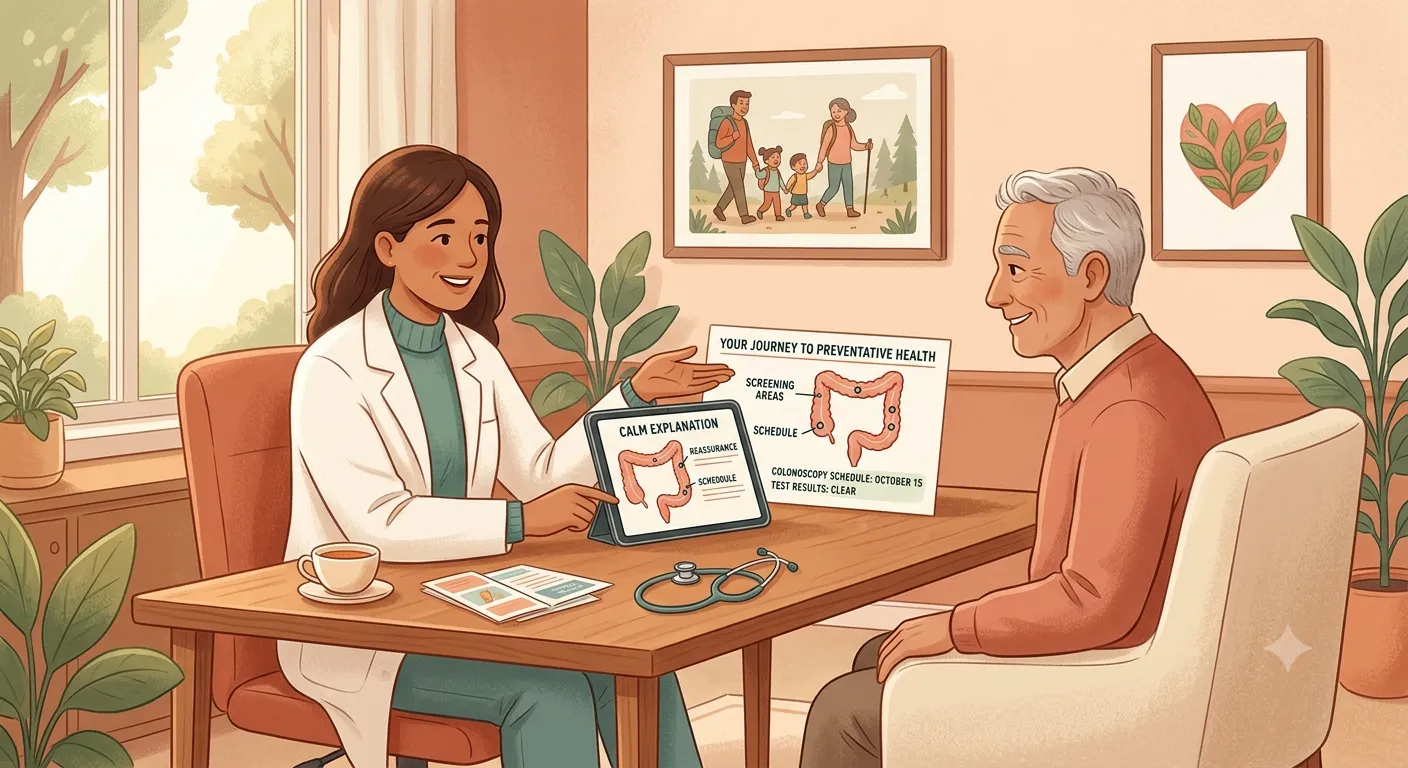
A colonoscopy requires taking a bowel-prep solution the day before to clear out the colon, and the procedure itself takes about 15 to 30 minutes under sedation or light anesthesia. A major advantage is that any polyps found can be removed on the spot. Because sedation effects can linger, plan on having someone else drive you home rather than driving yourself, and if a polyp was removed, you'll likely be told to avoid greasy food and alcohol for a few days afterward. If a biopsy was taken, results usually take a few days to come back, and your doctor will schedule a follow-up based on what they find.
If your symptoms are mild with no warning signs, it's often fine to schedule within the next several days rather than rushing in. But if any red-flag symptoms are present, don't wait for a routine appointment — go straight to the ER or a clinic offering same-day care. Cost and insurance coverage can vary depending on whether the test is for screening or for investigating a specific symptom, so it's worth checking with the clinic ahead of time to make the visit go smoothly.
How Treatment Differs by Cause
The right treatment depends entirely on the underlying cause. Two people who both showed up with "blood in stool" might end up with completely different paths — one resolved with a tube of ointment, the other requiring long-term medication or surgery. The notes below are meant as a general overview; actual treatment decisions depend on the individual's age, other health conditions, and how severe the bleeding is.
Treating Hemorrhoids
Lifestyle changes — more fiber, more water, sitz baths — come first and resolve most mild cases on their own. Persistent symptoms are managed with short courses of medicated ointments or suppositories to reduce swelling and discomfort. When conservative treatment doesn't work or bleeding keeps recurring, a non-surgical procedure like rubber band ligation is considered, with surgical removal reserved for the most severe cases.
Treating Anal Fissures
Sitz baths and stool softeners form the foundation, keeping stool soft enough to avoid re-injury. Topical ointments — often containing calcium channel blockers — help relax anal pressure so the tear can heal. If it doesn't improve after a few weeks and becomes chronic, a Botox injection to relax the muscle or a minor surgical procedure may be considered.
Treating Diverticular Bleeding
Most cases stop on their own during a period of observation in the hospital. If bleeding continues, doctors can apply clips or inject medication directly at the bleeding site during a colonoscopy; if that's not enough, angiography or surgery becomes an option.
Treating Colon Polyps
The standard approach is removing the polyp on the spot during the colonoscopy using a snare or specialized tool. The tissue is then examined under a microscope to check for cancer cells, and the results — along with the number and size of polyps found — determine the timing of your next follow-up exam.
Treating Inflammatory Bowel Disease
The goal leans toward long-term symptom control and fewer flare-ups rather than a one-time cure. Treatment typically starts with anti-inflammatory medication and escalates to immunomodulators or biologics if needed. Surgery becomes an option when medication alone can't keep things under control or complications develop.
Treating Infectious Colitis
Staying hydrated and replacing electrolytes is the priority. Antibiotics are used in some bacterial cases or when symptoms are severe, but a lot of cases clear up on their own without them. Persistent high fever or significant dehydration may require hospitalization for IV fluids.
Treating Colorectal Cancer
Treatment depends heavily on the stage at diagnosis. Early-stage cases are sometimes resolved with surgery alone, while more advanced cases combine chemotherapy or radiation with surgery. Across the board, earlier detection means more treatment options and a lighter overall burden.
What You Can Do at Home
If the cause is something mild like hemorrhoids or an anal fissure, there's a lot you can do at home alongside whatever your doctor prescribes. A warm sitz bath is the most widely recommended self-care step, since it improves blood flow around the anus and relaxes the surrounding muscles.
- Prepare warm water around 38–40°C (100–104°F). Test it against the inside of your wrist first to make sure it isn't too hot.
- Sit in a bathtub or sitz bath basin so the area is fully submerged, and stay there for 10 to 15 minutes.
- Do this two to three times a day, ideally including right after a bowel movement, for the best results.
- Pat the area dry gently with a soft towel afterward instead of rubbing it.
- If pain or bleeding continues despite sitz baths, use the prescribed ointment, and see your doctor again if things still aren't improving.
Keep in mind this is a supportive measure that helps with relatively mild causes like hemorrhoids or fissures — not a substitute for medical care. If the bleeding is heavy or the cause isn't clear, getting evaluated should always come before trying to manage it yourself.
Everyday Prevention and Care
Not every cause of bleeding can be prevented, but a few habits genuinely lower the risk over time. None of these require a dramatic life overhaul — they're small, sustainable adjustments.
- Get enough fiber: Aim for roughly 25–30g a day from whole grains, vegetables, fruit, and legumes. Increase it gradually over a week or two, since ramping up too fast can cause gas and bloating.
- Stay hydrated: At least 1.5–2 liters of water a day works together with fiber to keep things moving smoothly — fiber without enough water can actually make stool harder, not softer.
- Avoid straining on the toilet: Excess pressure is a common trigger for hemorrhoids and fissures. Don't hold it when you feel the urge, and try to cut back on long phone-scrolling sessions on the toilet. If nothing happens after about three minutes, it's gentler on the body to get up and try again later.
- Stay active: Regular movement improves bowel function and helps prevent constipation. Even a daily 30-minute walk makes a noticeable difference for a lot of people.
- Manage your weight: Excess weight is linked to higher rates of hemorrhoids and diverticular disease, partly because more abdominal fat increases pressure during bowel movements.
- Keep up with screening: Many guidelines now recommend colorectal cancer screening starting around age 45, with earlier screening if there's a family history.
- Review your medications: If you're on long-term blood thinners or NSAIDs, check in with your doctor periodically — and always mention them when starting any new medication.
- Get past the awkwardness: Embarrassment keeps a lot of people from seeing a doctor, but colorectal clinics deal with these exact symptoms every single day. Getting checked sooner brings far more peace of mind than putting it off.
Frequently Asked Questions
If you've made it this far and still have questions, you're not alone — these are the ones that come up most often in clinic.
I only saw blood once — is that okay?
A single, small, painless streak is often fine to simply watch for a few days. But if it happens again, or shows up alongside any other warning sign, it's worth getting checked.
Can stress alone cause blood in stool?
Stress itself rarely causes bleeding directly. That said, stress-related changes in bowel habits or increased gut sensitivity can aggravate existing hemorrhoids or other conditions.
Do hemorrhoids always require surgery?
No. Most hemorrhoids improve with lifestyle changes and medication. Surgery is reserved for severe cases or ones that don't respond adequately to conservative treatment.
Is blood in stool common during pregnancy?
Yes — hormonal changes and increased pelvic pressure from the growing uterus often trigger new or worsening hemorrhoids during pregnancy. Even so, bleeding during pregnancy is safer to discuss with an OB-GYN or relevant specialist rather than self-diagnosing.
Do I really need a colonoscopy? I've heard it's unpleasant.
Sedation has come a long way, and most people feel little to no discomfort during the procedure itself. The bowel prep beforehand can be a bit unpleasant, but it's a manageable trade-off for the most reliable way to confirm exactly what's going on.
If the blood is bright red, does that mean it's always minor?
No. Bright red bleeding can still be serious if it's heavy or recurring. Color is just one data point — the amount and any accompanying symptoms matter just as much.
How often can I do a sitz bath?
Two to three times a day, including after bowel movements, is typical. Doing it too often or using water that's too hot can irritate the skin, so it's best to stick to a reasonable frequency.
My stool test came back positive — do I really need a colonoscopy?
A positive stool test only confirms that bleeding occurred; it doesn't tell you the cause. A colonoscopy or similar follow-up test is recommended to pin down exactly where it's coming from.
I have both bleeding and constipation — which should I address first?
Constipation often causes or worsens fissures and hemorrhoids, so increasing fiber and water intake to soften stool is the logical first step. If symptoms persist, it's worth getting both the constipation and the bleeding evaluated together.
Which doctor should I actually see for this?
A colorectal surgeon or gastroenterologist handles most of these cases. If you're unsure where to start, a primary care or family doctor can point you to the right specialist. If bleeding is heavy or whole-body symptoms are present, skip the triage question entirely and go to the ER.
Final Thoughts
Blood in your stool can offer a rough clue about where it's coming from, but the only way to know for sure is through proper evaluation. A single, painless streak might be fine to watch for a few days. Heavy bleeding or whole-body symptoms, though, deserve immediate attention. It's also worth remembering that common causes shift by age, that certain foods and medications can mimic real bleeding, and that mild cases often respond well to simple self-care like sitz baths — all of which can spare you a fair amount of unnecessary worry.
More than anything, getting answers beats sitting with worry. Even a single visit that confirms nothing serious is going on is worthwhile, and if something does need treatment, catching it early almost always means a simpler path forward. Use the color clues and warning signs from this guide to take stock of where you stand right now.