
You sleep eight hours and still drag yourself out of bed. By 2 p.m., a third coffee barely keeps your eyes open. Sound familiar? There's a meaningful difference between ordinary tiredness — the kind that dissolves after a decent night's rest — and chronic fatigue, which lingers for months and resists recovery no matter how much you rest. This guide unpacks the real mechanisms behind chronic fatigue and lays out an evidence-based strategy to reclaim your energy, step by step.
What Is Chronic Fatigue? How It Differs from Normal Tiredness
Muscle soreness after a hard workout or grogginess the morning after a late night is your body's perfectly normal signal that it needs recovery time — and a good sleep typically does the trick. Chronic fatigue is categorically different. It's a state of persistent exhaustion lasting six months or more that doesn't improve with rest and makes even routine tasks feel overwhelming.
The World Health Organization classifies chronic fatigue not as a symptom but as a complex functional impairment. At the more severe end of the spectrum sits Myalgic Encephalomyelitis / Chronic Fatigue Syndrome (ME/CFS), a condition that affects neurological, immune, and endocrine systems simultaneously. Estimates suggest between 0.2% and 2.5% of the global population live with ME/CFS — far more than is commonly recognized.
Normal Tiredness vs. Chronic Fatigue: Key Differences
| Factor | Normal Tiredness | Chronic Fatigue |
|---|---|---|
| Duration | Days to 2 weeks | 6 months or longer |
| Cause | Clear activity or event | Multi-factorial or unclear |
| Response to rest | Full recovery | Little to no improvement |
| Impact on daily life | Minimal | Significant and ongoing |
| Accompanying symptoms | Rare | Headaches, brain fog, sleep disturbances, etc. |
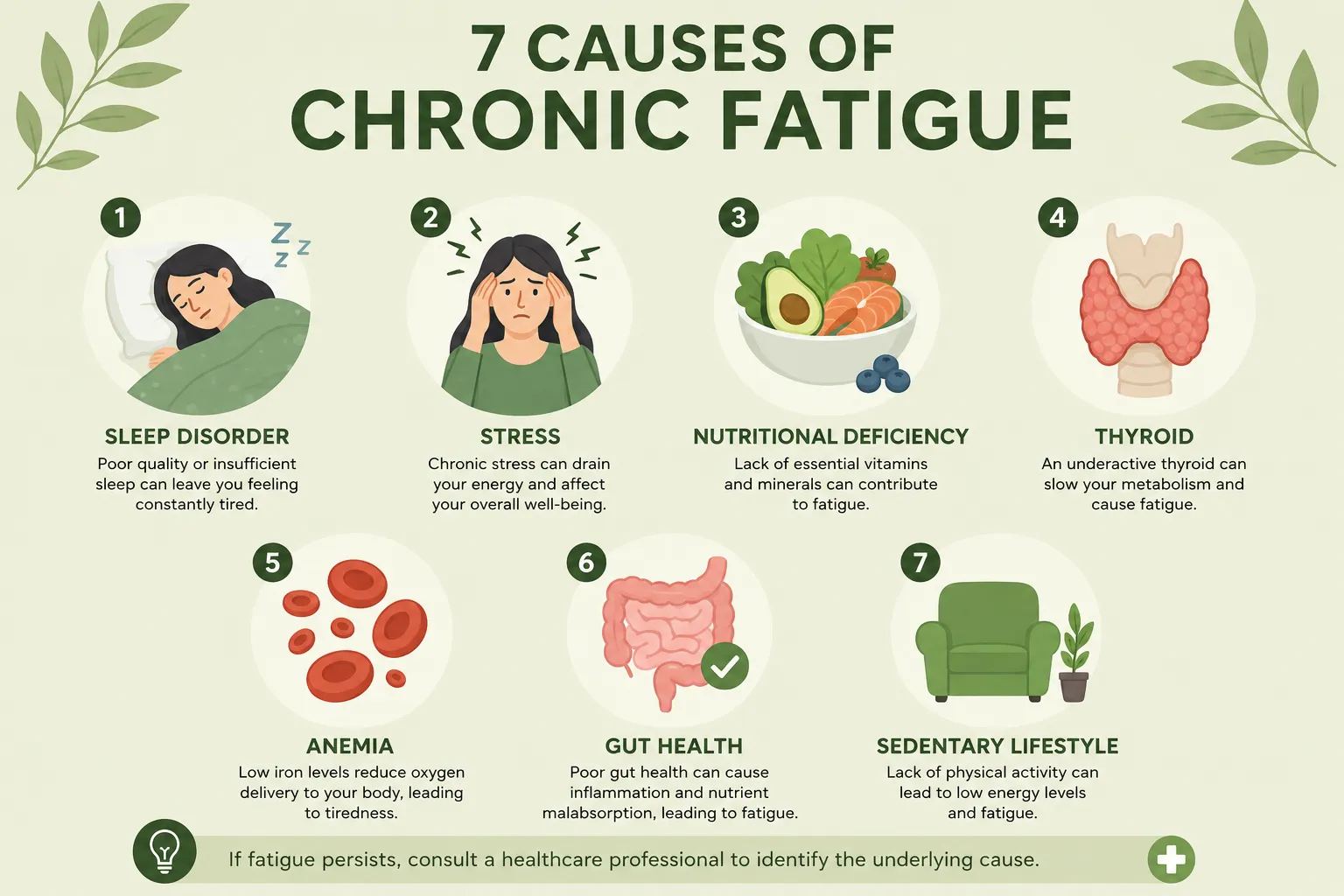
7 Root Causes of Chronic Fatigue
Chronic fatigue rarely has a single cause. Synthesizing research from Johns Hopkins Medicine and the National Institute of Neurological Disorders, the following factors tend to interact and compound one another.
-
1Poor Sleep Quality Eight hours in bed means little if you're spending minimal time in deep (slow-wave) or REM sleep. Sleep apnea is a particularly insidious culprit because many people have it without realizing it, silently fragmenting their sleep throughout the night.
-
2Chronic Stress and Cortisol Dysregulation Sustained psychological pressure disrupts the natural rhythm of cortisol secretion. When the adrenal glands are chronically overloaded, the body's overall capacity to regulate energy gradually degrades.
-
3Iron, Vitamin D, and B12 Deficiency Iron is essential for producing hemoglobin that carries oxygen to cells — too little means the whole body runs on empty. Vitamin D deficiency directly impairs muscle function and immunity; research suggests more than 70% of Koreans are deficient. B12 deficiency compounds this with neurological fatigue and cognitive fog.
-
4Hypothyroidism Thyroid hormones govern the pace of virtually every metabolic process in the body. When they're in short supply, the telltale triad of constant fatigue, unexplained weight gain, and heightened sensitivity to cold appears.
-
5Gut Microbiome Imbalance Gut-brain axis research has established that an imbalance in intestinal bacteria affects neurotransmitter production — contributing to fatigue, impaired concentration, and low mood. Prolonged antibiotic use and diets heavy in ultra-processed foods are primary risk factors.
-
6Physical Inactivity and Deconditioning Counterintuitively, too much rest breeds more fatigue. When activity drops, mitochondrial function and cardiorespiratory capacity decline together, creating a feedback loop where even minor exertion becomes exhausting.
-
7Depression and Anxiety Disorders Mental health conditions and chronic fatigue are tightly intertwined. It's often impossible to determine which came first because each amplifies the other in a bidirectional cycle.
"Fatigue is the body's warning light. Ignore it long enough and a manageable problem can evolve into a complex chronic condition." – Harvard Medical School Division of Sleep Medicine
Self-Assessment: Could You Have Chronic Fatigue?
If four or more of the following have been present continuously for six months or longer, a medical consultation is advisable. (This checklist is a reference tool, not a diagnostic instrument.)
More important than any checklist score is documenting when symptoms started and how long they have persisted. Keeping a symptom diary for at least two weeks before your appointment gives a physician far more to work with and can meaningfully accelerate diagnosis.
A Science-Backed 5-Step Recovery Routine
Chronic fatigue isn't solved by simply resting more. The strongest clinical evidence currently supports a combined approach drawing on cognitive behavioral therapy (CBT), graded exercise therapy (GET), and sleep hygiene improvement. The routine below translates these frameworks into practical daily habits.

5-Step Recovery Routine at a Glance
-
1Sleep Hygiene Reset Go to bed and wake up at the same time every day — including weekends. Power down screens and blue-light sources an hour before bed. Keep your bedroom between 18–20°C (64–68°F). Limit naps to 20 minutes. The American Academy of Sleep Medicine emphasizes that sleep schedule consistency matters more than total hours in bed.
-
2Graded Physical Activity Complete immobility accelerates deconditioning. Start with five to ten minutes of walking daily, then increase by five minutes every two weeks. If you experience a significant symptom flare within 24 hours of activity, scale back immediately — the goal is sustainable progression, not pushing through.
-
3Energy Pacing Think of your daily energy as a battery. Deliberately stop before it drains completely. The common trap is overdoing it on good days, then crashing for the next two. Operating at 60–70% of perceived capacity on better days yields faster long-term recovery than cycling between overexertion and collapse.
-
4Anti-Inflammatory Diet Reduce ultra-processed foods, refined sugar, and trans fats. Increase omega-3-rich fish (salmon, mackerel), colorful vegetables, fruit, and whole grains. Multiple studies confirm that the Mediterranean dietary pattern lowers chronic inflammation markers — a key driver of fatigue.
-
5Stress Buffer Routine Ten minutes of mindfulness meditation, diaphragmatic breathing exercises, and 20 minutes of morning natural light exposure each help stabilize cortisol rhythms. A meta-analysis in an international psychiatry journal found that mindfulness practice produced statistically significant improvements in chronic fatigue symptom severity.
Key Takeaway
Consistency beats intensity. Meaningful changes to your circadian rhythm and energy systems typically require two to four weeks of sustained practice. Rather than overhauling everything at once, pick a single change — ideally your sleep routine — and nail it before adding the next layer.
Nutritional Deficiency Checklist You Might Be Overlooking
Fatigue-related nutritional deficiencies are detectable through standard blood tests. Below are the key nutrients most strongly linked to chronic fatigue and the corresponding lab markers to request.
| Nutrient | Key Symptoms of Deficiency | Top Food Sources | Blood Test Marker |
|---|---|---|---|
| Iron | Chronic fatigue, pallor, shortness of breath | Beef, oysters, lentils, spinach | Serum ferritin, CBC |
| Vitamin D | Muscle pain, weakened immunity, low mood | Salmon, egg yolks, fortified milk | 25(OH)D |
| Vitamin B12 | Neurological fatigue, tingling extremities, brain fog | Clams, meat, dairy, eggs | Serum B12 |
| Magnesium | Muscle cramps, sleep disturbance, headaches | Nuts, dark chocolate, banana, tofu | Serum magnesium |
| Zinc | Weakened immunity, fatigue, poor appetite | Oysters, pumpkin seeds, chickpeas | Serum zinc |
| Coenzyme Q10 | Reduced cellular energy production, fatigue | Beef, sardines, broccoli | Requires specialized test |
Get tested before supplementing. Excessive intake of certain nutrients — iron in particular — can be harmful to organ health when levels are already normal. Always dose supplements under medical guidance based on confirmed deficiency, not assumption.
Top 5 Everyday Foods That Support Energy Recovery
You can meaningfully shift your energy levels through diet adjustment alone — no fancy supplements required.
- Eggs: Rich in B vitamins, choline, and selenium — all essential for nervous system function and energy metabolism.
- Mackerel and salmon: Omega-3 fatty acids reduce neurological inflammation and improve cell membrane integrity.
- Walnuts and almonds: Magnesium and healthy fats support deeper sleep and faster muscle recovery.
- Spinach and kale: Pair iron and folate with vitamin C naturally, boosting absorption rates and fueling energy metabolism.
- Fermented foods (miso, kimchi, yogurt): Cultivate beneficial gut bacteria, improving neurotransmitter production and immune function.
When Should You See a Doctor?
The following situations call for professional medical evaluation rather than continued self-management. Early detection significantly influences treatment outcomes.

Warning Signs Requiring Prompt Medical Attention
Which Specialist Should You See?
- Internal medicine or family practice: Start here — blood panels, thyroid function, and anemia screens will rule out the most common underlying causes.
- Endocrinology: If thyroid or adrenal dysfunction is suspected, specialized testing goes deeper than standard panels.
- Psychiatry: When depression or anxiety is co-occurring, medication combined with CBT typically produces better outcomes than either alone.
- Sleep clinic: If sleep apnea or clinical insomnia is the primary suspect, a polysomnography (sleep study) provides definitive answers.
Closing: Small Steps That Rebuild Your Energy
Chronic fatigue is not a willpower problem. It's your body's accumulated distress signal. The temptation is to wait for a moment of sufficient motivation and overhaul everything at once — but that rarely works. What does work is starting small and staying consistent.
Turn off your phone 30 minutes earlier tonight. Add a 10-minute walk tomorrow morning. These micro-changes compound. When sustained over weeks, they create the positive feedback loop your body needs to restore its natural energy rhythm. The core framework from this guide is straightforward: restorative sleep + gentle movement + anti-inflammatory diet + stress management. When these four pillars realign, chronic fatigue can meaningfully improve. And if symptoms have persisted for six months or more, seeking professional help is not an admission of defeat — it's the most efficient strategy available.
Listening to your body is the most powerful form of healing. Choose one change today — just one — and begin.