
Has visiting the bathroom started to feel like a chore you dread? That heavy, bloated feeling that just won't resolve — anyone who has dealt with constipation knows how much it can quietly drain the joy from an otherwise ordinary day. According to the World Gastroenterology Organisation, chronic constipation affects up to 27% of the adult population globally, making it one of the most common digestive complaints worldwide. Yet despite its prevalence, most people suffer in silence. In this guide, we cut through the noise with a clear, evidence-based look at what constipation actually is, the seven main reasons it happens, and what genuinely works to resolve it.
What Is Constipation? Medical Definition & Diagnosis
Many people assume constipation simply means not going to the bathroom every day. In reality, bowel habits vary widely — anywhere from three times a day to three times a week is considered normal. Constipation is less about frequency alone and more about what happens when you do go. The internationally accepted diagnostic standard, the Rome IV Criteria, defines functional constipation as experiencing two or more of the following symptoms for at least six months, with symptoms present for the past three months:
| Diagnostic Criterion (2 of 6 must apply) | Frequency Threshold |
|---|---|
| Straining during bowel movements | ≥25% of the time |
| Hard or lumpy stools (Bristol Type 1–2) | ≥25% of the time |
| Sensation of incomplete evacuation | ≥25% of the time |
| Sensation of anorectal blockage or obstruction | ≥25% of the time |
| Need for manual maneuvers to facilitate defecation | ≥25% of the time |
| Spontaneous bowel movements | Fewer than 3 per week |
An important nuance: you can move your bowels daily and still technically have constipation if the experience consistently involves significant straining or hard, difficult-to-pass stools.
Check Your Stool — The Bristol Stool Scale
The Bristol Stool Form Scale is a clinical tool used worldwide to classify stool into seven types based on consistency and shape, which reflects gut transit time. Types 1–2 indicate constipation; types 3–4 are ideal; types 5–7 suggest loose stools or diarrhea.
🔴 Constipation
🔴 Constipation
🟢 Normal range
🟢 Ideal
🔵 Slightly loose
🔵 Diarrhea
🔵 Severe diarrhea
Two Main Types of Constipation
Functional (primary) constipation — the most common kind — arises from diet, lifestyle, or psychological factors without an underlying structural disease. Secondary constipation is caused by an identifiable medical condition such as hypothyroidism, diabetic autonomic neuropathy, Parkinson's disease, or by certain medications. Secondary constipation requires addressing the root cause first.
"Constipation affects 14 to 17 percent of the world's population chronically and has a significant impact on quality of life and workplace productivity — yet the majority of cases respond well to lifestyle and dietary modification." – World Gastroenterology Organisation Global Guidelines on Constipation
7 Root Causes of Constipation
Constipation rarely has a single cause. For most people, it's the result of several factors compounding one another. Identifying which ones apply to you is the first step toward a lasting fix.
Insufficient Dietary Fiber
Fiber is the cornerstone of bowel regularity. It absorbs water to soften stools and adds bulk that stimulates intestinal movement. Research from the Harvard T.H. Chan School of Public Health consistently shows that adequate dietary fiber intake significantly reduces constipation risk. Most adults in developed countries consume only about half the recommended 25–38 grams per day, largely because modern diets are heavy on processed foods and light on vegetables, legumes, and whole grains.
Inadequate Hydration
The colon continuously absorbs water from stool as it moves through. When you're dehydrated, your body compensates by extracting even more fluid from the large intestine, leaving stools hard, dry, and difficult to pass. Aim for at least 1.5–2 liters of water daily, and remember that caffeinated and alcoholic beverages have a diuretic effect that accelerates fluid loss.
Sedentary Lifestyle
Physical movement stimulates the muscular contractions — called peristalsis — that push contents through the intestines. A meta-analysis published in the journal Alimentary Pharmacology & Therapeutics confirmed that regular aerobic exercise significantly shortens colonic transit time and improves chronic constipation symptoms. The rise of desk-bound work is one reason constipation has become so prevalent in modern populations.
Medication Side Effects
A surprising number of common medications can slow intestinal motility or reduce fluid secretion in the gut. The main culprits include: iron and calcium supplements, opioid pain relievers, certain antidepressants (tricyclics), antihistamines, and aluminum-based antacids. If constipation started shortly after beginning a new medication, raise it with your prescriber — alternatives or dose adjustments are often available.
Stress and Psychological Factors
The gut and brain are in constant communication via the gut-brain axis — a bidirectional network of nerves and signaling molecules. Chronic stress, anxiety, and depression can dysregulate this system, altering gut motility in either direction. This is particularly pronounced in people with irritable bowel syndrome (IBS). If you've ever noticed your digestion behaving strangely before a big presentation or stressful event, you've felt this connection firsthand.
Ignoring the Urge to Go
Routinely suppressing the urge to defecate — whether because of a busy schedule, discomfort with public restrooms, or simply inconvenient timing — causes the rectal sensory receptors to become less responsive over time. Eventually, you stop feeling the urge even when stool is present, creating a self-reinforcing cycle of constipation. Responding to the urge promptly is one of the simplest habits you can adopt.
Underlying Medical Conditions
Several systemic diseases directly impair gut motility. Hypothyroidism slows the entire metabolism, including digestive transit. Diabetic autonomic neuropathy, Parkinson's disease, and multiple sclerosis can damage the nerves controlling gut movement. Structural issues — including colorectal cancer — can also present as a change in bowel habits, which is why a new onset of constipation after age 50 always warrants medical evaluation.
Key Insight
Constipation is almost never caused by just one thing. Diet, hydration, exercise, medications, stress, bathroom habits, and underlying health conditions often act together. Pinpointing your specific contributors makes targeted solutions far more effective.
Dietary Approaches: Foods Your Gut Will Love
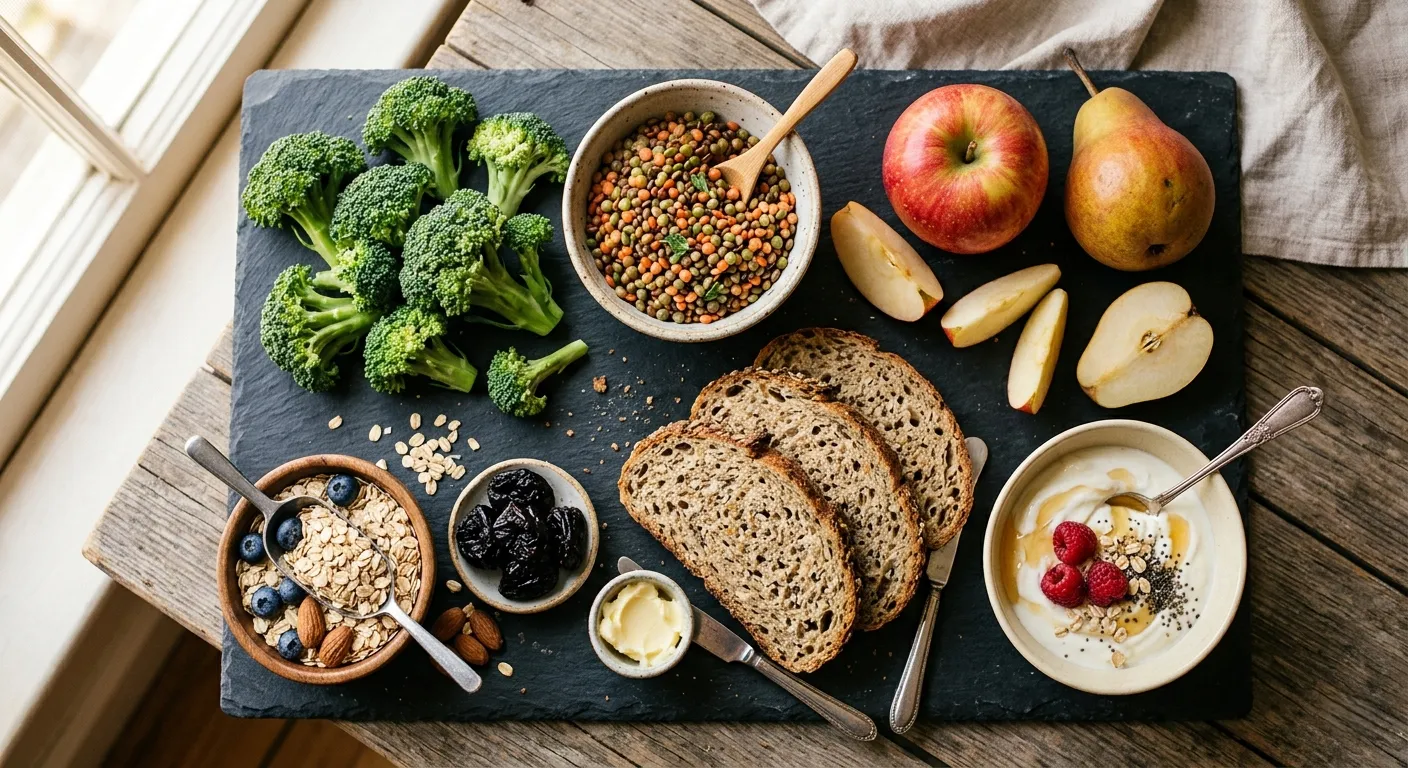
Understanding Fiber: Soluble vs. Insoluble
Dietary fiber comes in two forms, and both play distinct roles in gut health. The goal is to get enough of each rather than focusing on just one type.
| Soluble Fiber | Insoluble Fiber | |
|---|---|---|
| How It Works | Dissolves in water, forming a gel that softens stool and slows digestion | Doesn't dissolve; adds bulk and speeds up transit through the colon |
| Best Sources | Oats, apples, pears, legumes, avocado, psyllium husk | Whole wheat, brown rice, broccoli, carrots, nuts, fruit skins |
| Primary Benefit | Softens stool, stabilizes blood sugar | Stimulates bowel movement, reduces transit time |
The American College of Gastroenterology recommends 25–38 grams of fiber daily for adults. If your current intake is low, increase gradually over one to two weeks and drink extra water alongside — jumping in too fast causes bloating and gas.
Top 8 Fiber-Rich Foods
Three Foods With Especially Strong Evidence
Prunes — Nature's Laxative
Prunes contain both dietary fiber and sorbitol, a naturally occurring sugar alcohol that draws water into the intestines. In a randomized controlled trial published in Alimentary Pharmacology & Therapeutics, prune consumption outperformed psyllium husk — one of the most commonly recommended fiber supplements — in increasing stool frequency and improving consistency. A daily serving of around 50g (7–8 prunes) is a good target.
Kiwifruit — RCT-Proven Relief
A study published in the American Journal of Gastroenterology found that eating two kiwis per day significantly reduced colonic transit time, increased stool frequency, and improved stool consistency in people with chronic constipation. The effect is attributed to a combination of fiber, water content, and an enzyme called actinidin that supports protein digestion and gut motility.
Fermented Foods — Better Gut Flora
Yogurt, kefir, miso, kimchi, and other fermented foods introduce beneficial bacteria that help regulate gut function. A review in the journal Gut Microbes found that probiotic supplementation increased weekly bowel frequency and improved stool consistency in constipated adults, though effects vary significantly by strain. Think of fermented foods as maintenance — they create the conditions for better long-term gut health.
Hydration: The Simplest Fix You Might Be Overlooking
- 💧Drink at least 1.5–2 liters of water daily. More if you're active, in a warm climate, or consuming diuretics like coffee or alcohol.
- ☀️A warm glass of water first thing in the morning (200–250ml, on an empty stomach) triggers the gastrocolic reflex — a natural physiological response that prompts bowel movement.
- ☕Coffee also stimulates the gastrocolic reflex for many people, which is why the morning urge often follows that first cup — but caffeine's diuretic effect means it shouldn't replace plain water.
- 🍵Warm herbal teas (senna, ginger, licorice root) can provide gentle digestive support, though senna-based teas should only be used occasionally.
Lifestyle Changes That Make a Real Difference

Exercise: The Free Prescription Your Gut Has Been Waiting For
- 🚶Brisk walking: Just 20–30 minutes of aerobic movement daily is enough to noticeably speed up gut transit time. Low barrier, high reward.
- 🧘Yoga twists: Poses such as the Seated Spinal Twist (Ardha Matsyendrasana) compress and stimulate the abdominal organs. A pilot study in 2015 found yoga practice reduced constipation symptoms in IBS patients over an 8-week period.
- 💪Core and pelvic floor strengthening: Building these muscles helps with the mechanics of defecation, particularly important if straining is a consistent issue.
Building Better Bathroom Habits
Optimize Your Posture
Western-style toilets put the colon at a mechanical disadvantage. Squatting straightens the anorectal angle, reducing the muscular effort needed to pass stool. A simple footstool raising your knees 15–20cm above hip level approximates this position and can make a remarkable difference — particularly for those who strain. Multiple studies support its effectiveness in reducing straining time and effort.
Use the Gastrocolic Reflex
The gastrocolic reflex is most powerful 20–30 minutes after a meal, especially breakfast. Sitting on the toilet at this time — even without an urgent urge — trains your bowels into a consistent rhythm. Regularity in bowel timing is a cornerstone of treating functional constipation in clinical practice.
Put the Phone Away
Scrolling on your phone during a bathroom visit prolongs toilet sitting time, increasing venous pressure in the anal canal — a known contributor to hemorrhoids. If nothing happens within 5 minutes of trying, get up and try again later. Straining is always counterproductive.
Abdominal Massage — Follow Your Colon's Path
Colon massage is a safe, low-cost technique that can stimulate peristalsis. It works best when performed on an empty stomach in the morning.
- 1️⃣Start at the lower right of your abdomen, near the cecum (start of the large intestine).
- 2️⃣Move upward along the right side (ascending colon), then across the top (transverse colon), then down the left side (descending colon).
- 3️⃣Apply gentle, firm pressure using your full hand, making slow circular motions. Spend 10–15 minutes total.
- 4️⃣Skip this technique if you have acute abdominal pain, a known hernia, or are pregnant.
Laxatives: A Practical Guide to Getting It Right
Laxatives have their place, but they're not all equal — and some can cause long-term harm if used incorrectly. Always consult a pharmacist or physician before starting one.
| Type | Key Agents | How It Works | Best For | Safety |
|---|---|---|---|---|
| Bulk-forming | Psyllium, methylcellulose | Adds fiber bulk to stool, stimulates movement | First-line; mild to moderate constipation | Safe long-term |
| Osmotic | Polyethylene glycol (PEG), lactulose, magnesium oxide | Draws water into the bowel to soften stool | Moderate constipation | Generally safe |
| Stimulant | Bisacodyl, senna | Directly stimulates intestinal nerves to contract | Short-term or occasional use only | Caution: avoid long-term |
| Stool softener | Docusate sodium | Allows water and fats into stool to soften it | When straining must be avoided | Short-term use |
Prolonged use of stimulant laxatives (bisacodyl, senna) can reduce the gut's ability to function independently over time. They're useful for short-term relief but shouldn't become a daily habit without medical supervision.
Red-Flag Warning Signs That Require a Doctor's Visit
Most constipation resolves with lifestyle changes alone. But certain accompanying symptoms signal that something more serious may be going on. Do not wait if any of the following apply to you.
🚨 See a Doctor Promptly If You Notice Any of These
- Blood in your stool, or bright red blood on toilet paper — may indicate polyps, hemorrhoids, or colorectal cancer
- Black, tarry stools (melena) — a sign of upper gastrointestinal bleeding that requires urgent evaluation
- A sudden change in bowel habits, especially after age 50 — new-onset constipation later in life warrants colonoscopy to rule out colorectal cancer
- Unintentional weight loss — losing more than 5% of body weight over 3 months without trying
- Persistent or severe abdominal pain and bloating — could indicate intestinal obstruction, diverticulitis, or other serious conditions
- Constipation that doesn't improve after 3 weeks of lifestyle changes
- Family history of colorectal cancer — earlier and more frequent screening is advised
- Fever accompanying abdominal pain — may indicate infection or diverticulitis
The American Cancer Society recommends starting colorectal cancer screening at age 45 for average-risk adults. If you have a first-degree relative who had colorectal cancer, screening typically begins 10 years before their diagnosis age. Regular checkups are your best line of defense.
Building Your Daily Gut-Health Routine
Constipation doesn't have to be a permanent fixture in your life. For the vast majority of people, consistent small changes to diet and daily habits are enough to restore normal, comfortable bowel function. The key word is consistent — your gut responds best to routine and patience rather than dramatic one-off interventions.
Your 7-Point Daily Gut-Health Routine
- Start the day with a warm glass of water (200–250ml) on an empty stomach
- Include vegetables, legumes, or whole grains at every meal
- Add 7–8 prunes or 2 kiwis as a daily snack
- Move for at least 30 minutes — a brisk walk counts
- Try sitting on the toilet 20–30 minutes after breakfast each day
- Drink 1.5–2 liters of water throughout the day
- Manage stress with sleep, movement, or mindfulness — your gut is listening
Give it three to four consistent weeks before judging the results. The gut adapts gradually but reliably. If you're still struggling after making these changes, or if any of the red-flag symptoms above apply, don't hesitate to bring it up with your doctor — constipation is a completely legitimate medical concern, and no one should have to suffer through it quietly.