You notice a strange red spot on your child's hand. Or the daycare sends a dreaded notification: "A case of Hand, Foot and Mouth Disease has been confirmed." Every parent knows that stomach-drop feeling. HFMD spreads fast through daycares and preschools, especially during the summer months — but knowing the facts makes all the difference between panic and confident management. From the causative viruses and textbook symptoms to transmission routes, isolation guidelines, and yes, adult infection risks — here is everything you need to know.
This article is intended to provide general health and lifestyle information only, and is not a substitute for professional medical diagnosis, advice, or treatment from a qualified physician. If you or your child experiences symptoms of HFMD, or if severe symptoms such as high fever, vomiting, or seizures occur, please consult a healthcare provider immediately.
What Is HFMD? Causes and Epidemiology
Hand, Foot and Mouth Disease (HFMD) is a contagious viral illness named for the characteristic vesicular rash that appears on the hands, feet, and inside the mouth. First formally described in Canada in 1957, it has since become one of the most common childhood infections worldwide, with particularly high incidence across East and Southeast Asia during summer months.
The Causative Viruses: Enteroviruses
HFMD is caused by viruses in the Enterovirus genus, primarily:
CVA16 Coxsackievirus A16
- Most common HFMD cause globally and in Korea
- Generally causes mild, self-limiting illness
- Classic mouth ulcers + hand/foot rash
- Severe complications relatively rare
- No specific antiviral or vaccine available
EV-A71 Enterovirus A71
- Associated with severe neurological complications
- Responsible for large outbreaks in China, Taiwan, Malaysia
- Symptoms can be more severe and prolonged
- Vaccine approved in China (not available in Korea)
- Higher risk of severe disease in infants under 2
Others Other Enteroviruses
- CVA6, CVA10: increasing trend in recent years
- CVA6 can cause more widespread rash than typical HFMD
- Some cases report nail shedding (onychomadesis) after recovery
- May produce atypical presentations
- Under active surveillance by health authorities
According to the Korea Disease Control and Prevention Agency (KDCA) sentinel surveillance data, HFMD cases in Korea spike sharply each summer, peaking between June and August. Outbreaks are most common in daycare centers, kindergartens, and elementary school lower grades. Once one child is confirmed, multiple classmates often test positive within days — a pattern that underscores both the virus's infectiousness and the importance of prompt isolation.
Why Are Young Children Most Vulnerable?
Adults have typically built up immunity from prior exposure to various enteroviruses. Children under 5, however, are immunologically naive and therefore highly susceptible. Daycare and preschool environments — where children share toys, play in close proximity, and wear diapers that require frequent changing — create nearly ideal conditions for viral transmission. Young children also tend to put their hands in their mouths far more often than adults, further raising their risk.
Symptoms in Detail: Fever, Mouth Sores & Skin Rash
HFMD symptoms unfold in a fairly predictable sequence, though not every child presents identically. What begins like a common cold soon reveals its true identity through distinctive oral and skin findings.
No Symptoms
After viral exposure, it typically takes 3 to 7 days before any symptoms appear. During this silent window, the virus is actively replicating and the child can already be contagious. This is one of the key reasons HFMD spreads so quickly — infected children often attend daycare while still appearing perfectly healthy.
Fever and Prodromal Symptoms
The illness typically begins with a sudden low-to-moderate fever (37.5–39°C / 99.5–102.2°F), along with reduced appetite, malaise, and sore throat. At this stage, HFMD is clinically indistinguishable from many other viral illnesses. If your child suddenly refuses to eat and seems unusually cranky, it is worth watching closely over the next 24 hours.
Oral Lesions (Herpangina-Like Mouth Sores)
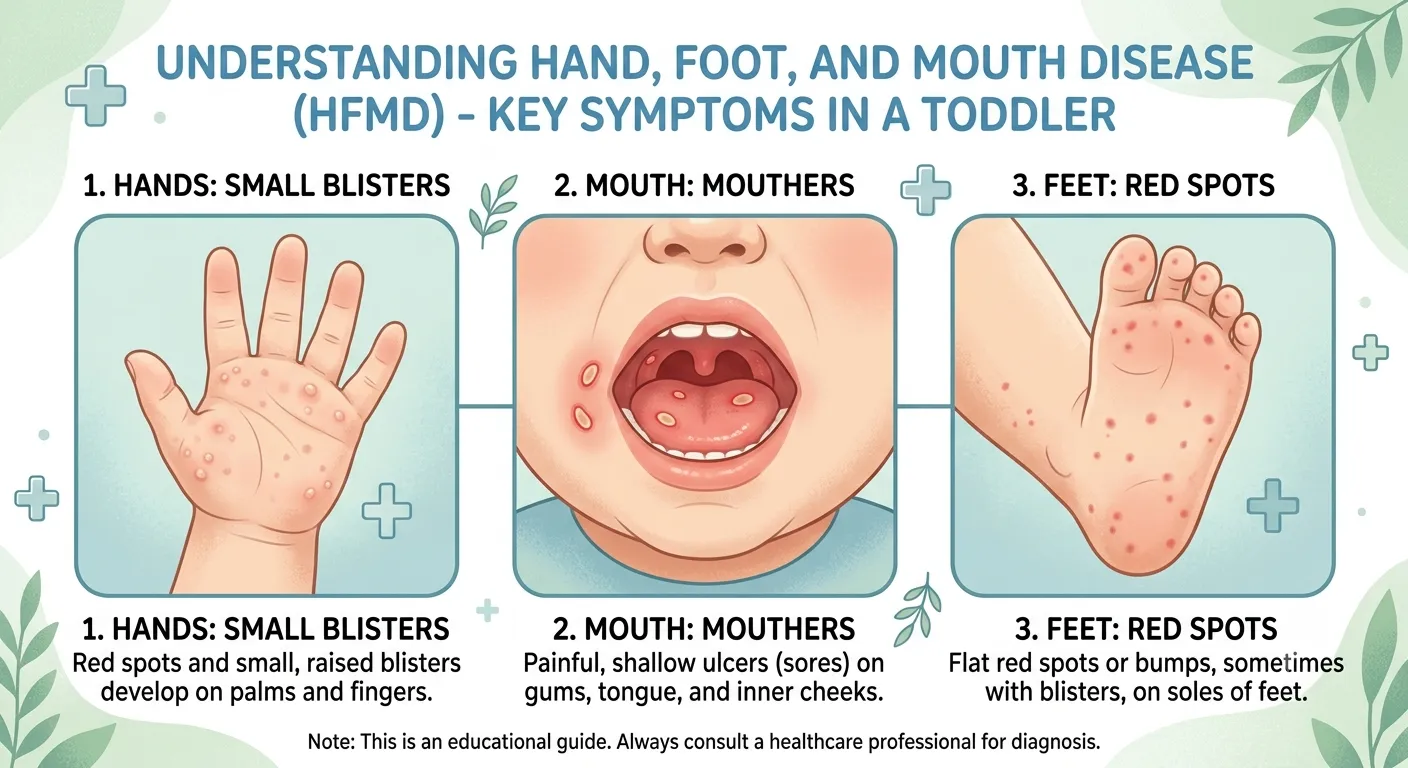
Small red spots appear on the tongue, inner cheeks, gums, and sometimes the soft palate and throat. These quickly develop into fluid-filled vesicles (blisters) that rupture to form shallow, painful ulcers 1–3 mm in diameter. The pain is often significant — many children refuse to eat, drool excessively, or cry when swallowing. Hot, acidic, or salty foods will worsen the pain considerably.
Hand, Foot & Buttock Skin Rash
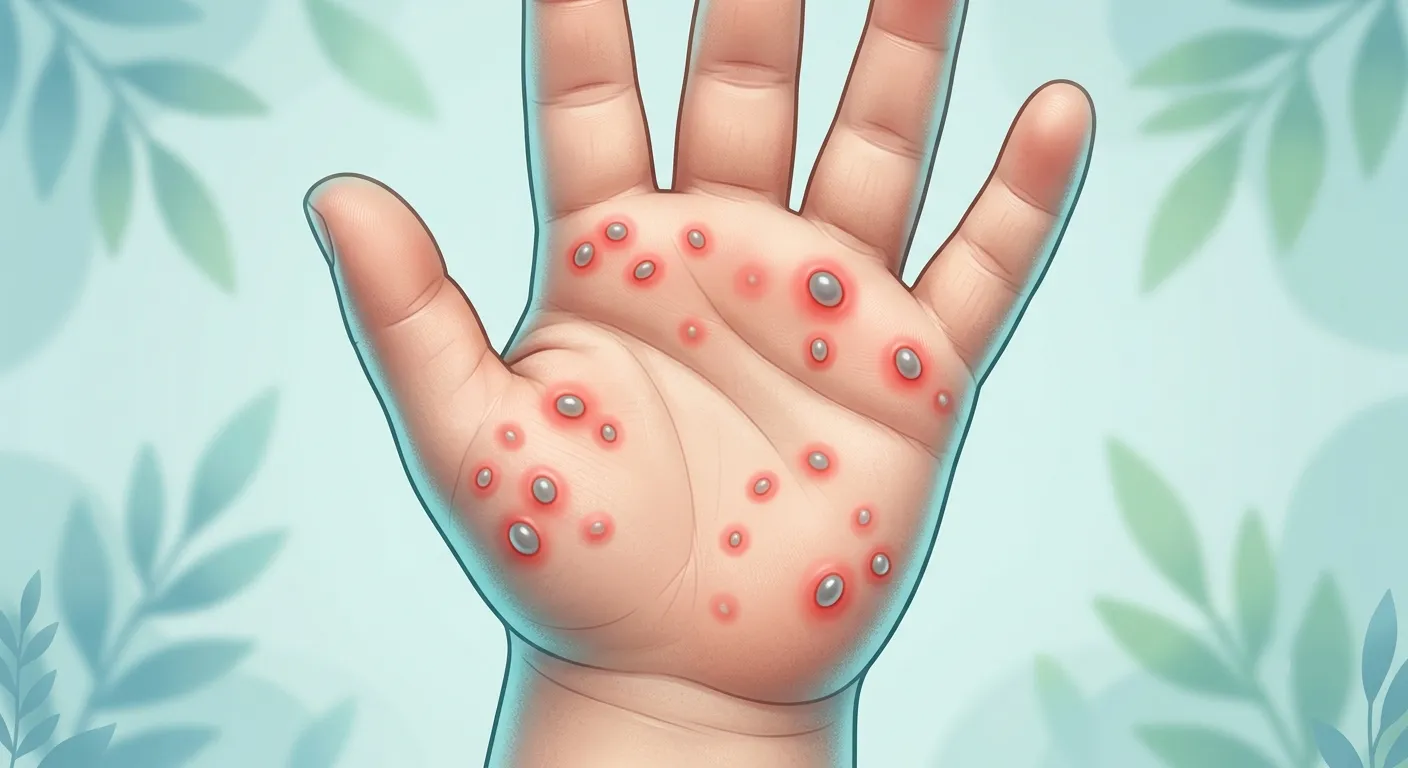
Around the same time as the oral lesions — or shortly after — a characteristic rash appears on the palms, soles, and often the buttocks and inner thighs. The lesions are small (2–5 mm), oval, and grayish-white with a red border. Unlike chickenpox, HFMD blisters are generally not itchy. CVA6 infections can produce a more widespread rash, sometimes covering the legs, arms, and trunk as well.
Natural Recovery
In the vast majority of cases, HFMD resolves on its own within 5 to 7 days without any specific treatment. Blisters dry up and disappear without scarring. Mouth ulcers typically heal within 7 to 10 days. Fever usually subsides within 2 to 3 days.
Nail Shedding (Onychomadesis)
Weeks after a full recovery — most often following CVA6 infection — some children experience partial or complete shedding of fingernails or toenails (onychomadesis). This occurs because the virus temporarily disrupts nail matrix growth during the acute illness. New nails regrow normally over several months. Though alarming to parents, this is benign and requires no treatment.
Lasts 2–3 days
Lasts 7–10 days
Lasts 5–7 days
Watch for dehydration
HFMD vs Herpangina vs Chickenpox: Telling Them Apart
HFMD is most commonly confused with two other conditions: herpangina and chickenpox. Here is a clear comparison to help you tell them apart — though a definitive diagnosis should always come from a doctor.
| Feature | HFMD | Herpangina | Chickenpox |
|---|---|---|---|
| Causative virus | Enteroviruses (CVA16, EV-A71 etc.) | Enteroviruses (Coxsackievirus A) | Varicella-Zoster Virus (VZV) |
| Fever | 37.5–39°C, lasts 2–3 days | High fever (39–40°C), abrupt onset | Mild fever (37.5–38.5°C) |
| Oral lesions | Tongue, inner cheeks, gums — widespread | Confined to tonsils, soft palate, uvula area | Rare |
| Skin rash location | Palms, soles, buttocks | No skin rash (oral only) | Whole body (trunk first, then face and limbs) |
| Itching | Usually absent | Absent | Intense itching |
| Blister appearance | Oval, grayish, 2–5 mm | Small red ulcers confined to throat | Multiple stages visible simultaneously |
| Vaccine available | No (in Korea) | No | Yes (national immunization program) |
| Natural recovery | 5–7 days | 3–5 days | 7–10 days |
💡 Key Differentiators at a Glance
- Rash on hands AND feet → HFMD (herpangina has no skin rash)
- Child is scratching intensely → Chickenpox (HFMD blisters rarely itch)
- Throat ulcers only, no hand/foot rash → Herpangina
- When in doubt, always have a pediatrician examine the child for an accurate diagnosis
Key Takeaway
The hallmark of HFMD is the combination of oval blisters on the palms/soles AND painful mouth ulcers appearing together. If there is no hand or foot rash and ulcers are confined to the back of the throat, suspect herpangina instead. If the rash is all over the body and intensely itchy, consider chickenpox. An accurate clinical diagnosis from a pediatrician is always the best approach.
How It Spreads: Why HFMD Is So Contagious
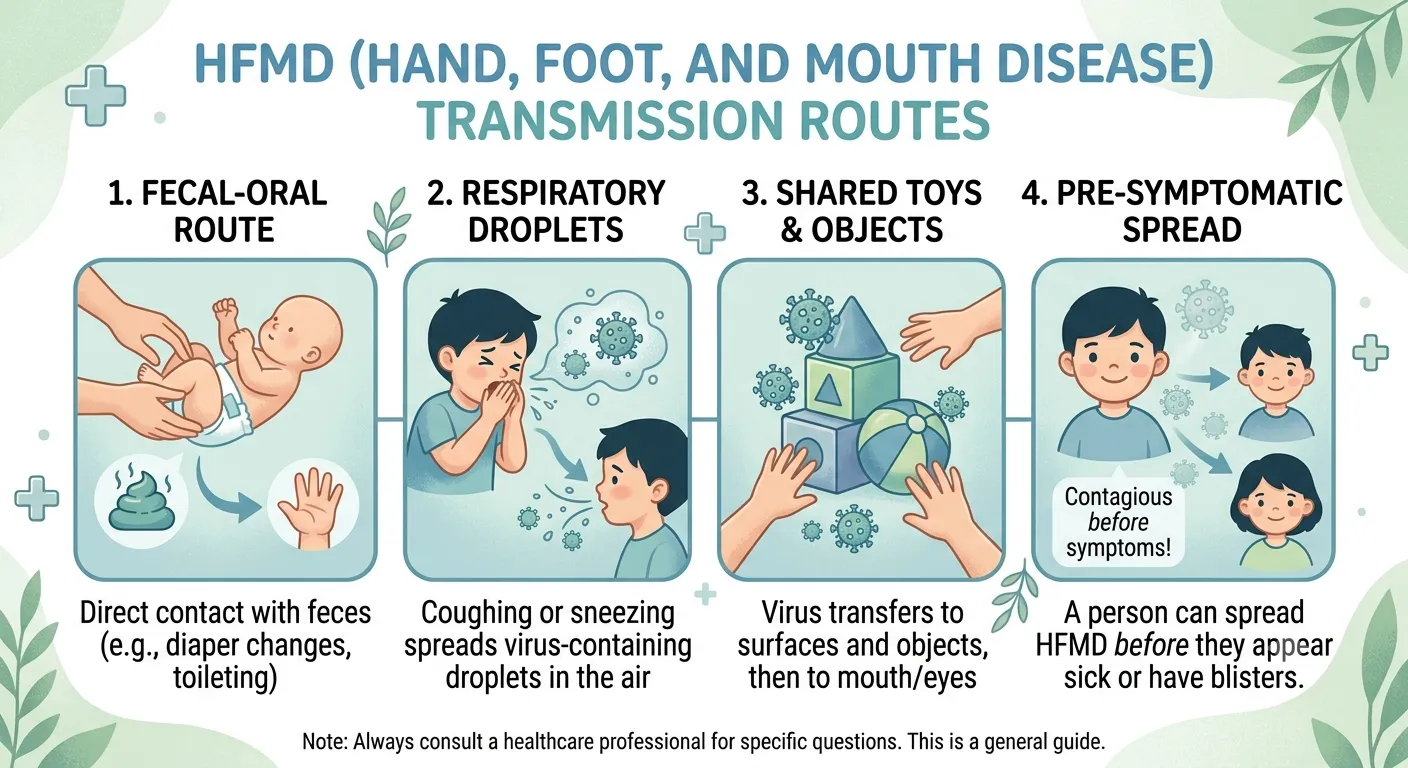
HFMD spreads through multiple routes simultaneously, and critically, infected children are contagious before symptoms appear. This combination makes containment genuinely difficult in group childcare settings.
-
Fecal-Oral Route — The Primary Pathway
Large amounts of virus are shed in the stool of infected individuals. Inadequate handwashing after diaper changes — or after a child uses the toilet — is the single most important transmission pathway in daycare settings. A caregiver who changes a diaper and does not wash hands thoroughly before preparing food or touching other children can rapidly spread the virus. Viral shedding in stool can continue for 4 to 8 weeks after clinical recovery, even after the child appears fully well.
-
Respiratory Droplets (Saliva and Nasal Mucus)
Coughing, sneezing, or simply talking releases virus-containing droplets that can be inhaled or land on surfaces. Children in close contact — sharing a snack, talking face to face, or playing together — are at particular risk. The fluid inside vesicles also contains virus, so contact with a burst blister is a transmission route.
-
Contaminated Surfaces and Objects
Enteroviruses can survive on dry surfaces for hours to days. Shared toys, doorknobs, faucet handles, and utensils become fomites — silent carriers that transmit the virus through hand-to-mouth contact. In daycare settings, shared toy bins are a particularly high-risk vector, which is why toy disinfection during an outbreak is so important.
-
Pre-Symptomatic Transmission
An infected child becomes contagious 1 to 2 days before any symptoms appear. This is the most challenging aspect of HFMD control: a perfectly healthy-looking child may already be actively spreading the virus. It underscores why consistent hand hygiene — not just isolating sick children — is the only reliable prevention strategy for community settings.
⚠️ When Contagiousness Is Highest
- 1–2 days before symptoms appear: child looks healthy but is already spreading virus
- First week of illness: peak contagiousness — isolation is essential
- Weeks after recovery: virus continues to shed in stool (4–8 weeks); hand hygiene remains critical
- Asymptomatic individuals (including adults) can transmit the virus without ever feeling ill
Diagnosis and Treatment: When to See a Doctor
How HFMD Is Diagnosed
In most cases, HFMD is diagnosed clinically — meaning a pediatrician can confirm the diagnosis based on the child's age, the season, and the characteristic combination of fever, mouth ulcers, and hand/foot rash, without needing laboratory tests. When severe complications are suspected, throat swabs, stool samples, blood, or cerebrospinal fluid may be sent for PCR or viral culture to identify the specific enterovirus subtype.
Treatment: Supportive Care Is the Cornerstone
There is no specific antiviral medication for HFMD, and no commercially available vaccine in Korea. Treatment focuses on managing symptoms and preventing complications, particularly dehydration.
✅ Home Care Guide
- Hydration first and always: Mouth sores make swallowing painful, so dehydration is the biggest practical risk. Offer cold or cool liquids frequently in small amounts — cold water, electrolyte drinks, ice cream, frozen popsicles, cold yogurt, and smoothies are often well-tolerated. Avoid hot, spicy, or acidic foods (orange juice, tomatoes) that worsen pain.
- Fever management: If fever above 38°C (100.4°F) is causing discomfort, acetaminophen (Tylenol) or ibuprofen (Advil/Motrin) dosed by body weight is appropriate. Do not use ibuprofen in infants under 6 months.
- Mouth pain relief: Giving acetaminophen syrup 30 minutes before meals can help the child tolerate eating. A physician may prescribe a topical anesthetic gel (lidocaine) for severe oral pain — use strictly as directed, as excess absorption is a risk in young children.
- Leave blisters alone: Do not deliberately pop or scratch the blisters. They will crust over naturally. Keep the skin clean to prevent secondary bacterial infection.
- Rest: Avoid strenuous outdoor activity; keep the child comfortable at home.
🚨 Go to the Doctor Immediately If Your Child Has:
- High fever (above 39°C / 102.2°F) lasting more than 3 days, or fever that does not respond to antipyretics
- Signs of dehydration: no urination for 8+ hours, crying without tears, very dry mouth, extreme listlessness
- A seizure (including febrile seizure)
- Severe headache or neck stiffness
- Persistent, severe vomiting
- Rapid or labored breathing
- Sudden drowsiness, confusion, or unresponsiveness
- Weakness or limping in the arms or legs
- Any infant under 6 months of age with suspected HFMD
Return-to-Daycare Guidelines and Isolation Period
"When can my child go back to daycare?" is one of the most common questions parents ask. Here are the criteria based on guidelines from the Korean Pediatric Society and KDCA.
✅ Safe to Return When:
- Fever-free for at least 24 hours without medication
- Mouth ulcers have healed enough to eat and swallow normally
- All blisters on hands and feet have crusted over or disappeared
- At least 7 days have passed since symptom onset
- Child is well enough to participate in normal activities
❌ Stay Home If:
- Fever is present, or less than 24 hours fever-free
- Mouth sores are still causing drooling or difficulty eating
- Unruptured blisters are still present on hands or feet
- Child is fatigued or unable to engage in normal activities
- The daycare's own policy requires a longer exclusion period
💡 What to Know About Daycare Outbreaks
- HFMD is not a mandatorily notifiable disease in Korea (not a Class 2), but childcare facilities are encouraged to voluntarily report cluster cases to the local health center.
- During an outbreak, facilities should intensify toy and surface disinfection (dilute bleach solution or 70% ethanol), mandate strict handwashing after all diaper changes, and eliminate shared towels.
- Siblings of confirmed cases should be monitored closely for symptoms and kept home from their own daycare if symptoms develop.
- Whether an entire facility closes during a cluster outbreak depends on outbreak size and institutional policy — temporary closure may be recommended by health authorities for large clusters.
Prevention Guide: Handwashing to Disinfection
Since no vaccine is available in Korea, prevention is entirely about hygiene. Proper handwashing is the single most powerful tool against HFMD — and it works.
The 6 Steps of Effective Handwashing
Wet hands with running water
Apply soap generously
Scrub palms together
Clean back of hands, between fingers, thumbs
At least 20 seconds total
Rinse thoroughly under running water
Critical moments for handwashing include:
- After every diaper change — for both caregiver and child
- After using the toilet
- After wiping a child's nose or mouth
- Before and after preparing food
- After playing with or holding a child — especially during outbreak season
- Immediately upon returning home from any public place
Surface and Object Disinfection Guide
| Target Surface | Recommended Disinfectant | Method & Notes |
|---|---|---|
| Hard toys and play equipment | Diluted bleach (500–1,000 ppm) or 70% ethanol | Apply disinfectant, leave for 5+ minutes, rinse with water, allow to dry completely before children use them |
| Diaper changing tables, floors | Diluted bleach solution | Disinfect immediately after every diaper change; rinse well on surfaces that infants may contact |
| Clothing and bedding | Regular laundry + dryer | Wash at 60°C (140°F) or above where possible; replace bedding that has contacted burst blisters |
| Soft toys and fabric items | Machine wash + dry / or quarantine | If machine washable, launder and dry thoroughly; if not washable, store separately for 1–2 weeks |
| Doorknobs, faucets, light switches | 70% ethanol or diluted bleach | Wipe down 1–2 times daily during an outbreak; use paper towels instead of hand dryers in shared bathrooms |
| Cups and utensils | Soap + hot water or dishwasher | Use separate dishes for the ill child; no sharing of cups or cutlery |
✅ Additional Prevention Tips During a Daycare Outbreak
- No shared towels — use individual or disposable paper towels
- Minimize sharing of mouthed objects (blocks, dolls, musical instruments)
- If your child is unwell, keep them home — sending a sick child spreads the virus to everyone
- Increase ventilation in indoor spaces
- Avoid public pools and water parks during the outbreak period
- No sharing of food, drinks, or utensils
HFMD in Adults: Yes, Grown-Ups Can Catch It Too
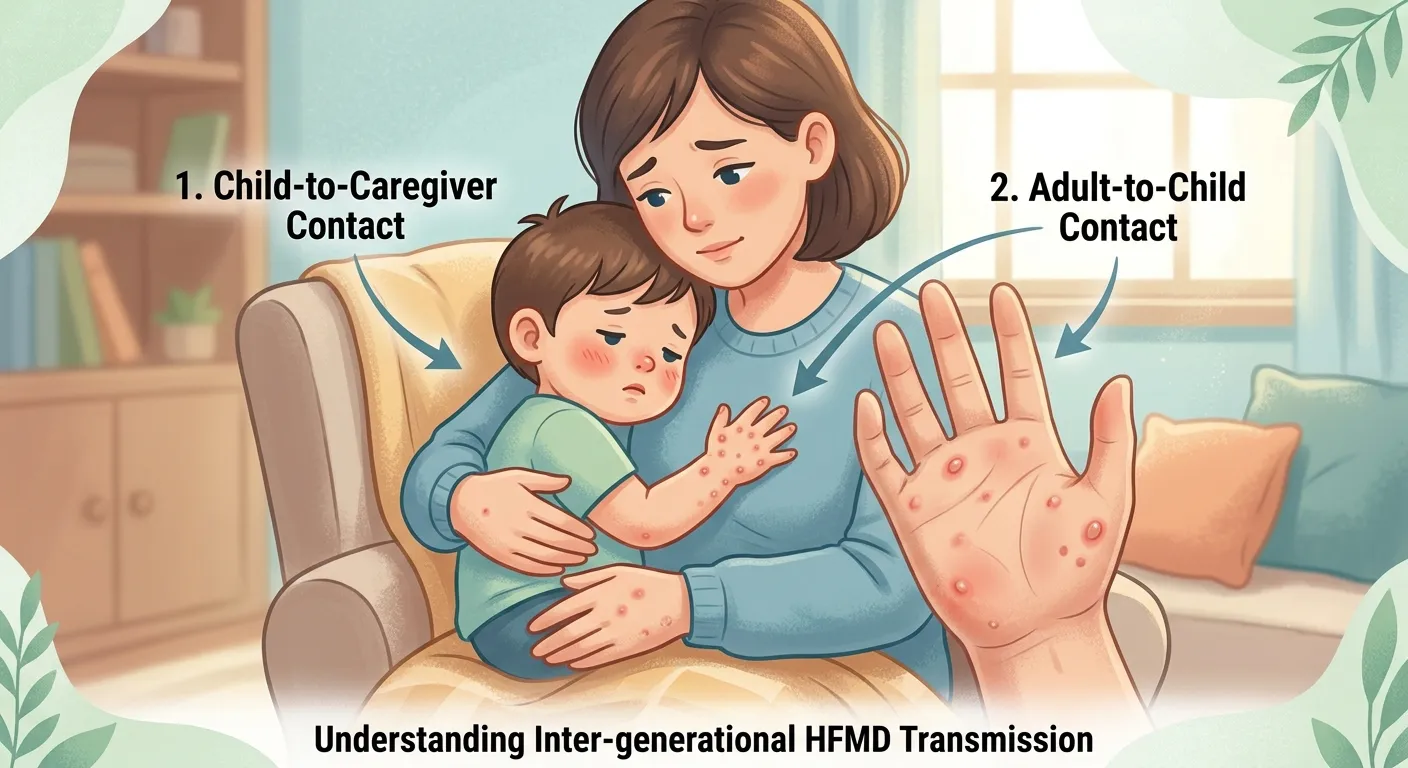
"Isn't HFMD just a kids' disease?" It is a reasonable assumption, but the reality is that adults can and do get infected — often while caring for a sick child. Every summer, adult HFMD cases show up in clinics across Korea.
👨👩👧 Adult HFMD: Key Facts
- Symptoms can be more severe in adults. Adults sometimes mount a stronger immune response, leading to more painful mouth ulcers and a more extensive skin rash than children typically experience.
- Immunity depends on prior exposure. If you have never been infected by a particular enterovirus serotype, you are susceptible regardless of age. Because there are many different enteroviruses, adults can be infected multiple times by different strains throughout their lives.
- Pregnant women should take particular care. HFMD during pregnancy is uncommon, but infection close to delivery can potentially transmit the virus to the newborn, who may become seriously ill. Any pregnant woman with HFMD symptoms should contact her obstetrician and a physician promptly.
- Work and school return criteria are the same as for children. Stay home until fever-free for 24 hours and all blisters have crusted over — both for your own recovery and to protect colleagues.
- You can be a "silent spreader." Adults often experience very mild or no symptoms while unknowingly spreading the virus to children in their care. This is yet another reason why hand hygiene by adults around sick children is absolutely critical.
Complications: Warning Signs You Cannot Miss
The overwhelming majority of HFMD cases are mild and self-limiting. However, in a small number of patients — particularly those infected with EV-A71 — serious complications can develop rapidly. Knowing these warning signs could save a child's life.
| Complication | Key Symptoms | Associated Virus | Frequency |
|---|---|---|---|
| Viral Meningitis | Severe headache, neck stiffness, light sensitivity, vomiting | EV-A71, CVA16 | Uncommon (generally good outcome) |
| Encephalitis (Brainstem) | Seizures, altered consciousness, limb weakness, abnormal eye movements | EV-A71 | Rare (serious) |
| Neurogenic Pulmonary Edema | Sudden breathing difficulty, blue lips, pink frothy cough | EV-A71 | Very rare (emergency) |
| Myocarditis / Pericarditis | Chest pain, palpitations, shortness of breath | Enteroviruses in general | Rare |
| Dehydration | Reduced urination, sunken eyes, dry mouth/skin, extreme listlessness | Any type | Relatively common (preventable) |
| Secondary Bacterial Infection | Blister area becomes red, swollen, and develops pus | Any type | Occasional |
| Nail Shedding (Onychomadesis) | Partial or complete nail loss 1–2 months post-recovery | CVA6 etc. | Uncommon; self-resolving |
🚨 Go to the Emergency Room Immediately For These EV-A71 Warning Signs:
- High fever above 39°C (102.2°F) that persists beyond 3 days or does not respond to antipyretics
- Sudden jerking or startling while sleeping (myoclonic jerks)
- Limb weakness or difficulty walking (motor weakness)
- Unusual eye movements or inability to focus
- Rapid, irregular, or labored breathing / blue lips or fingernails
- Seizures of any type
- Sudden profound listlessness, inability to speak, or unresponsiveness
Frequently Asked Questions
Final Thoughts: Knowledge Is Your Best Defense
HFMD sounds scary, but the clinical reality for the vast majority of infected children is straightforward: a few uncomfortable days, then full recovery. Your job as a parent or caregiver comes down to three essentials.
First, prevent dehydration. Keep offering cold, soothing fluids even when your child resists. Second, watch for red flags. High fever persisting beyond three days, seizures, limb weakness, or breathing difficulties are signals to go to the emergency room without delay. Third, stop the spread. Since no vaccine exists, your hands are literally the best tool you have — wash them thoroughly and often, especially during diaper changes and before food preparation.
If your child has been exposed or is showing early symptoms, keep them home, keep them comfortable, keep them hydrated, and keep a close eye on those warning signs. The vast majority of cases resolve without any medical intervention beyond supportive care. You've got this.
"In the fight against infectious disease, the most powerful weapon is not panic — it is accurate information put into consistent practice." – Common wisdom from pediatric infectious disease specialists