
Have you noticed yourself getting winded climbing stairs that used to be effortless, or feeling the strain of groceries that seemed lighter just a few years ago? Your 50s and 60s are the decade when the body's quiet signals begin to speak much louder. How you respond to them now won't just affect how you feel this year — it will shape the quality of the next 20 or 30 years of your life. The choices you make today are, quite literally, designing your later years.
Medical Disclaimer: This article is intended to provide general health and lifestyle information only, and is not a substitute for professional medical diagnosis, advice, or treatment. If you have a specific health condition or symptoms, please consult a qualified healthcare provider before making changes to your health routine. Individual needs may vary.
What Happens to Your Body in Your 50s & 60s
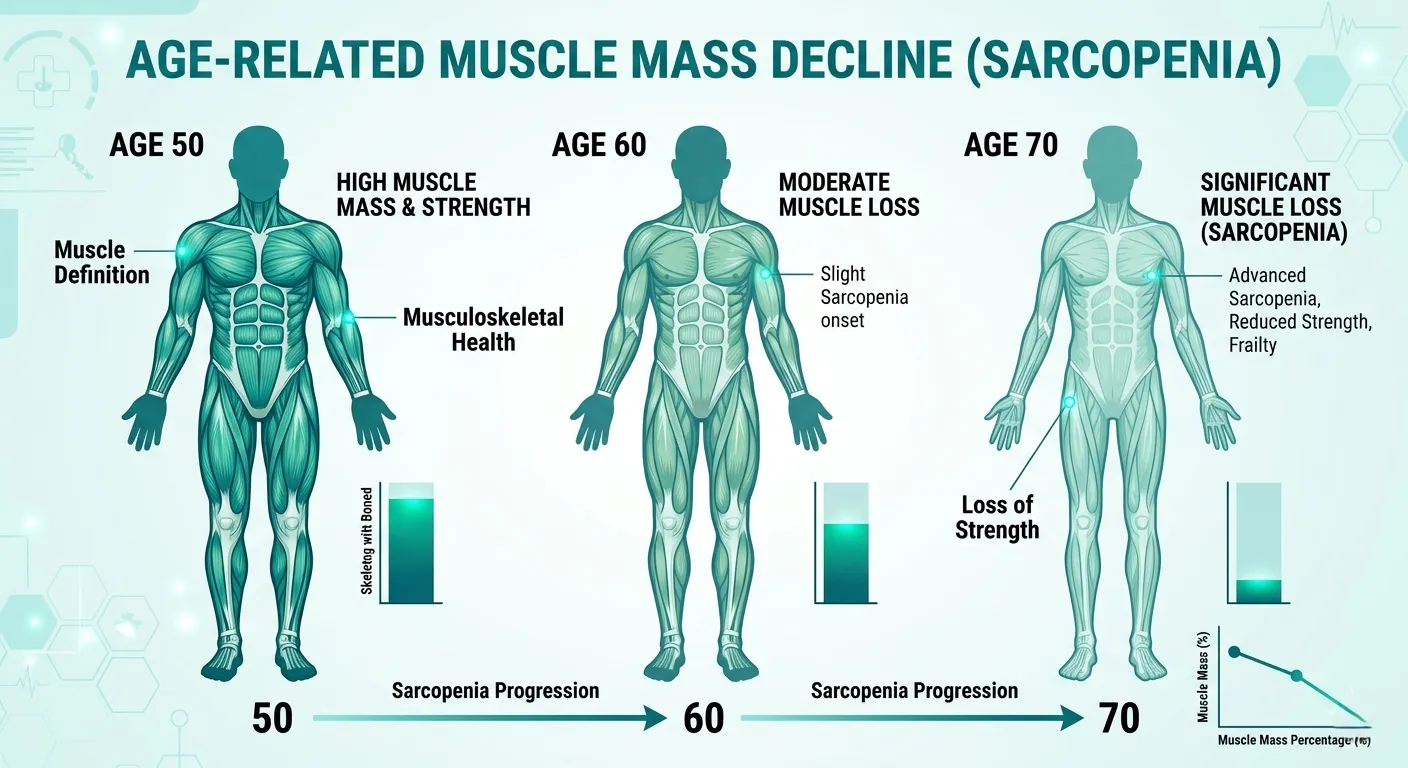
From the mid-40s onward, the pace of aging accelerates in measurable ways. Research from Imperial College London indicates that from the 50s onwards, skeletal muscle loss speeds up from around 1–2% per year to as much as 3–5% annually — a rate that climbs even higher into the 60s. For women, the estrogen decline of menopause compounds this; for men, a gradual drop in testosterone reshapes body composition in parallel ways.
Basal metabolic rate also decreases significantly. Compared to your 30s, your body in its 60s burns roughly 200–300 fewer calories per day at rest. That math explains a lot about weight management challenges in this decade. Meanwhile, the International Osteoporosis Foundation (IOF) estimates that one in three women over 50 will experience an osteoporotic fracture in their lifetime.
These numbers are not meant to alarm — they're meant to empower. The consistent finding across decades of research is that targeted lifestyle interventions started in your 50s and 60s can meaningfully slow or reverse many of these changes, preserving function well into your 70s and 80s. Recognizing what's happening is the essential first step.
Cardiovascular Health: Your First and Most Critical Priority
Cardiovascular disease remains the leading cause of death globally and the risk profile changes dramatically in your 50s and 60s. In the United States, the American Heart Association reports that about half of all adults have some form of cardiovascular disease — and many don't know it. The most insidious risk factor is high blood pressure, nicknamed the "silent killer" because it damages blood vessels for years without any noticeable symptoms.
Normal blood pressure is below 120/80 mmHg, but the prevalence of hypertension rises sharply in this age group. Knowing your numbers — and acting on them — is the single most important cardiovascular health decision you can make.
"The single most effective intervention to reduce cardiovascular risk is regular physical activity." – American Heart Association (AHA) 2021 Guidelines
💓 Core Habits for Cardiovascular Health
- Aerobic exercise: Aim for at least 150 minutes of moderate-intensity aerobic activity per week — brisk walking, cycling, swimming, or dancing. A large cohort study from Harvard T.H. Chan School of Public Health found that 150 minutes of weekly moderate exercise was associated with about a 35% reduction in cardiovascular disease risk.
- Reduce sodium: The WHO recommends no more than 2,000mg of sodium (5g of salt) daily. A single bowl of broth-based soup can contain 1,000mg or more. Read labels and cook at home when possible.
- Quit smoking: Smoking accelerates atherosclerosis more than twofold. Cardiovascular risk drops by roughly half within just one year of quitting.
- Limit alcohol: Alcohol raises blood pressure and weakens the heart muscle over time. If you drink, moderation is key — and less is always better.
- Monitor your blood pressure regularly: A home blood pressure monitor is an inexpensive but invaluable investment. Take readings in the morning, after resting quietly for at least five minutes.
Blood Pressure Classification (AHA Standard)
| Category | Systolic (mmHg) | Diastolic (mmHg) | Recommended Action |
|---|---|---|---|
| Normal | < 120 | < 80 | Maintain current habits |
| Elevated | 120–129 | < 80 | Start lifestyle changes |
| Stage 1 Hypertension | 130–139 | 80–89 | Consult a physician |
| Stage 2 Hypertension | ≥ 140 | ≥ 90 | Medication likely needed |
Key Takeaway
The cornerstone of cardiovascular health is knowing your numbers. Many people discover they have high blood pressure only after a stroke or heart attack. A home blood pressure monitor and a simple annual blood panel can genuinely save your life. Knowledge is prevention.
Musculoskeletal Health: Protecting Muscle and Bone
Sarcopenia — the progressive loss of skeletal muscle mass and strength — was officially recognized as a disease by the WHO in 2016. It's no longer viewed as an inevitable part of aging, but as a condition that can be meaningfully prevented and partially reversed. The Asian Working Group for Sarcopenia (AWGS) defines it as a combination of reduced muscle mass alongside diminished walking speed or grip strength.
The consequences extend far beyond weakness: sarcopenia raises the risk of falls and fractures, worsens insulin resistance (contributing to diabetes), and is independently linked to higher all-cause mortality. The good news is that the two most effective interventions are entirely within your control.
Your Strength Training Framework
Squats, lunges, step-ups. Protecting leg strength is the single best thing you can do for fall prevention.
Planks, bridges, bird-dogs. A strong core protects the lower back and underpins virtually every movement.
Resistance band rows, wall push-ups. Maintains your ability to lift, push, and pull through daily tasks.
Tai chi, yoga, stretching. Research consistently shows these reduce fall risk and maintain joint range of motion.
The target is 2–3 sessions per week, progressively increasing resistance over time. No gym required — resistance bands and bodyweight exercises are highly effective and gentle enough to start without prior fitness experience.
Key Nutrients for Bone and Muscle Health
Research published in the Journal of Clinical Nutrition shows that muscle protein synthesis efficiency declines with age, making higher protein intake necessary. Adults over 50 benefit from approximately 1.2–1.6g of protein per kilogram of body weight daily — that's 84–112g per day for a 70kg (154 lb) person.
Vitamin D deficiency is strikingly common in adults over 50 — studies suggest over half of older adults are insufficient or deficient. A daily 15–20 minutes of midday sun exposure helps, but many people require supplementation. Check your 25(OH)D blood level and discuss appropriate dosing with your doctor.

Metabolic Health: Blood Sugar, Cholesterol, and Weight
The CDC estimates that 38% of American adults have prediabetes — and 80% of them don't know it. In people aged 65 and older, the diabetes prevalence climbs to roughly 29%. Diabetes is far more effectively addressed before it develops than after, making metabolic health screening a genuine priority in your 50s.
Dietary Strategies for Blood Sugar Control
A growing body of evidence supports eating vegetables and protein first, then carbohydrates, as a simple habit that blunts post-meal blood sugar spikes. Swapping refined carbohydrates (white bread, white rice, sugary drinks) for complex alternatives (oats, legumes, non-starchy vegetables) significantly improves glycemic control. A Mediterranean dietary pattern — rich in olive oil, fish, vegetables, legumes, and whole grains — has some of the strongest evidence for metabolic health benefits.
Key Metabolic Health Benchmarks
| Marker | Optimal (Target) | Borderline | High Risk (See a Doctor) |
|---|---|---|---|
| Fasting Blood Glucose | 70–99 mg/dL | 100–125 mg/dL | ≥ 126 mg/dL |
| LDL Cholesterol | < 130 mg/dL | 130–159 mg/dL | ≥ 160 mg/dL |
| HDL Cholesterol | ≥ 60 mg/dL | 40–59 mg/dL | < 40 mg/dL |
| Blood Pressure | < 120/80 mmHg | 120–139/80–89 | ≥ 140/90 mmHg |
| Waist Circumference (Men) | < 40 in / 102 cm | 37–40 in | ≥ 40 in / 102 cm |
| Waist Circumference (Women) | < 35 in / 88 cm | 32–35 in | ≥ 35 in / 88 cm |
When it comes to weight, waist circumference is a more meaningful cardiovascular and metabolic risk predictor than BMI alone. Visceral fat — the type that accumulates around abdominal organs — secretes inflammatory cytokines that raise the risk of diabetes, heart disease, and certain cancers simultaneously. If weight loss is a goal, a gradual rate of 0.5–1 kg (1–2 lb) per week is recommended to preserve lean muscle mass.
Brain Health and Mental Wellness
"Exercise is the single best thing you can do for your brain. It's the world's most powerful cognitive enhancer." – Dr. John Ratey, Associate Clinical Professor of Psychiatry, Harvard Medical School
Dozens of studies confirm that aerobic exercise increases hippocampal volume and measurably improves memory and executive function. The landmark FINGER trial in Finland, which followed over 1,200 participants, found that a multi-domain intervention — combining exercise, nutrition, cognitive training, and vascular risk management — produced a statistically significant reduction in cognitive decline compared to controls.
Daily Habits for a Healthier Brain
- Sleep 7–8 hours nightly: During sleep, the brain's glymphatic system clears toxic waste proteins including amyloid-beta — a key feature in Alzheimer's pathology. Chronic sleep deprivation is increasingly recognized as a significant dementia risk factor.
- Stay socially connected: Social isolation is as damaging to cognitive health as smoking. Maintaining friendships, joining clubs, or volunteering are protective behaviors supported by robust evidence.
- Engage the brain consistently: Reading, learning a new language or instrument, playing chess or complex strategy games — any mentally demanding activity builds cognitive reserve and delays symptomatic decline.
- Manage chronic stress: Sustained stress elevates cortisol levels that damage hippocampal neurons over time. Mindfulness practices, time in nature, and breathing exercises offer evidence-backed relief.
- Quit smoking and moderate alcohol: Both accelerate cerebrovascular damage and are among the strongest modifiable risk factors for dementia.
🧠 Mental Health in Your 50s and 60s: Don't Minimize It
The 50s and 60s bring concentrated psychosocial stressors: children leaving home, retirement, relationship transitions, and confronting physical decline. Depression in this age group is significantly underdiagnosed, particularly in men, and carries a higher suicide risk than in younger populations. If low mood, loss of interest, or persistent fatigue persists for more than two weeks, please seek professional support. Depression is highly treatable — there is no reason to endure it in silence.

Screenings & Vaccinations: Your Prevention Checklist
Prevention is consistently more cost-effective, less disruptive, and far less painful than treatment. The screenings below represent the current evidence-based consensus for adults in their 50s and 60s — though your physician may recommend adjustments based on your personal history and risk factors.
Recommended Screenings for Your 50s & 60s
| Screening | Frequency | Who | Notes |
|---|---|---|---|
| Blood Pressure | Annually | All adults 50+ | Essential |
| Fasting Blood Glucose / HbA1c | Annually | All adults 50+ | Essential |
| Lipid Panel (Cholesterol) | Every 1–5 years | All adults 50+ | Essential |
| Colorectal Cancer (Colonoscopy) | Every 10 years | Ages 45–75 | High impact |
| Colorectal Cancer (Stool DNA) | Every 1–3 years | Ages 45–75 | Less invasive option |
| Breast Cancer (Mammogram) | Annually or every 2 years | Women 40–74 | High impact |
| Cervical Cancer (Pap / HPV) | Every 3–5 years | Women up to age 65 | Routine |
| Lung Cancer (Low-dose CT) | Annually | Ages 50–80, heavy smokers | High impact for eligible |
| Bone Density (DEXA) | Every 2 years | Women 65+; men 70+; earlier for high-risk | Ask your doctor |
| Eye Exam (Macular Degeneration / Glaucoma) | Annually | Adults 50+ | Often out of pocket |
| Dental Exam & Cleaning | Every 6 months | All adults | Oral-systemic health link |
Recommended Vaccinations for Your 50s & 60s
Vaccines remain one of the most cost-effective tools in preventive medicine.
The shingles vaccine deserves special mention. Shingles (herpes zoster) incidence rises sharply after 50 as cellular immunity wanes. Beyond the painful rash, post-herpetic neuralgia — a nerve pain syndrome that can last months or years — significantly impairs quality of life. The recombinant shingles vaccine (Shingrix) offers strong protection and is recommended regardless of whether you recall having chickenpox.
Conclusion: Small Habits, Big Results
Your 50s and 60s are not the beginning of decline — they're an opportunity to take the most informed, deliberate approach to your health that you've ever had. You don't need to be perfect. Adding one more vegetable to lunch, taking the stairs, putting down the phone 30 minutes before bed — these small, repeatable choices compound over months and years into a meaningfully different trajectory.
🌿 Your 50s & 60s Health Action Plan at a Glance
- Know your numbers: blood pressure, blood glucose, and cholesterol — check them every year.
- Move every day: 150 min/week of aerobic exercise + 2–3 strength sessions per week.
- Eat more protein (1.2–1.6g/kg/day), less sodium, and a rainbow of vegetables.
- Protect your sleep: 7–8 hours, consistent schedule, dark and quiet room.
- Stay connected: social engagement is medicine for both brain and mood.
- Don't skip screenings: early detection is the most powerful treatment there is.
- Get vaccinated: flu, shingles, and pneumococcal vaccines are low-risk, high-reward.
- Take mental health seriously — if you're struggling, seek professional help.
Lasting health is built in the ordinary moments: the walk after dinner, the glass of water instead of soda, the sleep you actually protect. The research is clear and the agency is yours. Here's to a vibrant, capable 50s and 60s — and the decades beyond.
Reminder: This article provides general health information only and does not constitute medical advice, diagnosis, or treatment. Please consult your healthcare provider before beginning any new exercise program, dietary change, supplement regimen, or health screening schedule, particularly if you have pre-existing conditions.