One in three adults. That's the proportion of people who experience insomnia at some point in their lives. This isn't something to simply brush off as "just feeling tired." Chronic sleep deprivation is linked to higher risks of cardiovascular disease, diabetes, and depression — and it measurably impairs cognitive function during the day. In this guide, we cover everything from the root causes of insomnia to CBT-I therapy, sleep hygiene, and the growing body of evidence behind heated eye masks.
What Is Insomnia? Diagnostic Criteria & Types
Insomnia is more than just "trouble sleeping." According to the DSM-5 criteria from the American Psychiatric Association, insomnia is diagnosed when a person has difficulty falling asleep, staying asleep, or waking up too early — and these problems cause meaningful daytime impairment — occurring at least three nights per week for at least three months. According to the World Sleep Society, approximately 10–30% of adults experience insomnia symptoms, and around 10% meet the threshold for chronic insomnia requiring treatment.
The Three Types of Insomnia
| Type | Key Characteristic | Common Causes |
|---|---|---|
| Sleep Onset Insomnia | Takes more than 30 minutes to fall asleep after getting into bed | Anxiety, hyperarousal, circadian rhythm disruption |
| Sleep Maintenance Insomnia | Wakes frequently during the night or can't return to sleep | Sleep apnea, chronic pain, depression, alcohol |
| Early Morning Awakening | Wakes 2+ hours earlier than intended and can't get back to sleep | Depression, aging, advanced sleep phase |
"According to the 3P model of insomnia, the condition develops and persists through the interaction of predisposing factors, precipitating events, and perpetuating behaviors." – Sleep medicine researcher Arthur Spielman
7 Key Causes of Insomnia
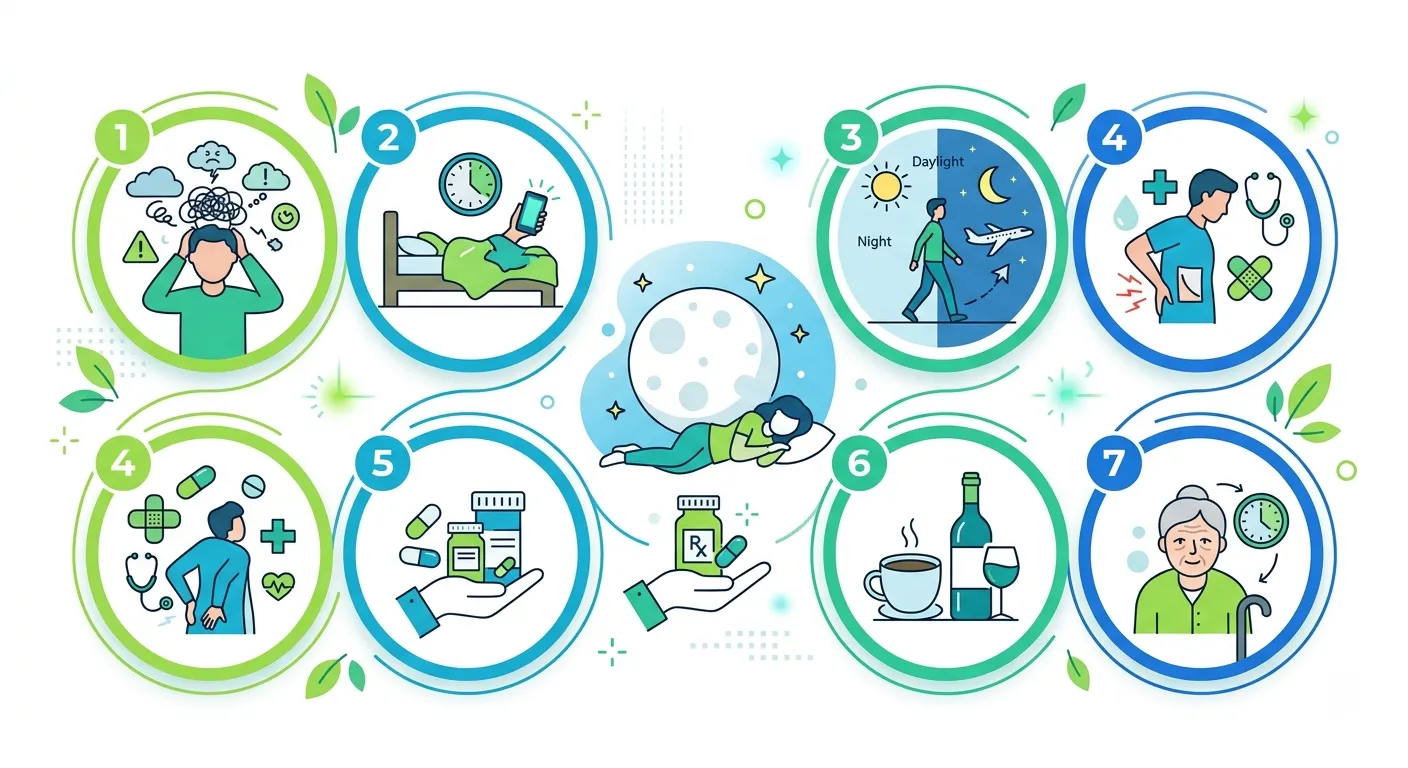
Insomnia rarely has a single cause. A meta-analysis from Oxford's sleep medicine research group found that insomnia almost always involves multiple overlapping factors. Identifying your specific triggers is the first step toward effective treatment.
-
1
Stress & Anxiety: Work pressures, relationship concerns, or health worries can push the brain into a state of hyperarousal — a kind of "on-guard" mode that overrides the natural sleep drive. Chronic stress elevates cortisol levels, disrupting the entire sleep-wake cycle.
-
2
Irregular Sleep Habits: Inconsistent bedtimes and wake times, or excessive napping, reduce sleep pressure (the biological drive to sleep) and make it harder to fall asleep at night.
-
3
Circadian Rhythm Disruption: Night-shift work, jet lag, and late-night exposure to the blue light from phones and tablets suppress melatonin production, pushing the body's internal clock off-schedule.
-
4
Medical Conditions: Sleep apnea, restless legs syndrome (RLS), chronic pain, acid reflux, and thyroid dysfunction are among the most common medical contributors to insomnia.
-
5
Medication Side Effects: Corticosteroids, some antidepressants (SSRIs), bronchodilators, certain blood pressure drugs, and even some cold medications containing pseudoephedrine can have stimulating effects.
-
6
Caffeine & Alcohol: Caffeine has a half-life of roughly 5–6 hours. That afternoon coffee can still be active in your system at midnight. Alcohol may help you fall asleep faster but fragments REM sleep, significantly degrading sleep quality in the second half of the night.
-
7
Aging: As people age, deep slow-wave sleep (SWS) becomes shorter and the circadian rhythm tends to advance, leading to earlier waking and lighter, less restorative sleep overall.
Key Takeaway
Identifying the cause of your insomnia is essential. Keeping a sleep diary for two or more weeks — recording bedtime, wake time, nightly wake-ups, and daytime energy — is one of the most effective ways to pinpoint your personal triggers.
Evidence-Based Treatments for Insomnia
Here's the encouraging news: insomnia is treatable. The American Academy of Sleep Medicine (AASM) and the UK's National Institute for Health and Care Excellence (NICE) both recommend Cognitive Behavioral Therapy for Insomnia (CBT-I) as the first-line treatment for chronic insomnia — ahead of medication. Research consistently shows that CBT-I produces meaningful improvements in sleep quality in roughly 80% of patients with chronic insomnia.
The Core Techniques of CBT-I
According to the National Sleep Foundation, CBT-I combines several techniques that work together to improve sleep quality within an average of 6–8 weeks — often without medication.
| Technique | What It Involves | Goal |
|---|---|---|
| Stimulus Control | Use the bed only for sleep and sex; get out of bed if you can't sleep | Strengthen the mental bed-sleep association |
| Sleep Restriction | Initially limit time in bed to match actual sleep time, then gradually extend | Build sleep pressure and improve sleep efficiency |
| Cognitive Restructuring | Challenge beliefs like "If I don't sleep tonight, tomorrow is ruined" | Reduce performance anxiety around sleep |
| Sleep Hygiene Education | Caffeine limits, exercise timing, bedroom environment (light, temperature, noise) | Remove behavioural barriers to sleep |
| Paradoxical Intention | Stop trying to fall asleep; instead, simply lie still and rest | Dissolve sleep-onset performance anxiety |
Your 10-Rule Sleep Hygiene Checklist
- Go to bed and wake up at the same time every day — including weekends (wake time matters most)
- Keep your bedroom cool — around 65–68°F (18–20°C)
- Make your bedroom as dark as possible with blackout curtains or a sleep mask
- Turn off all screens 1–2 hours before bed to reduce blue light exposure
- Avoid caffeine after 2 PM — its half-life is longer than most people think
- Exercise regularly — but avoid intense workouts within 2–3 hours of bedtime
- Don't go to bed overly hungry or uncomfortably full
- Keep naps before 3 PM and under 20 minutes
- Alcohol is not a sleep aid — it fragments the second half of your sleep cycle
- Build a relaxing pre-sleep routine: warm shower, light reading, stretching, or a heated eye mask
- Benzodiazepines carry a significant risk of dependence and rebound insomnia — symptoms that worsen when the drug is stopped — with long-term use.
- Non-benzodiazepine hypnotics (e.g., zolpidem) are associated with cognitive side effects and increased fall risk, particularly in older adults.
- All sleep medications should be taken only under the supervision of a physician, at the lowest effective dose, for the shortest duration necessary.
Heated Eye Masks: The Science & How to Use Them
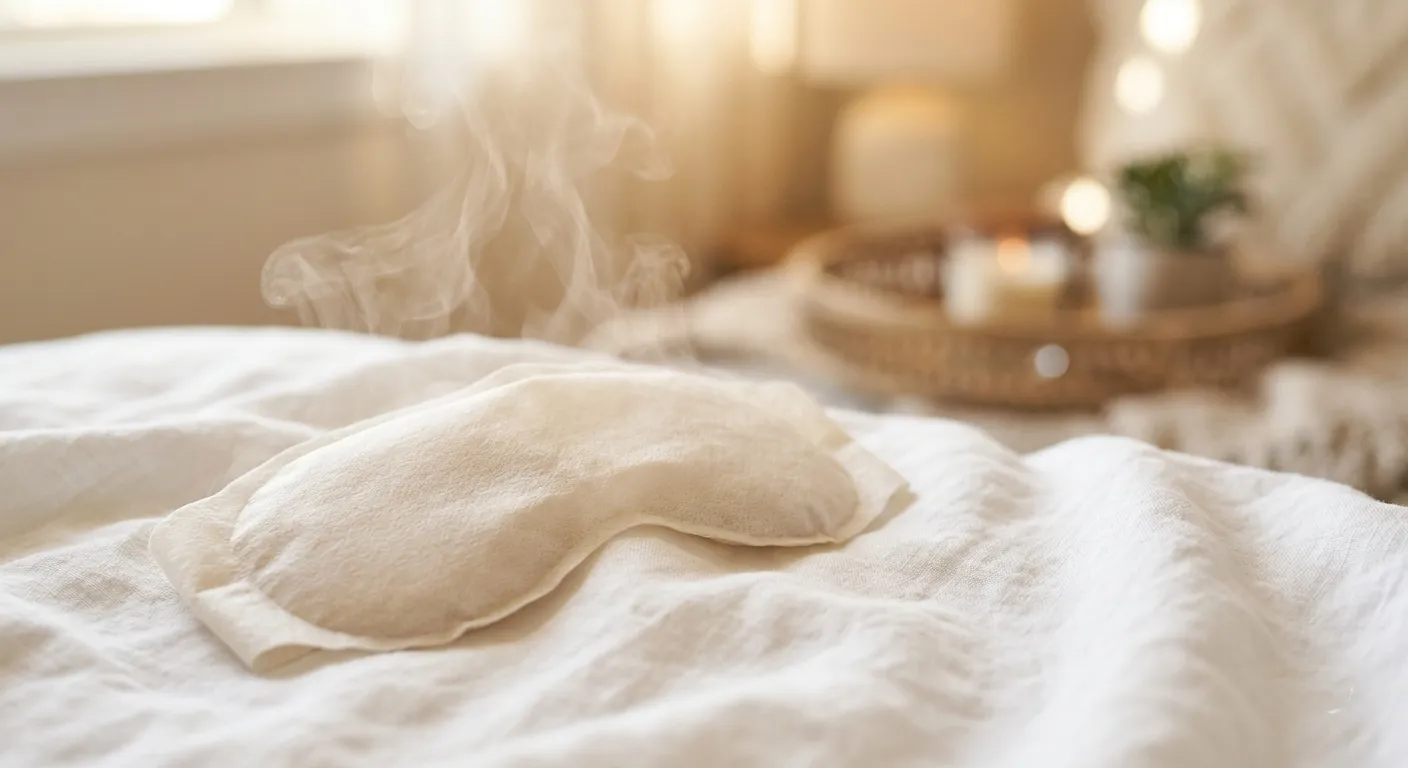
You've seen them at the convenience store. But are heated eye masks just clever marketing, or is there real science behind the relaxation they seem to provide? Research published in journals covering sleep medicine suggests that applying gentle warmth before bed promotes peripheral vasodilation — widening blood vessels near the skin — which helps lower core body temperature, a process that is tightly linked to sleep onset.
4 Mechanisms Behind Heated Eye Masks & Sleep
When we fall asleep, the body naturally lowers its core temperature by about 1–2°C (2–3°F). This is achieved by dilating blood vessels in the skin to release heat. A heated eye mask works with this process, not against it.
- Promotes vasodilation: Gentle warmth (38–42°C / 100–108°F) relaxes the blood vessels around the eyes, supporting the body's own heat-dissipation process.
- Activates the parasympathetic nervous system: Warmth triggers the body's "rest and digest" response, lowering heart rate and easing full-body tension.
- Relaxes eye and facial muscles: After hours of staring at screens, the muscles around the eyes accumulate significant tension. Warmth provides targeted relief.
- Blocks out light: Complete darkness signals the pineal gland to ramp up melatonin production, reinforcing your sleep environment.
A small but notable study from a Japanese sleep medicine team found that participants who wore a heated eye mask at approximately 40°C for 20 minutes before bed showed a statistically significant reduction in sleep onset latency compared to a control group. That said, large-scale randomized controlled trials are still limited, which means heated eye masks are best viewed as a complementary relaxation aid rather than a standalone insomnia treatment.
How to Use a Heated Eye Mask Correctly
- 1Use it 20–30 minutes before bed as the final step in your pre-sleep relaxation routine. Timing matters more than duration.
- 2The ideal temperature is 38–42°C (100–108°F). Avoid products that can't regulate heat — uncontrolled temperatures risk low-grade skin burns.
- 3Wear it for 15–20 minutes. Wearing it too long may paradoxically keep you in a more wakeful state.
- 4Pair it with slow diaphragmatic breathing or a guided meditation to amplify the relaxation effect.
- 5Contact lens wearers, those with eyelid skin conditions (eczema, atopic dermatitis), or people with glaucoma should consult an eye doctor before use.
Types of Heated Eye Masks Compared
| Type | Heat Source | Pros | Cons |
|---|---|---|---|
| Disposable Steam Mask | Iron oxidation (auto-heats to ~40°C) | Easy to use; adds soothing moisture | Single-use; higher long-term cost |
| USB / Electric Mask | Heating element; adjustable temperature | Reusable; cost-effective over time | Dry heat; requires charging |
| Gel Bead Mask | Microwaved or hot water heated | Can also be used cold; economical | Temperature hard to control; must reheat each time |
When to See a Doctor
If you've been consistently practicing good sleep hygiene and relaxation techniques for 2–4 weeks without improvement, it's time to see a healthcare professional. The following situations call for more urgent attention.
- You've been told you stop breathing during sleep, or your snoring is severe (possible sleep apnea)
- You feel an uncomfortable urge to move your legs when trying to fall asleep (possible restless legs syndrome)
- Your insomnia is accompanied by significant depression, persistent anxiety, or loss of motivation
- Sleep deprivation is seriously affecting your work performance, driving safety, or relationships
- You are using sleep medication regularly without a current prescription or physician oversight
A sleep medicine clinic (psychiatry, neurology, or pulmonology depending on suspected cause) can perform objective assessments including Polysomnography (full overnight sleep study) and Actigraphy (wrist-worn activity monitoring) to precisely diagnose the root cause and build a tailored treatment plan.
Final Thoughts: Better Sleep, Better Life
Insomnia is not a character flaw or a failure of willpower. It is a medical condition shaped by biology, psychology, and environment. Start with one or two items from the sleep hygiene checklist tonight. And remember — a heated eye mask alone won't cure insomnia, but used consistently as part of a thoughtful pre-sleep routine, it can genuinely help you wind down.
Sleep is not a luxury. It is the foundation of everything else. Here's to a quieter, deeper night.