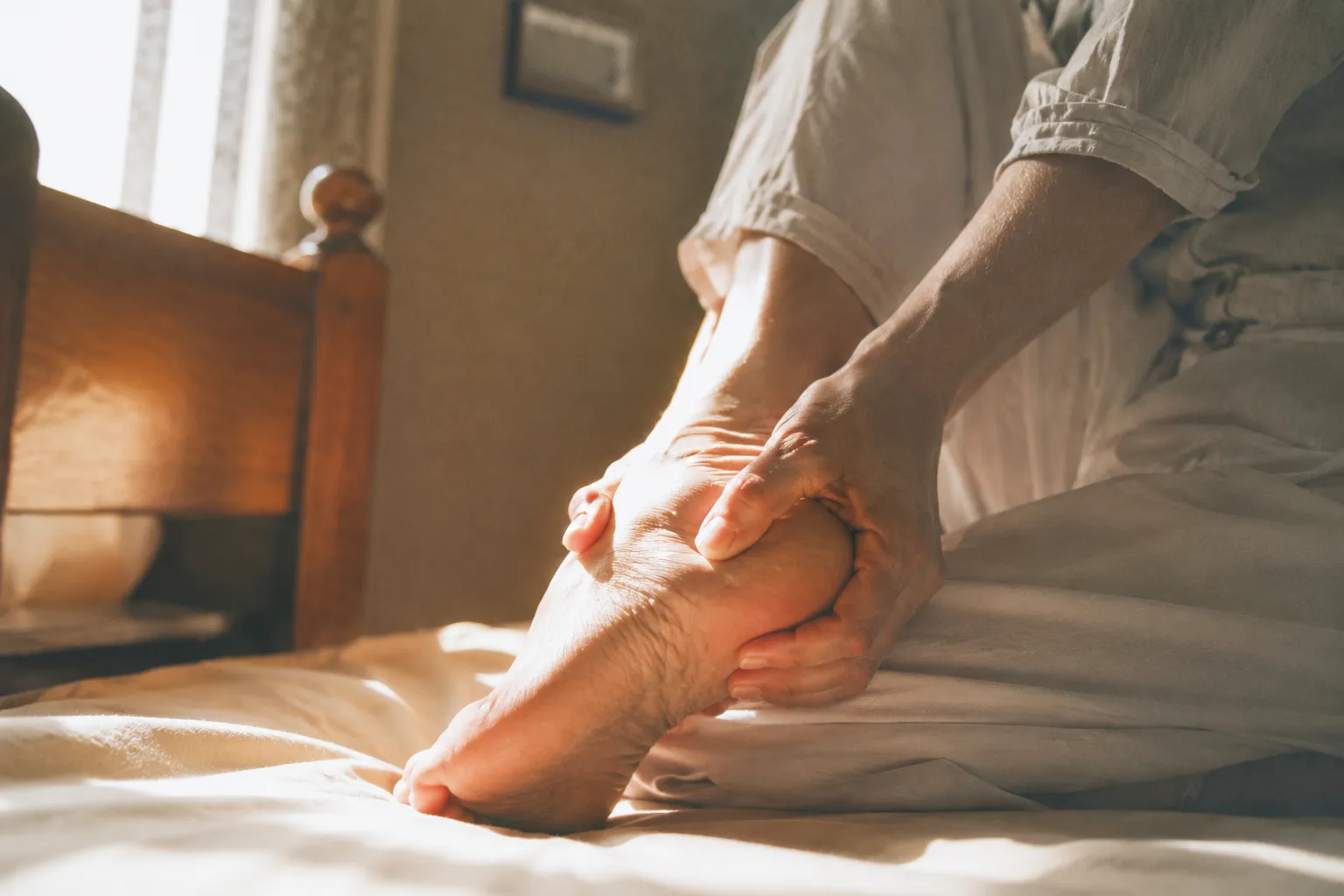
You swing your legs out of bed, take your first step, and a sharp pain shoots through the inside of your heel. It's easy to shrug off as one-off stiffness, but if that same jolt greets you morning after morning, it could be plantar fasciitis. In this guide, we'll walk through why plantar fasciitis develops, how to self-check for it, stretches that help calm the pain, and what to actually look for when shopping for plantar fasciitis slippers — a search term that's become increasingly popular for good reason.
This article is intended to provide general health and lifestyle information and is not a substitute for a medical diagnosis, examination, or treatment from a qualified physician. If you have a specific condition or symptoms, please consult a healthcare professional.
What Is Plantar Fasciitis? The Most Common Cause of Heel Pain
The plantar fascia is a thick band of fibrous tissue that fans out from your heel bone (calcaneus) across the bottom of your foot toward your toes. Every time you take a step, it supports your foot's arch and absorbs the shock of your body weight landing on the ground. Plantar fasciitis develops when repeated micro-damage builds up in this tissue, triggering inflammatory changes.
There's rarely a single cause. Standing on your feet for long shifts, a sudden jump in exercise volume, weight gain, foot structures like flat feet or high arches, and tight calf muscles or Achilles tendons can all play a role — often in combination. One orthopedic specialist recently noted that wearing thin, hard-soled slippers or sandals for long stretches during hot weather can place repeated stress on the sole of the foot, raising the risk of plantar fasciitis.
Looking at international data, a meaningful share of the general population experiences plantar fasciitis-related pain at some point in their lives, with the condition most common among people aged 45 to 64. Some analyses also report a notably higher diagnosis rate among women than men, so if you're a woman in midlife or beyond, it's worth paying a bit more attention to your foot health.
Could It Be Plantar Fasciitis? Self-Check List
- The inside of your heel stings sharply with your very first step in the morning
- Pain returns after sitting for a while and standing back up (so-called "start-up pain")
- Pain gets worse the longer you walk or stand
- Pressing on the inner heel or arch area is tender
- You've recently increased your activity level or gained weight
If two or three of these sound familiar, it's worth keeping plantar fasciitis in mind as you read through the rest of this guide.
"Heel pain is often dismissed as ordinary fatigue, but without early, appropriate management it can progress into chronic pain." – Rehabilitation Medicine Specialist
Stretches & Self-Care to Ease the Pain
The first line of defense against plantar fasciitis isn't medication or a procedure — it's stretching. A recent literature review identified tightness in the calf muscle (gastrocnemius) as one of the key factors that can turn plantar fasciitis into a chronic problem. In other words, recovery isn't just about the sole of your foot; loosening up everything from your calf to your Achilles tendon matters too.
4 Stretches Worth Doing Every Day 🦶
Towel Stretch Before You Get Up
Before getting out of bed, loop a towel or resistance band around the ball of your foot, keep your knee straight, and gently pull your toes toward you, holding for 10–15 seconds. This is especially helpful for easing that first-step pain.
Morning, 3 reps each sideCalf Stretch Against a Wall
Place your hands on a wall, step one foot back with the knee straight and heel flat on the floor, then lean forward until you feel a stretch in your calf. Hold for 20–30 seconds.
2–3x/day, 3 sets each sideRolling Massage with a Ball
Sit down and roll a massage ball or tennis ball under your foot, moving it gently back and forth. During an acute flare-up, avoid pressing too hard.
2–3 min, 2x/dayToe Spreads & Towel Scrunches
Lay a towel on the floor and scrunch it toward you with your toes, or gently spread your toes apart by weaving your fingers between them. This strengthens the small muscles of the foot that support your arch.
1–2 sets/day, 10 reps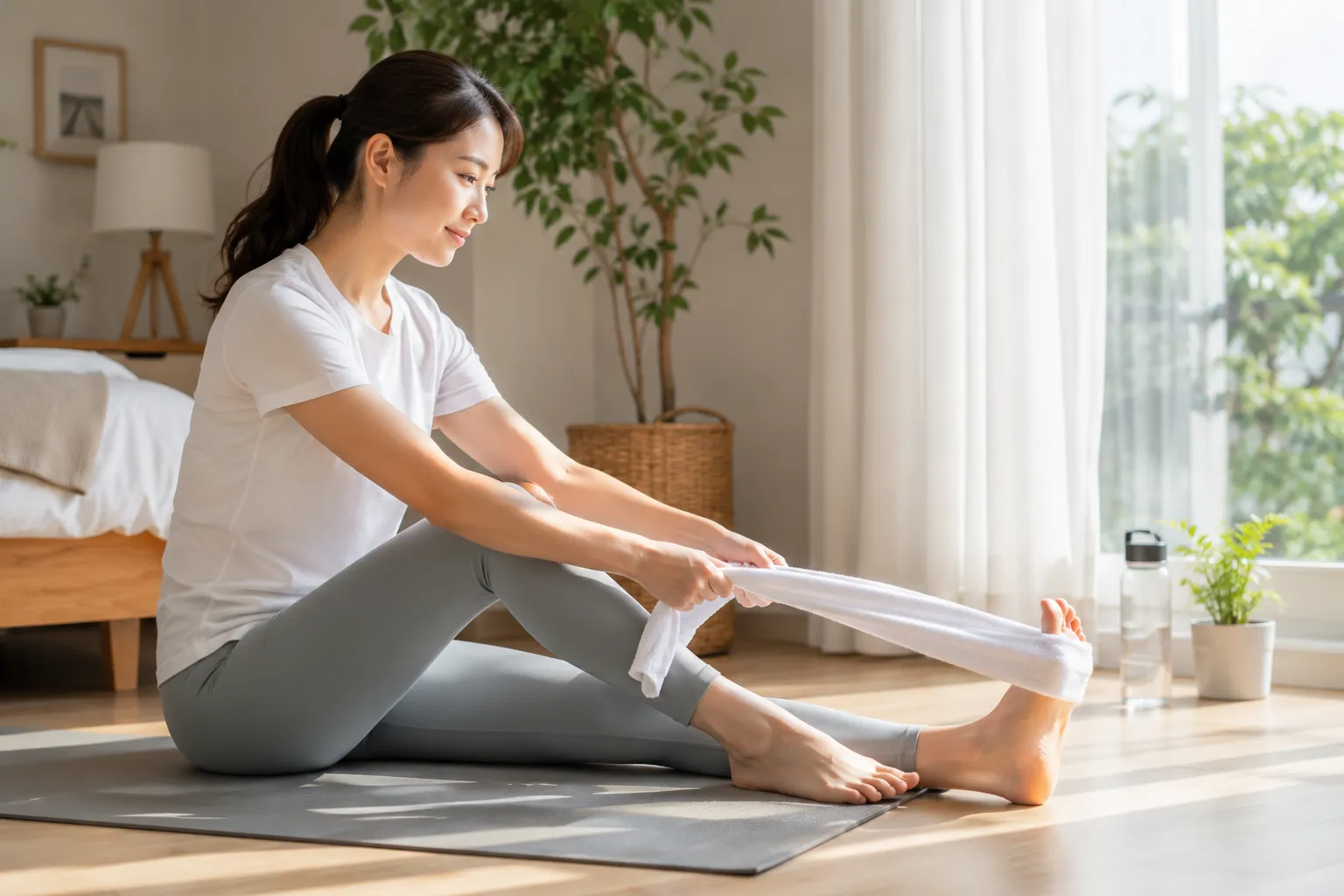
Key Takeaway
During an acute flare-up, prioritize rest and icing over aggressive stretching. Once the sharpest pain has eased, consistently doing the stretches above can help prevent it from coming back.
Daily Management: How to Choose Plantar Fasciitis Slippers
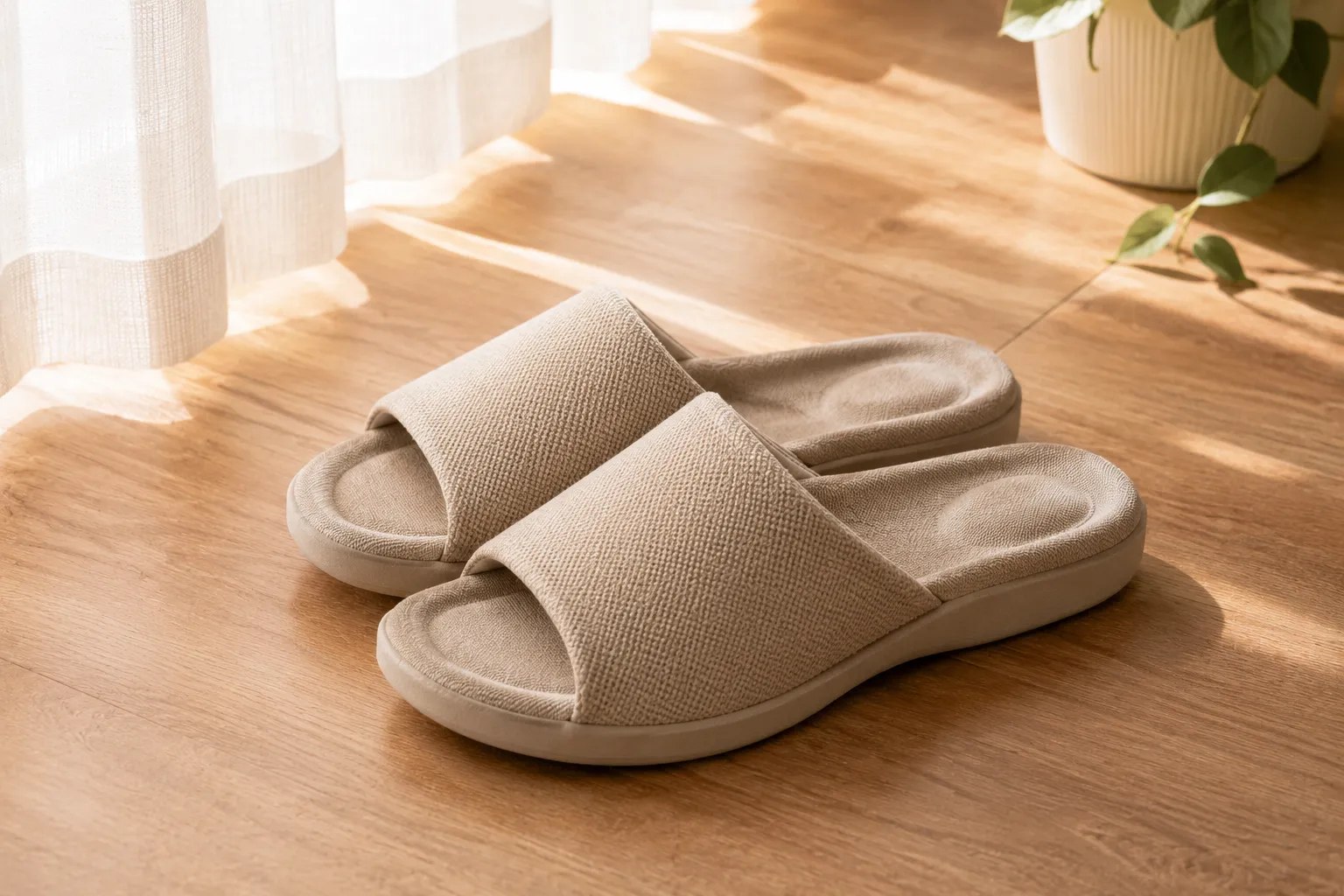
Alongside stretching, it's worth paying attention to what's between your feet and the floor — your shoes and indoor slippers. According to a recent health news report, walking for long periods in thin, hard-soled slippers or sandals transfers impact directly to the sole of the foot, allowing micro-damage to the plantar fascia to accumulate and potentially turn into inflammation. That's exactly why more people are searching for so-called "plantar fasciitis slippers" — supportive indoor footwear designed with this kind of foot pain in mind.
5 Things to Check When Choosing Plantar Fasciitis Slippers
Use the table below to compare a typical pair of slippers with ones designed for plantar fasciitis. Rather than chasing a "perfect" product that checks every box, focus on the features that matter most for your own feet.
| What to Check | Typical Slippers | Plantar Fasciitis Care Slippers |
|---|---|---|
| Arch support | Flat Little to no structure supporting the arch |
Arch support Insole contoured to gently support the arch |
| Cushioning | Thin Often a thin, hard sole |
Shock-absorbing Thicker polyurethane/EVA midsole that absorbs impact |
| Heel cup | None Heel often sits flat with no surrounding structure |
Stability Deep heel cup that cradles and stabilizes the heel |
| Outsole thickness & grip | Varies Can be slippery or too thin |
Non-slip Moderate thickness with a grippy rubber outsole |
| Fit | Loose Can feel unstable, with the foot sliding around |
Secure fit Holds the foot in place for a steadier stride |
Of course, no single pair of slippers will make plantar fasciitis disappear entirely. But slippers that support the arch and absorb shock can meaningfully reduce the load on your foot — making them a useful supporting tool for managing pain and lowering the chance of it coming back.
Other Habits Worth Pairing with the Right Slippers
- Manage your weight: Research suggests a higher body mass index (BMI) is linked to greater strain on the plantar fascia. Steady, sustainable weight management matters more than crash dieting.
- Avoid standing in one spot for too long: If your job keeps you on your feet, shift your weight or change position periodically to give your soles a break.
- Wear supportive slippers indoors too: Try to avoid long stretches of walking barefoot on hard floors like hardwood or tile.
- Try an arch-support insole: Sometimes simply swapping the insole inside your existing shoes can help — just make sure the shape matches your foot.
- Night splints: Some reports suggest holding the ankle at a right angle overnight can reduce morning pain, though others note that discomfort makes them hard to wear consistently, so the evidence is mixed. It's best to discuss this option with a healthcare provider before trying it.
Frequently Asked Questions ❓
In mild cases, rest and stretching alone can lead to improvement. But ignoring the pain and continuing to push through it can allow it to become chronic, so if symptoms last more than two weeks, it's worth reassessing how you're managing things.
Slippers play a supporting role by reducing the impact transmitted to your foot. They tend to work best alongside stretching, weight management, and, when needed, care from a healthcare professional.
It varies a lot depending on the individual and their habits, so it's hard to give a single timeline. With consistent conservative care, improvement can take anywhere from a few weeks to several months. If progress feels slow, a healthcare professional can help confirm the underlying cause and adjust your plan.
During flare-ups, it can help to scale back high-impact activities like running or jumping and switch to low-impact options such as swimming or cycling. As the pain eases, gradually build back up your intensity.
If the pain lasts more than two weeks, occurs even at rest at night, or comes with swelling or warmth in the foot, it's safer to see a healthcare professional rather than continue managing it on your own.
Wrap-Up: Key Takeaways & When to See a Doctor
If you notice any of the signs below, it's worth prioritizing a visit to a healthcare professional over continued self-management.
- Pain lasts more than two weeks or keeps getting worse
- You feel pain even while resting at night
- Your foot or ankle becomes swollen or warm to the touch
- You've noticeably changed how you walk (such as limping)
- No improvement after 4+ weeks of conservative care (stretching, rest, new footwear)
Plantar fasciitis is common, but if left unmanaged, it can turn into chronic pain. Use the self-check list from earlier to gauge your own risk, and make calf and foot stretches a regular habit. It's also worth taking a closer look at whether the slippers you wear every day are actually supporting your feet. Small changes like these can be the first step toward a day-to-day life that's free from heel pain. 🌿