
"Impaired fasting glucose" or "prediabetes" — seeing that on your checkup results can catch you off guard. Your numbers were fine last year, or maybe you've always assumed that diabetes is something that happens to other people. Perhaps a family member already lives with it, and you've been quietly dreading seeing something similar in your own results. Search online and you'll find no shortage of advice, but it's often hard to separate well-researched guidance from popular myth — and the information sometimes conflicts. What's actually going on in your body right now, and what's actually worth doing about it? Today we'll take a thorough look at what causes prediabetes, how to read your lab values, what comorbidities often appear alongside it, common misconceptions worth clearing up, and the specific diet and exercise habits that help bring blood sugar back toward normal.
This article is intended to provide general health and lifestyle information and is not a substitute for a medical diagnosis, consultation, or treatment from a qualified physician. If you have a specific condition or symptoms, please consult a medical professional.
What Is Prediabetes? Understanding Insulin Resistance
Prediabetes means your blood sugar is higher than normal, but not yet high enough to be classified as type 2 diabetes. Clinically it's separated into impaired fasting glucose (IFG) and impaired glucose tolerance (IGT) — both signaling that your body's blood sugar regulation isn't working as efficiently as it once did.
How insulin resistance develops
Insulin resistance is at the center of this. Insulin is the hormone that moves glucose from your bloodstream into cells to be used as energy. When cells become less responsive to insulin — commonly driven by increased visceral fat or reduced activity — the same amount of insulin no longer lowers blood sugar as effectively. The pancreas compensates by secreting more insulin, and as this burden accumulates, the entire blood sugar regulation system begins to falter. Initially the pancreas manages to keep blood sugar within normal range by producing extra insulin, but once that compensation reaches its limit, fasting blood glucose starts to creep upward. Insulin resistance isn't just the root of prediabetes — it's the shared underlying mechanism behind a cluster of related metabolic problems.
What drives insulin resistance
Genetic predisposition, abdominal obesity, physical inactivity, irregular eating patterns, and poor sleep all contribute to rising insulin resistance. Visceral fat in particular acts less like a passive storage depot and more like an active tissue that secretes inflammatory compounds, which interfere with insulin's ability to do its job — making it one of the most important modifiable targets. As muscle mass naturally declines with age, blood sugar regulation becomes more difficult too, since muscle is one of the body's largest consumers of glucose. Understanding these mechanisms isn't just academic; it points directly to the interventions that actually work.
How common is it, and why is it increasing?
Prediabetes is reported to affect a substantial portion of adults, with prevalence rising steadily alongside trends toward more sedentary lifestyles and energy-dense diets. The most unsettling aspect is that most people have no idea they have it until a routine blood test reveals it. That makes regular health checkups one of the most important tools for catching it early. Crucially, prediabetes is not a fixed destination — research consistently shows that lifestyle changes can return blood sugar to the normal range, or at least meaningfully slow progression toward type 2 diabetes.
Waist circumference matters more than weight alone
BMI is calculated from height and weight alone, so it doesn't tell you where body fat is distributed. The same weight can carry very different metabolic risk depending on whether fat sits in the extremities or around the abdomen. Research consistently shows that central (abdominal) fat — particularly visceral fat around internal organs — is more directly linked to insulin resistance. Measuring waist circumference at navel height gives a more useful read on your metabolic risk than the scale alone. Widely used reference thresholds are 90 cm for men and 85 cm for women, though specific guidelines vary by clinical setting and population.
"Prediabetes is both a warning and an opportunity. Changing your habits now can genuinely slow its progression — and in many cases, bring blood sugar back into the normal range." – Endocrinologist
Warning Signs in Your Lab Results
Prediabetes rarely causes noticeable symptoms, which is why it's usually caught through routine bloodwork rather than how you feel. That makes understanding exactly where your numbers fall the essential first step. Seeing a column of test results can feel abstract — knowing what the ranges mean makes the picture much clearer.
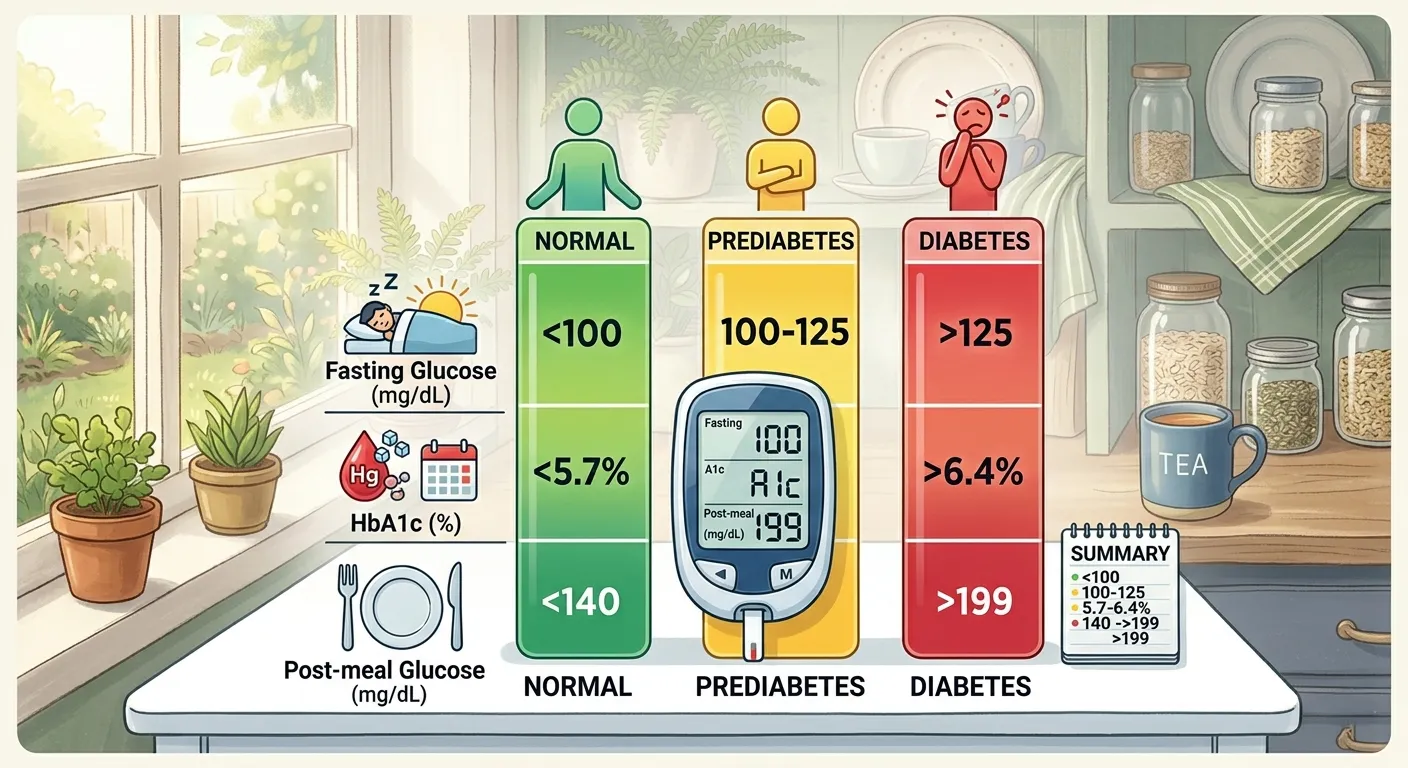
| Test | Normal | Prediabetes | Diabetes |
|---|---|---|---|
| Fasting blood glucose | Under 100 mg/dL | 100–125 mg/dL | 126 mg/dL or higher |
| HbA1c | Under 5.7% | 5.7%–6.4% | 6.5% or higher |
| 2-hour oral glucose tolerance test | Under 140 mg/dL | 140–199 mg/dL | 200 mg/dL or higher |
Why the three tests can tell different stories
Fasting glucose reflects your state on the day of the test; HbA1c reveals your average blood sugar over the past two to three months; and the oral glucose tolerance test shows how efficiently your body handles glucose after consuming it. It's possible for one test to show normal and another to flag prediabetes — which is exactly why a single number shouldn't be the only thing you go on. Always interpret results in context with a physician rather than reacting to one value in isolation.
While symptoms are rare, some people do notice subtle changes — feeling unusually tired, stronger-than-usual post-meal drowsiness, or increased thirst and urination. If you also have abdominal obesity, high blood pressure, or abnormal cholesterol, your insulin resistance may be further along, making closer monitoring worth discussing with your doctor.
How often should you get tested?
Adults without specific risk factors generally benefit from fasting glucose testing annually or every other year through routine checkups. If prediabetes has already been identified, re-testing every six to twelve months is a common timeline for tracking the impact of lifestyle changes. Those with family history, obesity, or other risk factors may want to discuss a shorter testing interval with their physician. Consistency in testing matters — it's how you see whether your efforts are working.
A note on HOMA-IR
Not always included in standard panels, HOMA-IR is calculated using fasting glucose and fasting insulin together to give a more direct read on how well insulin is actually working. Even when fasting glucose and HbA1c are still technically within normal range, an elevated HOMA-IR can be an early signal that insulin resistance is already building. It's not a test everyone needs, but if you have risk factors or a strong family history, it's worth asking your physician whether it would provide useful additional information.
If Prediabetes Progresses: Complications to Know About
Explaining potential complications now isn't meant to alarm you — it's to make the stakes of this moment clear. Managing prediabetes aggressively isn't just about preventing a diagnosis label; it's about protecting the actual function and health of your organs decades from now.
When blood sugar stays elevated over many years, microvascular damage accumulates across multiple organ systems. Diabetic retinopathy — damage to the retina's tiny blood vessels — can lead to vision loss. Diabetic nephropathy — a gradual decline in kidney filtration — can progress to chronic kidney disease. Diabetic neuropathy, which diminishes sensation in the feet and hands, can allow small wounds to go unnoticed, sometimes leading to ulcers or infection. These microvascular complications develop alongside increased risk of macrovascular events such as heart attack and stroke. Recent research emphasizes that cardiovascular risk begins rising quietly even during the prediabetes stage — not just after a full diabetes diagnosis arrives. This means "I'm not diabetic yet" is a less reassuring statement than it might feel like in the moment.
Foot care habits worth starting now
Diabetic foot complications are among the most preventable, and building protective habits early gives you the best foundation. Starting now: check your feet regularly for small cuts, calluses, or color changes. Choose well-fitting shoes rather than tight ones, avoid walking barefoot, and cut toenails straight across to prevent ingrown nails. These habits are low-effort in isolation, but they set a baseline of attentiveness that matters significantly if nerve sensation ever changes later.
The encouraging part is that complications typically develop over years to decades of uncontrolled blood sugar — and prediabetes is precisely the stage where that trajectory can be changed most effectively. Think of potential complications not as an inevitable outcome but as a clear illustration of why the lifestyle choices made right now genuinely matter for your future health.
Conditions That Often Come With Prediabetes
Prediabetes rarely shows up alone. Insulin resistance is often the shared engine behind a cluster of metabolic problems that researchers group together as metabolic syndrome — including high blood pressure, dyslipidemia (particularly elevated triglycerides and low HDL cholesterol), and abdominal obesity alongside impaired blood sugar. When three or more of the five criteria below are met, the cluster is classified as metabolic syndrome, which signals elevated risk not just for diabetes but for cardiovascular disease as well.
| Risk Component | General Reference Threshold |
|---|---|
| Waist circumference | ≥90 cm (men), ≥85 cm (women) — thresholds vary by population |
| Triglycerides | 150 mg/dL or higher |
| HDL (good) cholesterol | Under 40 (men), under 50 (women) |
| Blood pressure | 130/85 mmHg or higher |
| Fasting blood glucose | 100 mg/dL or higher |
The practical upside of this clustering is that because these markers influence each other, a single sustained lifestyle change — meaningful weight loss combined with increased activity — often improves multiple markers simultaneously. You don't need five separate interventions for five separate problems.
Non-alcoholic fatty liver disease (NAFLD) is also closely linked to insulin resistance. When the liver accumulates excess fat, its insulin sensitivity decreases, creating a feedback loop that makes systemic blood sugar control harder. If you've been told your liver enzymes are elevated alongside a prediabetes result, these two findings are likely connected and worth addressing together. In women, polycystic ovary syndrome (PCOS) is deeply intertwined with insulin resistance, and sleep apnea — marked by significant snoring or excessive daytime sleepiness — has also been associated with worsened insulin sensitivity. Managing prediabetes well means looking at blood pressure, cholesterol, body weight, and sleep quality alongside glucose numbers, not glucose numbers in isolation.
Common Myths About Prediabetes, Fact-Checked
Prediabetes attracts its share of myths and half-truths. Encountering wrong information at this stage can lead to ineffective strategies or missed opportunities for real improvement. Let's fact-check some of the most common ones.
Myth 1: If you're not overweight, prediabetes doesn't apply to you
Not true. Even people with a normal BMI can develop insulin resistance — particularly those with high visceral fat relative to muscle mass (sometimes called "metabolically obese normal weight"). Waist circumference and body composition matter more than the scale alone.
Myth 2: Cutting out sweets is all it takes
Reducing sugary foods helps, but the picture is broader. Refined carbohydrates like white rice and white bread, physical inactivity, insufficient sleep, and chronic stress all play significant roles. Targeting only one factor is rarely enough.
Myth 3: Once you start medication, you can never stop
This isn't an absolute. If lifestyle changes bring blood glucose under effective control, a physician may discuss adjusting or tapering medication. The answer depends entirely on individual circumstances — not on a blanket rule about medication permanence.
Myth 4: Family history means diabetes is inevitable
Genetics raise the risk, but they don't determine the outcome. People who know their family history and use it as motivation to start managing their lifestyle earlier consistently show better outcomes. Family history is a reason to act sooner, not a reason to accept defeat.
Myth 5: No symptoms means everything is fine
The absence of noticeable symptoms is precisely what makes prediabetes easy to overlook — and easy to let slide. Regular blood testing is the only reliable way to know where you actually stand.
Myth 6: One normal result means you're in the clear
Blood glucose fluctuates based on recent meals, stress, illness, and other factors. A single normal result provides reassurance but isn't a reason to skip future testing — especially if risk factors are present.
Myth 7: Eliminating carbohydrates is the fastest fix
Very low-carb approaches can produce rapid short-term improvements, but they're difficult to sustain long-term and can create nutritional imbalances. Replacing refined carbohydrates with complex ones is a more sustainable strategy that still meaningfully reduces blood sugar impact.
When you encounter new claims about prediabetes management, a useful filtering question is: "Has this been evaluated in rigorous studies, or is it based on individual testimonials?" When in doubt, your physician is the right person to ask.
Key Takeaway
Prediabetes is still a reversible stage. Studies have repeatedly shown that losing just 5–7% of body weight, combined with consistent exercise, can meaningfully lower the risk of progressing to type 2 diabetes.
Daily Habits That Help Bring Blood Sugar Back
Managing prediabetes isn't about an extreme diet overhaul — it's about helping insulin do its job efficiently again. The six habits below are consistently emphasized across research and clinical guidelines as the most impactful starting points.
- Target 5–7% weight reduction. Losing a modest but meaningful amount of weight — 5–7% of current body weight — consistently improves insulin sensitivity in research. For someone weighing 80 kg, that's roughly 4 to 5.5 kg, which is a realistic goal with steady effort rather than dramatic restriction.
- Cut back on refined carbohydrates and added sugar. Swap white rice, bread, and sugary drinks for whole grains, mixed grains, and vegetables. Higher fiber content slows how quickly food raises blood sugar. The specific foods matter, but even the order you eat them in does — vegetables and protein first, carbohydrates later, can measurably blunt post-meal glucose spikes.
- Aim for at least 150 minutes of aerobic activity per week. Brisk walking, cycling, or swimming at a moderate intensity, spread across five days in 30-minute sessions, is a realistic target. Adding two sessions of resistance training per week supports muscle mass maintenance, which helps regulate blood sugar even at rest. Start at a sustainable intensity — consistency beats intensity at the beginning.
- Move briefly after meals. Just 10–15 minutes of walking after eating can noticeably blunt the post-meal blood sugar rise. Rather than sitting down immediately after meals, building this into your routine is one of the simplest high-impact changes available.
- Protect your sleep. Poor sleep impairs insulin sensitivity — research has shown this effect appearing within just a few nights of restricted sleep. Aim for at least 7 hours of consistent, quality sleep. Reducing bright light and screen use one to two hours before bed meaningfully improves sleep quality for many people.
- Track your numbers regularly. Re-checking fasting glucose or HbA1c every 6 to 12 months gives you objective feedback on how your efforts are translating. Seeing real improvement in numbers is also one of the most effective motivators for sustaining lifestyle changes over time.

Starting weight loss without overwhelming yourself
A target of 5–7% weight loss can feel abstract. The approach that works best isn't setting one massive goal but breaking it into smaller 1–2 week milestones. For the first two weeks, focus on one change only — eliminating late-night snacking, for instance. Once that's settled, layer in the next change, like adjusting meal composition. Noticing non-scale improvements — a looser waistband, less breathlessness climbing stairs — helps maintain motivation beyond what the scale shows on any given morning.
The strategy that beats "all or nothing" thinking
Many people adopt aggressive new routines for the first week, then abandon everything when they slip. A more durable approach is choosing only one or two changes to anchor for at least two weeks before adding more. Sharing your goals with a family member or close friend — someone who can offer a word of encouragement or ask how it's going — adds a layer of accountability that makes sustained follow-through meaningfully easier.
Swap white rice for whole grains
More fiber in the same portion means a slower, gentler rise in blood sugar.
Take the stairs
Small bursts of extra daily movement add up to a meaningful difference over time.
Reach for water first
Cutting just one sugary drink a day can significantly lower your daily sugar intake.
Track your checkup results
Logging your numbers over time helps you see which habits are actually working.
Eat in sequence
Vegetables and protein first, then carbohydrates — this ordering visibly flattens glucose spikes.
Keep meal timing consistent
Irregular meal schedules can widen blood sugar swings even when food choices are good.
Diet and Nutrition: What to Eat
Claims that a single superfood can normalize blood sugar are almost always overstated. What consistently holds up in research is that overall dietary patterns matter far more than any individual food. The same calorie count can produce very different blood sugar effects depending on what those calories are made of.
| Category | Examples | Notes |
|---|---|---|
| Actively helpful | Leafy vegetables, legumes, fatty fish, nuts | High in fiber and protein — both slow glucose absorption |
| Fine in moderation | Brown rice, whole-grain bread, whole fruit | Better than refined versions, but portion still matters |
| Worth limiting | White rice, white bread, sugary drinks, packaged snacks | Refined carbohydrates that raise blood sugar quickly |
Think about the full meal, not individual GI scores
The glycemic index of individual foods is a useful reference, but real meals combine foods — and that combination changes how quickly glucose enters your bloodstream. The same portion of white rice eaten with a generous serving of vegetables and protein raises blood sugar much more gradually than rice eaten alone. Alcohol places an additional burden on the liver's blood sugar regulation, particularly when paired with refined carbohydrate-heavy bar food, so keeping consumption moderate is worth prioritizing. The simple act of moving briefly after every meal — even just walking around the block — is one of the most accessible ways to reduce post-meal glucose peaks. Eating the same food with this one addition can noticeably change the glucose profile.
Reading nutrition labels effectively
When buying packaged foods, the most useful figures to check are total carbohydrates broken down into dietary fiber and added sugars. Higher fiber and lower added sugar means a more gradual glucose impact. Checking sodium is worth the extra second too — managing salt supports blood pressure control alongside blood sugar management. Protein deserves equal attention: adequate protein at each meal supports satiety and muscle maintenance, both critical for managing blood sugar. A rough guide is including a portion roughly the size of your palm in protein-containing food — fish, tofu, eggs, lean meat — at each meal.
Eating out and social situations
Managing blood sugar while eating out is challenging but very manageable with a few consistent strategies. When you can't fully control what's ordered, focus on eating the vegetables and protein first, reducing the portion of starchy components, and choosing grilled or steamed options over fried. At social gatherings where alcohol is present, eating a meaningful amount of food before drinking, sipping slowly, and setting a lower overall quantity target helps avoid the combined blood sugar burden of alcohol plus refined-carbohydrate snacks. Sustainable management means having a workable approach to these real situations, not avoiding them entirely.
Practical tips for desk workers
People who spend most of the workday seated face a specific challenge: prolonged sitting suppresses the muscles' glucose uptake even when dietary habits are good. Standing up briefly every hour, or taking a 10-minute walk after lunch before returning to the desk, meaningfully offsets some of this effect. Keeping healthy snacks like nuts or plain yogurt accessible at your desk creates a low-effort alternative to vending machines during afternoon energy dips. For people whose schedule involves irregular or skipped meals due to overwork, aiming for consistent meal timing — even approximately — helps reduce the blood sugar volatility that irregular eating tends to produce.
Exercise: The Most Direct Tool for Blood Sugar
Exercise is one of the few available tools that lowers blood sugar directly, without medication. During physical activity, muscles can draw on glucose through pathways that bypass insulin — which means even a single workout session can produce a visible same-day improvement in blood sugar. This direct, immediate effect is one of the clearest arguments for making movement a non-negotiable part of managing prediabetes.
Aerobic and resistance exercise work through different mechanisms. Aerobic exercise — walking, cycling, swimming — produces the most immediate glucose-lowering effect during and right after the session. Resistance exercise builds muscle mass over time, which increases the body's baseline capacity to absorb glucose even at rest. Combining both produces stronger results than either alone. If dedicated exercise time genuinely isn't available, starting with just 10 minutes of brisk walking after each meal and gradually building from there is a legitimate and effective starting point.
| Exercise Type | Examples | Primary Effect |
|---|---|---|
| Aerobic exercise | Brisk walking, cycling, swimming | Directly lowers blood glucose during and after the session |
| Resistance exercise | Bodyweight exercises, bands, weights | Builds muscle mass, raising baseline glucose absorption capacity |
| Low-intensity daily movement | Stairs, housework, short walks | Reduces total time spent sedentary, with cumulative benefit |
A practical intensity guideline: moderate intensity means you can carry on a conversation but couldn't comfortably sing. This is the zone where aerobic exercise has the most well-documented benefit for blood sugar management. If you're starting from a very sedentary baseline or managing another chronic condition, discussing a safe starting point with your physician before beginning is a sensible precaution.
Medication and Regular Monitoring
When lifestyle changes alone aren't bringing blood sugar under adequate control, or when multiple risk factors are present, a physician may recommend adding medication. A common reaction to this suggestion is feeling like it represents failure — but that framing isn't accurate. Medication works as a support structure that makes lifestyle changes more effective, not as a signal that lifestyle changes didn't matter.
Metformin, the most commonly discussed medication for prediabetes, works primarily by reducing excess glucose production in the liver and improving insulin sensitivity. Whether medication is appropriate depends on a comprehensive assessment of age, BMI, blood glucose levels, and the presence of other risk factors — it's not a decision that follows a simple formula, which is why it requires a physician's individualized judgment. Starting medication doesn't mean lifestyle management becomes optional; evidence consistently shows that the combination of medication and lifestyle changes outperforms either alone. If you notice digestive discomfort or unexpected symptoms after starting medication, contact your physician rather than stopping on your own — adjustments to timing or dosage often resolve these issues.
Home glucose monitoring and continuous glucose monitoring
Home glucose meters allow you to check fasting and post-meal blood sugar between medical appointments. Values from home meters may differ slightly from lab measurements, so it's best to treat them as a tool for understanding your patterns rather than as a diagnostic standard. More recently, continuous glucose monitors (CGMs) — small sensors worn on the skin that track glucose levels in real time for days at a stretch — are increasingly being used not just by people with diabetes but by those managing prediabetes. A CGM can show in real time how a specific meal, workout, or stressful afternoon affects glucose, making the data feel personally relevant in a way that quarterly lab tests can't. Availability and cost vary by region, so it's worth asking your physician whether this would be a useful addition to your monitoring approach.
Stress, Sleep, and Blood Sugar
Diet and exercise get most of the attention in blood sugar conversations, but stress and sleep are nearly as important — and considerably underappreciated. Stress hormones like cortisol prompt the liver to release more glucose into the bloodstream, while simultaneously interfering with insulin's effectiveness. The result is that blood sugar can rise measurably during stressful periods even when food intake hasn't changed.
Sleep deprivation creates a very similar set of metabolic problems. Research has consistently shown that even a few nights of restricted sleep impairs insulin sensitivity — making sleep quantity and quality genuine metabolic variables, not lifestyle extras. Setting a consistent bedtime and wake time, reducing bright light exposure in the hour or two before bed, and limiting screen use in the evening are practical starting points for improving sleep quality. Meditation, light stretching, or listening to calming music are also worth trying as wind-down routines.
There's an important feedback loop worth understanding: stress hormones increase cravings for high-calorie, sugary foods. Reaching for sweets when stressed isn't simply a willpower failure — it's partly a physiological response to elevated cortisol. Recognizing this connection shifts the focus from self-blame toward addressing the underlying source, which is the stress and sleep deprivation itself. Building reliable stress-reduction practices — even modest ones — into daily routine is a legitimate component of blood sugar management, not a peripheral concern.
If You Have a Family History: What to Know in Advance
Having a parent or sibling with diabetes raises your statistical risk, and for some people that knowledge brings significant anxiety — particularly those who have watched a family member deal with complications. A common but counterproductive response to this anxiety is avoiding health checkups altogether, on the theory that not knowing is somehow preferable to knowing. In practice, avoidance only narrows the window of opportunity for effective intervention. Knowing your risk earlier is what enables you to act on it earlier — the information is an asset, not a threat.
If family history is part of your picture, discussing whether to start screening somewhat earlier and at shorter intervals than standard guidelines is a sensible conversation to have with your physician. Family members making lifestyle changes together can also be meaningfully more effective than going it alone — shared meals, shared walks, and mutual accountability remove some of the friction that makes individual behavior change hard to sustain.
Special considerations for older adults and post-menopausal women
With age, muscle mass tends to decline and activity levels often decrease, making insulin resistance easier to develop even without changes in diet. Muscle is one of the body's main glucose consumers, so maintaining it through regular resistance exercise becomes increasingly important with age rather than less. For women, the hormonal shifts surrounding menopause tend to redistribute fat toward the abdomen, increasing metabolic risk even when overall weight stays stable. Being aware of these biological shifts and adjusting management accordingly — not just relying on what worked at a younger age — is part of staying effectively ahead of the problem.
Your Personal Blood Sugar Tracking Checklist
A general commitment to "eating healthier" is harder to sustain than a concrete habit with specific items to track. Recording the following each day — even briefly in a phone note — creates a feedback loop that most people find genuinely eye-opening within a few weeks.
| What to Track | Example Note |
|---|---|
| Morning weight (weekly) | Same time and conditions each measurement |
| What you ate (briefly) | Note carbohydrate, protein, vegetable balance |
| Activity and movement | Step count, exercise type and duration |
| Sleep duration | Approximate bedtime and wake time |
| Home glucose reading (if available) | Fasting and/or 2-hour post-meal values |
| Energy and stress level | Simple 1–5 rating |
After a few weeks of records, patterns tend to emerge clearly: specific days, meals, or situations that consistently correlate with lower energy or higher readings. Bringing this log to your next medical appointment enables a far more specific and productive conversation than a summary of vague impressions. As these records accumulate, the abstract goal of "managing blood sugar" starts to feel like a navigable project with identifiable levers — and that shift makes sustained follow-through considerably more achievable.
Frequently Asked Questions
Q. Can prediabetes actually return to the normal range?
Yes, it can — and it does in a meaningful number of cases. Research documents people returning to normal blood glucose through weight loss and lifestyle improvement. Individual results depend on genetics, starting metabolic health, and consistency of effort. Even if full normalization doesn't occur, meaningful improvement in blood glucose still reduces the risk of complications — the benefit isn't all-or-nothing.
Q. Can thin people have prediabetes?
Yes. Normal BMI doesn't guarantee normal metabolic function. People with low muscle mass and relatively high visceral fat — sometimes described as "metabolically obese normal weight" — can have significant insulin resistance. Waist circumference and body composition testing provide a more complete picture than weight alone.
Q. Should I avoid fruit entirely?
No. Fruit doesn't need to be eliminated, but choosing whole fruit over juice, eating moderate portions, and having fruit alongside other foods rather than alone all help manage the glucose impact. Whole fruit contains fiber that slows absorption significantly compared with the concentrated sugars in fruit juice.
Q. Is intermittent fasting helpful?
Some research shows promising results, but it's not uniformly appropriate. People taking certain medications or managing other conditions may face hypoglycemia risk. If you want to try it, discuss the approach with your physician first to ensure it's safe for your specific situation.
Q. Can stress alone cause prediabetes?
Stress in isolation is unlikely to be the sole cause, but sustained high stress elevates blood sugar and can drive compensatory behaviors like poor eating, disrupted sleep, and inactivity that collectively accelerate metabolic deterioration. Managing stress is a legitimate part of blood sugar management, not a soft add-on.
Q. What happens if I'm diagnosed with prediabetes during pregnancy?
Pregnancy changes blood sugar dynamics significantly, and gestational diabetes has its own distinct diagnostic thresholds and management protocols. If this applies to your situation, working closely with an OB-GYN alongside a nutritionist who specializes in pregnancy nutrition is the appropriate path, as the needs and risks differ considerably from non-pregnant prediabetes management.
Q. Can supplements or health products normalize blood sugar?
Some compounds show modest supportive effects in research, but none are validated replacements for diet, exercise, and (when indicated) physician-prescribed medication. Always check with your doctor before adding supplements, since some interact with medications or have effects that vary significantly by individual situation.
Q. Do I need to give up alcohol completely?
Complete abstinence isn't required, but reducing frequency and quantity helps. The practical guidance: don't drink on an empty stomach, limit to moderate amounts, and be mindful of what you eat alongside drinks — refined carbohydrate-heavy bar snacks add meaningfully to alcohol's blood sugar burden.
Q. Can young people have prediabetes?
Yes, and it's increasingly common in younger adults. Sedentary lifestyles and energy-dense dietary patterns have made prediabetes a growing concern across age groups. There's no age at which routine blood glucose testing can be safely skipped if risk factors are present.
Q. Can a continuous glucose monitor be used without a prescription?
In many regions, consumer-grade CGM devices are available without a prescription. Interpreting what the data means takes some learning, so reviewing results with a physician initially is strongly recommended to get the most useful context.
Q. My workplace checkup showed prediabetes — do I need a second test?
Single-test results can be affected by recent diet, physical activity, illness, or stress. It's worth discussing with a physician whether a confirmatory test under controlled conditions would provide a clearer picture before making major management decisions based on one result.
Q. Can diet supplements replace lifestyle changes?
No supplement has been validated as a substitute for dietary improvement, increased physical activity, and appropriate sleep. Any supplement worth considering should be viewed as a potential add-on — something that might modestly support the foundation, not replace it.
Final Thoughts: When to See a Specialist
We've covered a lot of ground — from the mechanics of insulin resistance and how to read lab values, to the complications that make this stage worth taking seriously, the lifestyle changes that have the strongest evidence behind them, and the practical realities of eating out, managing stress, and sustaining motivation. If there's one thing to distill from all of this, it's that prediabetes is a stage where meaningful change is genuinely possible, and the actions taken in this window have outsized influence on long-term outcomes.
The three pillars that consistently produce results — losing 5–7% of body weight, reducing refined carbohydrates, and getting 150 minutes of aerobic exercise per week — aren't complicated in concept. The challenge is sustaining them. That's why everything else covered here — sleep, stress, meal timing, tracking habits, family support — is in service of making those fundamentals more achievable over the long run.
If blood sugar hasn't improved after several months of consistent lifestyle effort, or if you have a family history of diabetes combined with abdominal obesity and high blood pressure, it's time to consult an endocrinologist for personalized testing and a tailored care plan. Managing prediabetes well is ultimately a collaboration between you and your medical team — your daily choices and their clinical guidance working together.
One last thought: some weeks won't go as planned. A stressful stretch at work, a run of late nights, or a period of social eating can make the numbers move in the wrong direction. That's a normal part of a long process, not evidence that the project has failed. What matters is what happens over months and years, not any given week. Keep going, keep tracking, and the next checkup will tell its own story about what you've built.