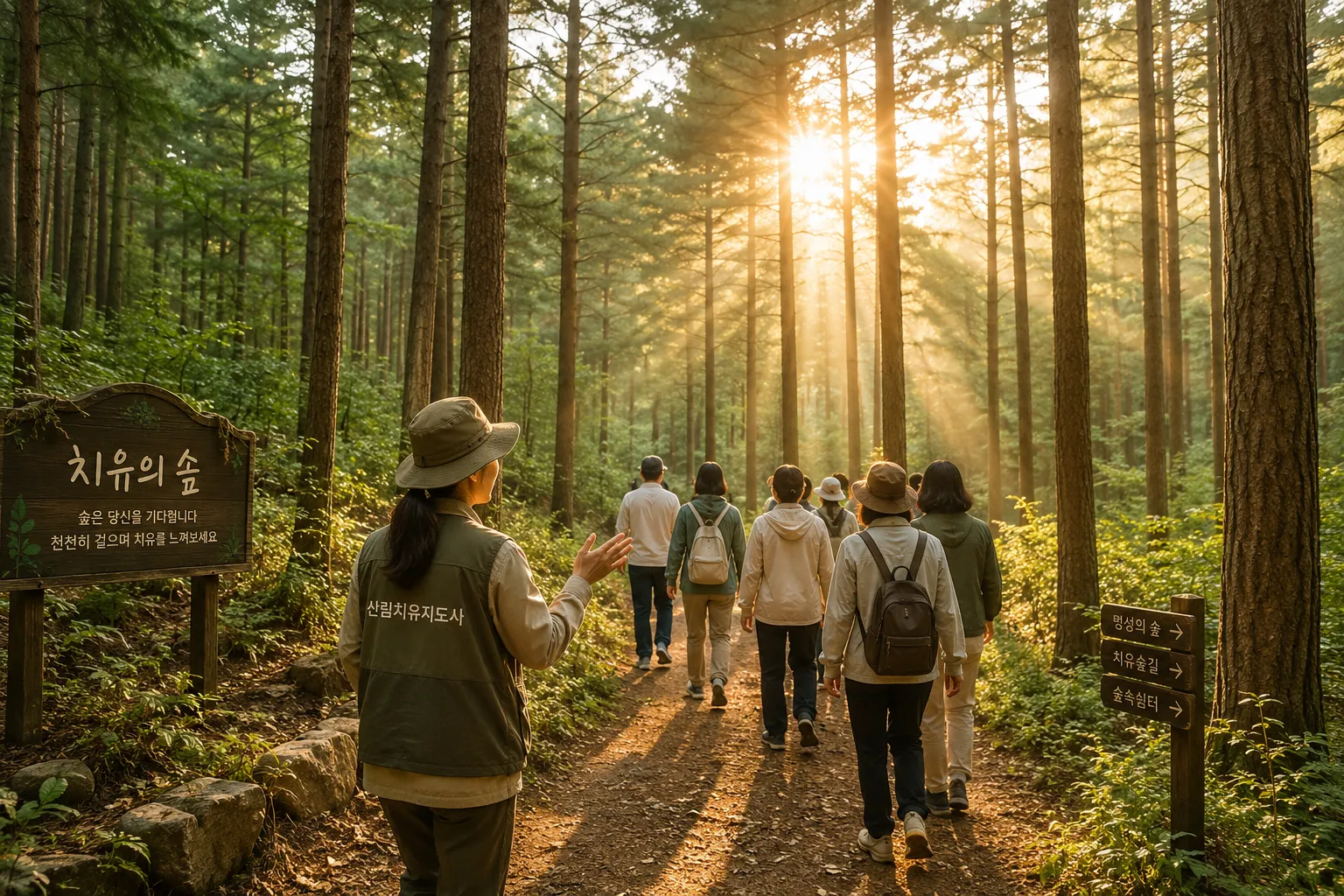
Work stress, digital burnout, chronic fatigue — the pressures of modern life send more people searching for healing, and increasingly, they're finding it in the forest. South Korea has one of the world's most developed forest welfare systems, complete with a national government-issued credential: the Forest Therapy Instructor (산림치유지도사). This guide covers every angle — what the job actually is, the science behind it, how to get certified, where to work, and the salary reality no one else talks about.
🌿 What Is a Forest Therapy Instructor?
The Forest Therapy Instructor credential is a national qualification issued by the Commissioner of the Korea Forest Service, grounded in the Act on Forest Culture and Recreation (Article 11-2). It comes in two levels, and practitioners work in Forest Therapy Venues (치유의 숲), Natural Recreation Forests (자연휴양림), forest bathing trails, and an expanding range of healthcare and corporate settings.
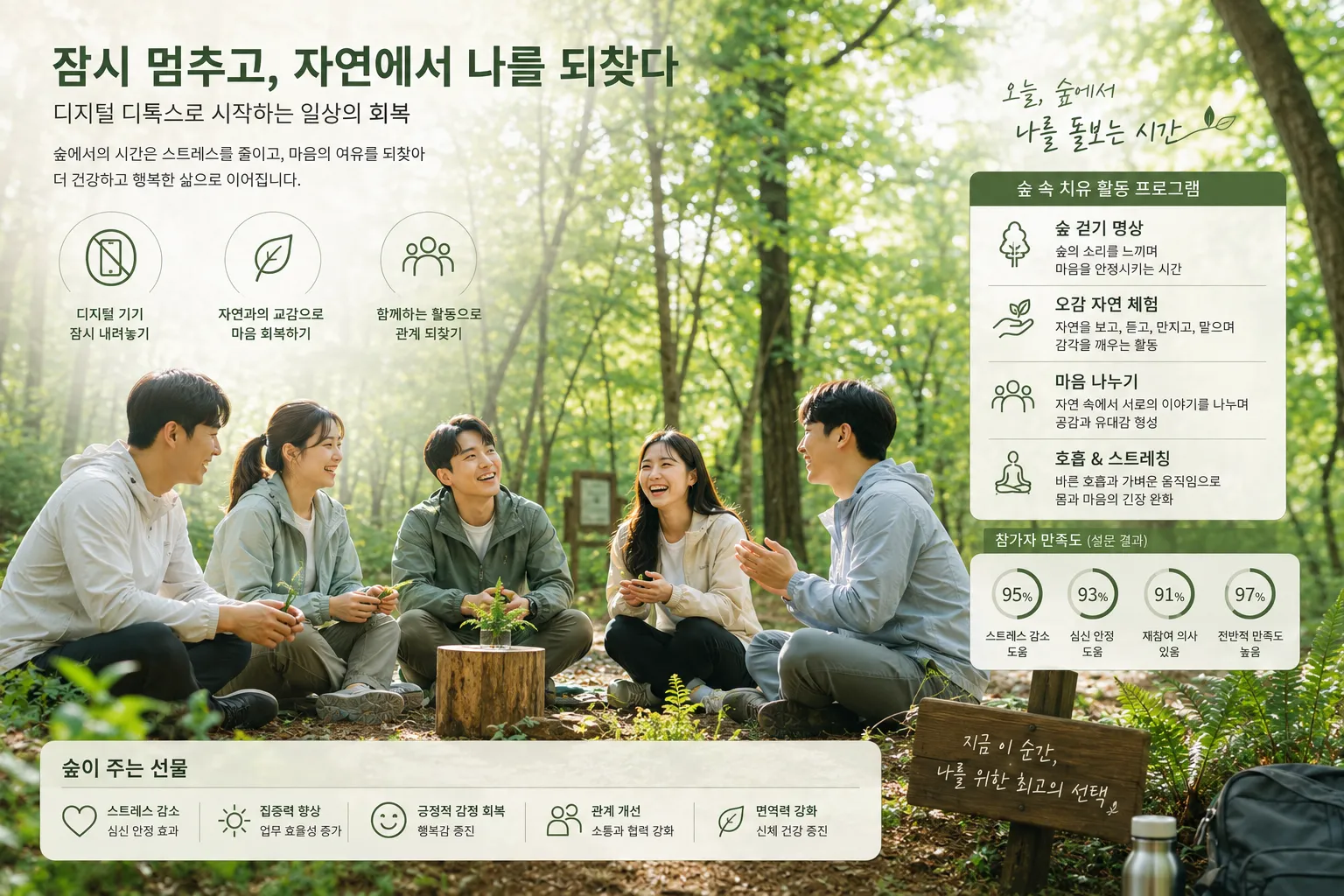
Forest Therapy is distinctly different from a casual hike. The goal is not medical treatment but health maintenance, immune enhancement, and psychophysiological recovery through systematically planned activities in natural settings. Target populations range from stressed office workers and burnout sufferers to elderly patients, cancer survivors, children, and people with chronic conditions.
Internationally, Japan's Shinrin-Yoku (Forest Bathing) has been formally integrated into the healthcare system since the 1980s, and Germany's Kneipp Therapy incorporates nature-based treatments into official medicine. South Korea has built one of Asia's most comprehensive forest welfare infrastructures, with over 200 natural recreation forests and a dedicated national credentialing system.
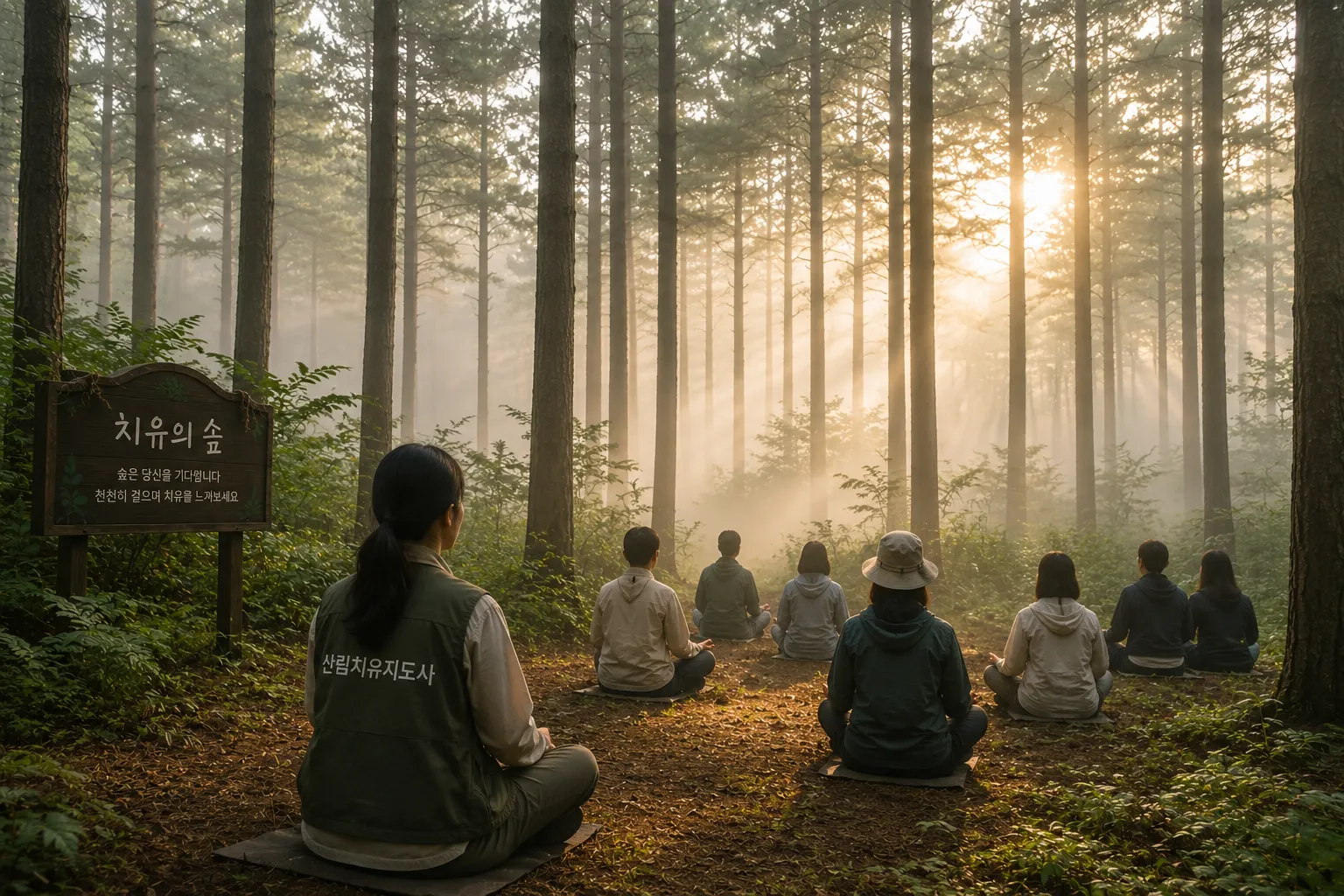
Level 1 vs Level 2 at a Glance
Put simply: Level 1 is the strategist, and Level 2 is the practitioner.
- Level 1 — Designs, develops, and evaluates forest therapy programs; writes operational manuals; plans instructor training; handles program management.
- Level 2 — Implements and facilitates programs under Level 1 supervision; directly guides participants through activities in the field.
(National 13 + Public 41 + Private 2)
(National 47 + Public 132 + Private 23)
(as of 2026)
(as of March 2026)
🔬 The Science: Does Forest Therapy Actually Work?
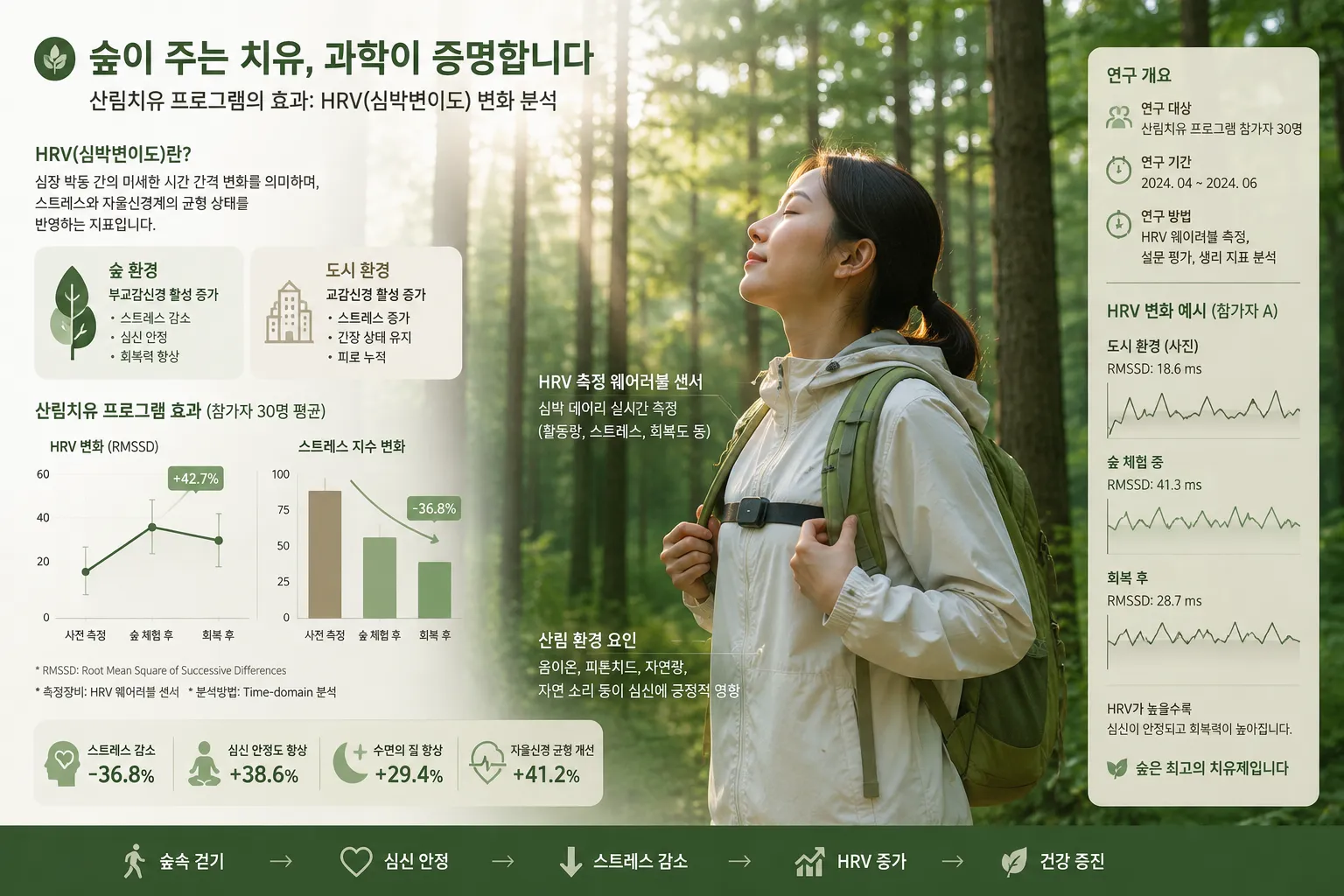
If you're skeptical — and you should be — the good news is that forest therapy isn't just a feel-good trend. Its physiological and psychological effects have been documented through blood tests, saliva cortisol assays, heart rate variability (HRV) analysis, EEG brainwave studies, and immunological panels over decades of research.
"Spending time in a forest significantly increases NK (Natural Killer) cell activity and meaningfully reduces cortisol, the primary stress biomarker. Control groups spending the same time in urban environments showed no comparable effect." — Research by Dr. Qing Li, Nippon Medical School, Tokyo — pioneer of Shinrin-Yoku science
The Six Core Modalities of Korean Forest Therapy 🌱
Korea's academic framework classifies forest therapy activities into six therapeutic modalities:
Phytotherapy (Plant Therapy)
Forest observation, landscape appreciation, and deliberate phytoncide inhalation. Phytoncides (natural volatile compounds released by trees) have confirmed antimicrobial, immune-boosting, and stress-reducing effects.
Mental / Mindfulness Therapy
Meditation, self-reflection, and existential inquiry activities in natural settings. Documented benefits include reduced depression and anxiety, improved self-esteem, and increased psychological resilience.
Exercise Therapy
Forest walking, stretching, and fitness activities using natural terrain. Research shows forest exercise reduces cortisol more effectively than equivalent urban exercise, with additional neurobiological benefits.
Climate Therapy
Forest bathing and breathing exercises that leverage the forest microclimate — lower temperatures, higher negative ion concentrations, and distinct atmospheric pressure. Aids fatigue recovery and autonomic nervous system regulation.
Hydrotherapy (Water Therapy)
Foot baths, stream activities, and water-based exercises using forest water sources. Promotes circulation, reduces fatigue, and provides sensory stimulation through temperature contrast.
Dietary Therapy
Forest tea ceremonies, natural cooking, and edible plant activities. Integrates multi-sensory experience with nutritional and experiential components using locally sourced forest ingredients.
Documented Outcomes — Research Synthesis
Average improvements reported in Korean and international forest therapy studies:
2026 Research Update
The Journal of Korean Institute of Forest Recreation (Vol. 29, No. 3, 2026) published a systematic review identifying standardized physiological indicators for measuring forest therapy outcomes. Wearable-based real-time cortisol monitoring systems are also under active research development, further anchoring the field's scientific credibility.
📋 Level 1 vs Level 2 — Full Comparison
The credential isn't something you can acquire just because you "love nature." Both levels require specific academic backgrounds or professional experience as prerequisites before you can even enroll in a training program.
| Category | Level 2 | Level 1 |
|---|---|---|
| Primary Role | Program delivery & facilitation | Program design, development & evaluation |
| Training Hours | 158 hours (24 courses incl. electives) | 130 hours (18 courses) |
| Academic Path | Degree in medicine, health, nursing, or forestry-related field | Same + Forest Education Expert cert. with 3+ yrs experience |
| Non-Related Degree Path | 4 years of forest therapy-related work experience | 5 years of forest therapy-related work experience |
| Certification Exam | Korea Forest Welfare Institute | Korea Forest Welfare Institute |
| Certificate Issuer | Commissioner, Korea Forest Service | Commissioner, Korea Forest Service |
| Mid-career popularity | ⭐⭐⭐⭐⭐ Very popular for career changers | ⭐⭐⭐ Requires prior experience |
The Eligible Field List Is Broader Than You Think
Korea's Forest Service recognizes 74 related academic departments for eligibility — far beyond medicine and nursing. Physical education, psychology, social work, environmental science, and forestry all qualify. Even if your exact degree isn't listed, completing 3 or more of 61 designated related courses within your degree program can make you eligible.
Forest Education Experts: The Shortcut Path
The "Forest Education Expert" route is one of the most common paths to Level 1 eligibility for those without a directly related degree. Under the Act on Promoting Forest Education, there are three types:
- 🌲 Forest Interpreter (숲해설가) — Guides ecological learning and nature experience activities in forests
- 🌱 Early Childhood Forest Instructor (유아숲지도사) — Specializes in forest-based education for young children
- 🥾 Forest Trail Experience Instructor (숲길체험지도사) — Leads forest trail exploration and safety activities
Holding any of the above and working in the relevant field for 3+ years qualifies you for the Forest Therapy Instructor training program, even without a related degree.
📚 How to Get Certified — Step-by-Step
The certification path has four clear stages. Realistically, it takes 1–2 years from start to finish. There's no shortcut worth taking — the training is hands-on and genuinely comprehensive.
Verify Your Eligibility
Check whether your degree falls under the 74 recognized fields, or whether you have sufficient experience via another route. When in doubt, contact the Korea Forest Welfare Institute directly at 1588-3249 — they provide clear eligibility guidance.
Choose a Training Institute & Apply
Compare the 16 approved institutes on location, cost, curriculum focus, and class schedule. Applications are online only — no postal or in-person applications are accepted. Intake periods are typically 1–2 times per year, so watch institute websites regularly.
Complete the Training Program
Level 2 requires 158 hours (24 courses); Level 1 requires 130 hours (18 courses). Coursework covers four domains: ▲Understanding therapy populations ▲Forest therapy resources ▲Program delivery ▲Planning & management. You must attend at least 80% of total hours to qualify for completion.
Pass the Verification Evaluation
The Korea Forest Welfare Institute administers a level-specific exam covering theoretical and practical components. Passing requires submitting supporting documents (academic transcripts, career records), after which your official credential is issued.
Receive Credential & Begin Job Search
Once documents are verified and eligibility confirmed, your Forest Therapy Instructor certificate bearing the Korea Forest Service Commissioner's name is issued. Use the Korea Forest Welfare Institute's Forest Welfare Jobs portal (forestjobs.fowi.or.kr) to track employment opportunities.
Key Curriculum Topics
🎓 Level 2 Core Courses (representative examples)
🎓 Level 1 Advanced Courses (representative examples)
🏫 Approved Training Institutes (2026)
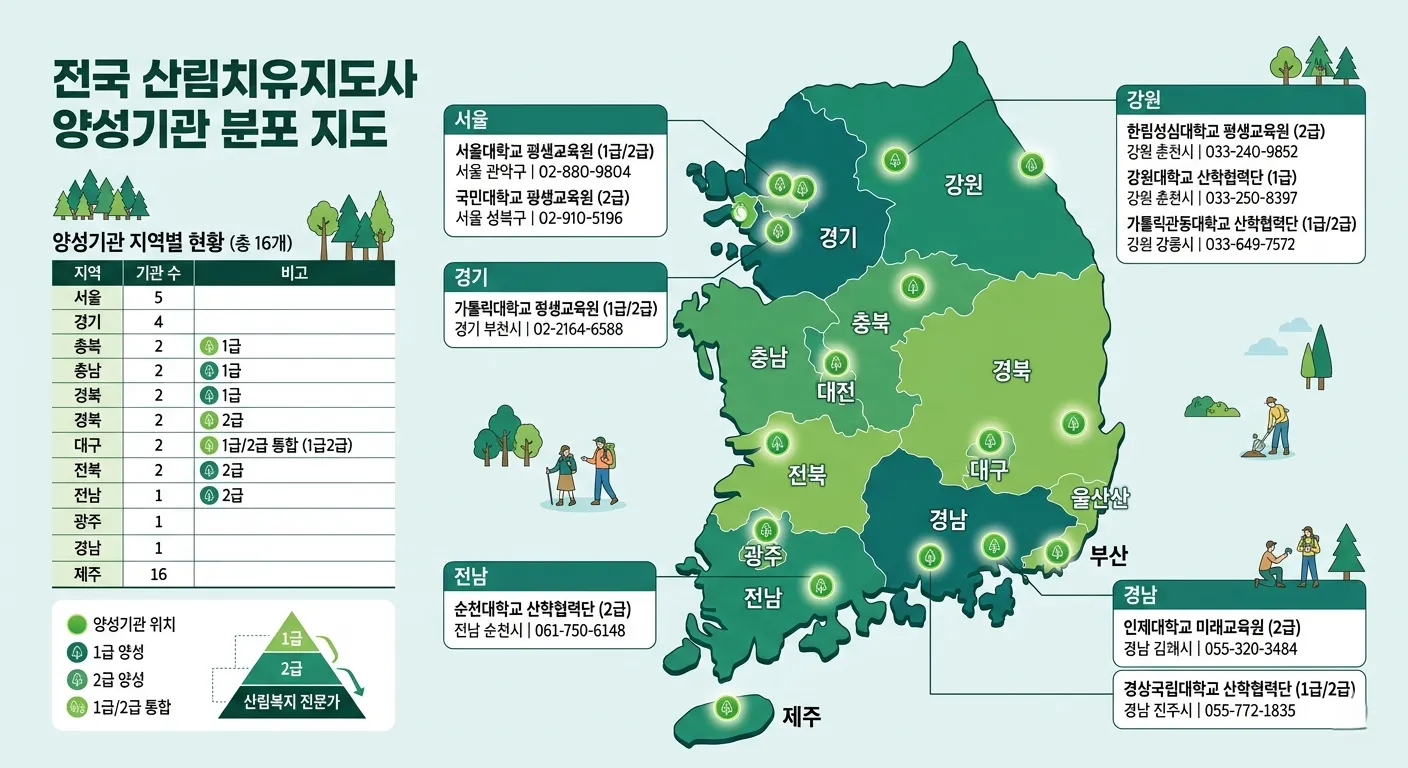
As of March 2026, there are 16 designated Forest Therapy Instructor training institutes across South Korea, from Seoul and Gyeonggi to universities in Chuncheon, Suncheon, Gwangju, and beyond. Some operate both Level 1 and Level 2 programs; others specialize in Level 2 only.
2026 Application Window Reference
Seoul National University's continuing education program ran its 2026 intake from January 20 to February 7. Schedules vary by institute, so bookmark individual institute websites. Most run 1–2 cohorts per year — missing one cycle means waiting several months.
Key Takeaway ✅
The Forest Therapy Instructor is a national government credential (not a private certification). The path is: training institute completion → verification exam → document submission. Level 2 (158 hours) has a lower entry barrier and is highly popular among career changers in their 40s–60s looking for meaningful second careers.
💼 Career Paths — Where Do You Work?
The job market is more varied than most people realize when they first hear "forest instructor." Here are the main employment sectors:
National & Public Healing Forests
56 healing forest venues currently operate across Korea, with 27 more under construction. Positions are mostly contract/fixed-term rather than permanent, but public sector employment is stable and desirable.
Natural Recreation Forests
202 national, public, and private recreation forests with growing demand for structured therapy programming beyond basic recreation. Slightly more regular employment opportunities than healing forests.
Healthcare & Social Welfare Linkage
Hospitals, nursing homes, mental health centers, and addiction recovery programs are increasingly incorporating forest therapy as a complementary intervention. Particularly strong in cancer patient support and mental health rehabilitation.
Corporate ESG Programs
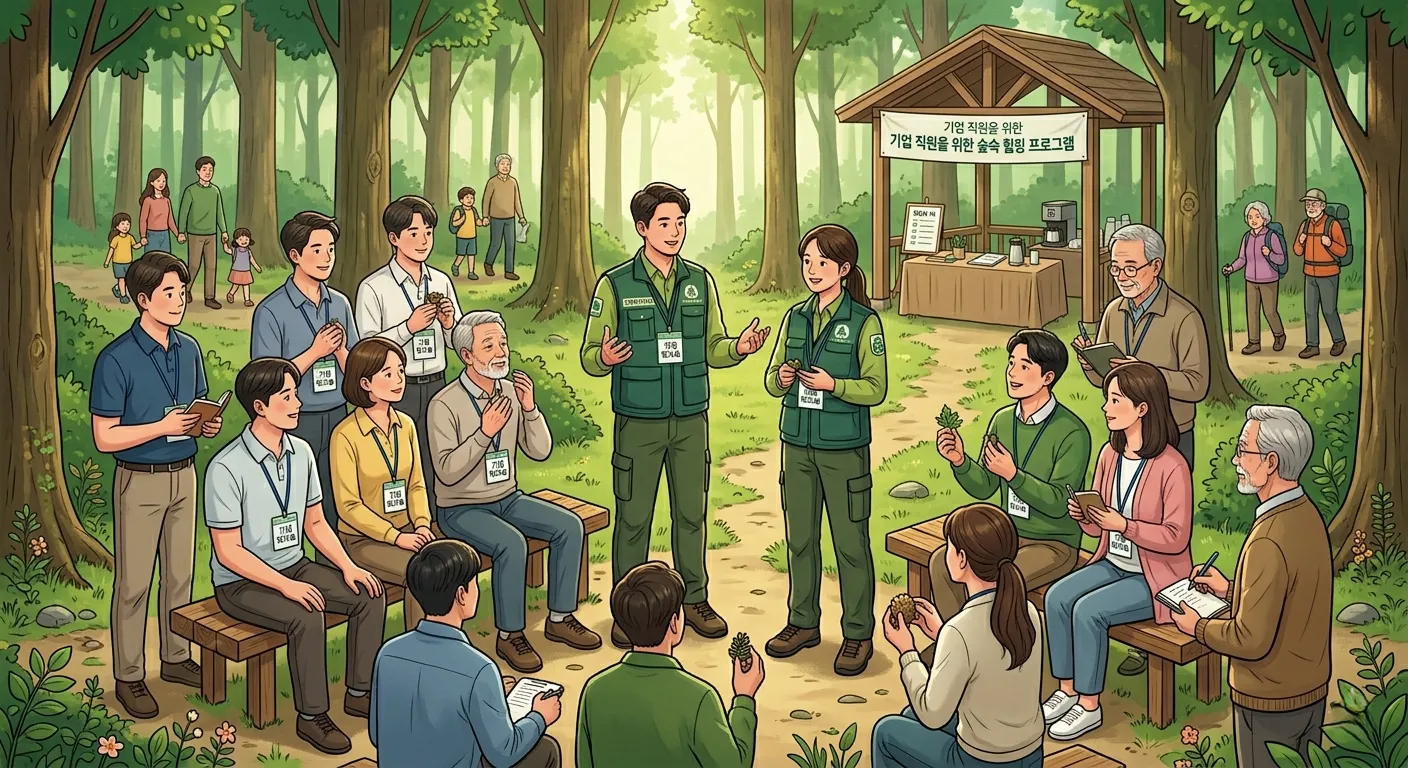
The ESG management wave is pushing companies to invest in employee well-being. Forest therapy workshops for burnout prevention and resilience-building are gaining traction as corporate benefits, making freelance instructor work increasingly viable.
Independent Forest Therapy Practice
Registration as a "Forest Therapy Business Operator" (산림치유업) is legally possible under the Act. Entrepreneurs can offer group programs, individual coaching, and online content — a portfolio approach that can outperform salaried options with the right marketing.
Training Institutions & Research
Level 1 credential holders with significant experience can transition into roles as training institute lecturers, researchers, or policy consultants for the Korea Forest Service. Building academic credibility (publications, research participation) opens this path.
💰 Salary Reality — Honest Numbers
Let's not bury this: high base salaries from this credential alone are uncommon. But the financial picture is more nuanced — and potentially strong — when approached strategically.
💵 Estimated Compensation by Role (2026 Reference)
The Salary Context That Matters
The most financially successful Forest Therapy Instructors tend to be those who use the credential to augment an existing career — nurses designing hospital-linked forest programs, social workers adding nature-based interventions, PE instructors expanding into therapeutic services. Used this way, the credential raises your professional positioning without depending solely on forest therapy income.
For retirees and career-changers in their 50s–60s, there's also real value in the public employment angle: part-time or 3–4 day/week contract roles at healing forests or municipal forest welfare programs offer both meaningful income and social engagement — a combination that's increasingly hard to find in retirement.
📈 2026 Job Market Outlook
The structural case for this field's growth is strong. Here's what's driving it:
🏥 Super-Aging Society + Chronic Disease Surge
Korea formally entered "super-aged" society status in 2026 (>20% aged 65+). The government is pivoting toward prevention-focused healthcare, creating structural demand for non-pharmaceutical wellness interventions like forest therapy.
😔 Mental Health Crisis & Burnout Economy
South Korea ranks among OECD nations with high rates of work-related psychological distress. Mental health centers, workplace EAP programs, and school counseling initiatives are all expanding into nature-based interventions.
🌲 Infrastructure Expansion
From 56 to 83+ healing forests (including those under construction) — more facilities mean more staffing demand. The Korea Forest Service continues to increase its forest welfare budget each year.
🌍 Global Wellness Industry Boom
The global wellness economy is projected to reach multi-trillion dollar scale by 2030. Interest in "Forest Bathing" and nature-based therapies is surging internationally, opening potential for Korea's credentialed practitioners to participate in tourism programs, global exchange, and research collaboration.
📲 Digital Detox as Lifestyle
The movement away from screen dependency — especially among younger Koreans who seek "숲캉스" (forest vacations) and mindful travel — creates a continuous pipeline of participants for forest wellness programs. Gen MZ is reshaping the demand side of this market.
+ under construction (2026)
users — growing annually
programs expanding
programs adding FTIs
💬 Real Reviews from Practitioners & Students
Theory aside — here's what people who've actually been through the training and are working in the field have to say:
"158 hours is not nothing — but it doesn't feel like classroom drudgery. A lot of the curriculum happens in actual forests doing actual activities. The hard part is managing the schedule while working full-time. Worth it though. After graduation, the way you perceive a forest changes completely."
— Full-time employee, Level 2 graduate
"Got this as my second-chapter career after retirement. The salary won't make you rich, but you're outside every day, helping people, and staying healthy yourself. And crucially — you can keep doing this well into your 60s and 70s as long as your body cooperates. That longevity is the real selling point."
— Retiree, 60s, holds both Level 1 & Level 2
"Getting the credential is not that hard. The challenge is job placement afterward — there simply aren't that many postings, and competition exists. Don't treat this as a standalone solution. Have a plan for where and how you'll work before you start the training. Networking with classmates matters more than most people think."
— 2nd-year contract worker, healing forest
"I added Level 2 to my social worker credential and immediately started designing forest walk programs for elderly residents at a care facility. The two qualifications together elevated my program design capability significantly. This is really about enhancing your primary career's competitiveness, not replacing it."
— Social worker with Level 2 dual credential
"After Level 1, I registered my own forest therapy business. Revenue was volatile at first. The shift came when I started targeting corporate HR managers directly and showing measurable employee wellness outcomes. B2B programming — packaged, branded, repeatable — is where the real money is in this space."
— Level 1 certified, 3rd-year independent practitioner
✅ Is This Career Right for You?
After this deep dive, let's come back to the core question: is the Forest Therapy Instructor path right for you?
This is a great fit if you… 👍
- Work in healthcare, social work, education, or fitness and want to add a nature-based therapeutic dimension to your practice
- Are in your 40s–60s and want a physically sustainable, meaningful second career after retirement or career transition
- Have experienced burnout yourself and are drawn to working in nature as a core part of daily life
- Already hold a Forest Education Expert credential (forest interpreter, early childhood forest instructor, trail instructor)
- Are interested in building a portfolio career that blends wellness, nature, education, and community service
Think carefully if you… ⚠️
- Expect this credential alone to provide a high fixed salary without prior planning
- Strongly prefer indoor, office-based environments or have physical limitations for outdoor work
- Are credential-collecting without a concrete employment or business plan in place
For official information, visit the Korea Forest Service (forest.go.kr) and the Korea Forest Welfare Institute (fowi.or.kr), or call the inquiry line at +82-1588-3249 (weekdays 09:00–18:00 KST).
"I spent 18 years as a nurse — my body just couldn't keep up. After getting my Level 2 certification, I started part-time at a local healing forest. My medical background is genuinely useful here: I can read participants' physical condition in real time in ways most instructors can't. The synergy between professions is real."
— Former nurse, 40s, Level 2 certified