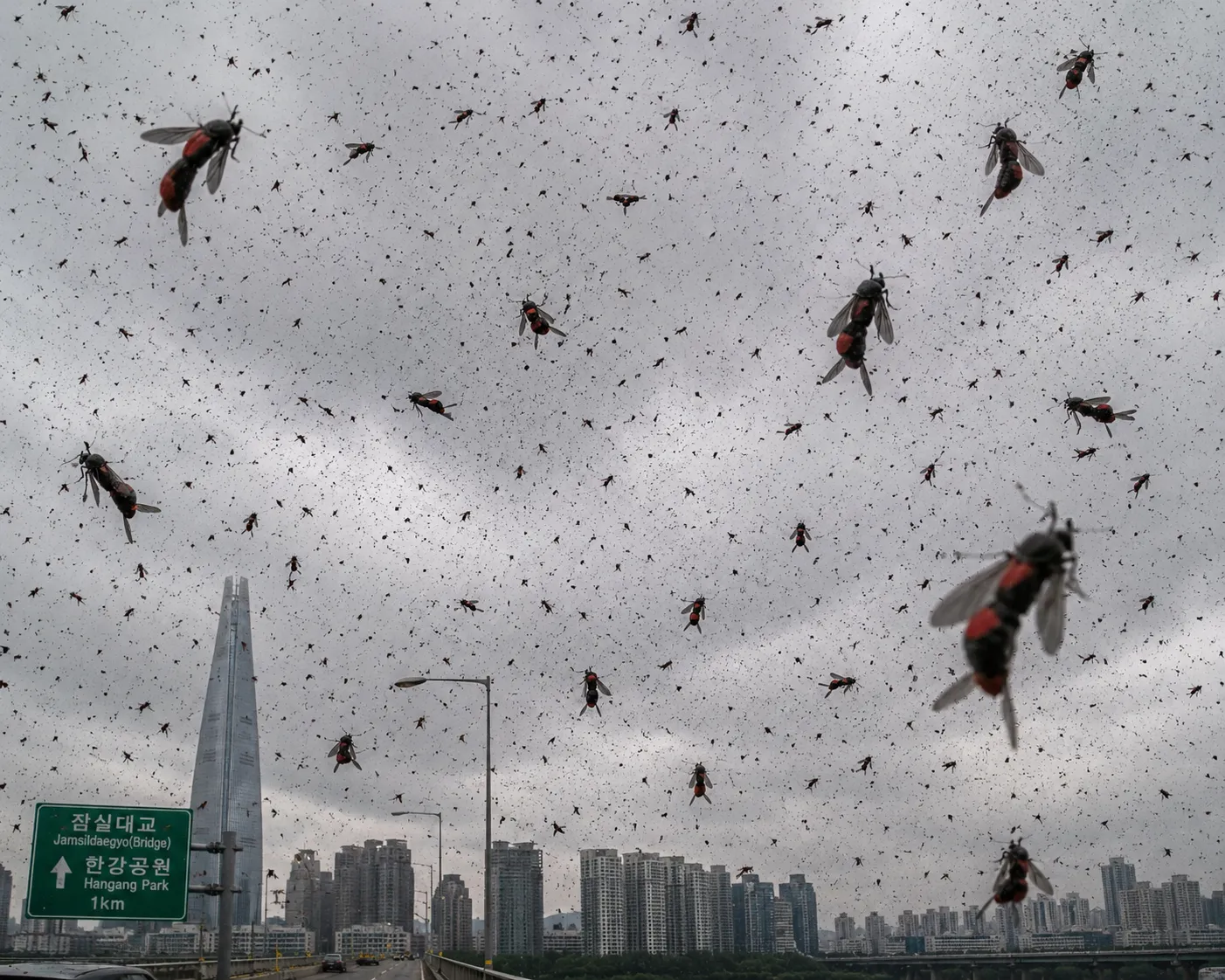
Every June since 2022, a predictable ritual plays out across Seoul and the greater metropolitan area of South Korea. Social media fills with photos of windows plastered with tiny black insects, car hoods covered in insect remains, and frustrated captions reading "They're back again." The culprit is the Love Bug — officially known as Plecia longiforceps, or 붉은등우단털파리 (Red-backed Hairy Fly) in Korean. Romantic name aside, encountering them in real life is anything but. Since their first mass outbreak in Seoul's Eunpyeong District in 2022, they've steadily expanded their territory each year, and by 2025–2026, their range extends across the entire Seoul metropolitan area and beyond. The tension between government officials calling them "beneficial insects" (익충) and citizens demanding action gave birth to a viral neologism: "익충라이팅" (beneficial-bug gaslighting). This comprehensive guide covers everything you need to know about Korea's Love Bug problem.
1. What Is a Love Bug? — Biology & Characteristics 🔬
The Love Bug's scientific name is Plecia longiforceps, classified within the family Bibionidae (March flies). In Korean, it goes by 붉은등우단털파리, literally "red-backed velvety fly." The name is apt: the insect's thorax (middle body segment) is a vivid red or orange-red against its otherwise jet-black body, making it visually distinctive among flies.
The "Love Bug" name comes from its mating behavior. Males and females connect end-to-end and fly in tandem for days — sometimes the entire duration of their adult lives. This coupled flight is unmistakable and is how most people first recognize the species. Crucially, during this adult phase, they barely eat at all; reproduction is their sole priority.
| Attribute | Detail |
|---|---|
| Scientific Name | Plecia longiforceps (Family: Bibionidae) |
| Korean Name | 붉은등우단털파리 (Red-backed Hairy Fly) |
| Origin | Presumed southern China; invasive species first recorded in Korea in 2015 |
| Appearance | Black body, red/orange thorax; body length ~6–9 mm |
| Adult Lifespan | Males: 3–4 days; Females: ~1 week |
| Active Season | Mid-June to mid-July (adult stage) |
| Larval Habitat | Decomposing leaf litter and humus in forests and parks |
| Diet | Pollen; adults consume almost nothing |
| Human Harm | No mouthparts for biting; does not transmit disease |
| Ecological Role | Minor pollination, leaf litter decomposition → classified as beneficial |
The adult lifespan is remarkably short. After mating, males die within 3–4 days, and females follow within about a week after laying eggs. But the larval stage is long and hidden: eggs hatch in autumn, larvae overwinter in leaf litter and humus, survive through spring, pupate around May, and then all emerge at once around mid-June. This mass simultaneous emergence is why love bug outbreaks feel so sudden and overwhelming — they don't build up gradually, they just explode.
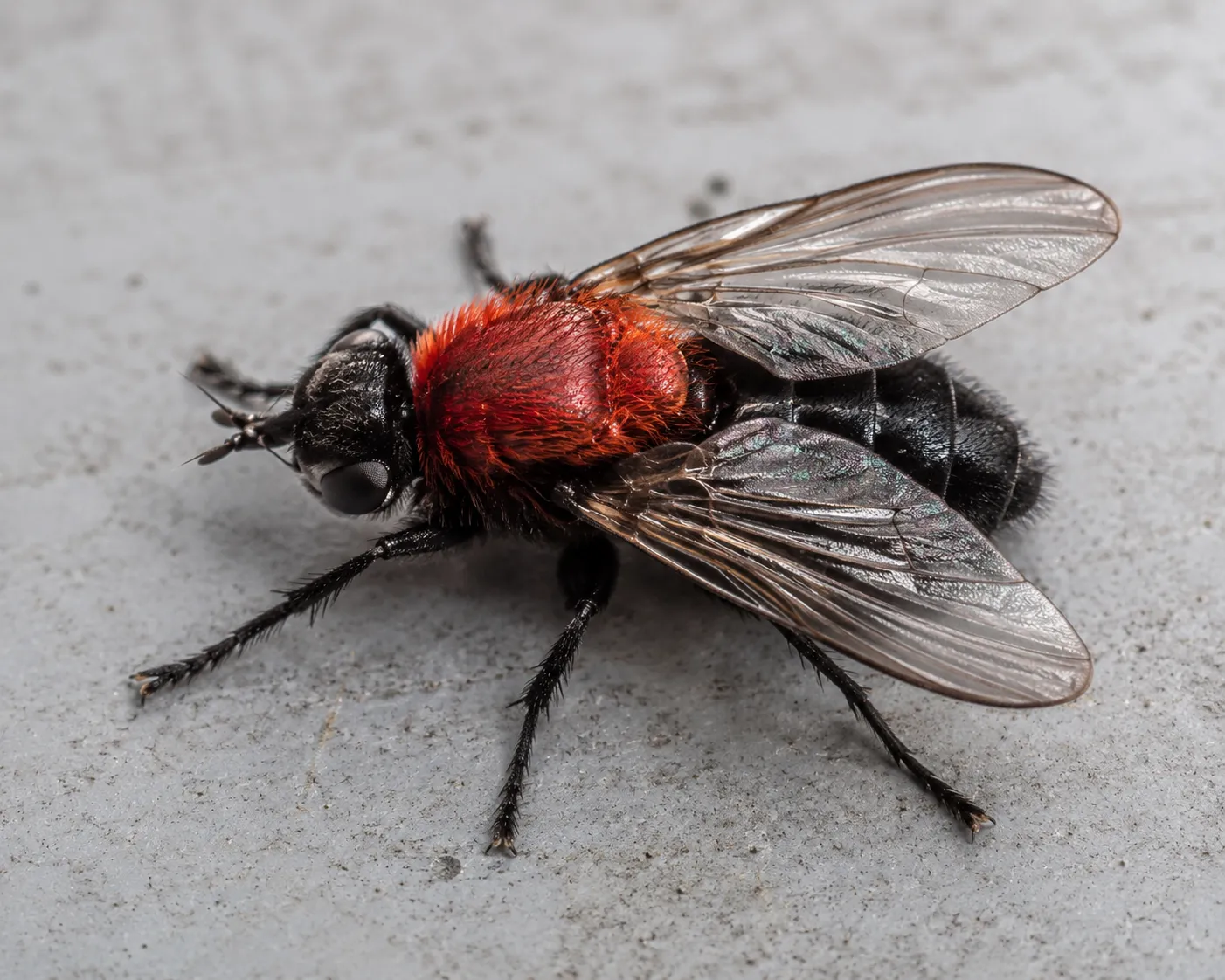
"The Love Bug (붉은등우단털파리) has no mouthparts for biting and does not transmit pathogens. In the ecosystem, it plays a role in pollination and soil enrichment, which is why it is classified as a beneficial insect." – National Institute of Biological Resources (국립생물자원관), Korea
2. The Spread Timeline — From Eunpyeong to Nationwide 🗺️
While the Love Bug was first officially documented in Korea in 2015, most citizens didn't encounter it until 2022. In those seven quiet years, it was building its beachhead — and in 2022, it announced itself loudly.
📊 Annual Love Bug Complaints Filed with Seoul City Government
* 2025 figure is partial (to June 20). Full-season total expected to be significantly higher.
3. Beneficial or Harmful? — The "Gaslighting" Controversy ⚖️
The sharpest debate around Love Bugs in Korea is the collision between the official position — "they're beneficial insects, so we can't spray them with pesticides" — and the citizen demand for "just do something already." In summer 2025, this tension reached a breaking point.
✅ The Beneficial Case
- Minor pollination role as adults visit flowers
- Larvae decompose leaf litter, enriching soil
- Some research suggests role in tick population control
- Do not bite or transmit disease
- Short adult lifespan means natural die-off
- Chemical pesticides risk broader ecosystem damage
❌ The Harmful Case
- Mass outbreaks effectively shut down outdoor life
- Rotting carcasses produce severe odors, harming businesses
- Acidic body fluids corrode car paint — real property damage
- Food hygiene concerns in open-air settings
- As an invasive species, may disrupt native ecology
- "All flies decompose leaves — does that make them all beneficial?" (logical counter)
The flashpoint was the Gyeyang District mayor's remark on July 2, 2025 that citizens should "learn to tolerate" the infestation while it was at its worst. The backlash was immediate and furious. Citizens coined 익충라이팅 — a portmanteau of 익충 (beneficial insect) and 가스라이팅 (gaslighting) — to describe what they felt was official dismissal of legitimate suffering.
Seoul City's Compromise: "Trendy Nuisance Insect"
Faced with the impossible choice between ecological principle and public outrage, Seoul City coined a new category: "유행성 생활불편곤충" (trendy life-nuisance insect). The term acknowledges the ecological function while recognizing the quality-of-life impact. Critics called it a dodge. But it reflects the genuine difficulty of managing a species that is simultaneously ecologically non-harmful and socially intolerable at mass scale.
The Seoul Research Institute made headlines by suggesting Love Bugs be turned into a mascot character — citing the example of SpongeBob SquarePants creator Stephen Hillenburg (a marine biologist who made sea life lovable). The suggestion was met with widespread mockery online.
4. Car Paint Damage & Daily Disruptions — How Bad Is It? 🚗
For many Koreans, the Love Bug's most infuriating impact isn't the sheer numbers — it's the car paint damage. This moves the problem beyond inconvenience into actual property loss.
⚠️ Why Cars Are Especially Vulnerable
Love Bug body fluids contain acidic compounds. When smashed insects are left on a car's surface, the acid gradually etches into the clear coat, causing micro-scratches and, over time, visible surface corrosion. Female Love Bugs are attracted to cars because vehicle exhaust and heat mimic the smell of decaying vegetation where they lay eggs. After a highway drive through a swarm, it's not uncommon to find dozens or even hundreds of corpses on the hood and windshield.
Beyond cars, the disruption to daily life is extensive. Open-air restaurant and café terraces are effectively shut down during peak season. Ventilating apartments requires battling bugs crowding screens. Food safety becomes a concern when insects land on uncovered meals. At Gyeyang Mountain in summer 2025, hiking trails were rendered impassable — not metaphorically, but literally: bugs filled the air to the point where breathing through the mouth was risky.
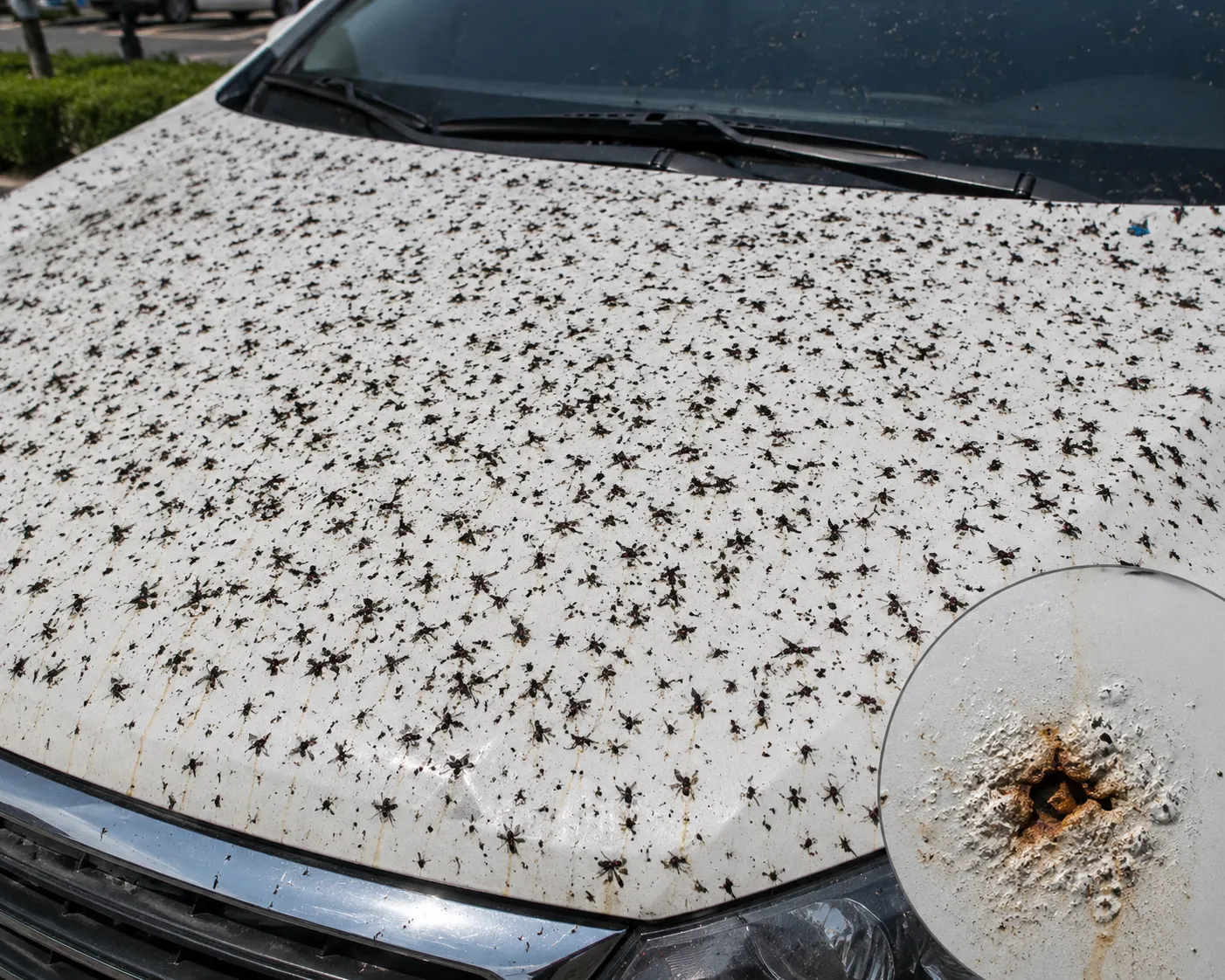
Key Takeaway: Car Protection Golden Rule
If Love Bugs land on your car, remove them within 24 hours. Soak the area with water first, then wipe gently with a damp microfiber cloth. Never scrub dry — it scratches the paint. Pre-season wax or ceramic coating provides excellent protection. A dedicated bug cleaner spray makes removal much easier during the season.
5. Government Response — Controversy & Legislation 🏛️
What started as a local district matter has become a national policy debate. The reason the government's response was so slow is structural: Korean law on pesticide spraying requires that the target insect cause direct harm to humans, crops, or forests. Love Bugs — classified as beneficial — don't meet that threshold. So for years, officials were legally constrained from doing much even when the situation was clearly untenable.
July 2025: Ministry of Environment Deploys Directly
In an unprecedented move, the Ministry of Environment deployed 37 of its own staff — from the ministry itself and the National Institute of Biological Resources — plus about 10 Gyeyang District office workers to Gyeyang Mountain on July 4, 2025. They used blowers, insect nets, and water spray equipment for manual control. A central environmental ministry deploying staff to handle a fly outbreak was historically unprecedented — a measure of how extreme the situation had become.
Environmental groups pushed back hard. The Seoul Environmental Alliance warned that heavy-handed intervention could trigger secondary ecological disruptions: pesticide-resistant species filling the void left by Love Bugs, or unforeseen effects on native biodiversity. "The fact that they're exploding in numbers means ecosystem balance is already broken," the group said. "Artificial intervention might just make things worse."
Despite opposition, a Seoul City ordinance enabling large-scale insect control passed the city assembly in early 2025, reflecting how powerful the public pressure had become.
6. The 2026 Action Plan — Drones, Bti & New Laws 🚁
The 2026 response plan represents a genuine upgrade from previous years' reactive firefighting. Announced May 21, 2026 by the Ministry of Climate and Energy Environment, it has three core pillars.
🏛️ 2026 Love Bug Response: Three Core Pillars
-
①
Legal Framework — Wildlife Protection Act Amended (May 7, 2026)
The National Assembly passed an amendment creating a legal definition for "mass-outbreak insects," enabling central government and local authorities to systematically survey, monitor, and fund control efforts. This removes the legal paralysis that hampered previous responses. -
②
Pre-emptive Larval Control — Bti Biological Agent Field Trials
Rather than waiting for adults to swarm, the government is targeting larvae underground. Bacillus thuringiensis israelensis (Bti) — a naturally occurring soil bacterium used against mosquito larvae — showed effectiveness against related species in lab tests. Four high-incidence areas in Seoul and Incheon received preemptive Bti applications in April–May 2026. -
③
Advanced Equipment — Drones, Vacuums & Massively Expanded Traps
A drone with a 70-liter water tank will be trialed at Gyeyang Mountain, operating for ~10 days during peak emergence. Portable vacuum-based insect collectors will be deployed at hotspots. Light-based traps scale from 21 units (2025) to 15 units with larger capacity; pheromone/floral-lure traps scale from 12 units to an extraordinary 3,850 units with three types of attractants.
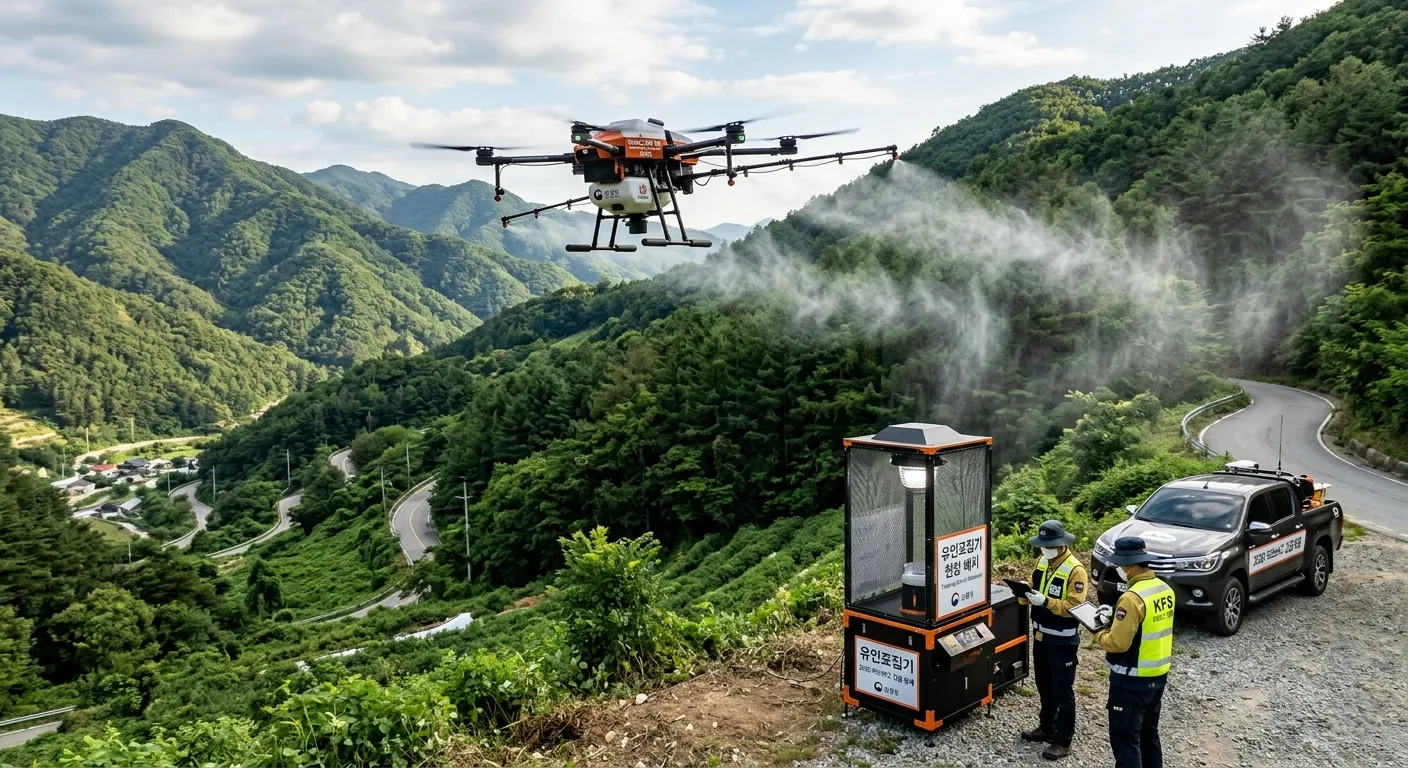
Multi-Agency Coordination: The Mass Outbreak Response Council
A new inter-agency council brings together the Ministry's field offices, local governments, pest control associations, and academic experts. During the June–July outbreak window, an emergency field response unit operates within this council structure. Local governments report complaint data; the National Institute of Biological Resources shares surveillance and control technology; the National Institute of Ecology tracks invasive species entry — all in real time.
7. What You Can Actually Do — Practical Tips 💡
Government action helps, but there's no guarantee of total control during Love Bug season. Here's what individuals can realistically do.
Protect Your Car
Pre-coat with wax or ceramic coating before June. After driving through swarms, remove bugs within 24 hours: soak with water, then wipe with a damp microfiber cloth. Use a dedicated bug-cleaner spray. Never dry-wipe.
Windows & Screens
Spray water from inside-out through the screen to dislodge bugs. Time ventilation for cloudy days or breezy evenings. Minimize open windows after dusk when bugs swarm toward indoor lights.
Natural Repellents
Citrus essential oils (orange, lemon) diluted in water can be applied around window frames as a mild deterrent. Commercial bug-repellent sprays work for personal use. Avoid heavy chemical insecticides.
When Outdoors
Avoid bright white or light-colored clothing during peak weeks (mid-June to early July). Skip heavy floral perfumes. A hat and long sleeves reduce surface area for bugs to land on.
Timing Your Activities
Love Bugs are most active from 10 AM to 4 PM in hot, sunny weather. Early mornings and evenings are noticeably more comfortable for outdoor exercise in affected areas.
Long-Term Thinking
Plant diverse native species in gardens to support predator populations. Clear leaf litter promptly in autumn to reduce larval habitat. Support urban green space programs that restore ecological balance.
🚘 Step-by-Step Car Care During Love Bug Season
Pre-Season Coating — Do This Before June
Apply a quality wax or ceramic coating to your car's front surfaces before the season starts. This creates a barrier so acidic fluids don't make direct contact with the clear coat. Paint protection film (PPF) on the hood is the most thorough option.
Post-Drive Check — Don't Leave Bugs Overnight
After driving through bug-dense areas, inspect the front of your car. Every hour of delay increases acid damage. The goal is removal within 24 hours, ideally much sooner.
Soak, Then Wipe — The Right Method
Saturate the affected area with water and wait 5–10 minutes to soften the dried residue. Then gently wipe with a wet microfiber towel. A bug-cleaner spray speeds the process. Never use a dry cloth — it scratches.
Shorten Your Wash Cycle — More Frequent During Season
If you normally wash every 2–4 weeks, cut that to weekly during peak Love Bug weeks. Highway commuters should check after every significant trip through affected corridors.
8. Climate Change & the Future of Love Bugs in Korea 🌡️
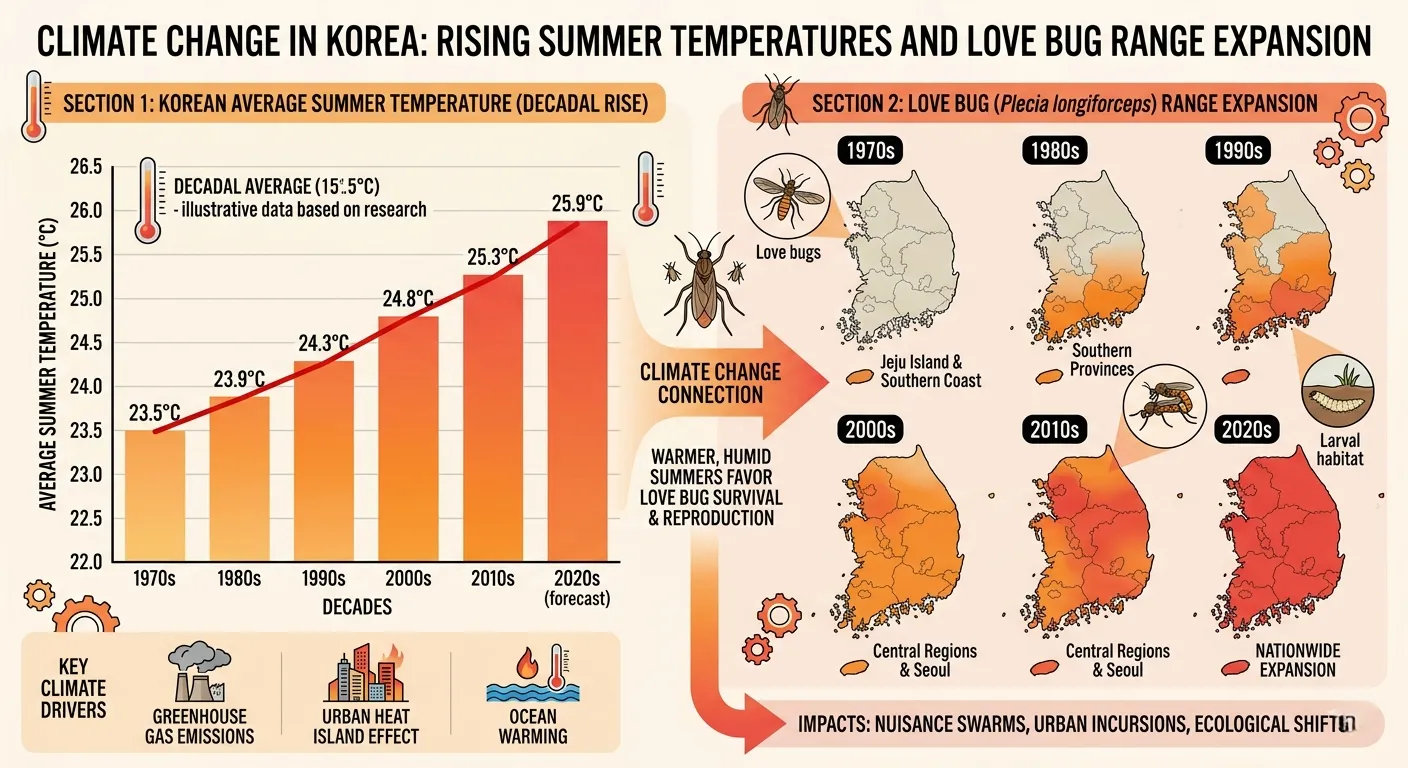
To understand Love Bugs is to understand a much larger story about what's happening to Korea's climate. Experts consistently frame the Love Bug explosion not as a random anomaly but as a symptom.
Korea's climate is rapidly shifting from temperate to subtropical. Summer temperatures are rising, winters are warming, and the threshold conditions that used to limit tropical and subtropical species from establishing permanent populations in Korea are eroding year by year. Love Bugs originated in southern China's subtropical zone — and that zone is now, effectively, coming to them.
"Love Bugs are not the end of this story. We will conduct research to identify in advance the characteristics of insects with high potential for introduction into Korea, in preparation for the emergence of a 'second or third Love Bug' due to climate change." – Kim Tae-o, Director of Nature Conservation, Ministry of Environment
Two specific climate factors amplify the problem. First, winter temperatures in the Seoul area have increasingly failed to drop below -10°C — the threshold at which Love Bug eggs and larvae suffer meaningful cold mortality. More larvae surviving winter means more adults emerging each June. Second, the urban heat island effect in Seoul raises local temperatures further, creating a microclimate that especially favors thermophilic species like Love Bugs.
The warning from environmental scientists is sobering: Love Bugs are harmless. The next invasive insect to mass-emerge due to climate shift may not be.
9. What People Are Saying — Community Reactions 💬
The Love Bug debate in Korea isn't just an ecological or administrative story — it's a social one. Here's a sample of the voices that have shaped the public conversation.
"I went to Gyeyang Mountain and couldn't even open my mouth outside without fear of inhaling them. They call this a 'beneficial insect'... This is a disaster-level situation. I've given up on hiking for the entire summer."
"It's not 'don't complain because they're beneficial' — it's 'this population density is not normal even if each individual bug is beneficial.' That's the point everyone keeps missing. 'Beneficial-bug gaslighting' is exactly the right term."
"I understand why environmental groups oppose chemical spraying. But the alternative can't just be 'deal with it.' If they had used eco-friendly methods like Bti aggressively three years ago, we wouldn't be at this point."
"Brand new car, first summer. Took it on the highway and came back to a hood that looked like a bug cemetery. Removed them with bug cleaner but the micro-scratches are already there. This is actual property damage. Who compensates for this?"
"Turn them into a mascot like SpongeBob? SERIOUSLY? That's the Seoul Research Institute's actual suggestion? So you can't control them, can't spray them, and the answer is... to make them cute? What exactly is your job?"
"Can't go to the park with my kids, can't open windows, they even land near the baby formula. They say they don't bite but what if they get in a baby's eyes? Has this actually become our new normal? Something is seriously wrong."
10. Conclusion — What Comes Next 🌱
Love Bugs are more than an annoying pest problem. They're a window into the collision of climate change, urban ecology, invasive species management, and the social contract between governments and citizens. Every one of those threads is visible in this story.
The 2026 response plan is a real improvement. Legal authority finally exists to act systematically. Preemptive larval control is a smarter approach than waiting for swarms to appear. But experts are clear: sustainable resolution requires restoring urban biodiversity so that natural predators can regulate populations — and that's a multi-decade project, not a seasonal fix.
Small Things That Actually Help
Plant diverse native species in your garden to support predator insects and birds. Clear leaf litter each autumn to reduce larval breeding sites. Support urban green space programs and river restoration initiatives that rebuild healthy ecosystems. And most importantly — recognize that Love Bugs are a signal that something in the urban ecosystem is out of balance. Addressing the symptom alone won't fix the underlying problem.
If you're living in the Seoul area or planning to visit during summer, the practical answer is simple: know when they come (mid-June to mid-July), protect your car early, plan outdoor activities for mornings and evenings, and accept that the season will end in a week or two. They're unpleasant, not dangerous. And hopefully, with better preemptive management each year, the peaks will soften.
Have your own Love Bug story or tip? Share it in the comments — your hands-on experience may help someone else navigate Korea's most controversial summer insect. 🐛