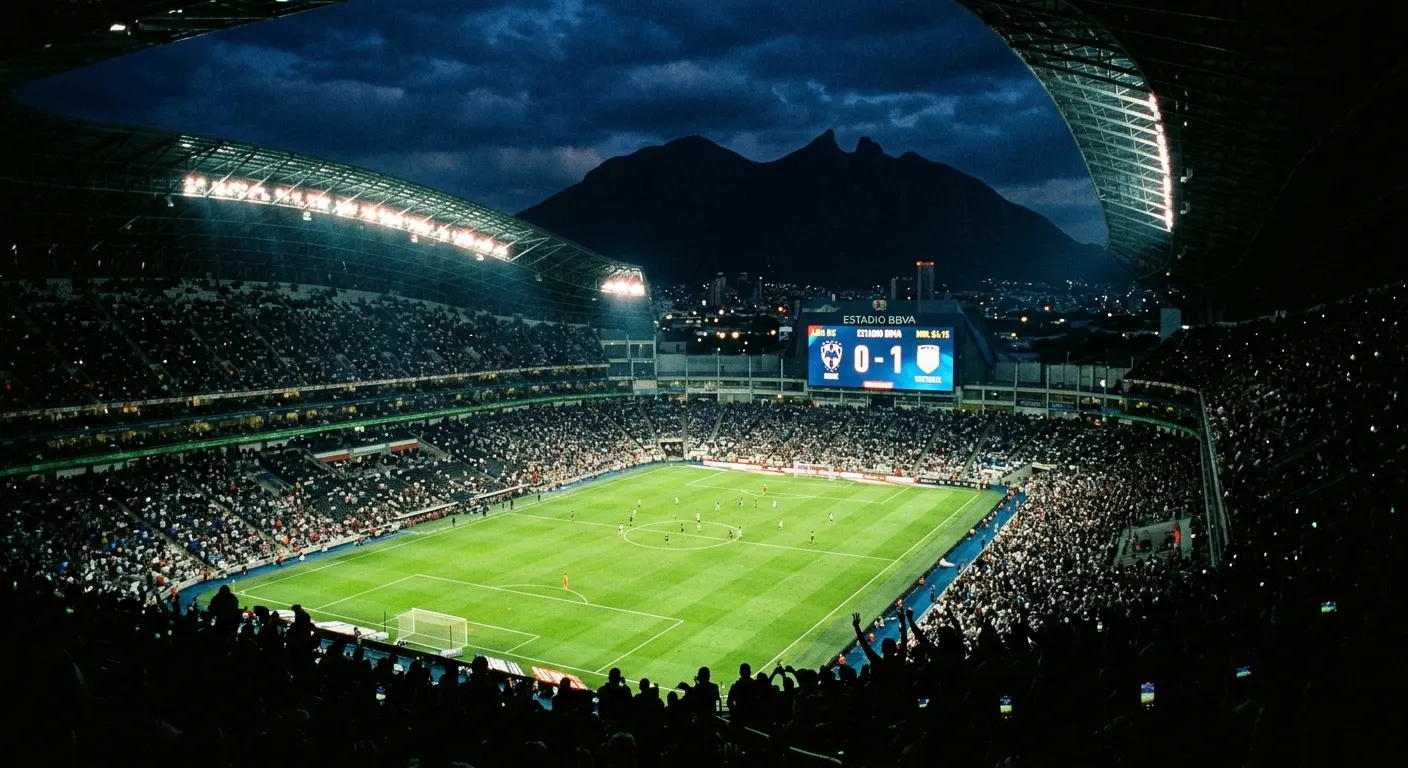
It was a weekday morning, no late nights, no early alarms required. And yet offices, subway cars, and bedrooms across the country were locked onto the same screen, wearing the same expression. The result defied every expectation: 28th-ranked Korea fell 0-1 to 56th-ranked South Africa. The moment the final whistle blew, one word was on every fan's lips: three-back. What actually happened in Monterrey, why this formation ended up in the crosshairs, and what this single match means for Korea's Round of 32 hopes — let's break it all down. By the end, the benching controversy, the fallout off the pitch, the global reaction, and Korea's survival odds will all make a lot more sense. 🙂
Shock80 Silent Minutes: What Happened Against South Africa
Korea's tournament had been going reasonably well heading into this match. In the opener against Czechia, Korea conceded an early header to Ladislav Krejčí but came back to win 2-1 thanks to a Hwang In-beom equalizer and a late winner from substitute Oh Hyeon-gyu — Korea's first World Cup opening-match win since the 2010 South Africa tournament against Greece, 16 years earlier. In match two against Mexico, Korea lost 0-1 after conceding from a loose ball in the box, but the three points banked from the Czechia win meant the math heading into the final group game was simple: a draw against South Africa would send Korea straight through to the Round of 32 as group runners-up. A loss was barely discussed as a realistic possibility.
The day before kickoff, South Africa boss Hugo Broos told reporters he might not know every Korean player's name, but he knew exactly how Korea plays — disciplined, physical, well-organized. Tellingly, he never once mentioned Son Heung-min by name. In hindsight, that omission turned out to be eerily on the nose.
High Expectations Made the Result Sting Even More
Going into this World Cup, expectations for Korea were sky-high. Kim Min-jae anchoring the back line at Bayern Munich, Lee Kang-in starring for Paris Saint-Germain, and captain Son Heung-min still putting up numbers at LAFC — by several measures, this was considered one of the most balanced Korean squads in recent memory. The opening win over Czechia only reinforced that narrative. Which is exactly why a 0-1 loss to a side widely seen as the weakest team left in the group hit so hard. The bigger the expectations, the bigger the fall — and this time, that old cliché landed with unusual precision.
Things felt off from the moment the lineups were announced. Son Heung-min — a starter in every Korea World Cup match since his 2014 debut, 13 straight starts — was named to the bench for the first time. The captaincy passed to Kim Min-jae, while Oh Hyeon-gyu got his first-ever World Cup start at center forward. The first half finished scoreless, but Korea's attack rarely looked dangerous. Oh Hyeon-gyu was isolated up front and barely touched the ball, while the wide players struggled to time their runs. Some local reporters even noted the players looked unusually sluggish on the pitch.
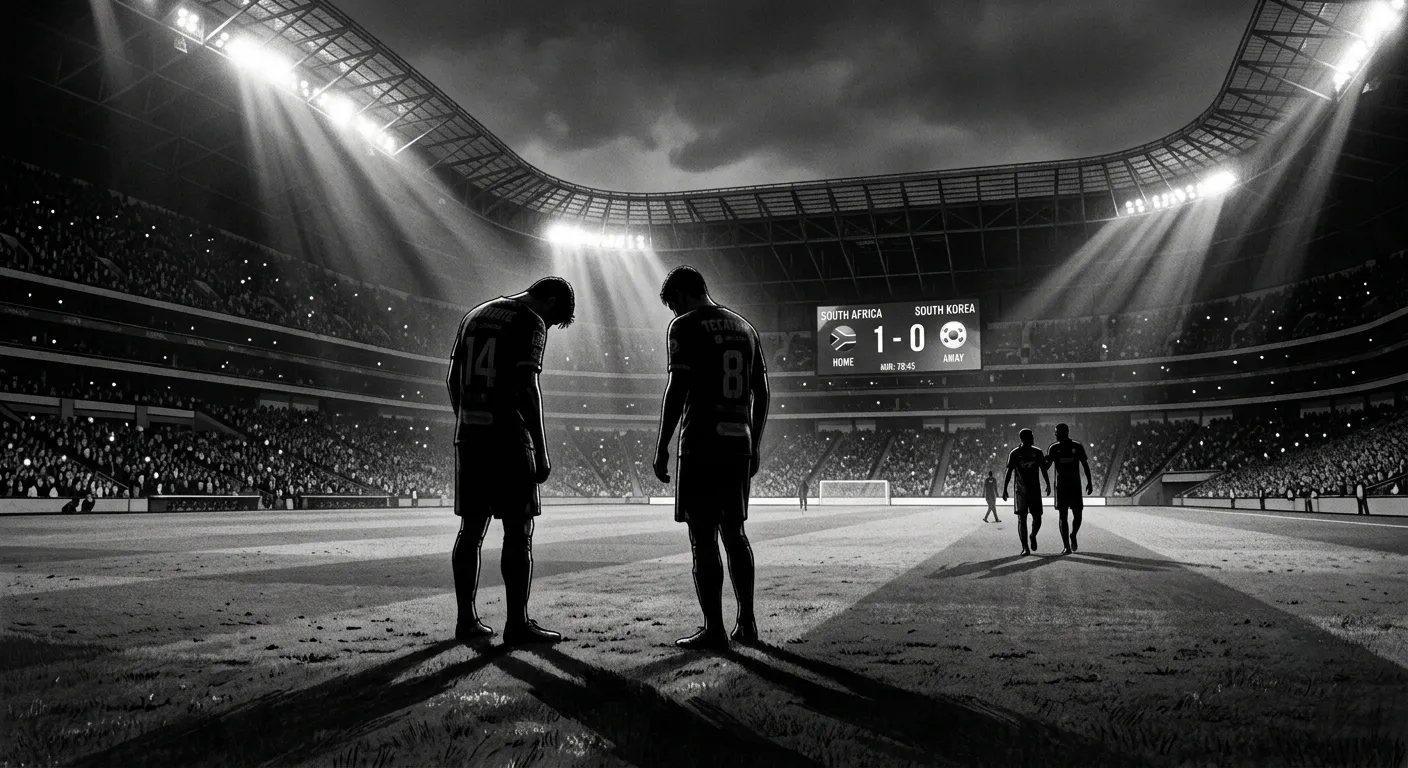
At halftime, Hong Myung-bo made a triple substitution, bringing on Son Heung-min, Jens Castrop, and Kim Jin-gyu all at once — effectively admitting the starting XI hadn't worked. But the second half didn't get much easier. The breakthrough came in the 62nd minute. South Africa worked the ball from deep in their own half to Korea's box in just four passes. Tapelo Maseko pounced on a midfield mistake, took a clean first touch, beat Jens Castrop with a quick turn, and slotted the ball home — the payoff for South Africa's patient counter-attacking approach all match long.
Two minutes after conceding, Hong subbed off Kim Min-jae, who was nursing a calf issue, for Park Jin-seob. There was a chance Park could have pushed forward into a more attacking midfield role, but instead he simply filled Kim's spot at the heart of the back three — the three-back shape stayed exactly as it was. Kim Min-jae's injury was more than just a formation footnote, too: as Bayern Munich's first-choice center-back and the team's captain on the day, any lingering issue with his leg immediately raised questions about Korea's next match, assuming they advance. The final substitution, in the 74th minute, swapped Oh Hyeon-gyu for the taller Jo Gue-sung — another like-for-like change. Of the three substitutions available, not one of them reduced the number of defenders on the pitch. As the clock wound down, Korea grew visibly more rushed, and that urgency never translated into a goal.
Match 1 vs Czechia (Monterrey)
Conceded early, came back through Hwang In-beom's equalizer and substitute Oh Hyeon-gyu's late winner — Korea's first World Cup opener win in 16 years.
Match 2 vs Mexico (Guadalajara)
Conceded from a loose ball inside the box that fell to a Mexican forward.
Match 3 vs South Africa (Monterrey)
Kept the three-back shape until the final whistle, conceded the winner to a four-pass counter in the 62nd minute.
| Category | Detail |
|---|---|
| FIFA Ranking Gap | Korea #28 vs South Africa #56 |
| Son's Starting Streak | 13 straight World Cup starts since 2014 → benched for the first time |
| South Africa's Previous Results | 0-2 loss to Mexico, 1-1 draw with Czechia |
| Crowd Noise | Korean fans peaked at 120dB vs South Africa's 100dB |
| Korean Fans in Attendance | 2,000+ (including 510 official "Red Devils" supporters) |
South Africa: First-Ever Knockout Berth, Earned the Hard Way
It's worth pausing on South Africa's own story here, because they were no pushover underdog by accident. This was South Africa's fourth World Cup appearance, and they had never once made it out of the group stage before. They opened with a 0-2 loss to host nation Mexico, then scraped a 1-1 draw with Czechia just to stay alive. Nobody had them advancing. So when this same team turned around and beat a Korea side that had already locked up direct qualification, it marked the first knockout-stage appearance in South African football history — the kind of result that will be replayed for years back home.
The squad makeup made it even more striking. South Africa's lineup leaned almost entirely on domestic-league talent, with eight players apiece from rivals Mamelodi Sundowns and Orlando Pirates making up the bulk of the squad. Coach Hugo Broos, who previously guided Cameroon to an Africa Cup of Nations title, has built a reputation for getting the most out of cohesive, lower-profile squads rather than star power. Tapelo Maseko, who scored the winner, plays his club football in Cyprus rather than one of Europe's big five leagues. Organization beat star power on this particular night — and for African football more broadly, beating a heavily-favored Asian power with a domestic-league-heavy roster could become something of a reference case.
Hong Myung-bo's Second Stint, Under Fire Again
This is Hong Myung-bo's second time leading the senior men's national team. He previously stepped down after Korea's group-stage exit (1 draw, 2 losses) at the 2014 Brazil World Cup, and returned to the dugout roughly a decade later. Heading into this tournament, he built his approach around a stable build-up and a solid back-three, and tested the system consistently through qualifying and friendlies. The Czechia comeback suggested the plan was working. But after the Mexico loss and now this shock defeat to South Africa, his second tenure is already facing renewed scrutiny — and it's no coincidence that several pundits have pointed out the echoes of 2014.
Across the Pitch, It Was a Night of Celebration
On the other side of the same stadium, the mood couldn't have been more different. South African fans, who had been relatively quiet all match, erupted the moment the winning goal went in. For Hugo Broos, it was a new chapter in his country's football history. For a team that lost 0-2 to Mexico and barely drew with Czechia, beating a Korea side that had already secured direct qualification on the final matchday is the kind of result South African football will talk about for years. One side's night of shock and self-blame was another's night of pure celebration — a reminder of how cruel, and how fair, sport can be at the same time.
Adding to the difficulty: the travel schedule itself wasn't easy. The distance between Guadalajara, where Korea played match two, and Monterrey, where this match was held, is considerable, and the two cities differ noticeably in altitude and climate. A short turnaround paired with a change in conditions is a real, if modest, factor in player conditioning. That said, Hong Myung-bo himself was careful not to use it as an excuse for the result, so it's best treated as useful context rather than a primary explanation.
In the post-match press conference, the mood was heavy. With such a wide ranking gap, most expected a routine Korean win, so much so that one of the first questions from local reporters was whether the squad had dealt with something like food poisoning before kickoff — a sign of just how hard the performance was to explain otherwise. Hong Myung-bo ruled that out and admitted this was, by his own assessment, the team's worst performance of the three group games. He did note that the shift in altitude and climate between Guadalajara and Monterrey may have played some role, but was careful to add that he didn't want to look for excuses elsewhere, placing the responsibility for the result squarely on himself.
In the end, the scoreboard read 0-1. Stuck on three points and behind South Africa on goal difference, Korea slipped to third in the group. What should have been settled with a simple draw turned into the hardest possible way to finish the group stage.
Sometimes the most dangerous decision in a crisis is to change nothing at all. – A shared sentiment among those who watched this match
TacticsWhat Is a Three-Back, and Why the Backlash?
A three-back (or 3-back) system lines up three central defenders in front of the goalkeeper, with wing-backs bombing up and down the flanks to provide width. It typically shows up as a 3-4-2-1, 3-4-3, or 3-5-2. Having extra bodies centrally makes it strong against target forwards and quick counters, and when the wing-backs push high, it can effectively turn into a five-man attack. It's a thoroughly modern system — plenty of Europe's biggest clubs use it regularly.
The real engine of the system isn't the three center-backs — it's the wing-backs. They're asked to cover both ends of the pitch, which demands far more stamina and work rate than a standard fullback role. As a match wears on and a wing-back's forward runs start to dry up, the team's width disappears, and a three-back can quietly turn into a defense-only back five. Part of why Korea's second-half attack looked so toothless may simply be that tired wing-backs weren't getting up the pitch anymore.
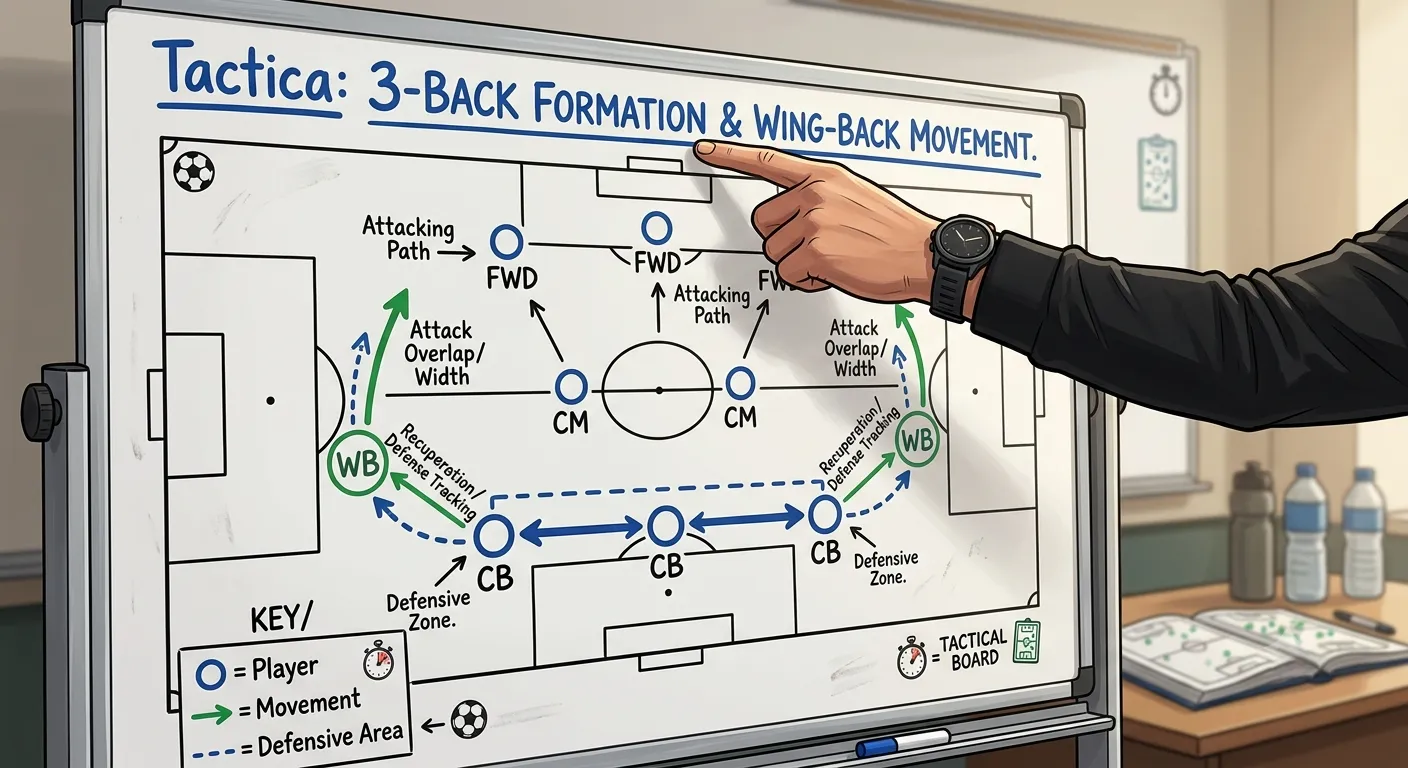
The whole system runs on balance. If the wing-backs can't get high enough, or if the team can't fluidly shift shape while chasing a goal, one of those three center-backs is just dead weight. The standard response when you're a goal down is to release the back three into a back four — or even a back two — and turn a center-back into a midfielder or forward. Holding your defensive numbers steady when you're the team that needs a goal is a bit like leaving blank answers on an exam with the clock running out, instead of using the remaining time to fill them in.
Yet Korea kept the back-three shape intact even after conceding in the 62nd minute, and even with two more substitutions still in hand. Analysts and pundits zeroed in on four specific moments as the clearest examples of the problem.
Back Three Held After Conceding
Even with an equalizer on the line, Korea never reduced its defensive numbers — fear of a second goal apparently outweighed the urgency to score one.
A Defensive Swap
When Kim Min-jae went off injured, his replacement Park Jin-seob filled the exact same center-back role rather than adding attacking presence.
Son Heung-min Brought On Too Late
Benched for the entire first half, Son entered at the start of the second — but by then South Africa had already seized control of the match.
The Final Sub Was Also Like-for-Like
The 74th-minute swap of Oh Hyeon-gyu for Jo Gue-sung kept the same role and position — no real change in approach.
Look closely at these four moments and a pattern emerges: at every fork in the road, Korea chose the safer option. The injury substitution for Kim Min-jae was unavoidable, but filling that spot with another center-back rather than an attacking midfielder was a clear choice. Not bringing Son on earlier, and not giving Jo Gue-sung a different job than Oh Hyeon-gyu had, point in the same direction. With a goal desperately needed, what Korea showed was a team trying not to lose, rather than a team trying to win.
Replaying the winning goal tactically only reinforces this. South Africa's break started in Korea's central midfield zone. Korea's wing-backs had already pushed forward at that point in the buildup, and when the central player who needed to cover that space made a passing error, the numerical balance collapsed in an instant. Jens Castrop losing his one-on-one with Maseko was really just the visible symptom of a deeper problem: the midfield cover in front of the back three had broken down. The back three itself wasn't necessarily the weak link — the balance required to run it well is what slipped in the second half.
To be fair, switching to a back four wouldn't have guaranteed an equalizer. Changing formation mid-match always carries a brief risk of defensive disorganization. But most analysts agreed that at least attempting it was worth the risk. The fact that the team that needed a goal stuck with its most conservative shape all the way to the final whistle is what fueled most of the debate after the match.
Here's the irony: Korea ran the exact same three-back system in the Czechia match and got the opposite result. They conceded early there too, but before Hwang In-beom's equalizer arrived, the whole team visibly played with urgency — wing-backs overlapped more aggressively, and substitute Oh Hyeon-gyu scored the winner in exactly the moment that urgency was needed. In other words, Korea proved within a single tournament that the same formation can produce two completely different matches depending on how it's managed. The numbers on the team sheet were identical against Czechia and South Africa; how the team actually played was not.
Key Takeaway
The three-back system itself isn't the villain here. The real issue was the decision not to change shape while behind. Across three substitutions, Korea never once reduced its defensive numbers — and that's what made this loss sting so much more.
What Korea Actually Played: Back Three (3-4-2-1 base)
Held all the way to the final whistle. Stable, but short on extra attacking options.
An Option On the Table: Switch to Back Four
Many analysts felt dropping a center-back for an extra attacker could have given Korea a real shot at the equalizer.
HindsightSon Heung-min's Silent Night, and Hindsight
The biggest story of the day was, without question, Son Heung-min's exclusion from the starting XI. It was the first time since his 2014 World Cup debut that Son hadn't started a World Cup match — a streak of 13 consecutive starts, broken. Hong Myung-bo explained before the match that bringing Son on in the second half, when the opponent's legs would be tiring, made more sense for both the team and Son himself. On paper, it's a defensible call — saving your most dangerous weapon for when the opponent is fatigued is a fairly standard substitution strategy. Son himself expressed confidence that the pre-planned game model would work out fine either way.
The match told a different story. Left alone up top, Oh Hyeon-gyu barely touched the ball in the first half, and the wide players struggled to time their runs into space. Making his first-ever World Cup start, Oh had called it the most important match of his career — yet the passes simply weren't coming his way. Son entered at the start of the second half, but by then South Africa had already wrestled control of the match, and there wasn't enough time left to turn it around.
The reaction abroad was immediate. American outlets called benching a key player in a must-not-lose match one of the most surprising coaching decisions in World Cup history, suggesting it likely affected team morale given how widely Son is regarded as one of the greatest players Asian football has produced. Some commentary leaned almost sardonic, suggesting that bringing Son on for the second half essentially handed the opponent a gift by signaling exactly when Korea would push.
| Tournament | Status |
|---|---|
| 2014 Brazil | Started |
| 2018 Russia | Started |
| 2022 Qatar | Started |
| 2026 vs South Africa | Benched (first time ever) |
Of course, hindsight is always a risky lens. There's no guarantee starting Son would have automatically meant a win. He's well into his mid-thirties now, and managing his minutes over a long tournament is a perfectly reasonable thing for a coaching staff to think about. But the question of why this particular experiment had to happen in the one match that mattered most for direct qualification, against a side widely seen as the weaker opponent, never got a satisfying answer. Had the result gone the other way, this same decision would likely be praised as smart squad rotation. Instead, in defeat, it became Exhibit A. It's a rare case where both the outcome and the process drew criticism at the same time.
There's a well-known psychological phenomenon at play here too: hindsight bias, the tendency to feel, after the fact, that an outcome was obviously predictable all along. The Son decision is a textbook example. Had Korea scored a dramatic late winner, the exact same call might be remembered as a stroke of genius instead. It's part of why sports commentary tends to get sharper after results are known rather than before. None of this means the criticism here was unfair — but it's worth pausing on the standard we use to judge a coach's calls, if only so we apply it consistently the next time a similar fork in the road comes up.
The captaincy switch added its own layer of symbolism. Son has effectively been the team's emotional anchor since 2014, and seeing him hand the armband to Kim Min-jae and watch from the bench was a striking image in itself. Son himself appeared composed in his post-match comments, but for fans, the fact that their most trusted player was left out at the most important moment was hard to simply accept. Lee Kang-in, visibly frustrated after the match, kept his comments brief, saying only that he hoped luck would be on Korea's side the rest of the way.
Isolated Up Front: Oh Hyeon-gyu and Jo Gue-sung
Few players drew more sympathy than Oh Hyeon-gyu. The Beşiktaş forward made his first-ever World Cup start in this match, standing alone up top, but passes simply weren't reaching him as the team's build-up broke down behind him. His replacement, the taller Jo Gue-sung, brought on in the 74th minute, didn't leave much of an impression beyond a few aerial duels before the final whistle. Both forwards who took the field that day were, in a sense, victims of the same underlying issue — a team that never quite found its rhythm in possession. It's a blunt but accurate reminder of one of football's simplest truths: a striker's movement means nothing if the ball never arrives.
Fan ReactionOff the Pitch Was Even Hotter: Fans and Legends Sound Off
The moment the final whistle blew, Korean football communities erupted. Posts arguing that giving Son zero minutes in the first half was simply unacceptable, and that playing time should be distributed fairly, racked up hundreds of likes within minutes; some fans went further, proposing that Korea should have started Son alongside Jens Castrop from the opening whistle. Major Korean football forums had their top posts dominated by South Africa match threads for hours, and a petition demanding the coach's immediate dismissal appeared online soon after, pushing the conversation off the pitch into territory hotter than the match itself.
Even normally measured pundits didn't hold back. One veteran commentator said the team simply didn't look like it was trying to find a way to score, full stop. Another former national team player argued the 2014 Brazil collapse was effectively repeating itself, suggesting the federation hadn't actually learned anything from preparation through to results, and that fixing the underlying pattern would take a decade of structural change starting at the federation level.
Argued the team showed no real intent to find a way to score, and questioned whether the squad can perform even if it does advance.
Said the 2014 Brazil collapse was repeating itself, and that nothing had been learned from preparation through to the result.
Pointed to the players' downcast expressions on the pitch, saying their frustration was completely understandable.
Some pundits had urged restraint before the result was known — but once the loss was confirmed, that earlier caution drew its own wave of backlash.
A common, self-deprecating refrain: qualification was always going to depend on other groups' results anyway — but the one match Korea actually controlled, Korea lost by itself.
A counter-movement also emerged urging fans to direct criticism at the coaching staff rather than individual players, discouraging personal attacks.
Several well-known former national team figures weighed in with their own distinct angles. One legendary former captain directly criticized Hong Myung-bo for sitting passively on the bench, arguing that even from the touchline he should have signaled for fewer defenders once Korea fell behind, and followed up after the match by pressing hard on who bears responsibility for the team's state. Another well-known pundit had urged restraint before the result was known, only to see that same caution become a target once the loss was confirmed. A third focused less on tactics and more on the players themselves, saying he felt for the young squad members who looked lost on the pitch in the moment. Others didn't hold back at all, venting that the same old pattern had repeated itself yet again, and one prominent analyst directly challenged the way the team had been run.
What stood out is that none of this criticism was purely emotional venting. It all converged on one point: the tactics, the lineup, and the substitution timing were all, in hindsight, conservative choices. As one veteran commentator put it, playing to win and playing not to lose can look nearly identical on the surface, but come from completely different mindsets. That razor-thin difference is exactly why this particular loss stung so much — because it translated directly into Korea losing control of its own qualification.
There's an ironic statistic buried in all of this, too. In the combined Best XI compiled from both squads after the match, nine of the eleven spots went to Korean players — a rare case of a losing team supplying almost the entire honor roll. It suggests individual quality was never really the issue, lending more weight to the idea that this loss came down to system and management rather than talent. Meanwhile, "three-back" itself spent hours near the top of Korea's real-time search trends that day, with plenty of casual, non-football fans apparently looking up exactly what the term meant.
To be fair, not every reaction was purely critical. Some fans and analysts cautioned against judging an entire coaching tenure off a single result, arguing the team deserved to be evaluated after the full Round of 32 run, and that some trial and error is inevitable when testing a new lineup and shape. Even that more patient camp, though, struggled to answer the more fundamental question: why test anything new in the one match where direct qualification was on the line?
The atmosphere inside the stadium made for an interesting contrast. According to the Korea Football Association, at least 2,000 Korean fans were in the stands, with the real number likely higher. Every time a Korean starter's name flashed on the big screen, the cheers were loud; South African names barely registered a reaction. Crowd noise peaked at 120 decibels for the Korean section versus 100 for South Africa's — practically a home atmosphere for what was technically a neutral-site match. The result went the opposite direction. Local Mexican residents near the stadium reportedly waved Korean flags alongside fans, citing the economic boost from Korean businesses in the area — a small reminder that, away from the result itself, the mood on the ground hadn't actually been hostile, which only made the outcome sting more.
There was also a more uncomfortable story developing off the pitch. One defender who had a difficult match became the target of a wave of abusive comments and signaled plans to pursue legal action — timing that, coming right after Korea failed to qualify outright, split opinion among fans. Some argued criticism of performance is fair game but personal attacks cross a line regardless of timing; others felt announcing legal action at this particular moment was a bit tone-deaf. The next day at training, Hong Myung-bo addressed the situation, saying he'd never experienced a tournament this turbulent both on and off the pitch — though he added, with a touch of dark humor, that 2014 had still been far harder to get through.
Looking at it all together, much of this uproar is really a byproduct of how much people care. Nobody starts a petition, gets visibly angry on air, or sends a phrase to the top of search trends over a team they don't love. The intensity of the backlash is, in its own way, proof of how much affection still exists for Korean football. Making sure that affection doesn't curdle into personal attacks on individual players is probably the one job left for the fans themselves.
World ReactsJapan, China, and the World React
This loss didn't stay a domestic story for long. In China, which failed to qualify for this World Cup at all, interest in the match ran surprisingly high, with users on Weibo and major sports forums largely agreeing that Korea had let a simple draw slip through its own hands. Some users who already held a less-than-warm view of Korean football piled on, mocking the "strongest team in Asia" label and suggesting Korea focus on actually clearing the group stage before using that phrase again.
Japanese reaction followed a similar tone. Japanese outlets used words like "shocking" and "poor performance" in the same breath while covering the result prominently, with some analysis pieces going as far as to question whether Korean football has lost its sense of identity. American and British outlets offered an interesting split. Fox Sports and Yahoo Sports both flagged the decision to bench Son Heung-min as one of the most surprising coaching calls in World Cup history, suggesting it may have hurt team morale, while a BBC-affiliated outlet took aim at the performance itself, arguing the team simply didn't look like itself, with or without Son on the field.
- China: Widespread criticism that Korea threw away a result that only required a draw. Plenty of mocking commentary aimed at the "strongest team in Asia" tag.
- Japan: Heavy coverage of the shock result alongside questions about Korean football's identity. Some outlets detailed the tears shed by both players and fans.
- United States (Fox Sports, Yahoo Sports): Called the Son benching one of the most surprising decisions in World Cup history.
- United Kingdom (BBC-affiliated): Argued the team lacks identity regardless of who's on the pitch.
With Asian football's broader standing now part of the conversation, the fallout from this single match has clearly outgrown a simple group-stage defeat. Nobody expected a Korea-South Africa match — not Korea-Japan, not Korea-China — to become this big a talking point across East Asia, but here we are.
Mexico's View From the Host Nation
Reaction in the host country itself was considerably calmer. Mexico's own team had just demolished Czechia 3-0 in the same window to lock up first place in the group — bigger local news by far — so the Korea-South Africa result got comparatively brief coverage in Mexican media. Still, word filtered back that Korean expats and local business contacts in the Monterrey area had shown genuine warmth and support for the team, which offered at least a small silver lining.
Survival OddsThe Road to the Round of 32: Korea's Survival Scenario
This isn't over yet, though. Starting with this tournament, the field expanded from 32 to 48 teams, which changed the entire format. In the past, only the top two in each group advanced. Now, with 12 groups instead of eight, a new Round of 32 stage was added before the traditional knockout rounds, and part of that Round of 32 access is shared out among third-place finishers. Specifically, the top 8 of the 12 group third-place teams also earn a spot. Korea dropped to third, but the wildcard race is still very much open. The downside is having to get compared on goal difference, goals scored, and fair-play points against other third-place teams stuck in the exact same situation.
- Expanded field: 32 teams → 48 teams, the largest World Cup ever.
- Three co-hosts: The first World Cup jointly hosted by three nations — the United States, Mexico, and Canada.
- New Round of 32 stage: An extra knockout round added ahead of the traditional Round of 16, extending the tournament by one more round.
- Third-place wildcard: The top 8 of 12 group third-place finishers also advance — the single biggest variable of this tournament.
| Rank | Team | W-D-L | Points | Round of 32 |
|---|---|---|---|---|
| 1st | Mexico | 3-0-0 | 9 | Confirmed |
| 2nd | South Africa | 1-1-1 | 4 | Confirmed |
| 3rd | Korea | 1-0-2 | 3 | Awaiting wildcard |
| 4th | Czechia | 0-1-2 | 1 | Eliminated |
How the Wildcard Works, Simply Put
Line up the 12 third-place finishers from all 12 groups by points, then take the top 8 to fill out the Round of 32. Ties are broken first by goal difference, then goals scored, then fair-play points. Korea sits on 3 points, roughly in the middle of that line, and its position can still shift depending on results in groups that haven't finished yet.
Mexico closed out the group with a 3-0 demolition of Czechia, finishing a perfect 3-0-0 and securing first place comfortably. South Africa, at 1-1-1 and 4 points, didn't need the wildcard process at all — they secured second on goal difference outright. Korea finished third at 1-2-0 (1 win, 2 losses) for 3 points, while Czechia finished bottom of the group at 0-1-2 and were eliminated.
For context, this is Korea's 11th consecutive World Cup appearance. They're also the only Asian nation to ever reach the semifinals, finishing fourth at the 2002 tournament they co-hosted with Japan — a point of real pride for a team that has long carried the "best in Asia" label. Slipping to third in the group therefore stings as more than just a number; it touches on identity. That's part of why interest in this wildcard race has run hotter than usual.
Korea's Estimated Round of 32 Qualification Odds
As of the close of Groups A–C, based on third-place tracker estimates from international sports outlets
International sports-data outlets have been the fastest to track this number, recalculating the third-place standings in real time as each group wraps up. Korean fans have taken to refreshing these tracker pages and cheering on completely unrelated matches in other groups — a strange position to be in, joking that their own match is over, yet they still have to sweat through everyone else's.
The number looks comforting on its face, but it shifts daily depending on how the remaining groups play out. The most frustrating part of this wildcard race is that Korea has no direct control over any of it. Goal difference, goals scored, even fair-play points can all swing the outcome, which means watching other matches with bated breath for the rest of the group stage is simply part of the deal now. Korean football is, frankly, no stranger to this kind of scenario-dependent drama. At the 2018 Russia World Cup, Korea beat defending champions Germany 2-0 in a match that meant nothing for their own already-eliminated campaign, only to miss out on the Round of 16 anyway because of how another match in the group played out. They've also been on the lucky side of these calculations before. Either way, the tradition (if you can call it that) of nail-biting "what are the odds" math continues into this tournament too.
If Korea does sneak through via the wildcard, the first talking point will almost certainly be flexibility. Few are calling for scrapping the three-back system outright. The more realistic fix being floated is having a clear Plan B ready — switching to a back four or even a back two depending on the scoreline — along with being bolder about bringing on key players like Son Heung-min earlier in matches. Knockout football is single-elimination, win or go home, so if this same lack of in-game flexibility shows up again, the consequences next time could be far more severe than this one.
FAQFrequently Asked Questions
Q. Could Korea actually fail to reach the Round of 32?
It's unlikely, but not impossible. Only the top 8 of the 12 group-stage third-place teams advance as wildcards, so if more teams end up ahead of Korea on goal difference, goals scored, or fair-play points, the ranking could shift. Based on results completed so far across the other groups, the estimated probability sits in the mid-90% range — fairly comfortable, but not locked in. The riskiest scenario would be several other strong teams also finishing third with 1 win and 2 losses, which would put more direct competitors right alongside Korea in the goal-difference comparison.
Q. When and who does Korea play next?
The opponent and schedule can only be set once qualification for the Round of 32 is finalized. Teams advancing as third-place wildcards are matched against group winners or runners-up from other groups according to a pre-set bracket formula, which only becomes clear once every group has finished play.
Q. Will Hong Myung-bo be fired?
As of this writing, the Korea Football Association has made no formal announcement either way. Public opinion on his future will likely hinge heavily on whether Korea advances and how far the team goes in the knockout rounds.
Q. Will Korea keep using a three-back in the next match?
No official word yet. Given how much attention this controversy drew, there's speculation that the coaching staff may adjust the formation or rethink how Son Heung-min is used if Korea advances.
Q. How far can South Africa go in this tournament?
They've already achieved their historic first — a knockout-stage appearance. Their Round of 32 opponent is still to be determined based on other groups' results, and given the squad's domestic-league-heavy makeup, simply reaching this stage is already being treated as a major success story back home.
Q. Is Son Heung-min's World Cup over?
Not at all. If Korea advances via the wildcard route, he'll still have a shot at redemption in the knockout stage. Whether this single benching becomes the defining image of his final World Cup will come down to how he's used going forward.
Q. What's the Korea Football Association's official response to all this?
No separate statement has been issued yet. Given how intense the reaction on the ground and online has been, however, the evaluation and any response are likely to take shape once the team's full tournament run is complete — typically through a post-tournament report or press conference, which is the usual pattern after controversies of this scale.
Q. Where can I watch the Round of 32 match?
Terrestrial broadcaster KBS and cable network JTBC have carried Korea's matches so far, with streaming also available via Naver Chzzk. Once qualification is finalized, the exact schedule and broadcast details will be announced — we'll update this post as soon as that happens.
Three-Line Summary
① The three-back system itself isn't to blame — the failure to adapt it is. ② Benching Son Heung-min was a clear mistake in hindsight, but a defensible decision in the moment it was made. ③ Korea's Round of 32 hopes are still alive, but the outcome now rests on other groups' results, not Korea's own.
Final Word: Is Three-Back Really to Blame?
If you've read this far, one thing should be clear: there's nothing inherently wrong with a three-back system. Plenty of the world's best clubs use it. The real issue lay elsewhere — the stubbornness to keep the same shape while behind, and three separate substitutions that all leaned the same conservative direction. The criticism, in the end, was never really about choosing a three-back. It was about never finding a way out of it.
- Result: South Africa 1, Korea 0. Korea dropped from first to third in the group.
- Tactical controversy: Back-three shape held even after conceding, with all three substitutions staying defensively neutral.
- Lineup controversy: Son Heung-min benched for the first time since 2014; his second-half introduction couldn't reverse the flow of the match.
- Round of 32 outlook: Competing for a third-place wildcard spot; estimated qualification odds around 94%.
A tactic is, at the end of the day, just a tool. The same hammer that drives a nail in is useless — worse than useless — if you keep swinging it after the nail needs pulling back out. This match handed Korean football exactly that kind of splintered piece of wood to look at. Hong Myung-bo accepted full responsibility for the result in his post-match press conference. All that's left now is to wait on the other groups. If Korea does advance, the next thing worth watching is whether this controversy actually leads to a more flexible approach in-game, or whether the same pattern shows up again. How did you see this three-back stubbornness play out? Leave a comment — we'll factor reader takes into the next match breakdown. 🙌
Once the Round of 32 bracket is set, we'll be back with a breakdown of Korea's next opponent. By then, we should have a clearer sense of whether this three-back saga ends up as a cautionary footnote or the turning point that forces a more flexible approach. Thanks for reading all the way through — here's hoping you'll be sweating through Korea's next 90 minutes right along with the rest of us. ⚽