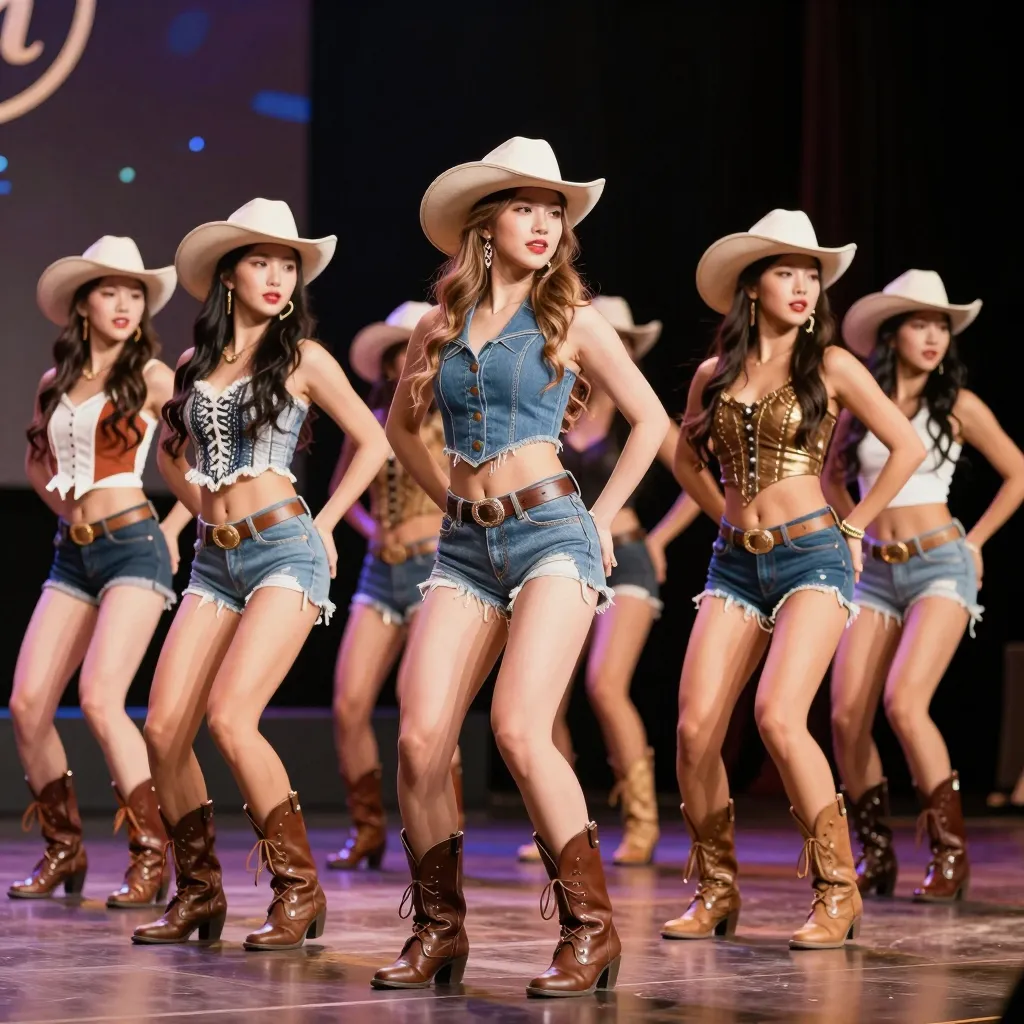
At first you're staring at your feet. Then the music takes over. And before you know it, you're hooked on the people around you. That's exactly why line dancing has captivated tens of millions worldwide. You don't need a partner, no heavy gear, no special talent — just music, a bit of floor space, and the willingness to step. This guide covers everything: the history of line dancing, the foundational steps, its science-backed health benefits, the best music to dance to, and how to get started today. 💃
What Is Line Dancing? Origins & Definition
Line dancing is exactly what the name suggests: a choreographed dance performed in lines or rows, where all participants execute the same sequence of steps simultaneously — no partner required. Unlike ballroom dancing, which demands a paired connection, line dancing is a solo endeavor within a collective experience. The music starts, and every dancer on the floor starts together, moves together, and stops together when the music ends.
One of its most distinctive features is the Four Walls format. As the routine progresses, dancers periodically rotate 90, 180, or 270 degrees, so they face each of the room's four walls over the course of the dance. This means the same routine works whether you're in a circle, a grid, or a long single row — everyone stays synchronized regardless of formation.
"Line dancing is about moving in rows with a defined routine. Everyone starts simultaneously, dances the same steps, and finishes with the music." – Korea Line Dance Association (KLDA)
While line dancing's musical roots are firmly in American country western, the genre has evolved far beyond cowboy boots and Stetsons. Today you'll find line dance routines set to pop, jazz, salsa, disco, hip-hop, and even K-pop. The structure is universal; only the music changes. This adaptability is precisely why line dancing continues to grow in communities across every continent.
A Brief History: From Cowboys to the World Stage
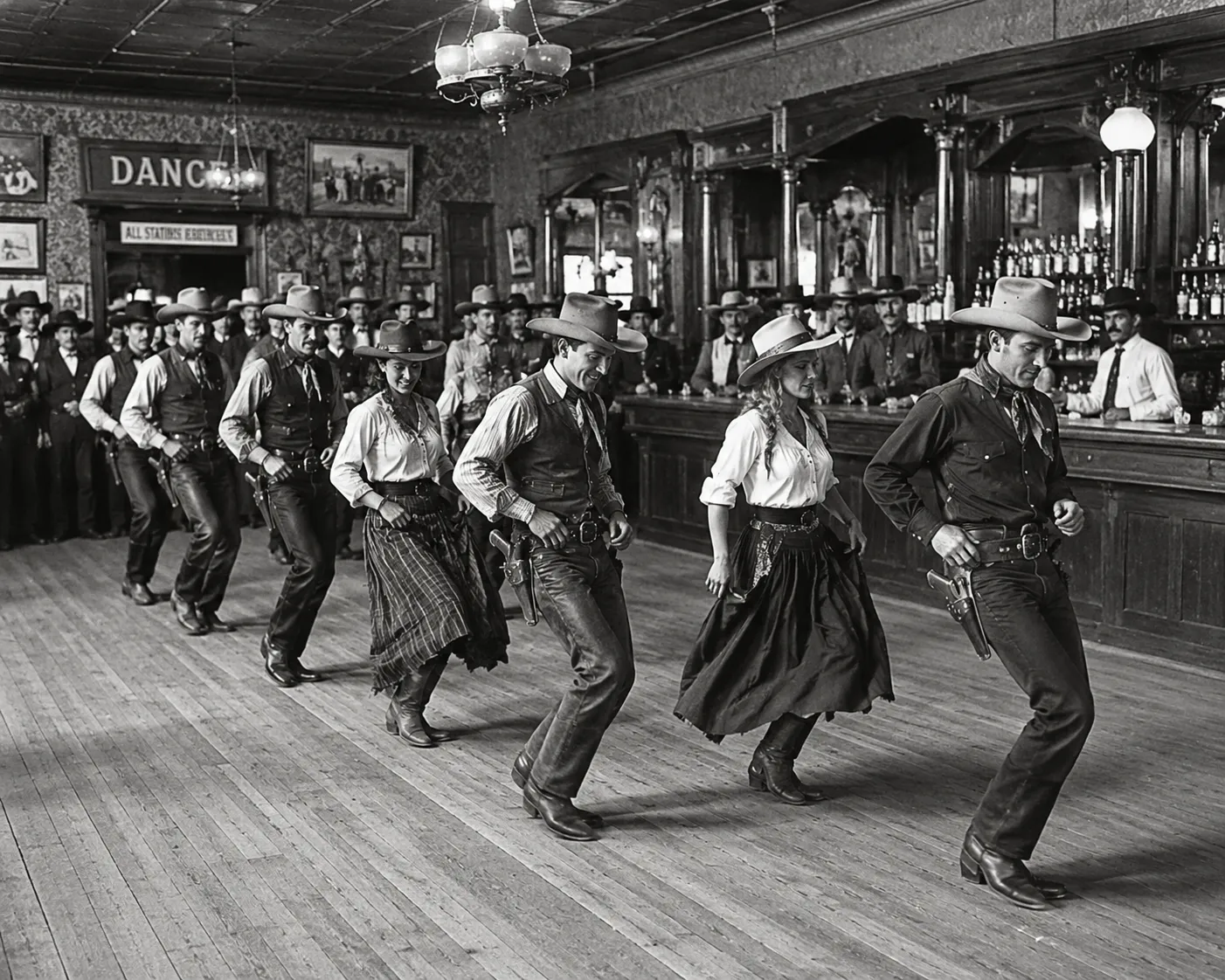
The history of synchronized line dancing is older than most people realize. African, Native American, and European folk dance traditions all feature row-based communal dance patterns that predate modern line dancing by centuries. The contemporary version, however, traces most directly to the American frontier saloon culture of the late 19th century.
Line Dancing in South Korea
South Korea has developed one of the most vibrant line dancing cultures in Asia. Since its introduction in the late 1990s, the scene has grown into a well-organized community with multiple national associations — most notably the Korea Line Dance Association (KoLDA) and the Korea Line Dance Association (KLDA) — both running nationwide instructor certification programs and regional chapter networks.
Significant milestones include the 11th KLDA National Championship held at Yonsei University Sports Science Hall in April 2025, and the upcoming 2026 Seoul International Line Dance Festival scheduled for June 27, 2026, at Island Castle Waterpark & Hotel in Uijeongbu, Gyeonggi Province. Events of this scale reflect the depth and maturity of Korea's line dancing community.
Korea's Line Dancing Scene — Key Facts
Multiple national associations operate instructor certification systems, making Korea one of the most structured line dance communities in Asia. While middle-aged women have traditionally dominated the participant base, younger demographics are increasingly joining thanks to TikTok and YouTube influencers creating Korean-language tutorials.
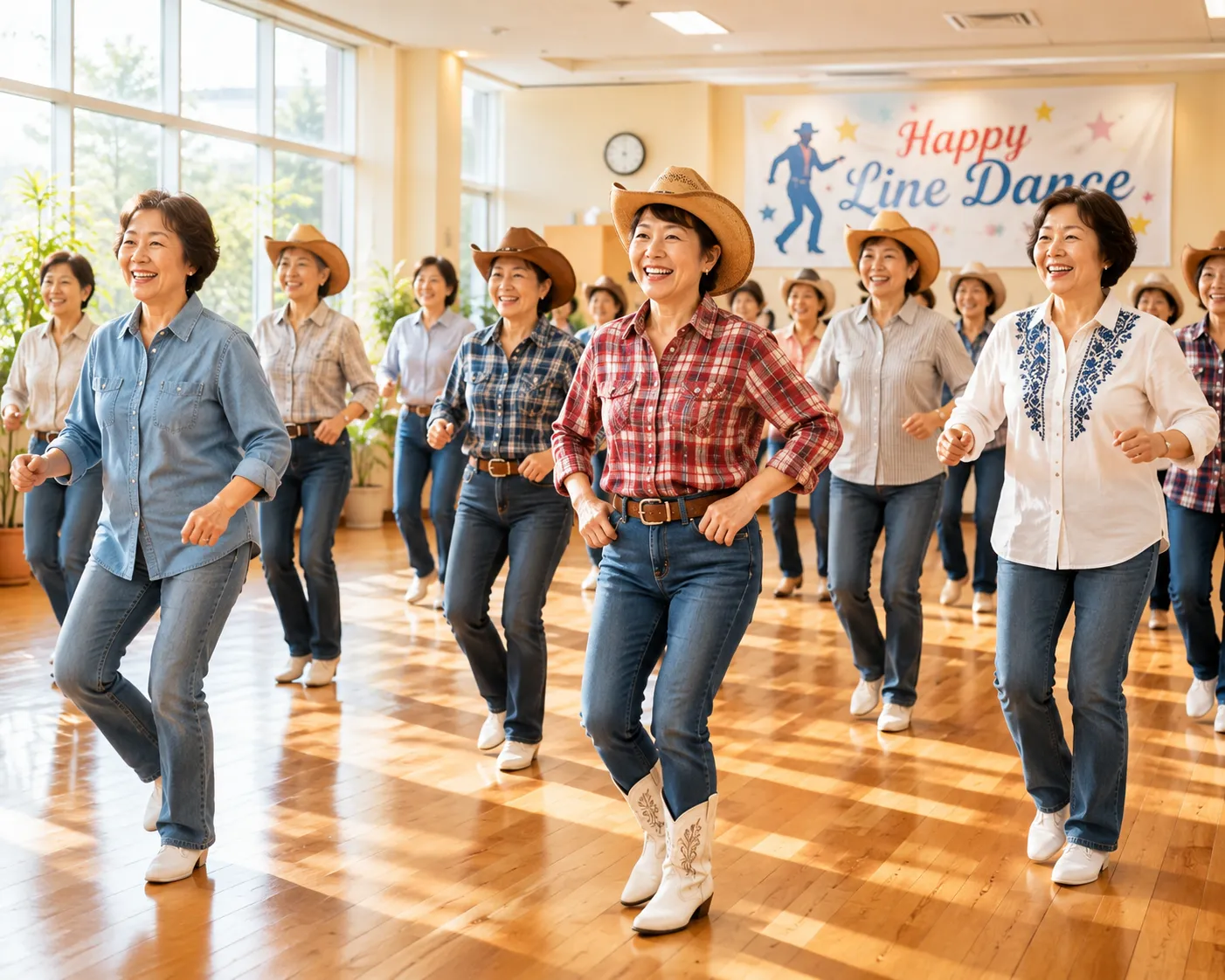
What makes Korean line dancing particularly unique is the local creative adaptation: choreographers have developed original routines set to trot music (트로트), 7080s Korean folk songs, and K-pop tracks. Academic research on Korean middle-aged women has found that line dancing functions as far more than exercise — it builds self-efficacy, fosters community belonging, and significantly improves life satisfaction.
Science-Backed Health Benefits of Line Dancing
In March 2025, a CQUniversity research team led by Michelle Cleary and Danielle Le Lagadec published a comprehensive scoping review in an international nursing journal, synthesizing findings from 16 studies across 15 research projects. Their conclusion was clear: line dancing delivers measurable benefits across four dimensions of health.
① Physical Health
※ Figures reflect positive response rates reconstructed from study findings.
Line dancing operates at walking pace rhythms, making it a genuinely low-impact cardiovascular workout that won't destroy your joints. Older dancers especially benefit from the balance and gait improvements, which translate directly into reduced fall risk — a critical health concern for seniors. Younger dancers can harness the direction changes and footwork patterns to develop agility and coordination.
② Mental Health
The 2025 review confirmed that line dancing reliably reduces anxiety and depression while relieving stress. The mechanism is straightforward: physical exertion releases endorphins, the body's natural mood elevators. These neurochemicals improve emotional state and can leave dancers feeling genuinely elated and confident after a session. Fascinatingly, even watching dance (not just participating) triggers some of the body's mood-boosting responses, according to separate research.
③ Social Health
Loneliness has been declared a global health epidemic — with over 43% of young people reporting persistent loneliness, and elder isolation reaching crisis levels in many nations. Line dancing offers a structural solution: because no partner is required, anyone can walk in alone and immediately belong to something. Participants in research studies reported forming meaningful friendships, becoming more involved in their broader communities, and feeling a genuine sense of belonging. Line dancing even breaks down cultural and social barriers, creating unity across demographics.
④ Cognitive Health
Memorizing step sequences, counting beats, tracking direction changes, and anticipating transitions all constitute a multi-faceted workout for the brain. Research shows that as dancers become more proficient, their working memory and executive brain function measurably improve. Evidence points toward a protective effect against dementia and has shown concentration improvements in university students. Think of it as a video game for your motor cortex.
Essential Basic Steps Explained
Line dance routines are built from a vocabulary of individual steps that recombine in different sequences. Once you know the core building blocks, picking up new routines becomes exponentially easier. Here are the foundational steps every beginner needs to know.
- Practice without music first. Once footwork is automatic, add the music and the rhythm will click into place naturally.
- Count out loud: "1, 2, 3, 4" or verbalize directions ("right, behind, right, touch"). Verbal reinforcement accelerates motor learning dramatically.
- Download step sheets from Copperknob.com — the world's largest free database of line dance choreography. Nearly every routine has a free step sheet.
- Practice in front of a mirror. Seeing your own body orientation helps you catch when you're facing the wrong wall before it becomes a habit.
- Film yourself. Watching your own footage reveals posture, timing, and placement issues that feel invisible from the inside.
Best Line Dance Songs: A Curated List
A great line dance song has clear downbeats at 120–136 BPM, distinct 32-count musical phrases, strong percussion to mark transitions, and a hook that signals step changes. Here's a curated list organized by skill level and genre.
🌟 Classics That Never Die
🎉 Pop & Crossover Hits
🏆 Best Beginner Routines for 2025–2026
Leveling Up: Intermediate & Advanced Steps
Once the basics feel natural, it's time to add vocabulary that transforms competent dancing into compelling performance. These steps aren't just harder — they're tools for richer musical expression.
Line Dancing vs. Other Group Dance Forms
| Factor | Line Dancing | Ballroom Dance | Aerobics | K-pop Cover Dance |
|---|---|---|---|---|
| Partner Required | ✗ No | ✓ Yes | ✗ No | ✗ No |
| Age Range | All ages | Some limits | All ages | Mainly 10–30s |
| Learning Curve | Low ⭐ | High ⭐⭐⭐⭐ | Low ⭐ | Medium ⭐⭐⭐ |
| Cardio Effect | High | High | Very High | Moderate |
| Social Connection | Very High | High | Moderate | Moderate |
| Special Costume Needed | Optional | Required | Optional | Varies by song |
| Cognitive Stimulation | High (memory) | High | Moderate | High |
How to Get Started: A Step-by-Step Guide
Ready to try? Here's a practical roadmap from total beginner to confident social dancer. The first step is always the hardest; everything after that gets easier — and more fun.
- Watch Before You Try Search YouTube for "line dance beginner tutorial" and spend 20 minutes watching a few different instructors. Channels like Honkytonk Highway, Line Dancing With Terressa, and Country Dancing Tonight offer excellent free beginner content. Getting a visual sense of the flow before you step onto the floor makes everything less overwhelming.
- Pick One Routine and Own It The Cupid Shuffle is universally recommended as the world's easiest entry point — the lyrics literally tell you what to do. Once you can run through it confidently from start to finish, you'll have your first "anchor routine" that you can fall back on at any event. One routine mastered is worth more than ten routines half-learned.
- Find a Local Class Community centers, recreation departments, gyms, and adult education programs frequently run line dancing classes. Search your local government's leisure programs or look up country bars and dance studios in your area. In South Korea, check the KoLDA and KLDA websites for regional class listings. Group classes accelerate progress dramatically compared to solo home practice.
- Use Step Sheets Every line dance routine has an official step sheet — a text-based notation of every move and count. Copperknob.com hosts tens of thousands of free step sheets searchable by title, choreographer, or music. Download the sheet for any routine you're learning and study it alongside the video. You'll start reading step sheets fluently faster than you think.
- Practice Consistently — Even 10 Minutes a Day The biggest factor in line dance progress isn't natural talent — it's repetition frequency. Even 10 minutes of daily practice between weekly classes will accelerate your improvement enormously. One researcher who studied line dancing for her academic work couldn't follow a single step at first. A year later she was still going every week and encouraging everyone she knew to join.
- Attend a Festival or Social Dance Event When you're ready, attend a line dance social event or festival. These aren't competitions — they're joyful gatherings of people united by a shared love of movement. The 2026 Seoul International Line Dance Festival (June 27, 2026) is a perfect target if you're in Korea. Even just attending as a spectator your first time can be inspiring and informative.
Outfit & Footwear Guide
There's no strict dress code in line dancing. But the right clothing and especially the right shoes make a significant difference in both comfort and safety. Shoes in particular are non-negotiable.
👟 Shoe Selection Guide
Latin/Ballroom Dance Shoes: Suede soles provide the ideal friction coefficient for clean pivots and spins on smooth floors.
Dedicated Line Dance Shoes: Available at dance supply stores, these are lightweight with appropriate grip for controlled footwork.
Stiletto Heels: High ankle injury risk. Block heels are manageable, but stilettos on a dance floor are a recipe for a sprain.
Bare feet / Socks only: Slip-and-fall risk. Always wear appropriate footwear.
👚 Clothing Style Tips
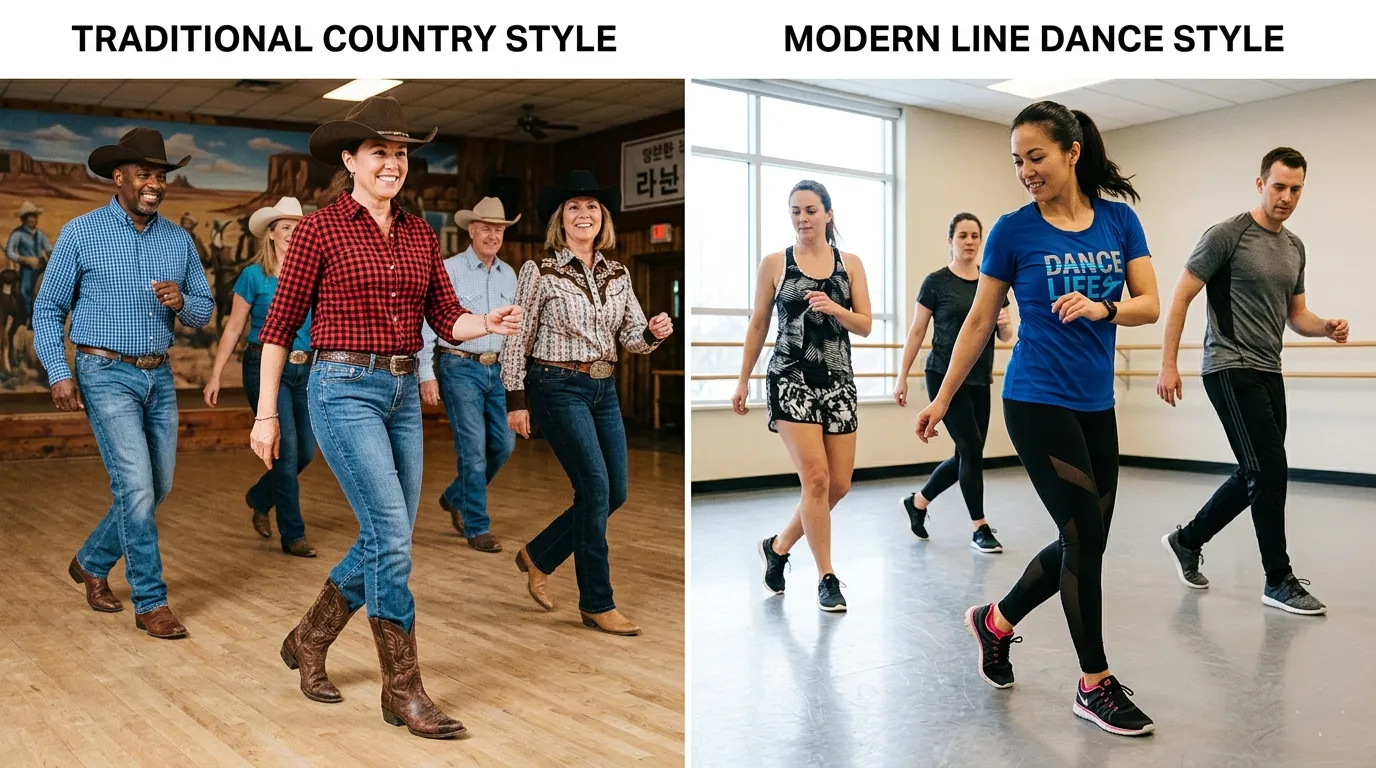
Two dominant style currents exist in line dancing. The first is traditional country western: denim (jeans or skirts), plaid or solid button-down shirts, western belts, and of course the cowboy hat. The second is practical modern dancewear: stretch pants or leggings paired with vibrant tops. In Korea's line dancing community the latter is most common, with many participants — especially women — opting for colorful, energetic outfits that are both functional and expressive.
- Start with whatever comfortable clothes you already own. Invest in purpose-specific attire once you know you're committed.
- Prioritize shoes from day one. Appropriate footwear prevents injury and makes technique dramatically easier. This is the one item worth buying before anything else.
- Online dance supply retailers carry a wide range of line dance shoes at various price points. Search "line dance shoes" or "country dance boots" for options.
- The cowboy hat is optional — but try one on once. Something shifts mentally when you put it on. It's inexplicably motivating. 🤠
Frequently Asked Questions
Community Voices: Real Stories From Real Dancers
Numbers and research are compelling. But the stories people tell about line dancing — the way it changed their lives in ways they never expected — might be the most persuasive argument of all.
Final Thoughts: All You Need Is One First Step
Line dancing is not just a dance form. It is movement and music and human connection braided together into something deceptively simple. Each step you take is good for your heart, your brain, your mood, and your social world. Science confirmed all of this in 2025. What science can't fully quantify is what it feels like to stand in a room full of strangers, hear a familiar beat drop, and realize that everyone around you — regardless of age, background, or skill level — is doing exactly the same thing you are.
It doesn't matter if your first few attempts are a mess of wrong directions and missed counts. That's the universal first chapter of every line dancer's story. The community doesn't want perfect dancers. It wants people who show up. So: pull up the Cupid Shuffle tutorial on YouTube, clear some space in your living room, and take your first step today. It might just change your life. 🎶
"Line dancing can be profoundly addictive and seriously fun. There may be no turning back." – CQUniversity Research Team, 2025