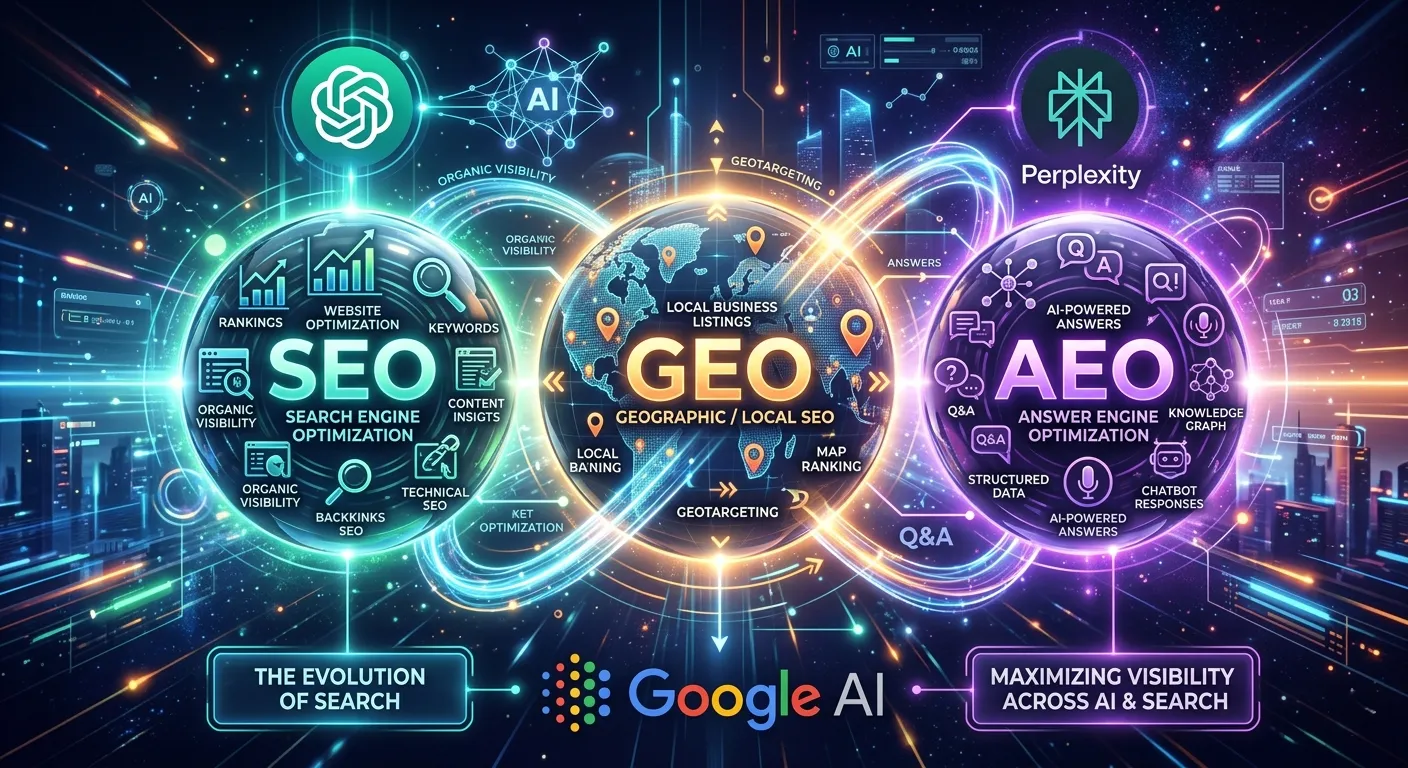
By 2026, search has become a completely different game. Users ask ChatGPT, Perplexity answers, and Google's AI Overview summarizes. The era of clicking blue links is fading. To survive in this new world, brands and content creators must understand and integrate three pillars: SEO, GEO, and AEO. What each one is, how they differ, and what you need to do right now — here's the full breakdown backed by the latest data.
Ahrefs research found that fewer than 9% of ChatGPT and Google Gemini citations come from URLs ranked in Google's top 10 results. That means more than 90% of your top-ranking organic pages are never cited by AI. The rules have changed.
The Search Paradigm Shift — Why These Three Matter Now
Three years ago, a digital marketer's workflow was predictable: research keywords, publish content, earn backlinks, check Google rankings. That was the entire game. Then ChatGPT's explosive 2023 growth and Google's full AI Overview rollout in 2024 flipped the entire equation.
User behavior has fundamentally changed. People now type conversational questions into ChatGPT instead of search bars. They outsource research to Perplexity. Even when they do use Google, they read the AI-generated summary at the top and leave without clicking. By 2026, daily AI search users in the US have risen to 29.2% — up from just 14% six months earlier in early 2025.
What this means for brands is stark: ranking on Google's page one is no longer sufficient. You need to be included in the single AI-generated answer. As Kaare Wesnaes, Head of Innovation at Ogilvy North America, put it: "AI Overviews and Google Zero pushed us into a world where the search result is now the answer itself. If a brand isn't mentioned or cited in that instant, it effectively doesn't exist."
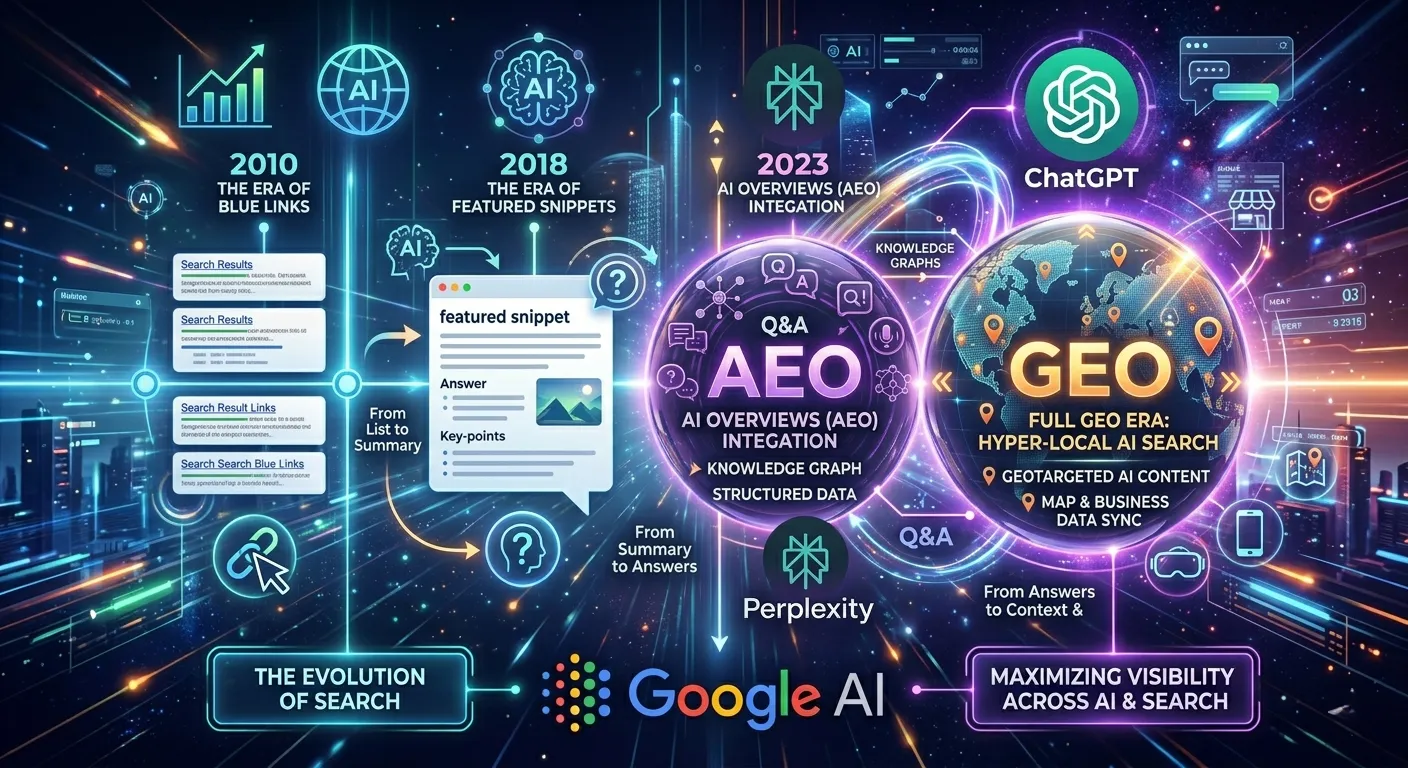
This environment gave rise to three distinct but interconnected disciplines: SEO (Search Engine Optimization), AEO (Answer Engine Optimization), and GEO (Generative Engine Optimization). These are not competing replacements — they are layered architecture. SEO builds the technical foundation, AEO captures immediate-answer visibility, and GEO secures the AI citation. Ignore any one layer and the entire strategy becomes unstable.
"The overlap with what we've been doing in the SEO space and digital marketing space before AI search existed is very, very strong. GEO is not a replacement — it's an additional layer." – Lily Ray, VP of SEO Strategy & Research, Amsive (eMarketer, 2026)
SEO: Still the Essential Digital Foundation 🔧
SEO is not dead. In 2026, it has actually become the prerequisite for AI search. AI engines crawl the web to collect and verify information. If your technical SEO is broken, AI engines can't even find your content. And while the correlation is imperfect, higher-ranking pages do tend to have a better — if still slim — chance of being cited by AI systems.
The most critical concept in 2026 SEO is E-E-A-T — Experience, Expertise, Authoritativeness, and Trustworthiness. Google has made these signals central to its quality assessment, and they translate directly into the authority signals that AI engines use to decide what to trust. Keyword-stuffed content is worth nothing in 2026 SEO.
- Core Web Vitals — LCP under 2.5s, CLS under 0.1. Page speed directly affects AI crawler access.
- E-E-A-T Signals — Author bios, expert citations, transparent publication dates. AI is sensitive to credibility signals.
- Structured Data (Schema.org) — FAQ, HowTo, Article, Product schemas are required. This is how AI extracts data.
- Semantic SEO & Topic Clusters — Build topical authority through related content, not just individual pages.
- Brand Mentions Over Backlinks — In the AI era, being mentioned on high-quality sites matters more than raw link count.
Google's AI Mode uses a "query fan-out technique" — breaking down questions into subtopics and running multiple simultaneous searches. This means broad topical authority across an entire domain now outperforms single-keyword optimization. AI doesn't just read one page; it reads your whole site.
AEO: Competing for Position Zero in a Zero-Click World 🎯
Answer Engine Optimization (AEO) emerged in the mid-2010s alongside voice search and Google's Featured Snippets — the boxed answers that appear above all organic results, sometimes called "Position Zero." The goal: structure your content so that when a user asks "Hey Siri, what's the weather in New York?" the answer comes from you.
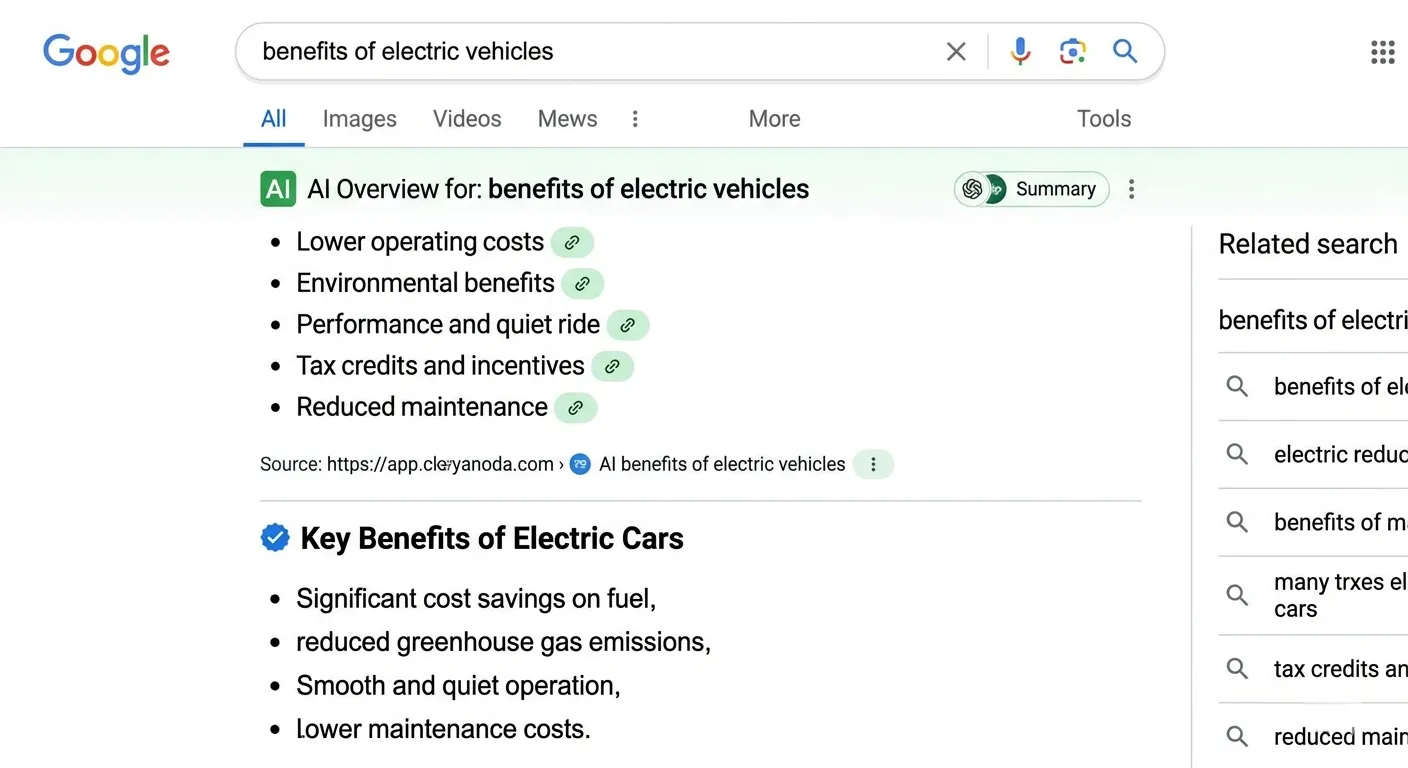
In 2026, the central battlefield for AEO is Google's AI Overview. This AI-generated summary now appears on roughly 16% of US searches, and is rapidly expanding into commercial and transactional queries. When an AI Overview appears for a given keyword, the click-through rate for the top-ranking organic result drops by 58%. If you don't own the AI summary, your clicks evaporate even if you rank first.
Core AEO Tactics
GEO: The New Game of Hunting AI Citations 🤖
Generative Engine Optimization (GEO) is the newest of the three disciplines. It was formally defined in a 2024 academic paper by researchers at Princeton, Georgia Tech, and IIT Delhi, and entered mainstream marketing vocabulary in 2025. In short, it means optimizing your content so that AI engines — ChatGPT, Perplexity, Claude, Gemini, Google AI Overviews — cite your brand, statistics, and expertise when generating answers.
The fundamental difference between GEO and the other two: the goal is not a click but a citation. When AI cites your data, definition, or brand inside its generated answer, millions of users consume your content without ever visiting your site — but they associate that knowledge with your brand. They arrive primed. That's why AI-referred visitors convert at 4.4x the rate of traditional organic search visitors.
What Makes AI Cite Your Content
- Use specific statistics and original data — AI preferentially cites content with concrete numbers. "Increased by 527%" beats "significantly increased."
- Include named expert quotes — Full name and title required. Anonymous claims carry no citation weight for AI systems.
- Keep content fresh — AI retrieval systems (especially Perplexity) heavily weight recency. Refresh key statistics and dates regularly.
- Build third-party platform presence — AI cites Reddit, YouTube, and Wikipedia heavily. Brand activity on these platforms is a core GEO lever.
- Entity optimization — Structure your brand, products, and people as recognized knowledge graph entities. Wikipedia presence and Google Knowledge Panel are key targets.
SEO vs AEO vs GEO — Complete Comparison ⚖️
The foundational practice of optimizing web pages to rank highly in search engine results and drive organic clicks.
- Goal: Higher rankings → more clicks
- Targets: Google, Bing, Naver
- Core: Keywords, backlinks, technical optimization
- Measured by: Rank, organic traffic, CTR
- Status: Essential foundation in 2026
Structuring content so AI assistants and search engines can extract and deliver direct answers without requiring a click.
- Goal: Featured Snippets and AI Overviews
- Targets: Google AI Overview, Siri, Alexa
- Core: Q&A structure, Schema markup, concise answers
- Measured by: Snippet wins, voice search presence
- Status: Increasingly merged with GEO
Optimizing your brand and content to be cited by LLMs when they generate answers — brand exposure without requiring a click.
- Goal: AI citation → brand recognition
- Targets: ChatGPT, Perplexity, Claude, Gemini
- Core: Statistics, expert quotes, entity optimization
- Measured by: Citation frequency, brand mentions
- Status: Fastest-growing discipline in 2026
| Dimension | SEO 🔍 | AEO 💬 | GEO 🤖 |
|---|---|---|---|
| Era | 1990s–present | 2015–present | 2024–present |
| Optimization Target | Individual web pages | Content sections | Brand entity as a whole |
| Primary Platforms | Google, Bing, Naver | Google AI Overview, Voice | ChatGPT, Perplexity, Claude |
| Key Metric | Rankings, traffic, CTR | Snippet wins, voice answers | Citation frequency, brand mentions |
| Content Approach | Keyword-centric | Q&A structure | Authority, stats, quotes |
| Link Building | Critical | Important | Replaced by brand mentions |
| Measurement Difficulty | Easy (GA4, GSC) | Moderate | Hard (emerging tools) |
| 2026 Priority | ★★★★★ Foundation | ★★★★☆ Important | ★★★★★ Fast-growing |
📊 Full-Stack Search Optimization: Layered Architecture
Key Takeaway
SEO, AEO, and GEO are not competing approaches — they are a layered stack. SEO provides the infrastructure AI crawlers need to find you. AEO wins immediate answer visibility. GEO achieves the ultimate goal: AI citation. Remove any layer, and the entire strategy weakens.
Platform-Specific GEO Strategy 🤖
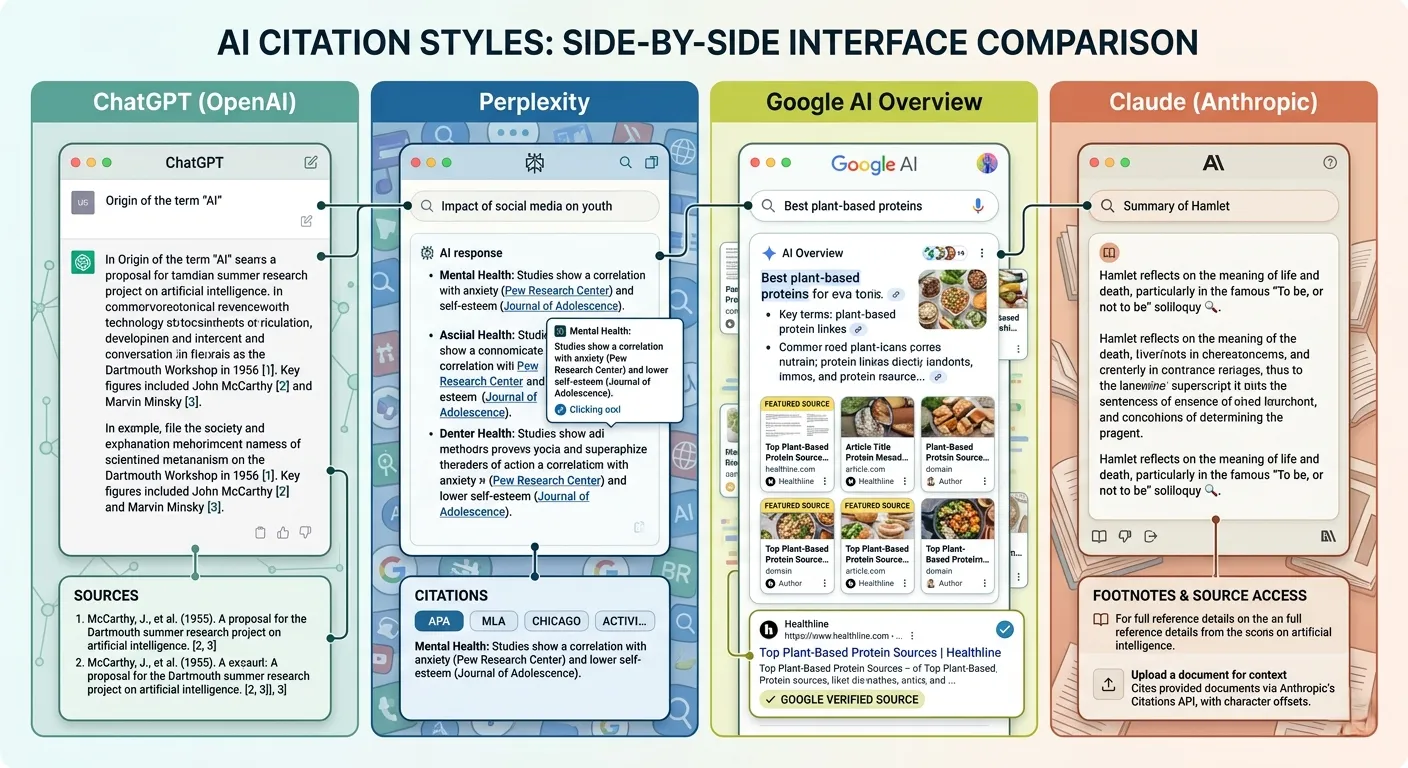
Not all AI engines evaluate content the same way. Each platform has distinct citation patterns and preferred content types. Here's a breakdown of the four major platforms and what works on each.
| Platform | Citation Behavior | Optimization Focus | Priority Channels |
|---|---|---|---|
| 🟢 ChatGPT | High Wikipedia dependency, favors conversational explanations | Clear definitions, structured explanations, Wikipedia presence | Wikipedia, Reddit AMAs, authoritative domains |
| 🔵 Perplexity | Real-time web crawling, explicitly shows citation links | Content freshness, clear sourcing, original data | News media, official blogs, research reports |
| 🔴 Google Gemini / AI Overview | Google index-dependent, multimodal integration | Schema.org, E-E-A-T, structured data richness | Google My Business, YouTube, official website |
| 🟣 Claude (Anthropic) | Analytical reasoning emphasis, weights trustworthiness heavily | Logical structure, balanced perspective, transparent sourcing | Academic papers, credible institutions, research |
| 🔵 Microsoft Copilot | Strong LinkedIn and Microsoft Graph dependency | LinkedIn content strategy, B2B positioning | LinkedIn articles, Microsoft ecosystem |
LLMs disproportionately cite Reddit, YouTube, Wikipedia, Yelp, and TripAdvisor. This means brands that only manage their official channels are structurally disadvantaged in GEO. Sponsoring Reddit AMAs, building a YouTube content library, and earning authentic reviews on community platforms are now core GEO tactics — not optional extras.
Full-Stack Optimization: The Practical Checklist ✅
🔍 Layer 1: SEO Technical Foundation
- Audit Core Web Vitals (Google Search Console) — fix LCP, CLS, FID issues
- Verify full mobile responsiveness and page speed
- Submit XML sitemap; review and optimize robots.txt
- Build internal link structure using topic cluster architecture
- Optimize title tags and meta descriptions with primary keywords
- Add E-E-A-T signals: author bios, expertise credentials, citations
💬 Layer 2: AEO Content Structuring
- Place 40-word answer summary at the top of every section
- Rewrite H2/H3 headings as genuine user questions
- Implement FAQ Schema (JSON-LD) on key informational pages
- Apply HowTo Schema to all step-by-step guide content
- Identify "AI-Triggered keywords" (queries containing why/how)
- Structure key concepts in definition boxes or comparison tables
🤖 Layer 3: GEO Authority Building
- Back every major claim with a specific statistic or research citation
- Include named expert quotations with full name and title
- Build active presence on Reddit, YouTube, and industry forums
- Contribute to or create relevant Wikipedia entries
- Update cornerstone content monthly (refresh statistics and dates)
- Pursue Google Knowledge Panel listing for your brand/product
- Earn coverage in industry authority publications
What the Marketing Community Is Saying 💬
How to Measure GEO Performance 📊
| Metric | How to Track | Tools |
|---|---|---|
| AI Citation Frequency | Manually prompt AI platforms with brand/topic queries weekly | ChatGPT, Perplexity, Claude (direct testing) |
| AI Referral Traffic | Filter GA4 by source/medium for chatgpt.com, perplexity.ai, etc. | Google Analytics 4 |
| Brand Mentions | Monitor brand name mentions across Reddit, X, LinkedIn, forums | Brand24, Mention, Google Alerts |
| AI Visibility Score | Use dedicated AI search visibility monitoring platforms | Amplitude AI Visibility, SE Ranking, Semrush |
| Direct Traffic Trend | Users who discover you via AI often return via direct URL entry | GA4 Direct channel trend analysis |
| Conversion Rate by Source | Compare AI-referred session conversion vs. organic search | GA4 goal configuration, CRM data |
HubSpot Senior Director of Global Growth Aja Frost warns that "marketers chasing traffic from LLMs miss the real value of GEO." The right KPI for GEO is "Solution Awareness" — the frequency with which users first become aware of your brand through an AI interaction. This requires survey data, brand lift studies, and CRM source tracking, not just analytics dashboards.
Conclusion — The AI Search Survival Formula 🏁
SEO is not dead. AEO is already mandatory. GEO is the fastest-growing discipline in digital marketing. Brands that fail to integrate all three will find themselves slowly erased from the AI search landscape.
The 2026 optimization formula is clear: build on SEO's technical foundation, layer in AEO's structured answers, and add GEO's authority and citation signals. This is what practitioners call "full-stack optimization." Remove any layer and the whole structure weakens.
The most important GEO insight is this: AI trusts communities and third-party sources more than official brand channels. Reddit, YouTube, Wikipedia, industry analysts — these are the channels that shape AI's understanding of your brand. The content you control matters, but what others say about you matters just as much — perhaps more.
The day Perplexity cites your brand's research, ChatGPT uses your definition as its source, and Google's AI Overview credits your expertise — that's the finish line for 2026 search optimization. Start now, because your competitors already have.
The AI search landscape evolves rapidly. For the latest data and strategies, consult Google Search Central, Semrush Blog, Ahrefs Blog, and eMarketer. This article was last updated: May 23, 2026.