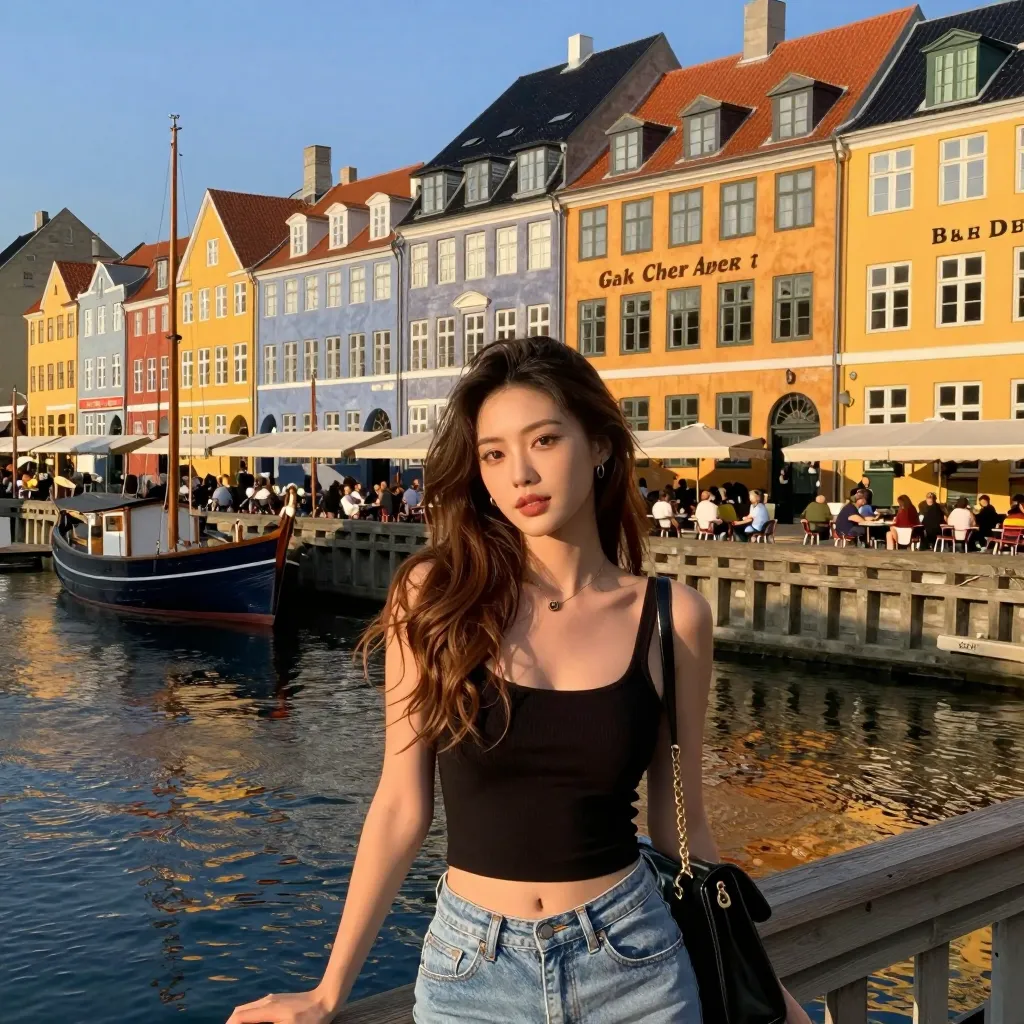
If there is one city in Northern Europe that earns a permanent spot on every travel wish-list, it is Copenhagen. City of the Little Mermaid, birthplace of LEGO, home to world-beating restaurants, the global capital of bicycle commuting, and a place where the word "hygge" was invented to describe a feeling that most other languages don't even have a word for. No single label captures what makes Denmark's capital so endlessly appealing. What surprises first-time visitors most, beyond all the hype, is the sheer walkability of the place and how easy it is to feel at home within hours of arriving. Three days is a genuinely satisfying amount of time here: enough to cover the landmarks, eat well, wander off-map into neighbourhoods most tourists never reach, and leave with that rare feeling that you have actually understood a city rather than just sprinted past its greatest hits.
Before You Go: Copenhagen Essentials
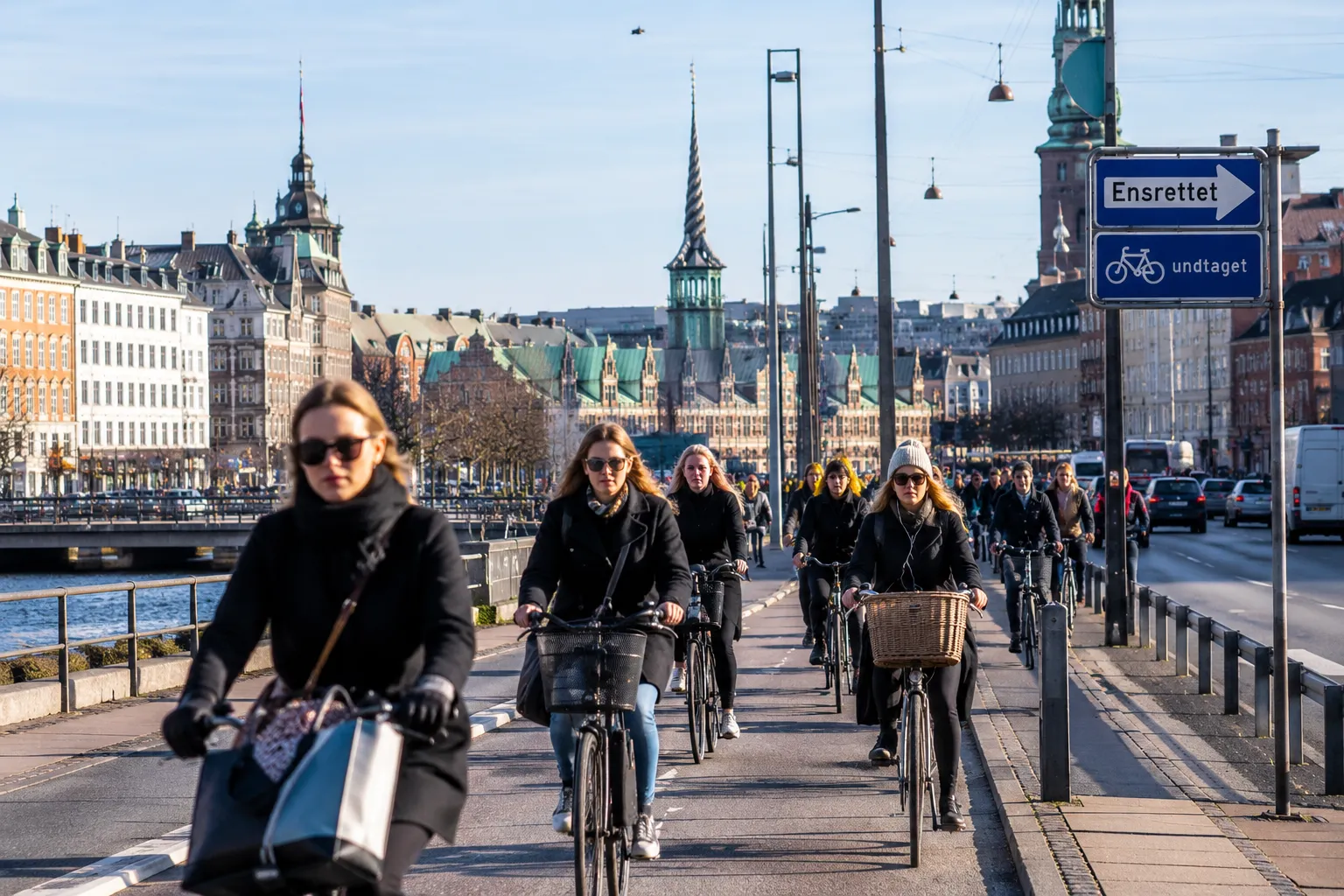
Copenhagen sits on the eastern shore of the island of Zealand (Sjælland) and has a population of roughly 800,000 — making it compact by capital-city standards, in the very best way. The city's famous cycling infrastructure, with fully separated lanes that even nervous riders find perfectly navigable, means you can cover a surprising amount of ground without ever flagging down a taxi. Around 49% of Copenhagen residents commute by bike every single day, and you feel that energy from the moment you land. Streets are clean, signage is bilingual, and virtually every person you encounter in a shop, café, museum or transport hub speaks fluent, idiomatic English. As a first-time visitor, you face almost no logistical friction — which frees you up to simply enjoy being there.
Copenhagen At a Glance
- Country / Capital: Capital of the Kingdom of Denmark (Danmark). Constitutional monarchy.
- Language: Danish (official), but English fluency is near-universal — every shop assistant, waiter, museum guide and metro passenger will speak it effortlessly and without any awkwardness
- Currency: Danish Krone (DKK). Roughly 1 DKK ≈ €0.13 / £0.11 / $0.14 (mid-2026). Card payments accepted almost universally; a small amount of cash is handy only for street hotdog carts and some market stalls
- Time Zone: Central European Time (UTC+1), summer CEST (UTC+2)
- Entry: Schengen Area — EU/EEA citizens enter freely; most nationalities including US, UK, Australia and South Korea enjoy 90-day visa-free stays (always verify for your specific passport)
- Airport: Copenhagen Airport (CPH, Kastrup) — one of Scandinavia's busiest hubs. Metro line M2 connects directly to the city centre in approximately 13 minutes
- Power: 230V / 50 Hz, Type C and F sockets (European standard). North American and UK visitors need adapters
- Safety: Consistently ranked among Europe's safest cities. Petty crime is rare; bicycle theft is the primary concern — always lock rented bikes with the provided lock
- Tipping: Service is typically included in Danish prices. Tipping is appreciated but not expected — rounding up to the nearest 50 DKK is common at restaurants
When Is the Best Time to Visit? 🌤️
Copenhagen rewards visitors in every season, but the undisputed sweet spot is May through September. Summer months offer extraordinary daylight — in June, the sky stays genuinely light until well past 10 pm, making evening sightseeing and outdoor café culture feel magical and unique. July averages a pleasant 22°C, busy but rarely oppressively hot. May and September offer fewer crowds with still-comfortable temperatures — excellent choices for budget-conscious travellers. Winter (November–February) is cold, dark and very atmospheric: the café culture retreats indoors, the concept of hygge becomes almost tangible, and December brings one of Northern Europe's most beautiful Christmas markets to Tivoli. Every season has a case to make.
📅 Best Months to Visit & Average Temperature
City Centre & the Harbour
Torvehallerne → Round Tower → Strøget → Christiansborg Palace → Nyhavn
Day one is about orienting yourself in Copenhagen's compact, walkable heart. You move from a world-class food market to a 17th-century astronomical tower, down the city's legendary pedestrian shopping street, through a palace that houses three branches of government simultaneously, and end the evening on the most photographed canal in Northern Europe. Distances between every stop are short — most are under 15 minutes on foot — and the route unfolds logically without requiring any transport at all.
🛒 Torvehallerne KBH — Copenhagen's Premier Food Market
Start your first morning at Torvehallerne, a pair of glass-roofed market halls set alongside Israels Plads. More than 60 vendors operate here, selling everything from freshly baked Danish pastries and cold-brew coffee to cured meats, organic produce, artisan cheeses, fresh pasta, and what many visitors claim is the city's best smørrebrød. The atmosphere before 10 am is calm enough to actually appreciate: the gentle clatter of coffee machines, the smell of cardamom pastry coming out of the oven, vendors arranging elaborate open sandwiches with the care of jewellers.
What to order: A wienerbrød (laminated Danish pastry) — cardamom-spiced, almond-topped or custard-filled — alongside a flat white or a pot of filter coffee. If you're hungry for something more substantial, the smørrebrød counters open early and a piece of their dense rye bread topped with smoked salmon, cream cheese and cucumber will sustain you through the whole morning. The market opens at 7 am on weekdays and 8 am on weekends, making it perfect for an early start.
🗼 The Round Tower (Rundetårn) — Panoramic Views Over Old Copenhagen
A ten-minute walk south from Torvehallerne brings you to the Round Tower (Rundetårn), a 34.8-metre brick tower built between 1637 and 1642 on the orders of King Christian IV. What sets it apart from every other European city lookout is the means of ascent: not stairs, but a continuous helical ramp — wide enough that Russian Tsar Peter the Great supposedly rode a horse-drawn carriage to the top during his 1716 visit to Copenhagen, while his wife followed in a second carriage behind. The spiral winds for 7.5 full turns before arriving at the observation platform. The 360° panorama of Copenhagen's copper-green spires, red-tiled rooftops and church towers spreading to every horizon is one of the finest free-to-view vistas in any European capital — and at around 45 DKK entry, one of the best-value viewpoints anywhere.
Inside the tower is Europe's oldest functioning observatory, still used for public stargazing events on winter evenings. A small gallery space hosts rotating art exhibitions. The whole visit takes around 45 minutes at a leisurely pace.
🛍️ Strøget — One of Europe's Longest Pedestrian Shopping Streets
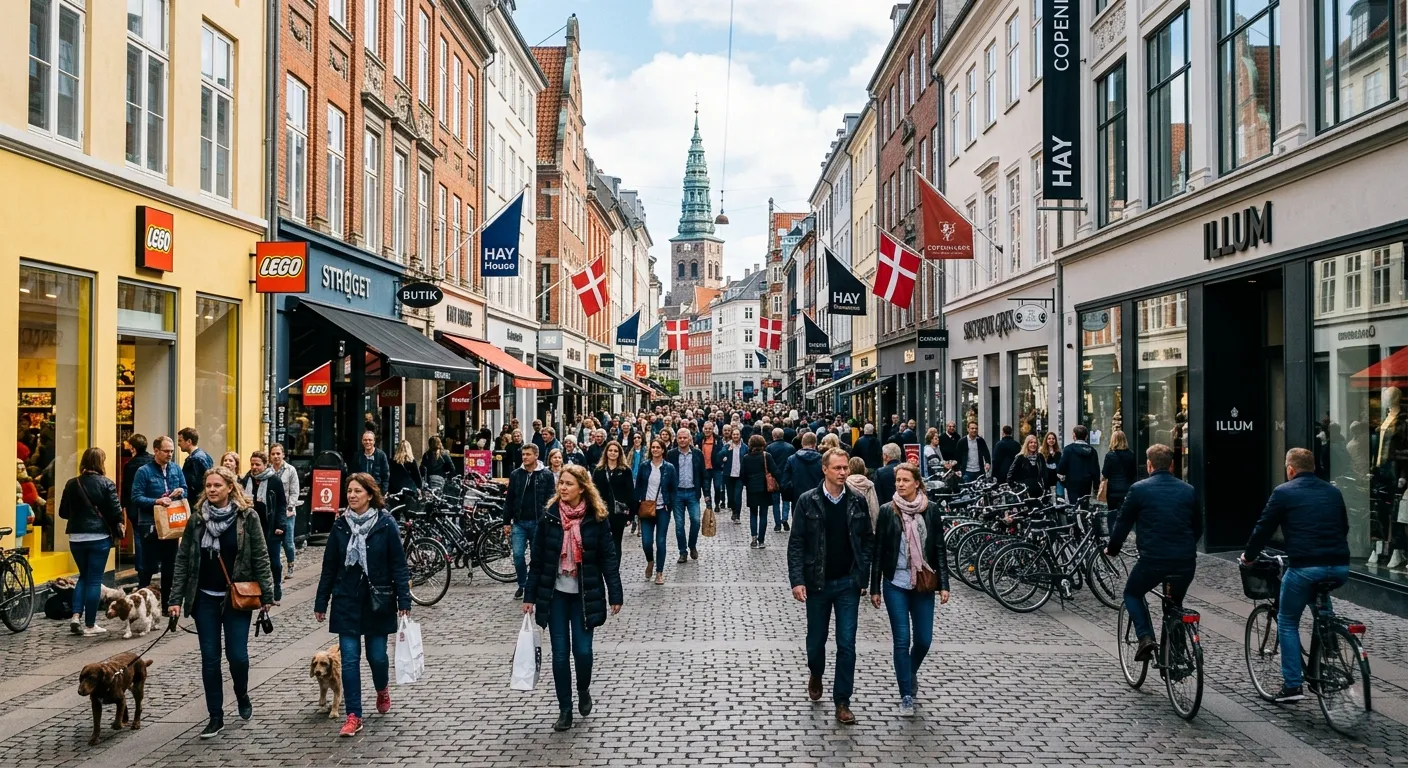
Head south from the Round Tower and you'll step onto Strøget, a 1.1-km car-free corridor running from City Hall Square (Rådhuspladsen) all the way to Kongens Nytorv (the King's New Square). The street changes character as you walk east: busier and more commercial near the western end, with international fast-fashion chains and street performers competing for attention, then progressively more upmarket as you approach Kongens Nytorv. Near the eastern end you'll find the flagship stores of Bang & Olufsen, Georg Jensen silverware, Royal Copenhagen porcelain (established 1775), and LEGO's largest standalone shop. Don't rush it — duck into the side streets running off Strøget to discover independent design boutiques, second-hand bookshops, vintage clothing stores, and the kind of small-batch ceramics studios that make Danish design so coveted internationally.
Street performers appear at various points along the route: musicians, living statues, jugglers. When you need a break from walking, the side streets hold dozens of excellent cafés — sit down for another coffee and experience Danish café culture, which prioritises comfort and staying power over quick turnover.
🏰 Christiansborg Palace — The Only Building in the World Housing All Three Branches of Government
Walking south from Strøget leads to Christiansborg Palace, built on the small islet of Slotsholmen — a site that has held a castle since the 12th century. The current neo-Baroque building (completed 1928) is unique in the world: it simultaneously houses Denmark's parliament (Folketing), the Supreme Court, and the Prime Minister's offices. The Queen's — now King's — ceremonial reception rooms occupy a further wing. Standing in the main courtyard, surrounded by this single building performing the functions that most democracies distribute across three different locations across a city, feels genuinely strange in the best possible way.
The palace tower is Copenhagen's tallest free viewpoint — entry to the tower itself is free, though opening times vary seasonally so check in advance. Below ground, excavations have revealed foundations of the original 12th-century fortress of Bishop Absalon, now open to visitors as the Ruins under Christiansborg (separate admission). The canal-front views from the palace perimeter are worth a slow stroll even if you skip every interior — the reflections in the water are particularly beautiful in afternoon light.
🌊 Nyhavn — The Most Iconic Canal in Northern Europe at Its Best
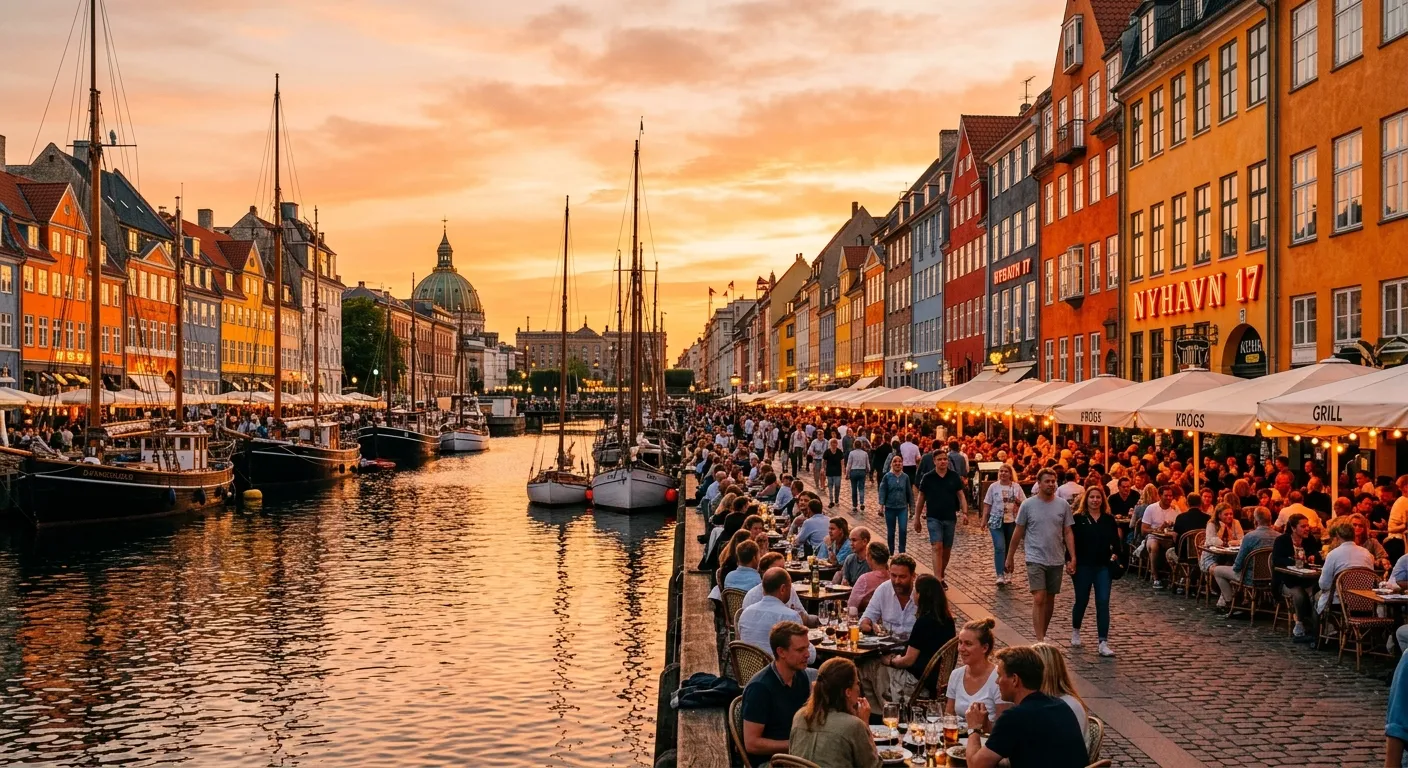
No visit to Copenhagen is complete without Nyhavn. The name translates straightforwardly as "New Harbour" — though it was constructed in the 1670s, when "new" had a somewhat longer shelf life. The canal runs for about 450 metres and is flanked on both sides by a vivid row of 17th and 18th-century townhouses painted in blues, reds, yellows and deep ochres, their colours seeming to intensify and warm as afternoon light fades toward golden hour. Hans Christian Andersen — who wrote The Little Mermaid, Thumbelina, The Ugly Duckling and dozens of other fairy tales here — lived at three different addresses on this street across more than 20 years of his life, including the famous No. 20 and No. 67.
The northern, odd-numbered side of the canal has the busiest restaurant terraces and the best angle for photographs of the colourful facades. The southern, even-numbered side is quieter and tends toward slightly more locally-oriented establishments. Visit during golden hour — roughly 6 to 8 pm on a clear summer evening — and the warm light reflecting off the water will make every photograph look composed by a professional. Sit down for a Danish beer and a plate of smoked herring or chilled shrimp at any of the canal-side restaurants. Budget around 80–120 DKK per beer and 200–350 DKK for a main course. Canal boat tours also depart from Nyhavn for a one-hour loop of Copenhagen's waterways — a genuinely lovely way to see the city from a different angle.
Nyhavn restaurants command a tourist-location premium — a beer and light snacks can easily run to €15–25 per person. If you would prefer a proper dinner without the markup, walk ten minutes west into the Indre By neighbourhood where equally good restaurants charge more honest prices. Alternatively, do what locals do: buy food from a nearby Netto or Irma supermarket and eat sitting on the Nyhavn quayside steps, which is entirely normal and actually rather pleasant. Copenhagen evenings in summer are mild enough to sit outside comfortably until well past 9 pm.
"Copenhagen is the kind of city that slows you down in the best possible way. Every block has a reason to stop — a bakery, a canal view, a street musician. That rhythm of wandering and pausing is the real Copenhagen experience." — VisitCopenhagen Official Travel Guide
Royal History & Tivoli
King's Garden → Rosenborg Castle → Amalienborg → Marble Church → Little Mermaid → Tivoli
Day two follows the thread of Copenhagen's royal history — this is, after all, a city where the monarchy is not a distant ceremonial institution but an active and visible part of daily urban life. You will visit a Renaissance castle guarding Denmark's Crown Jewels, watch the ceremonial changing of the Royal Life Guard, encounter the world's most-visited statue that consistently disappoints tourists who forget to look up the dimensions beforehand, and end the evening inside one of the oldest and most genuinely enchanting amusement parks on earth. It is a day that moves between different centuries without ever feeling disjointed.
🌿 The King's Garden (Kongens Have) — Denmark's Oldest Royal Park
Begin with an unhurried morning stroll through the King's Garden (Kongens Have), established by Christian IV in the early 17th century as a private royal kitchen garden and gradually opened to the public over subsequent centuries. Today it is Copenhagen's most visited and most-loved public park, and with good reason: the geometry of its hedges and pathways has a quiet formality, the rose garden in the centre blooms magnificently in summer, and the mature lime trees along the main allée provide shade that feels almost cathedral-like on warm mornings. Rosenborg Castle rises from the centre of the park like something from a Grimm fairy tale — giving you a strong visual anticipation of what comes next.
On warm weekend mornings, Copenhageners arrive early to spread blankets across the lawns for relaxed picnics that will continue all afternoon. Puppet shows occasionally run in the park during summer. It is a pleasant, grounding way to begin a day that will otherwise involve quite a lot of walking and queue-navigating.
👑 Rosenborg Castle — Denmark's Crown Jewels & 400 Years of Royal History
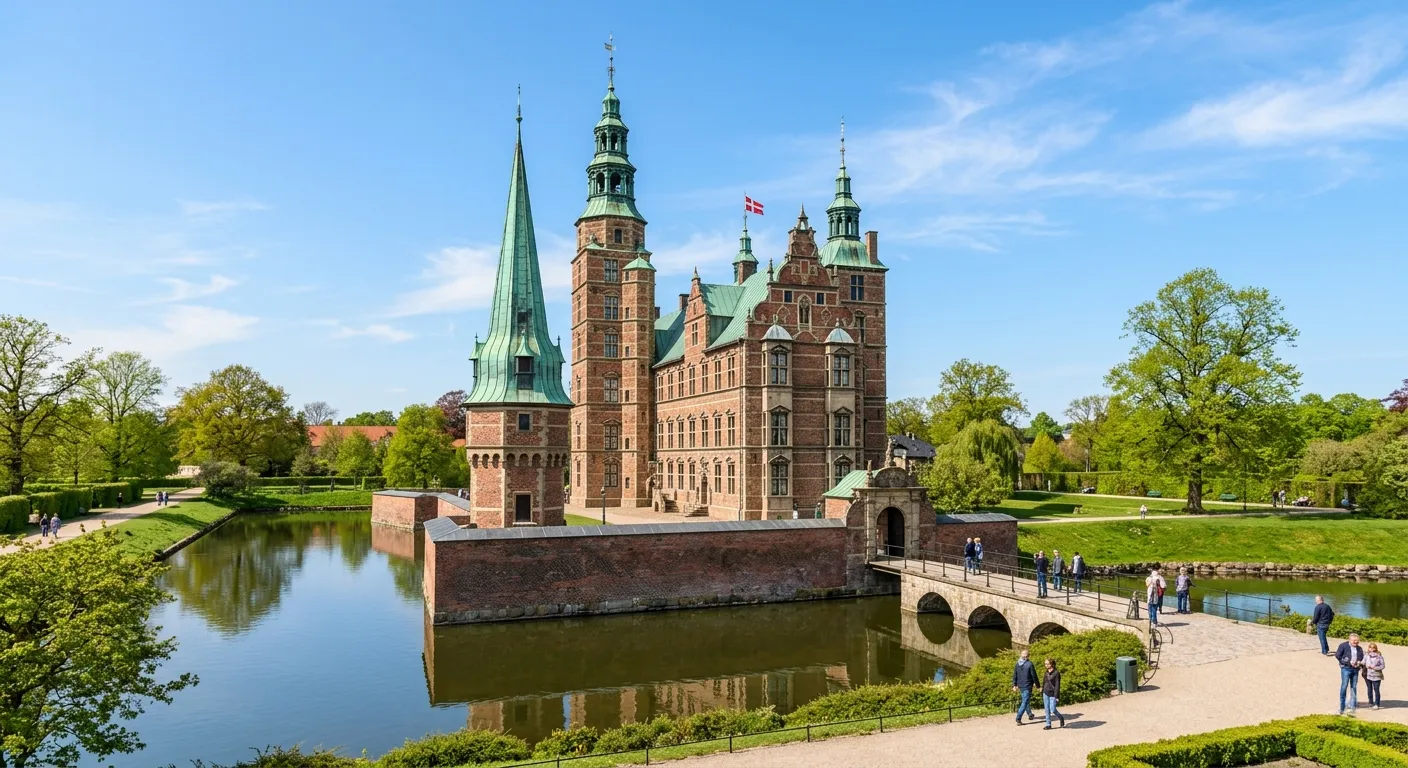
Rosenborg Castle was built as a modest summer residence for Christian IV between 1606 and 1624, expanded several times as the king's ambitions — and his affection for the building — grew. The exterior is Dutch Renaissance: red brick with elaborate gables, green copper spires and white-framed windows that make it look almost too picturesque to be real. It is, in the considered opinion of most visitors who bother comparing, simply the most beautiful building in Copenhagen.
Inside, 24 chronologically arranged rooms chart four centuries of Danish royal life in extraordinary detail: there are tapestries, silver furniture, ivory cabinets, a throne of narwhal tusks, and thousands of objects accumulated across generations of a dynasty that takes its heritage seriously. The undisputed highlight, however, is in the basement. The treasury holds the Danish Crown Jewels — including Christian IV's crown (1596), the Queen's crown, the Sword of State, and an orb and sceptre that together constitute one of the most intact sets of royal regalia in Europe. Entry is around 115 DKK; the Copenhagen Card covers it. Plan at least 90 minutes inside.
🏛️ Amalienborg Palace & the Royal Guard Changing Ceremony
A 20-minute walk east from Rosenborg brings you to Amalienborg, the winter residence of the Danish royal family since 1794. Rather than a single palace, Amalienborg is an ensemble of four identical Rococo mansions, designed by the court architect Nicolai Eigtved and arranged with geometric precision around an octagonal cobblestoned square. A large equestrian statue of Frederick V dominates the centre. The symmetry is immaculate, and the scale — neither overwhelming like Versailles nor understated like a country house — has a satisfying human quality. When the monarch is in residence, the Royal Standard flies from one of the four mansions.
Every day at noon, the Royal Life Guard marches from Rosenborg Castle to Amalienborg for the Changing of the Guard — a 30-minute procession through the city that ends with a ceremony in the palace square. The guards wear distinctive tall bearskin hats, deep blue uniforms, and carry rifles; on the birthdays of members of the royal family or national holidays, the ceremony becomes considerably more elaborate, with a marching band and a full guard parade. The Amalienborg Museum in one of the four palaces offers a carefully curated look inside the royal apartments used by recent monarchs.
⛪ Frederiks Church (Marble Church) & 🧜 The Little Mermaid
The colossal green dome that looms over the rooftops immediately behind Amalienborg is Frederiks Church — universally known as the Marble Church (Marmorkirken), though much of the material is actually Norwegian limestone rather than marble. The dome is 31 metres in diameter, making it one of the largest church domes in Scandinavia. The building's history is characteristically Danish in its pragmatic honesty about budget constraints: construction began in 1740, stalled completely for lack of funds in 1770, and the building stood as an open ruin for over a century before a private banker funded its completion in 1894. Inside, stand directly beneath the cupola and look up: the painted ceiling and the sheer volume of the space combine to create a genuinely overwhelming moment.
From the Marble Church, a 15-minute waterfront walk leads north past Kastellet — a 17th-century star-shaped fortress that remains one of the best-preserved military fortifications in Northern Europe — to The Little Mermaid (Den Lille Havfrue). A word of honest preparation: the bronze sculpture, cast by Edvard Eriksen in 1913 and inspired by Hans Christian Andersen's fairy tale, is 1.25 metres tall and sits on a rock a short distance from the shore. It is perpetually surrounded by a considerable crowd of camera-wielding visitors. It is smaller than you almost certainly imagine. It is also, without question, iconic in the truest sense: a modest, quietly beautiful object that has somehow become the most visited sight in Denmark. Go early in the morning for a cleaner view. Entry is free.
🎡 Tivoli Gardens — The Enchanted Park After Dark
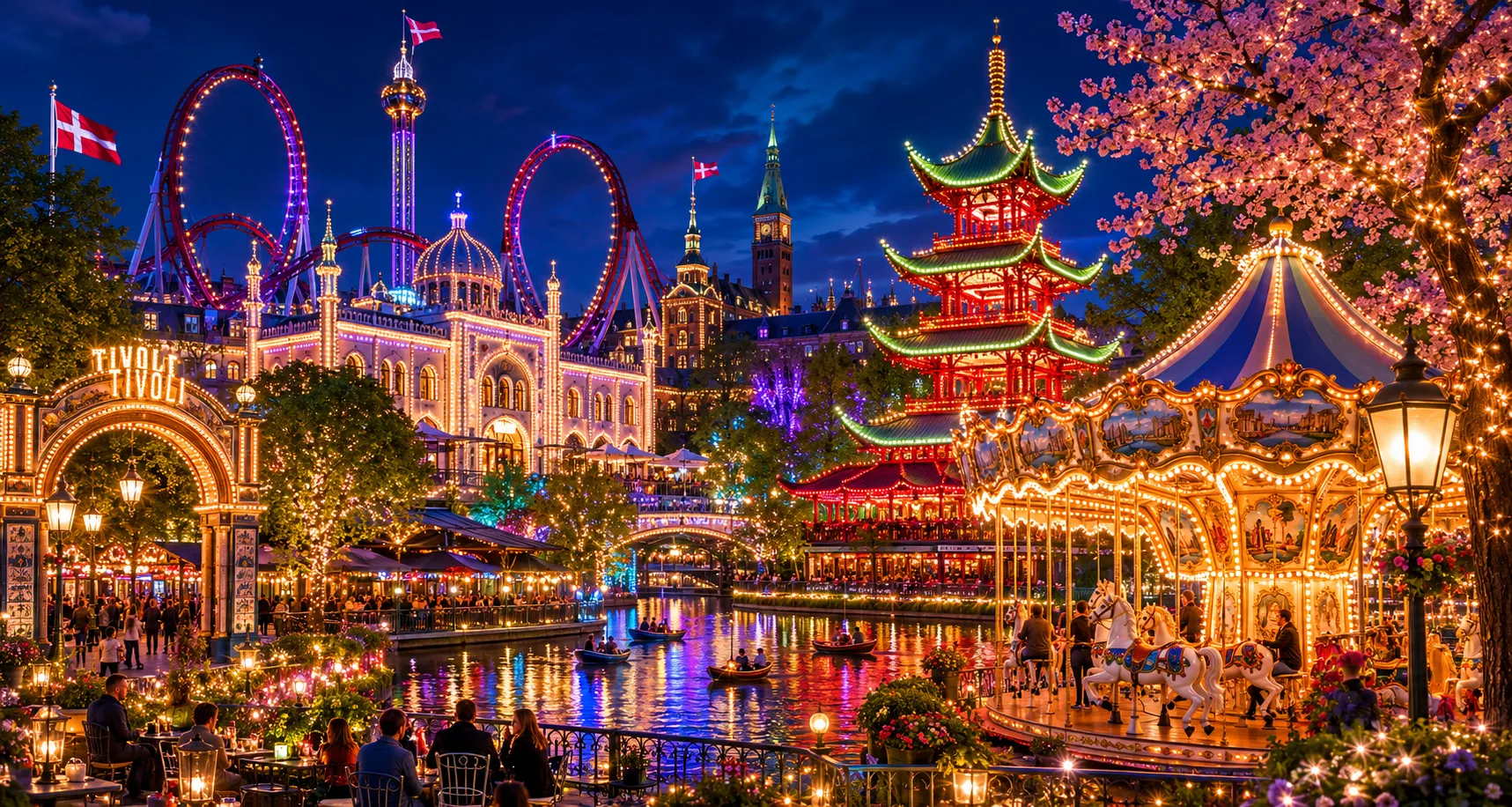
End Day Two at Tivoli Gardens, Copenhagen's showpiece pleasure garden right beside the Central Station. Opened on 15 August 1843, Tivoli is one of the world's oldest continuously operating amusement parks, and arguably the most atmospherically distinctive. Walt Disney visited before designing Disneyland and later credited Tivoli as an influence. During daylight the park is pleasant: 88,000 square metres of impeccably maintained gardens, 25-plus rides ranging from vintage to vertiginous, a concert hall, two open-air stages, restaurants covering most major cuisines, and more food stalls than you could visit in a week.
After dark, it becomes something else entirely. Thousands upon thousands of warm incandescent bulbs illuminate every tree, path, building and ride — the effect is so complete and so warm that the park feels genuinely transported to another era. The lake at the centre reflects the lights. Buskers and small-stage acts appear around every corner. The oldest wooden roller coaster in the world — Rutschebanen, constructed in 1914 — still runs, operated by a brakeman who physically controls the speed using a hand brake. The StarFlyer swings riders to 80 metres above the city. Every Saturday evening in summer, fireworks light the sky above the park. Admission is around 175 DKK; rides cost extra per ticket or via an unlimited pass. Copenhagen Card holders enter free. If you have only one evening highlight to choose in Copenhagen, make it Tivoli after sunset.
🔑 Day 2 Key Points
The Royal Guard Changing takes place daily at noon. The procession departs from Rosenborg Castle and arrives at Amalienborg at approximately 12:30 pm — position yourself in the palace square by noon for the best view of the ceremony. Tivoli operates from mid-April through late September; additional special seasons run for Halloween (October) and Christmas (November–December). Buy Tivoli admission online in advance during summer peak to avoid the gate queue, which can add 30+ minutes. Copenhagen Card holders enter free and the card more than covers its cost across a 3-day visit.
Art, Design & Freedom
Church of Our Saviour → Christiania → Louisiana Museum → Vesterbro
The final day steps away from royal history and leans into the parts of Copenhagen that feel genuinely unlike anywhere else on earth: a neighbourhood that has operated under its own laws and customs for over 50 years, a modern art museum that many visitors rate as the highlight of their entire European trip, and a former slaughterhouse district that has reinvented itself as one of the continent's most interesting dining and nightlife destinations. The day covers considerable geographical ground but rewards the effort at every stop.
⛪ Church of Our Saviour — The Spiral Staircase That Goes Outside
Start Day Three in Christianshavn, the canal-laced neighbourhood connected to the city centre by a short bridge. The area has an entirely different character from the historic core: quieter, more residential, with waterside houseboats moored along the canals and independent cafés occupying the ground floors of 17th-century warehouses. The neighbourhood's defining landmark is the Church of Our Saviour (Vor Frelsers Kirke), a Baroque church completed in 1696 with a copper spire added in 1752 that does something no other tower in Copenhagen does: its external helical staircase winds up the outside of the spire, narrowing with each revolution as it spirals toward a gilded globe 90 metres above street level.
Climbing the external staircase — which begins inside and emerges through a hatch into open air — is one of Copenhagen's most quietly thrilling experiences. The staircase narrows progressively as it rises; the last 15 steps are genuinely narrow and have no handrail, which is not for the seriously acrophobic but provides an exhilarating finale for those who push through. The view from the top, looking out over Christianshavn's canals, the coloured rooftops of the old city, and the sea beyond, is completely worth the mild adrenaline. Entry is around 85 DKK. Arrive early to beat the queue.
🌿 Freetown Christiania — The World's Most Famous Self-Governing Commune
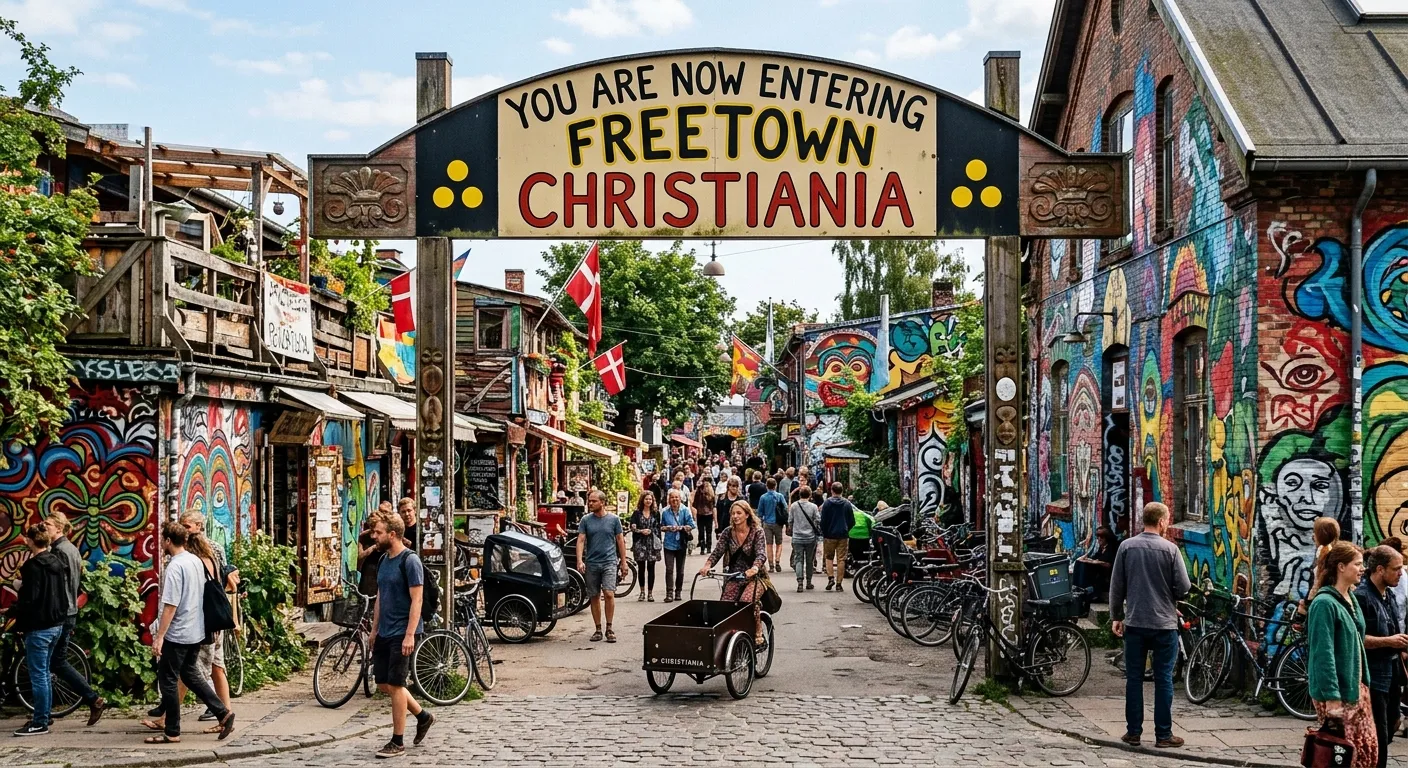
A five-minute walk from the church brings you to Christiania — arguably the most singular neighbourhood in any European capital, and one of the most visited sites in all of Denmark. In September 1971, a loose group of young Copenhageners occupied a decommissioned Danish Army barracks on 34 hectares of Christianshavn and declared it a self-governing free state, operating outside Danish law. More than 50 years later, roughly 900 people still live here under their own community charter, with their own tax arrangements, rules about building modifications, and decision-making processes based on consensus rather than voting. The result is a neighbourhood that feels genuinely unlike anywhere else in Europe: handbuilt homes painted in vivid murals, artist studios and workshops, vegan restaurants, organic food stalls, community gardens, children's playgrounds, live music venues and even a concert hall — all connected by unpaved paths through mature trees.
Christiania is open to visitors and is generally safe and welcoming during daylight hours. The Månefiskeren bar and café is a good spot for a coffee. Walk the main path slowly and you'll discover craftwork workshops selling handmade jewellery, furniture and clothing; murals of extraordinary ambition and skill; and an atmosphere of unhurried community life that contrasts sharply with the city centre a few minutes away.
Photography is strictly prohibited in and around Pusher Street (the area where cannabis is openly sold). Producing a camera or phone in that area will cause an immediate and potentially serious confrontation with sellers who are known to enforce this rule aggressively. Cannabis remains illegal under Danish law — purchasing or possessing it carries genuine legal risk regardless of what you observe happening around you. Christiania residents have historically discouraged parents from bringing young children. Treat the community's self-set boundaries with respect; it is what keeps the place open to visitors at all.
🖼️ Louisiana Museum of Modern Art — Worth Every Minute of the Journey
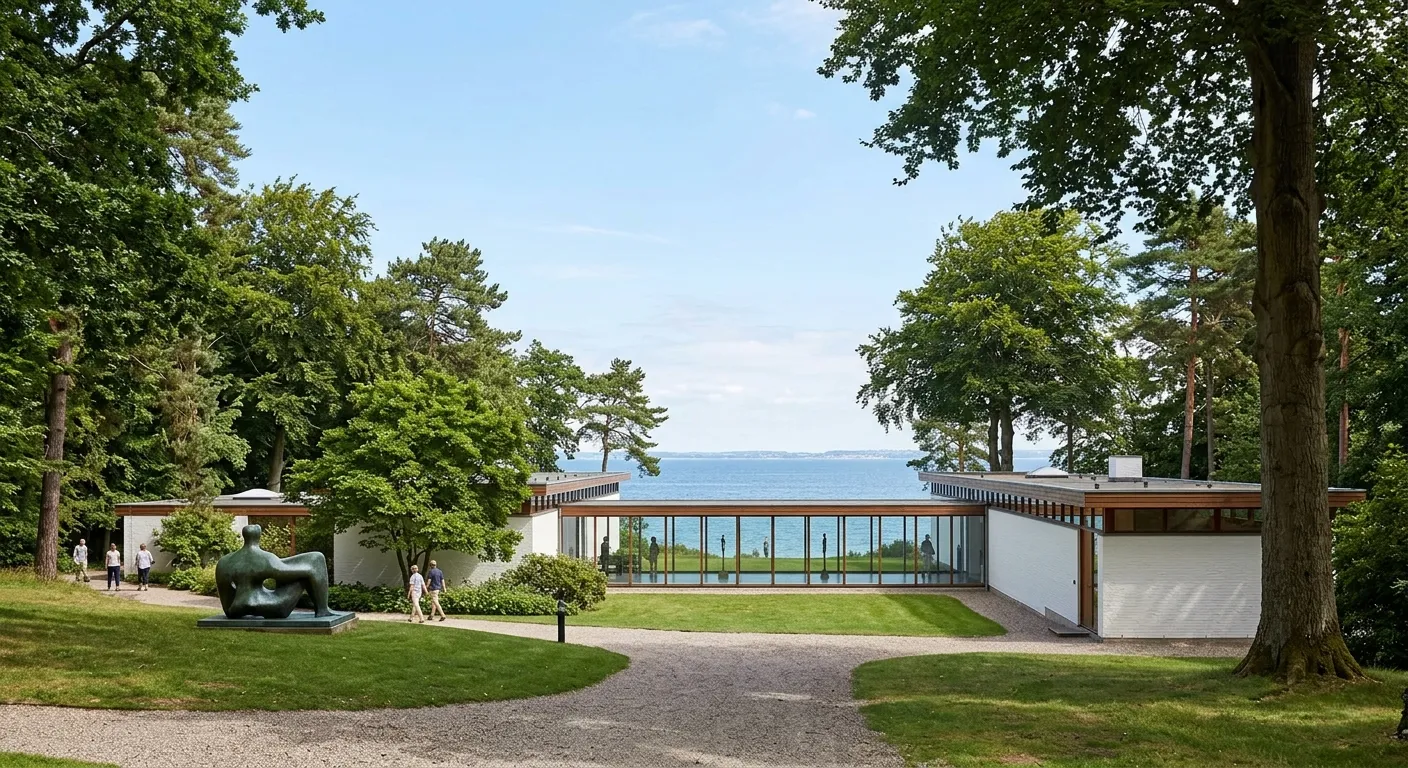
Thirty-five minutes north of Copenhagen by S-tog regional train (alight at Humlebæk, then a ten-minute walk) sits Louisiana — consistently rated among the best modern art museums in the world and the most-visited art museum in Scandinavia by a wide margin. The permanent collection ranges from Picasso, Andy Warhol and Francis Bacon to Alexander Calder's monumental kinetic sculptures, Danish modernists of the mid-20th century, and a world-class selection of post-war American abstract painting. What elevates Louisiana beyond the quality of its collection alone is the architecture: a series of low, white interconnected pavilions and glass corridors built directly into the landscape, winding through ancient beech forest and emerging above the Øresund strait. Every single room has a view — into the trees, across the water toward Sweden, or into the sculpture garden. The outdoor sculpture park, set on a hillside above the sea, includes pieces by Henry Moore, Joan Miró and Max Ernst that you discover around corners as you walk. Entry is around 150 DKK; Copenhagen Card applies. Plan a minimum of three hours — most visitors who've been before advise going for the entire afternoon.
If visiting Louisiana in the same afternoon as Christiania feels too rushed, an excellent city-based alternative is the Ny Carlsberg Glyptotek, a ten-minute walk from Central Station. It houses one of Northern Europe's finest collections of ancient Egyptian, Greek and Roman art alongside an extraordinary collection of 19th-century French painting (including extensive Gauguin and Degas holdings), all under a spectacular glass-domed winter garden. Entry is free on Sundays before 1 pm.
🥩 Vesterbro & Kødbyen — The Meatpacking District
End your Copenhagen experience in Vesterbro, the neighbourhood that most successfully captures the city's contemporary character and where you're most likely to encounter Copenhageners who moved here by choice rather than by birth. Vesterbro was, for most of the 20th century, a solidly working-class district: the location of Copenhagen's slaughterhouse industry (Kødbyen), its red-light district, and dense apartment blocks housing families who worked in both. Urban renewal and a wave of independent businesses across the 1990s and 2000s transformed it without stripping out its character.
Kødbyen — the Meatpacking District — is where the transformation is most visible and most striking. Former abattoir buildings, kept in their original white-tiled industrial state, now house some of Copenhagen's most celebrated restaurants (including Michelin-starred establishments alongside excellent casual spots), craft beer bars, concept stores and art galleries. Istedgade, the neighbourhood's main spine, is lined with independent restaurants, wine bars and the kind of genuinely good neighbourhood cafés that have no particular desire to be discovered. Book a table somewhere in Vesterbro for your final dinner; return afterward for a last drink at one of the canal-side bars. It's the part of Copenhagen most likely to make you immediately start planning the return trip.
Louisiana and Christiania can feel rushed if you try to visit both in a single afternoon. If visiting in summer, consider Louisiana as a standalone morning excursion (leave Copenhagen Central by 9 am, return by 2 pm) and keep the afternoon for Christiania and Vesterbro. If you'd rather stay central all day, swap Louisiana for the Ny Carlsberg Glyptotek — free on Sundays before 1 pm, making it one of Copenhagen's best budget moves. Whichever you choose, keep the Vesterbro evening: it's where the city genuinely comes alive after dark.
Copenhagen Food Guide 🍴: From Street Hotdogs to World-Class Fine Dining
Copenhagen has probably done more to reshape global food culture in the last 25 years than any other city of comparable size. When René Redzepi opened Noma in 2003 and began cooking hyperlocal Scandinavian ingredients with radical technique — fermenting, foraging, applying Japanese-precision thinking to Danish terroir — he didn't merely earn Michelin stars. He launched a worldwide conversation about what Nordic food could be, triggered a generation of chefs to rethink their own cuisines, and effectively made Copenhagen a mandatory pilgrimage for anyone seriously interested in food. The ripple effect from that single restaurant is visible in every neighbourhood bistro in the city. Even casual restaurants in Copenhagen apply a degree of craft and seasonal awareness that would be considered exceptional in most other European capitals. You do not need a reservation at Noma, or any Michelin-starred establishment, to eat remarkably well here.
🥪 Foods You Must Try
Smørrebrød
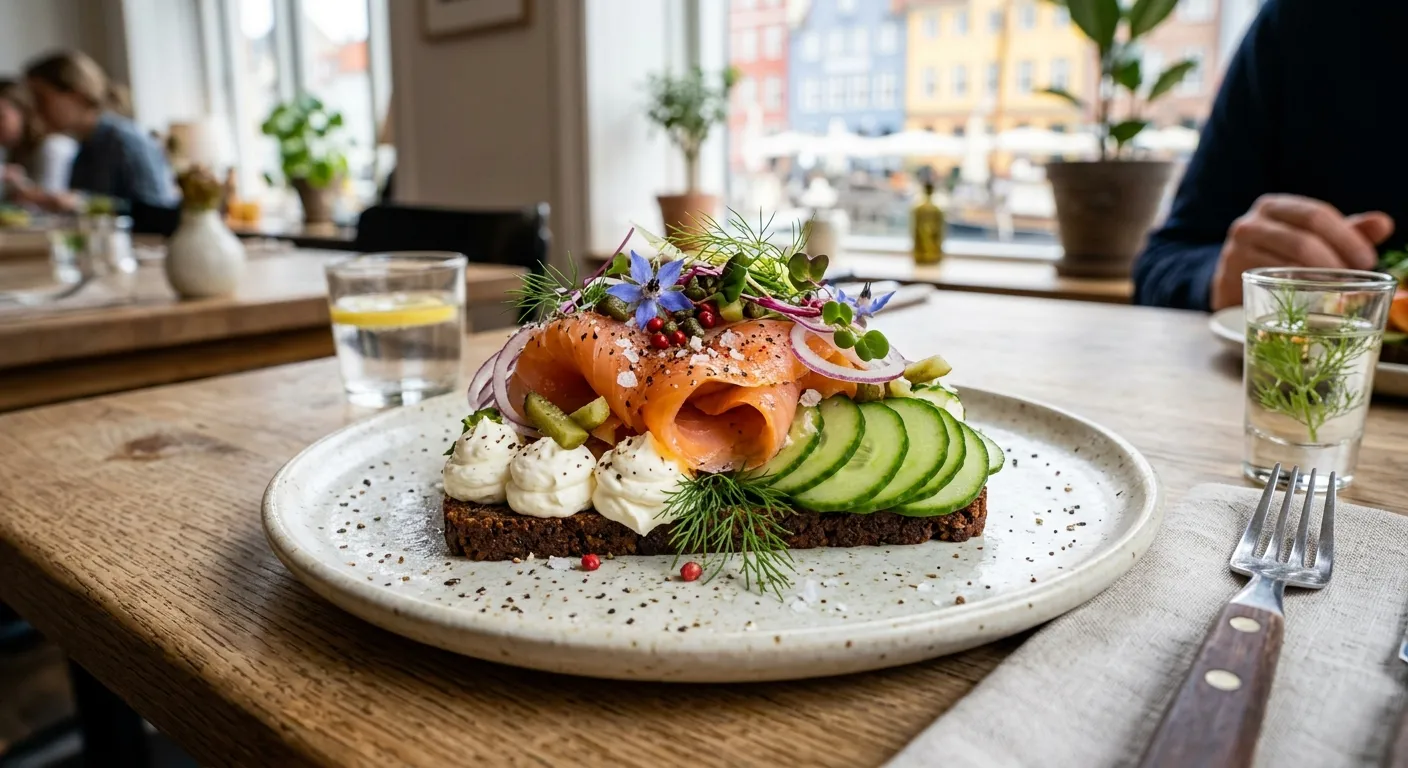
Mid-rangeDenmark's open-faced rye sandwich is an art form in the truest sense — each piece is essentially a miniature composed dish. Dense, slightly sour rugbrød (rye bread) is topped with architecturally precise combinations: smoked salmon with cream cheese, cucumber and dill; pickled herring with raw onion and capers; roast beef with remoulade and crispy fried onions; or egg with mayonnaise and smoked prawns. Torvehallerne KBH is the best accessible spot for a casual smørrebrød breakfast. For the full traditional lunch experience, try Aamanns or the legendary Slotskælderen hos Gitte Kik near Christiansborg.
Danish Pastry (Wienerbrød)
Budget-friendlyWhat the rest of the world calls a "Danish" is called a Wienerbrød (Vienna bread) here — honouring the Austrian bakers who came to Denmark in the 19th century and taught the locals the laminated-dough technique. Copenhagen's bakers have been refining it ever since. The local versions — cardamom-laced, almond-paste-filled, custard-crowned, raisin-studded — are incomparably better than anything you will have tasted outside Denmark. Queue at Lagkagehuset (multiple branches citywide) or Sankt Peders Bageri in the old city, famous especially for its Wednesday kanelsnegle (cinnamon rolls), which sell out by mid-morning.
Danish Hotdog (Pølse)
Budget-friendlyThe humble pølsevogn (hotdog cart) is a Copenhagen institution that has survived decades of gentrification and gastronomic revolution with its dignity entirely intact. A rød pølse (red sausage, boiled or grilled) in a brioche bun or a split hotdog roll, dressed with yellow mustard, ketchup, remoulade, pickled cucumber relish and a generous heap of crispy fried onions — costs around 40–60 DKK and is unexpectedly satisfying. It is also, demonstrably, how you eat like a Copenhagener in 90 seconds flat. Several food critics have noted that it bears no resemblance to any hotdog sold anywhere else in the world. That is not an exaggeration.
Herring (Sild)
Mid-rangePickled in vinegar, marinated in dill, curried, served in mustard cream or baked in a rye crust — herring is the backbone of Danish food culture and has been for centuries, predating even the Viking era. Order a traditional herring plate (sildetallerkenen) for a tasting of three or four preparations alongside rye bread, boiled potatoes and a cold aquavit. It is the most distinctly Danish meal you can order, priced around 120–180 DKK at a good restaurant, and it tells you more about this country's food history than any museum exhibit could.
Danish Beer (Carlsberg & Mikkeller)
Mid-rangeCarlsberg was founded in Copenhagen's Valby district in 1847 by J.C. Jacobsen, and the brewery campus has been redeveloped into Carlsberg City — a neighbourhood with a visitor centre, museum and tasting room that tells the full history of lager's global spread. For something more modern, Mikkeller is the world-famous Copenhagen craft beer project founded by Mikkel Borg Bjergsø, whose experimental and intensely flavoured beers are now sold in more than 60 countries. Multiple Mikkeller taprooms operate in Copenhagen itself; the flagship at Viktoriagade in Vesterbro is an essential stop for beer enthusiasts.
Fine Dining (Noma · Alchemist · Geranium)
SplurgeCopenhagen hosts more restaurants ranked among the world's best per capita than almost any other city. Noma's hyperlocal fermentation-focused dinners, Alchemist's 50-course immersive theatrical dining experience (rated among the world's top fine-dining destinations in 2026), and Geranium's three-Michelin-star menu served on the top floor of a football stadium with panoramic parkland views — all require reservations months in advance and budgets of €400–600 or more per person. Even mid-tier New Nordic restaurants in Copenhagen — places like Kadeau, Marv & Ben and AOC — operate at a level that would earn Michelin recognition in most other cities.
🍴 Copenhagen Restaurant Reference Guide
| Restaurant | Type | Price | Rating | Go-to Order |
|---|---|---|---|---|
| Torvehallerne KBH | Food Market | 💰 | ★★★★★ | Smørrebrød, pastry, coffee |
| Lagkagehuset | Bakery Chain | 💰 | ★★★★★ | Cinnamon roll, cardamom wienerbrød |
| Kødbyens Fiskebar | Seafood | 💰💰 | ★★★★☆ | Oysters, shrimp, fish of the day |
| Høst | New Nordic | 💰💰 | ★★★★☆ | Seasonal tasting menu, vegetable courses |
| Pluto | Casual Dining | 💰💰 | ★★★★★ | Beef tartare, pasta, natural wine |
| Aamanns | Smørrebrød | 💰💰 | ★★★★★ | Premium open-face sandwich lunch |
| Noma | Fine Dining | 💰💰💰💰 | ★★★★★ | Seasonal tasting menu (months ahead) |
| Alchemist | Immersive Dining | 💰💰💰💰 | ★★★★★ | 50-course theatrical experience (book early) |
Noma operates on a seasonal ticket model — reservations for each menu season (spring/summer/game & forest/winter) open in batches on the official website and typically sell out within minutes of release. Follow Noma on social media or sign up to their mailing list to get advance notice of opening dates. Alchemist books via their website; waiting lists run several months long year-round. If the very top tier is out of reach during your visit, the city's excellent mid-range bistro level — Kadeau, Marv & Ben, AOC, Geist — offers Michelin-level cooking at roughly £70–120 per person for a full dinner with wine, which represents extraordinary value by international standards.
Practical Information 🗺️: Transport, Accommodation, Budget & the Copenhagen Card
🚇 Getting Around Copenhagen
Metro
Four lines (M1–M4) operating 24 hours a day, 7 days a week including weekends and public holidays. Airport to Central Station in ~13 minutes. Single ticket around 26 DKK. Copenhagen Card provides unlimited metro travel for the card's duration.
Bus
Dense network covering every corner of the city including areas the metro doesn't reach. Use the DOT app (download before arriving) for real-time routes, departures and journey planning. Accepts Copenhagen Card or individual transport passes.
Bicycle
The most authentically Copenhagen way to move through the city. Fully separated bike lanes are safe even for nervous riders. Rent via Donkey Republic or Bycyklen apps — both work well. Around 80–120 DKK per day. Lock your bike every time you stop; theft is the primary crime concern.
S-tog (Regional Rail)
Essential for day trips: Louisiana Museum at Humlebæk station (~35 min), Kronborg Castle (Hamlet's castle) at Helsingør (~45 min). Check your Copenhagen Card's coverage carefully for suburban zones before boarding — some require a supplement.
🃏 The Copenhagen Card — Is It Worth Buying?
The Copenhagen Card bundles free entry to 80-plus attractions with unlimited use of the entire public transport network across Copenhagen and North Zealand. Over a three-day itinerary that includes Tivoli, Rosenborg Castle, Louisiana Museum, the airport metro link and substantial day-to-day transport, the arithmetic almost always comes out in your favour — often by a significant margin. Here's the current breakdown to help you decide:
- 80+ attractions free
- Unlimited public transport
- Airport link included
- Best for one intensive day
- 80+ attractions free
- Unlimited public transport
- Airport ↔ city included
- Louisiana Museum (discount)
- Optimal for this 3-day guide
- 80+ attractions free
- Unlimited transport
- North Zealand day trips
- Kronborg Castle included
- Best for slow travellers
Cross-reference the card's full attraction list against your specific itinerary at copenhagencard.com before purchasing. Individual ride tickets inside Tivoli are not included — only the park entry gate fee is covered. Some special exhibitions charge a supplement on top of card admission. That said, across a typical first-timer's 3-day visit including Tivoli (175 DKK), Rosenborg (115 DKK), the Round Tower (45 DKK), Louisiana (150 DKK), Church of Our Saviour (85 DKK) and 3 days of metro transport, the 72-hour card typically saves between 200–400 DKK compared to paying individually — before even considering any other attractions you might add.
🏨 Where to Stay: Neighbourhood Guide
📍 City Centre / Nyhavn Area
The best location for first-time visitors — walking distance from every Day 1 and Day 2 sight, 13 minutes from the airport by metro, and utterly central for everything. The premium location is reflected in prices: expect €150–400 per night for a well-positioned hotel. The neighbourhood never fully quiets down in summer. Recommended hotels: Hotel Sanders (design boutique, exceptional quality and service), Ibsens Hotel (independently run, neighbourhood feel), Absalon Hotel (very central, more reasonably priced). Worth paying the premium for your first trip.
📍 Vesterbro
Copenhagen's most characterful neighbourhood for a hotel base: excellent restaurant and bar scene within walking distance, close to Central Station, genuinely local feel. Typically 20–30% cheaper than Nyhavn-area hotels for equivalent quality. Recommended: Hotel Ottilia (beautifully positioned in the Carlsberg complex), CPH Living (floating hotel on the harbour, genuinely memorable), Brøchner Hotels (sustainability-focused, strong neighbourhood integration). €100–250 per night range for a quality hotel.
📍 Christianshavn
Romantic and canal-sided, home to the Church of Our Saviour and five minutes walk from Christiania. Limited conventional hotel stock means short-term apartment rentals often make more sense here — a canalside flat provides a genuinely special and local experience. The neighbourhood is quiet and residential after dark, which suits travellers who prefer calm evenings. An excellent base for Day 3 of this itinerary.
💰 Three-Day Budget Guide (Per Person)
Copenhagen has a reputation as an expensive city — which is partly deserved but easily managed with planning. The key insight is that mid-range and even budget options in Copenhagen are consistently of higher quality than equivalent price points in most other European cities. You're rarely wasting money at any level; you're calibrating the experience.
| Expense | Budget (3 days) | Mid-range (3 days) | Luxury (3 days) |
|---|---|---|---|
| Accommodation | €70–100/night | €130–220/night | €300+/night |
| Food & drink | €30–50/day | €60–100/day | €150+/day |
| Attractions (Copenhagen Card) | ~€174 (72h Card) | ~€174 (72h Card) | Card + premium tours |
| Shopping & extras | €30 | €80–130 | Unlimited |
| 3-Day Total (1 person, no flights) | ~€500–650 | ~€800–1,100 | €2,000+ |
Flights excluded. All prices approximate and subject to exchange-rate changes. Mid-2026 rates applied.
What Travellers Are Saying 💬: Reddit & Community Reactions
Here is a selection of reactions from real visitors on Reddit (r/travel, r/copenhagen, r/solotravel) and international travel forums — covering the moments that most surprised, delighted, confounded or simply made first-time visitors to Copenhagen laugh.
"Copenhagen genuinely surprised me. It wasn't just Noma — every mid-range restaurant I walked into seemed to have this quiet confidence about the food. Denmark clearly takes cooking seriously at every price point. I ate better here in three days than I have in a week in most other cities."
"Don't skip Christiania because it sounds sketchy. In the daytime it's a genuinely fascinating place — artisan workshops, vegan cafés, community gardens, extraordinary murals. Just respect the no-camera rule near Pusher Street and you'll be absolutely fine."
"Rent a bike. I'm not a confident cyclist and I was completely fine. The infrastructure is on another level — the cycle lanes are wider than some car roads I've driven on. It completely changes how you experience the city. You stop being a tourist and start being a person who lives there."
"The Little Mermaid is hilariously small in real life and I genuinely laughed out loud when I first saw it. There are 40 people standing around a bronze statue the size of a golden retriever. But that almost makes it more charming? It's iconic precisely because it's this tiny, modest thing on a rock and the whole world comes to see it anyway."
"Tivoli at night was the single best experience of our whole Scandinavia trip. We weren't expecting much from an amusement park, but the atmosphere — the lights, the old wooden coaster, the concert stage, the gardens reflected in the lake — is unlike anything else in Europe. Nothing prepares you for it."
"Copenhagen is as close to perfect for solo travel as I've experienced in 15 years of doing this. The crime rate is negligible, English is universal, and there's genuinely zero awkwardness about eating alone at restaurants — the café culture makes it effortless to spend three hours somewhere with just a book and a very good coffee."
"Louisiana is the most underrated museum in Europe. People fixate on Noma and Tivoli but Louisiana is genuinely one of the greatest museum experiences I've had anywhere in the world. The building, the collection, the sculpture garden, the views across the strait — take the train and give it a full afternoon."
"Get the 72-hour Copenhagen Card. I was sceptical but between Tivoli entry, Rosenborg, Louisiana (discounted), the airport metro both ways, and three days of buses and metro, it paid for itself on day one with money to spare. The maths really does work for a first-time visit."
Final Thoughts: One Visit Is Never Quite Enough 🇩🇰
Copenhagen is that rare destination which plants the seeds of a return trip before you've even landed home. Three days is enough to understand the city's essential character — its particular combination of civic pride and unpretentiousness, its cycling culture, the extraordinary and consistent quality of its food, its deep and pervasive respect for design at every scale from a coffee cup to a harbour front. But three days will also show you how much you didn't get to: the multicultural energy of Nørrebro, the elegant canals of Frederiksberg, the windswept beaches along the Øresund coast twenty minutes by bike from the centre, the Renaissance castle at Helsingør where Shakespeare set Hamlet, the Louisiana Museum's permanent collection that deserves a full day not an afternoon.
The Danish have a word: hygge. It describes a quality of warmth, cosiness and contentment — the particular pleasure of being in a good place, ideally with good people and good food, unhurried and comfortable with the present moment. You don't need to understand the concept intellectually to feel it. Sit at a Nyhavn café as the evening light turns everything gold. Find a bench in the King's Garden on a warm afternoon and watch the city go by. Order one more coffee and refuse to hurry. Copenhagen will take it from there.
✅ Copenhagen 3-Day Final Checklist
① Buy the 72-hour Copenhagen Card before arriving · ② Book Tivoli online to skip the entrance queue · ③ Fine dining (Noma, Alchemist) needs 2–3 months advance booking minimum · ④ Airport metro to city centre: 13 minutes, covered by Copenhagen Card · ⑤ Download Donkey Republic for bike rental · ⑥ Download DOT app for real-time public transport · ⑦ Visit Nyhavn at golden hour (6–8 pm in summer) · ⑧ No photography in Christiania's Pusher Street — enforce this rule with yourself · ⑨ Louisiana requires a half-day minimum; plan the train in advance · ⑩ Carry a small amount of DKK cash for hotdog carts and some market stalls · ⑪ Church of Our Saviour tower — verify opening times online before visiting · ⑫ Royal Guard Changing: noon daily, at Amalienborg by 12:30 pm