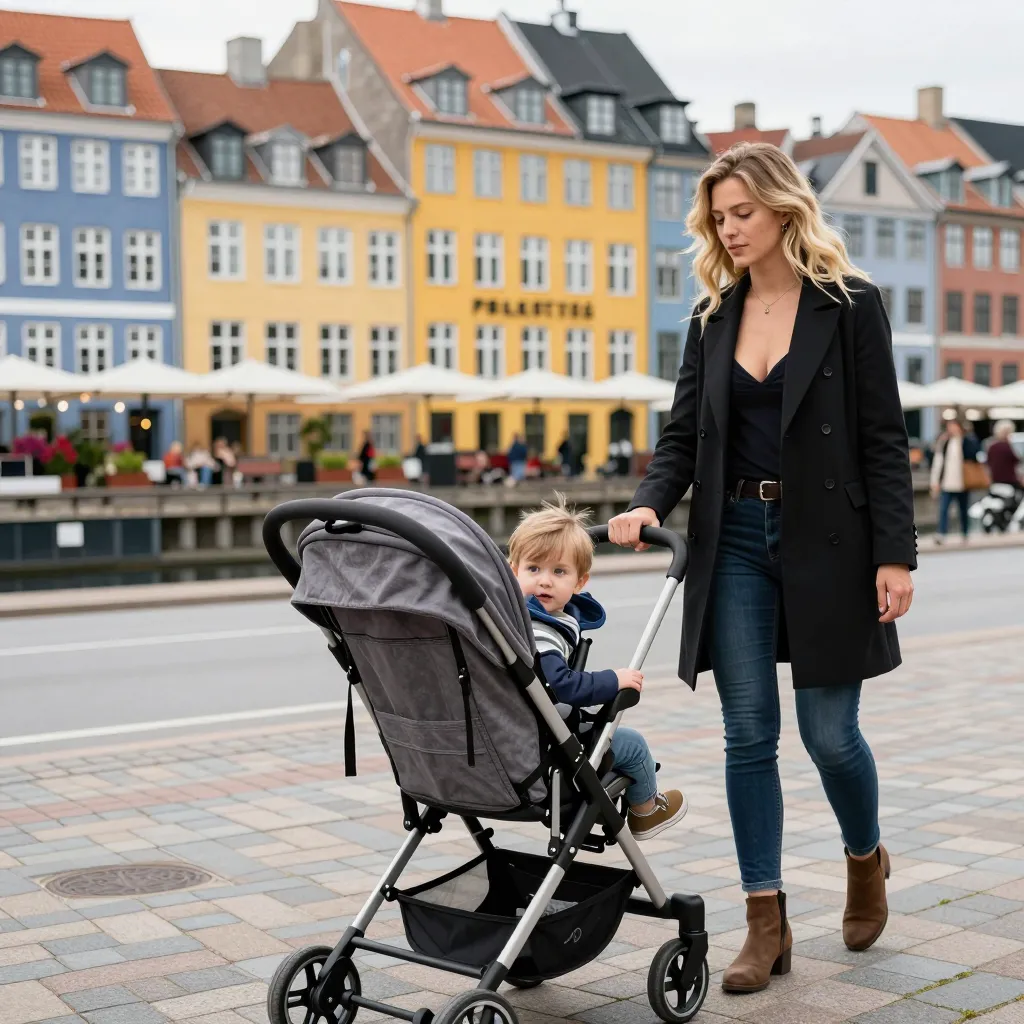
In July 2025, 24,144 Danish men were actively receiving parental benefits — a staggering 60% increase compared to just before Denmark's landmark 2022 parental leave reform. It wasn't a fluke or a one-off campaign. It was the result of a deliberate policy decision: give fathers weeks of leave they simply cannot transfer to the mother. Use it or lose it. The numbers moved. So did the culture.
🇩🇰 1. Why Denmark Is a Family Paradise
The word "welfare state" gets thrown around casually, but in Denmark it translates into very concrete numbers. The moment a child is born, an extraordinary support network activates: 52 weeks of paid parental leave, a legally guaranteed childcare spot from six months old, up to 75% of childcare costs covered by the state, and a quarterly child benefit that continues until the child turns 18.
The deeper philosophy, however, is what makes the Danish model distinctive: both parents are treated as equal caregiving partners. The 2022 reform enshrined this by carving out weeks that fathers simply cannot give away. It forced a cultural conversation — and the data shows the conversation is working.
To be fair, Denmark isn't the Nordic gold standard in every metric. Iceland leads the world with 20 weeks earmarked for each parent. Sweden and Norway give fathers more non-transferable weeks than Denmark. Even KVINFO, the Danish information center on gender equality, describes the 2022 reform as a "minimum implementation" of the EU directive. Denmark's commitment to personal freedom (a deeply embedded cultural value) meant the outcome was less radical than some advocates hoped.
Still, the ecosystem Denmark has built — combining leave, childcare, education, and cash benefits — makes it one of the most powerful family-support systems on earth. Let's break it down.
📋 2. The 52-Week System: Who Gets What?
Danish parental leave is governed by Barselsloven (the Maternity/Paternity Leave Act). The following structure applies to children born on or after 2 August 2022.
-
👩
Pre-birth pregnancy leave (Mother only) 4 weeksMothers can begin leave up to 4 weeks before the expected due date, receiving barselsdagpenge (maternity benefit).
-
👩
Mandatory maternity leave (Mother only) 2 weeksThe first 2 weeks after birth are mandatory for the mother. No exceptions.
-
👩
Earmarked maternity leave (Mother only) 8 weeksCannot be transferred to the father. If unused before the child turns one, these weeks are lost permanently.
-
👨
Mandatory paternity leave (Father only) 2 weeksMust be taken within the first 10 weeks after birth. For salaried employees, these 2 weeks are earmarked and non-transferable.
-
👨
Earmarked parental leave (Father only) 9 weeksThe game-changing addition from the 2022 reform. Cannot be transferred to the mother. Must be used before the child's first birthday — otherwise permanently forfeited.
-
👪
Transferable shared leave 13 weeks × 2 = 26 weeksEach parent holds 13 transferable weeks. Either parent can hand their 13 weeks to the other, allowing one parent to take an extended continuous stretch. The transfer must be registered on Borger.dk.
"The father's share of total parental leave roughly doubled after the reform, rising from approximately 12.5% to around 20%. The structural change didn't just shift leave patterns — it changed how couples negotiate caregiving from day one." – CBS (Copenhagen Business School) Research, 2024
Key: Earmarked Weeks Are Non-Negotiable
- The father's 9 earmarked weeks cannot be transferred to the mother under any circumstances.
- If not used before the child turns 1, they vanish — permanently. No grace period, no exception.
- This "use it or lose it" mechanism is the policy lever that moved Denmark's paternity uptake from 80% to 88% in under two years.
- Self-employed parents (selvstændig) operate under slightly different rules — fewer earmarked weeks and modified benefit conditions. Check with your A-kasse.
- Benefit eligibility requires employment on or before the first day of leave, plus at least 160 hours of work in the preceding 4 calendar months.
⚖️ 3. The 2022 EU Reform — Birth of the Earmarked Dad's 9 Weeks
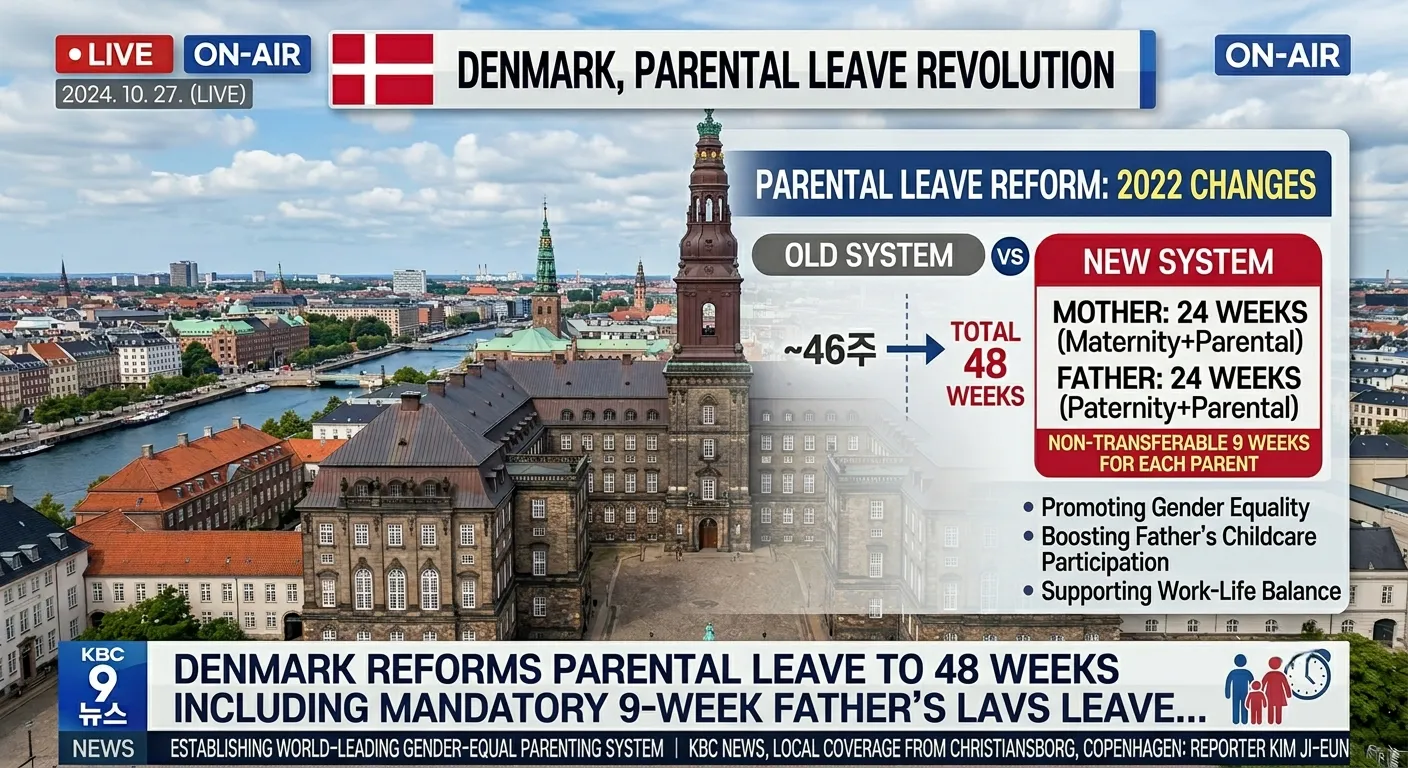
The story begins with the EU's Work-Life Balance Directive (2019/1158/EU), adopted in June 2019. Its core demand: every EU member state must give both parents at least two months of paid, earmarked leave — non-transferable between parents — by 2 August 2022.
On 26 October 2021, the Danish government and a broad parliamentary majority reached a political agreement. The bill passed on 3 March 2022, taking effect on 2 August 2022. The outcome: fathers gained 9 additional earmarked weeks — a historic shift in a country that had long championed "freedom to choose" over mandated parenting roles.
Before vs. After: Reform Comparison
| Item | Before (Pre-August 2022) | After (Current Rules) |
|---|---|---|
| Total paid leave | 52 weeks | 52 weeks (unchanged) |
| Father-only earmarked weeks | 2 weeks | 11 weeks (2 + 9) |
| Pre-birth pregnancy leave | 4 weeks | 4 weeks (unchanged) |
| Mother-only post-birth | 14 weeks (incl. 2 mandatory) | 10 weeks (2 mandatory + 8 earmarked) |
| Transferable shared weeks | Up to ~26 weeks per parent | 13 weeks per parent |
| LGBT+ equal treatment | Limited | Co-mother fully equal to father |
| Father uptake rate | ~80% | ~88% (2024 data) |
Critics remain vocal. KVINFO notes Denmark is still "the Nordic country with the least earmarked paternity leave." Iceland's 20 weeks per parent dwarfs Denmark's 11. But the reform's measurable cultural impact — men actually taking leave, normalizing caregiving — suggests that even modest structural change can shift behavior meaningfully.
🌈 4. 2024 Updates: LGBT+, Single Parents & Social Parents
From 1 January 2024, Denmark's parental leave rules expanded further to accommodate diverse family structures.
A gap remains: single parents still receive 4 fewer total weeks than two-parent families. Advocacy groups continue to push for full parity, and this remains an open political debate in Denmark.
🏠 5. Denmark's Childcare System: Vuggestue & Børnehave
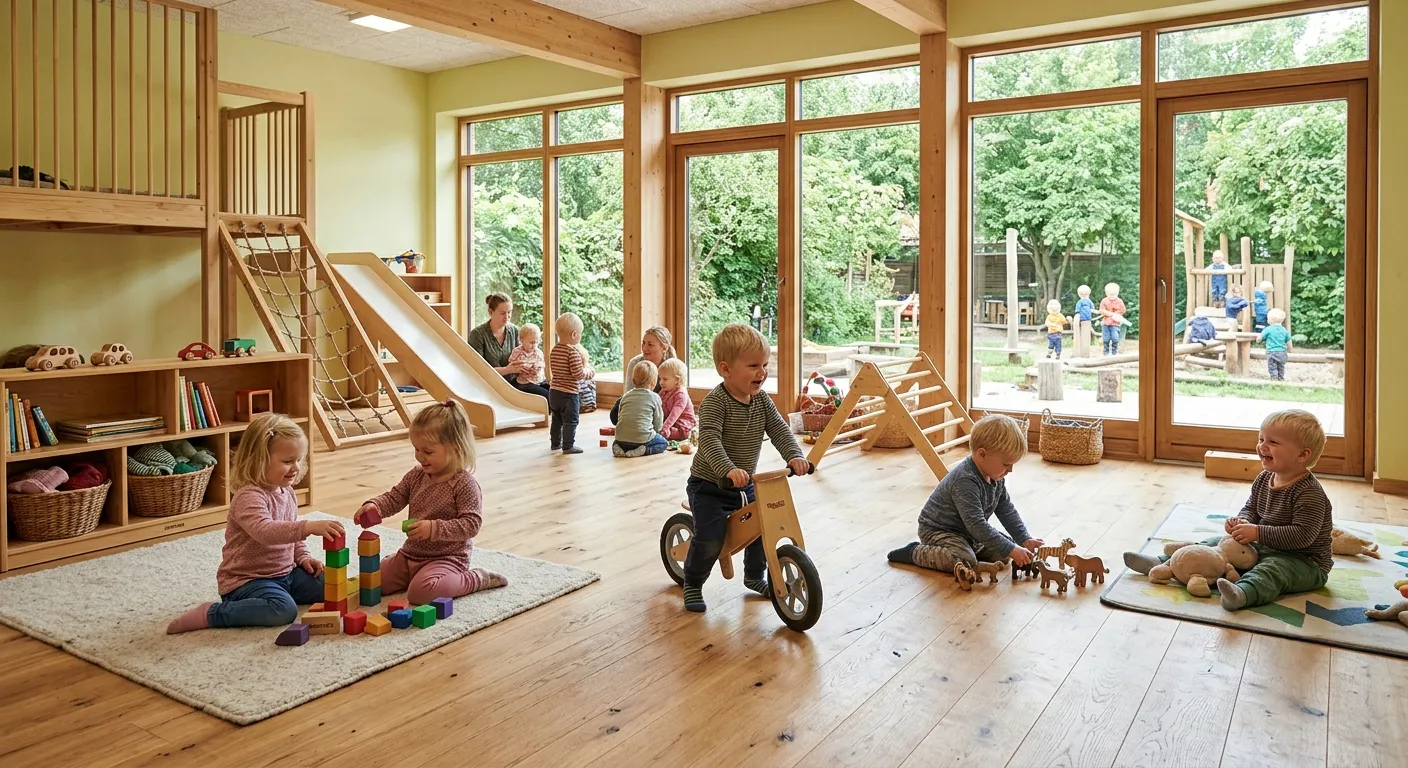
When parental leave ends, Denmark's childcare system takes over seamlessly. Every child has a legal right to a publicly subsidized childcare place from 26 weeks (roughly 6 months) old until they start primary school. This childcare guarantee was designed explicitly so there's no gap between parental leave ending and childcare beginning.
Hours: Part-time (25 hrs/week) or full-time (50 hrs/week)
Focus: Brain development, early socialization, outdoor play
Cost to parents: ~2,000–3,700 DKK/month after subsidy (~€270–€500)
Hours: Typically 6:30 AM – 5:00 PM on workdays
Focus: Play-based learning, creativity, autonomy — not academic drills
Cost to parents: ~1,500–2,500 DKK/month after subsidy
The numbers are staggering. In 2024, 81.6% of Danish 1–2 year-olds attended formal childcare for at least 25 hours per week — the highest rate in the entire EU. For ages 3–5, the figure hits 94.4%. Nearly every child in Denmark goes to daycare, not because parents are forced to, but because the system is affordable, guaranteed, and trusted.
"The Danish childcare philosophy is simple: play is not the opposite of learning — it IS learning. Children figure out social norms, emotional regulation, and self-identity through free play. That's why we do sandpit first, spelling later." – Copenhagen childcare educator (The Local DK interview)
The Childcare Guarantee: No Waiting Lists
All municipalities (kommuner) are legally obligated to assign a childcare place within 3–4 months of application. Parents cannot demand a specific facility, but any assigned facility meets national quality standards. In Copenhagen, you can even register before your child is born — and the city's Social Democratic mayoral candidate ran on a 2025 promise to make early childcare entirely free in the capital.
💰 6. Childcare Costs: The State Pays 75%
Denmark's childcare system is subsidized at the municipal level. The state covers up to 75% of the actual cost, capping what parents pay at roughly 25%. Low-income families, single parents, and families with multiple children receive additional support that can bring the net cost close to zero.
For context, a Copenhagen family earning DKK 600,000 annually (~€80,000) would pay perhaps DKK 2,800–3,200/month for a full-time nursery place — still a fraction of what families pay in London, New York, or Seoul. A 2003 "Free Choice Scheme" also allows parents to choose private daycare or even home-based care and receive the same public subsidy, though in practice only about 4% of Danish children use private facilities.
🎁 7. The Børnecheck: Denmark's Automatic Child Benefit
Beyond parental leave and subsidized childcare, Denmark deposits a quarterly payment directly into a parent's bank account from birth until the child turns 18. No application required — it's automatic for tax-resident parents. This is the Børne- og ungeydelsen (child and youth benefit), commonly called børnecheck.
| Child's Age | Quarterly Amount (2025) | Annual Total |
|---|---|---|
| Ages 0–2 | ~4,700–4,900 DKK | ~18,800–19,600 DKK (~€2,500–2,625) |
| Ages 3–6 | ~3,700–4,000 DKK | ~14,800–16,000 DKK |
| Ages 7–14 | ~2,900–3,100 DKK | ~11,600–12,400 DKK |
| Ages 15–17 | ~1,100–1,200 DKK | ~4,400–4,800 DKK |
| Single-parent supplement | +1,666 DKK/quarter (2025) | +6,664 DKK/year additional |
※ 1 DKK ≈ €0.134. Rates are adjusted annually — verify current amounts at borger.dk.
To receive the full benefit, parents generally need to have lived or worked in Denmark for at least 6 of the last 10 years. Newcomers earn entitlement progressively. The benefit is paid automatically to one parent's NemKonto each quarter. It cannot be claimed retroactively for missed quarters.
Beyond Childcare: Free Education Through University
- Primary through secondary school: fully free, including lunch, textbooks, and after-school care.
- Private tutoring is rare — Denmark's culture discourages academic pressure on children.
- University education: completely free of tuition — and students receive a monthly living allowance (SU, Statens Uddannelsesstøtte) of approximately DKK 6,000–7,000/month.
- Sports clubs and cultural activities are subsidized; low-income families receive additional help covering these costs.
📊 8. Denmark vs South Korea: A Data Comparison
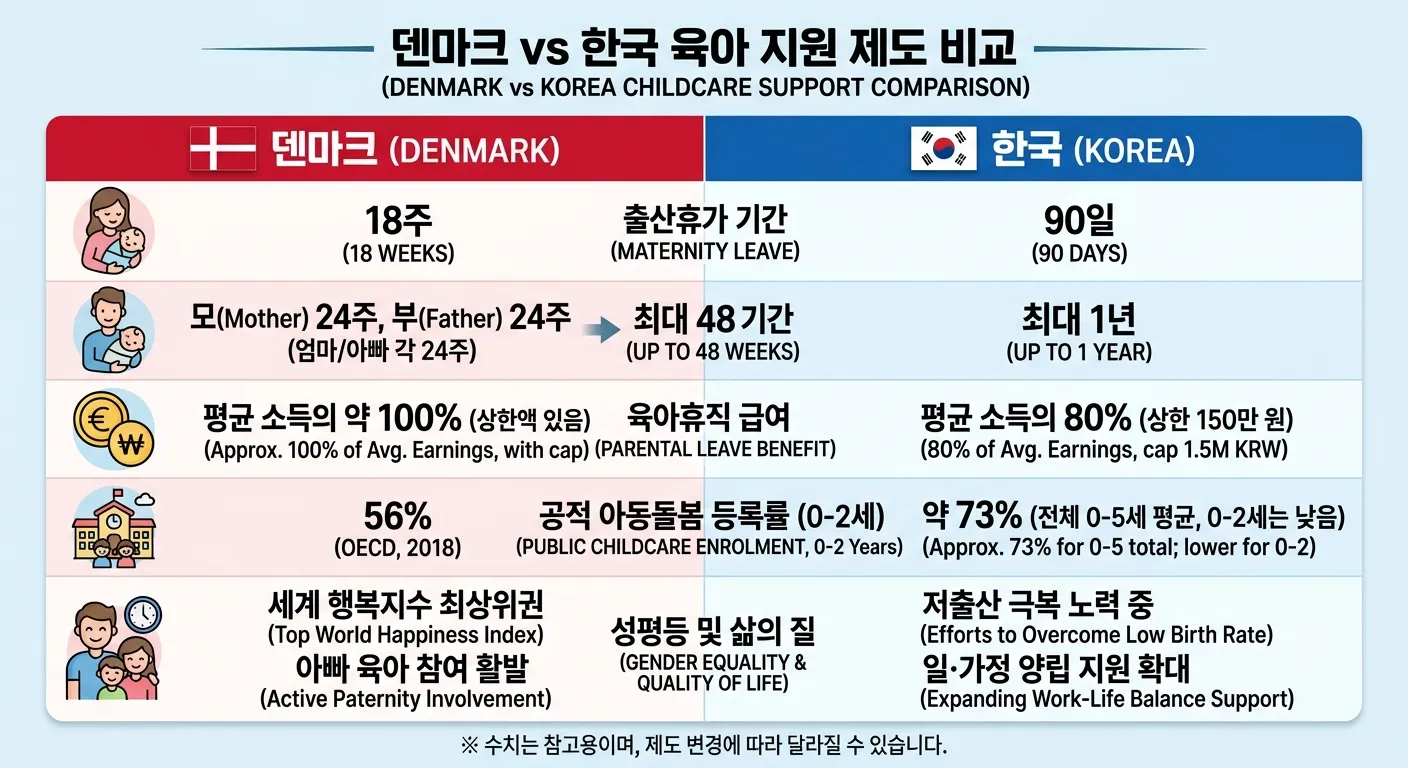
| Metric | 🇩🇰 Denmark | 🇰🇷 South Korea |
|---|---|---|
| Total paid parental leave | 52 weeks per child | Up to 52 weeks per parent (separate) |
| Earmarked paternity leave | 11 weeks (non-transferable) | No earmarked weeks; 10-day spousal leave |
| Paternity benefit rate | Max ~4,405 DKK/week | Max ~2.5M KRW/month (from 2025) |
| Father uptake rate | ~88% | ~28% (2023 statistics) |
| Childcare participation (ages 1–2) | 81.6% (EU No. 1) | ~38% (nursery + kindergarten) |
| State childcare subsidy | Up to 75% of real cost | Income-based tiered support |
| Legal childcare guarantee | From 6 months old, guaranteed by law | Not guaranteed (waiting lists common) |
| Child benefit | Ages 0–17, age-tapered, auto-paid | Under age 8, ~100,000 KRW/month |
| University tuition | Free + monthly living stipend (SU) | 4–7 million KRW/year or more |
| Total fertility rate (2024) | 1.44 (declining) | 0.75 (OECD lowest) |
Paternity Leave Uptake Comparison
One critical caveat: even Denmark isn't solving the birth rate problem. Its 2024 TFR of 1.44 falls well below the 2.1 replacement rate, and the OECD's 2026 Denmark survey explicitly calls for additional policies to reduce barriers to family formation. Money and leave policies help — but they don't fully explain why people choose or avoid having children.
💬 9. Real Voices: Reddit & Expat Community
Numbers tell one story. People living it tell another. Here are perspectives gathered from r/Denmark, r/expats, r/ScandinivianParenting, and international parenting forums.
"My husband took his 9 earmarked weeks and I was honestly surprised how natural it felt in the workplace. Nobody questioned it, nobody made jokes. He just... took care of our daughter, and came back. It normalized everything."
"The childcare guarantee here is insane in the best way. We moved to Copenhagen when my son was 4 months old, registered him immediately, and got a vuggestue place by the time he hit 6 months. Back in the US, we were on a 2-year waitlist. Here it's basically a right."
"The børnecheck just appears in my account every three months. I didn't have to do anything after the initial registration. In my home country, you'd fill out forms for months and still not be sure you'd get it. Here, it just works. That 'it just works' quality is honestly the part visitors don't understand about Denmark."
"To be fair, Denmark isn't perfect. Paternity leave here is still shorter than Sweden or Iceland. And even with the earmarked weeks, some men still feel subtle pressure not to take the full 9 weeks if they're in senior roles. Progress is real, but the culture is still changing — and it's changing faster than most people realize."
"I gave birth to my third child here. Back in Korea I'd been told it costs roughly 100 million won per child. Here, after parental leave, the monthly childcare bill was less than what I'd spent on one month of Korean hagwon (tutoring academy) fees. There are no hagwons. There's nothing to compete about in the first six years of life. The children just... play."
🔎 10. Conclusion & Key Takeaways
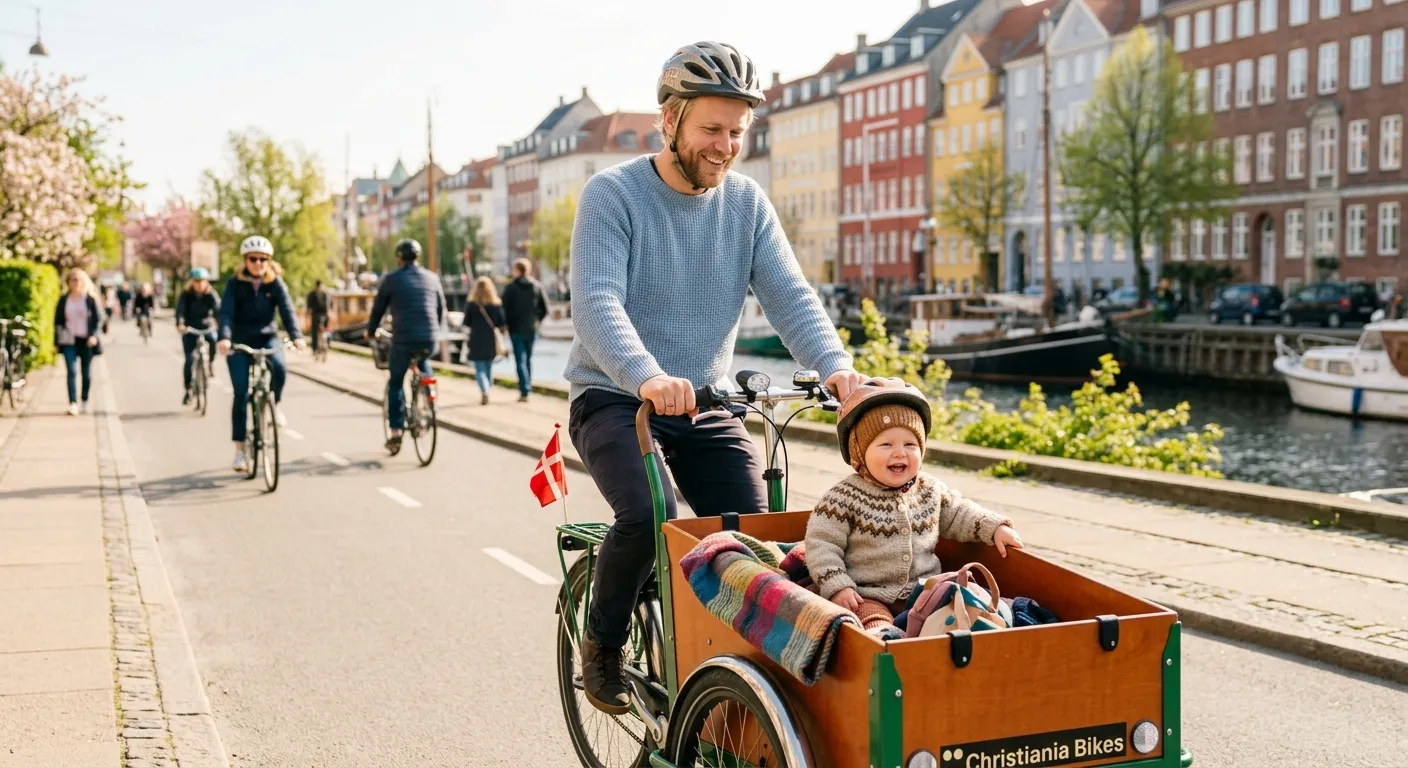
What can we actually take away from the Danish model?
① Structural mandates change behavior — faster than campaigns
Denmark didn't run ads telling dads to be more present. It made their 9 weeks non-transferable. The result: within two years, paternity uptake jumped 8 percentage points and is still rising. Policy architecture is more powerful than persuasion. Countries serious about closing the caregiving gap should design structures that make equal involvement the default, not the exception.
② Childcare quality + affordability + access — all three, simultaneously
Denmark's 94% childcare participation rate among 3–5 year-olds isn't an accident of culture. It's the product of three simultaneous investments: quality (trained educators, regulated standards), affordability (75% subsidy), and access (legal guarantee from 6 months). Remove any one of the three and the system breaks. Subsidized slots no one trusts don't get used. Trusted slots no one can afford don't get used either.
Denmark Family Policy: Full Summary
- 52 total weeks of paid parental leave per child, flexibly shared
- Father's 11 non-transferable weeks (2 at-birth + 9 earmarked) — use or lose
- Since 2024: up to 4 parents can share leave legally (world first)
- Twin bonus: 13 extra weeks for twins born after May 2024
- Childcare legally guaranteed from age 6 months
- State subsidizes up to 75% of real childcare costs; low-income families pay near zero
- Børnecheck: automatic quarterly child benefit from birth to age 17
- All education free through university, plus monthly student living allowance
- Father uptake: 88% and rising — structural reform, measurable cultural shift
None of this is free. Denmark's personal income tax rates rank among the world's highest, often exceeding 55% for higher earners. Danish families consciously trade a larger share of their paycheck for a system that handles much of the financial burden of raising children. Whether that trade-off makes sense is a deeply personal — and deeply political — question.
But the data on outcomes is hard to argue with. Denmark's children are among the world's happiest. Its women have among the highest labor market participation rates in Europe. Its men are, increasingly, equal caregivers. And its childcare participation rates — 81.6% for infants, 94% for preschoolers — are the highest in the EU.
Denmark hasn't solved the birth rate problem. No country has. But it has demonstrated that it's possible to raise children without it being financially catastrophic — and that policy, designed thoughtfully, can genuinely move culture. 🌱