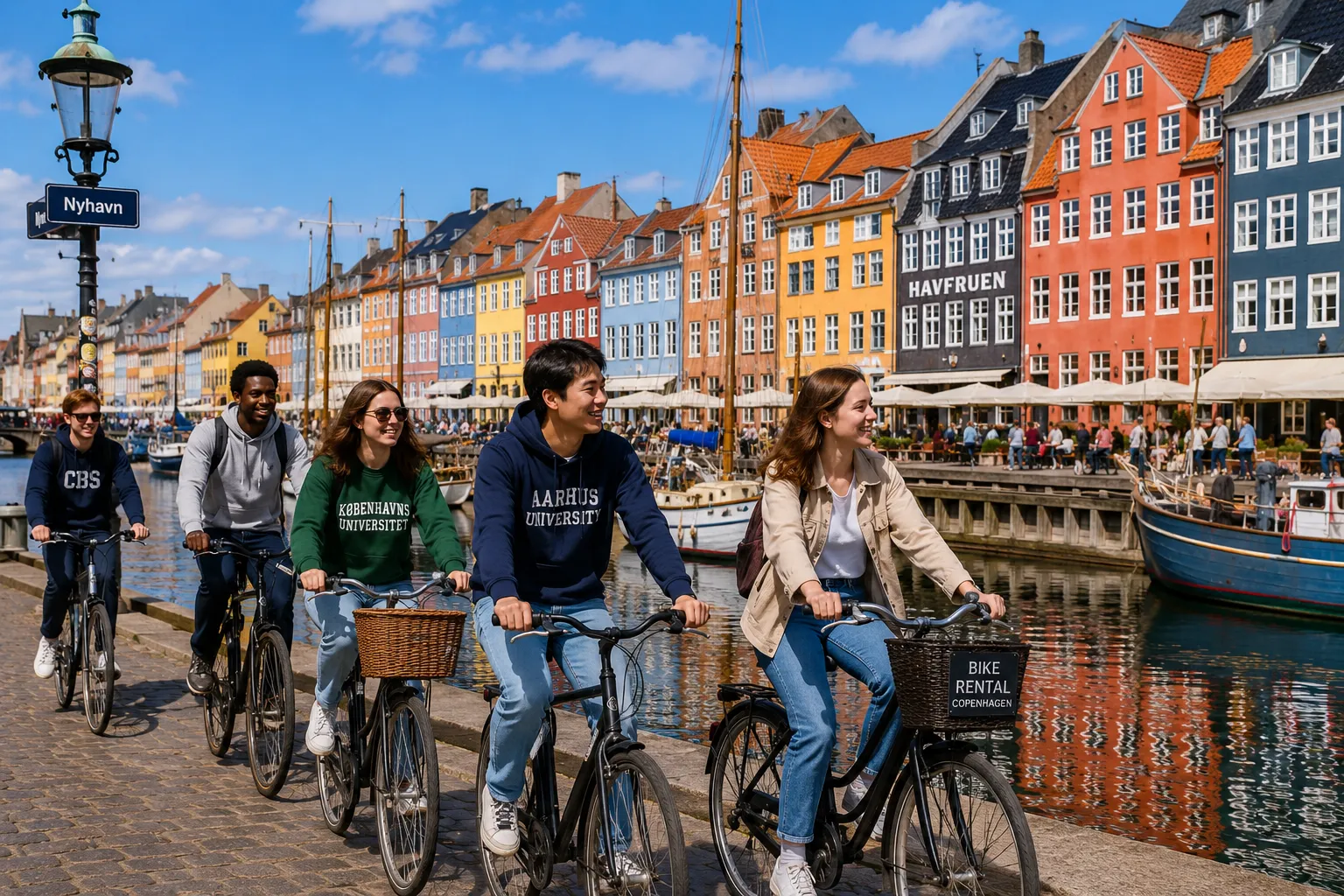
"World's happiest country." "Best place to live." The brochures make Denmark sound like a utopia. And in many ways, it is — but the reality of arriving as an international student is a lot more complicated than the glossy prospectus suggests. Copenhagen housing is a fierce battle. The cost of living will hit harder than you expect. And making real Danish friends takes patience that nobody warns you about. This guide skips the marketing and gives you what you actually need: the unfiltered, practical knowledge that students only learn after they've already made the expensive mistakes.
Your First Week: Navigating the Admin Maze
Your first week in Denmark is exciting and completely overwhelming in equal measure. Before you even finish unpacking, there's a queue of bureaucratic tasks waiting for you. The most important concept to understand is the CPR number (Civil Registration Number) — Denmark's equivalent of a national ID. Without it, you can't open a bank account, access the healthcare system, sign a mobile contract, or even get a library card. Everything flows from this one number.
Non-EU/EEA Students (including South Koreans) — Residence Permit Essentials
Students from outside the EU/EEA need a Study Residence Permit from SIRI (Danish Agency for International Recruitment and Integration). Apply at least 2–3 months before your arrival — processing can take up to 2 months. Financial self-sufficiency requirement: DKK 80,328/year (approx. DKK 6,694/month). Proof can be a bank statement, a blocked account, or a scholarship award letter. EU/EEA students are exempt from this financial requirement and simply need to register their residence.
The Housing War: Finding a Place to Live
Let's be honest: finding accommodation is consistently the most stressful part of studying in Denmark. Popular student dormitories (Kollegium) in Copenhagen and Aarhus have waiting lists of 6–12 months. "Finding a flat was harder than passing my exams" is not an exaggeration — it's a refrain you'll hear from students everywhere. But knowing the landscape dramatically improves your chances.
✅ Built-in community
✅ Near university, low deposit
⚠️ Shared kitchens/bathrooms common
✅ Split costs with housemates
✅ Great for meeting locals
⚠️ Variable landlord requirements
✅ International community
✅ Flexible contracts
⚠️ Less personal autonomy
✅ Completely independent
⚠️ Central Copenhagen easily DKK 12K+
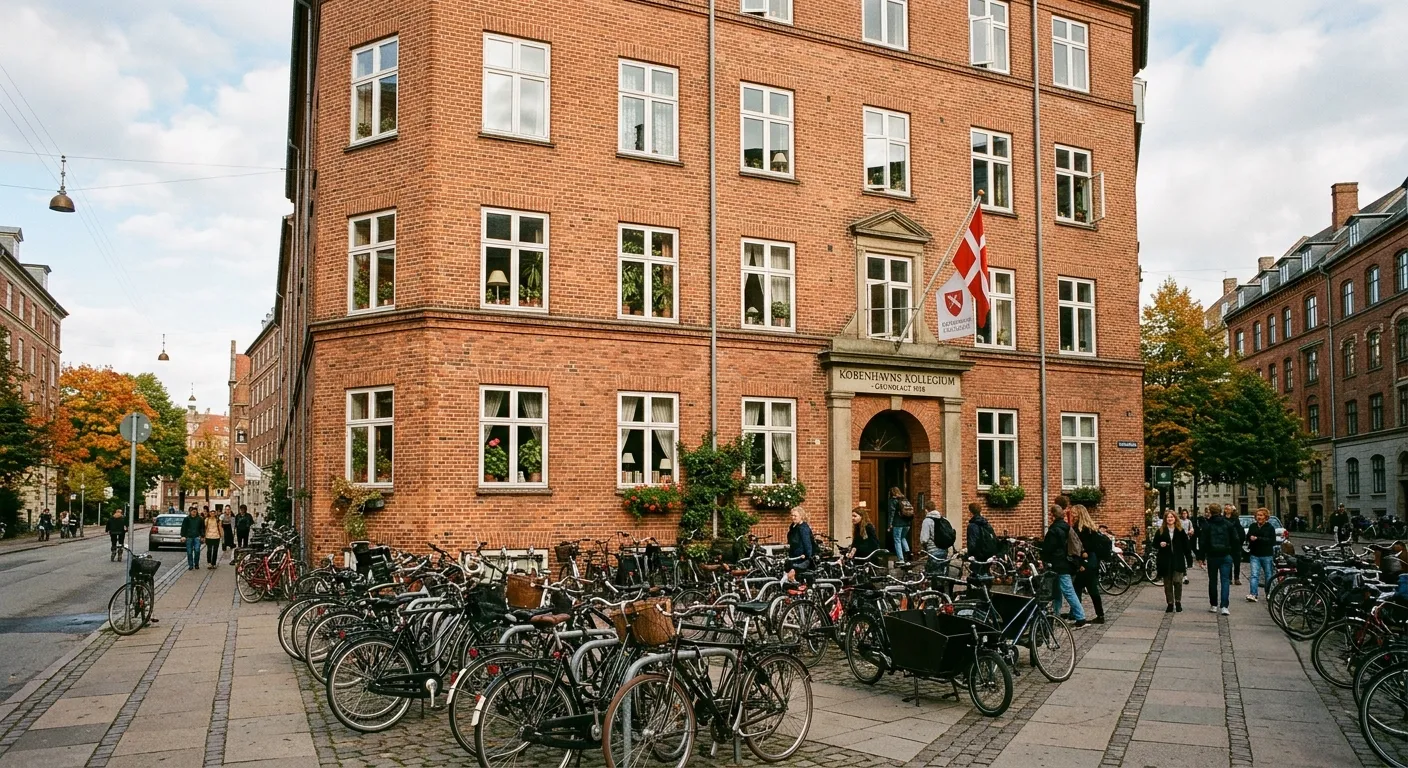
Housing Platforms & Practical Tips
Start searching at least 3–6 months before your semester starts. Peak competition is August–October (autumn semester) and January–February (spring semester).
- lejebolig.dk — Denmark's largest private rental platform. Paid subscription enables instant new-listing alerts.
- boligportal.dk — Second largest platform. Excellent for shared flats and room rentals.
- University International Office — Priority dormitory allocation for new international students. Apply immediately after admission.
- Facebook groups — Search "Rooms for Rent in Copenhagen", "Housing for International Students Denmark".
- hybel.dk — Shared housing specialist. Best Copenhagen selection.
- findroom.dk — Short-term rooms (1–6 months). Useful for initial temporary accommodation.
Rental Scam Alert — Never Transfer Money Without Viewing the Property
Scam listings exist in Denmark too: "pay the deposit from abroad without viewing and the room is yours." Never transfer money without physically verifying the property. Deposits (Depositum) are typically 3 months' rent — DKK 12,000–22,000 for a private room. Budget DKK 15,000–25,000 (~USD 2,200–3,700) for your first month including deposit, advance rent, and initial setup costs. Have this money ready before you arrive.
Real Living Costs & How to Budget
Denmark is one of the most expensive countries in Europe, and students are not exempt. Realistic monthly costs for international students: Copenhagen DKK 9,000–14,000 (approx. USD 1,300–2,000), Aarhus/Odense DKK 7,000–11,000 (USD 1,000–1,600). The key is to know the numbers upfront so you can plan rather than scramble.
| Category | 🏙 Copenhagen | 🌆 Aarhus | 🏘 Odense / Aalborg |
|---|---|---|---|
| Housing (dorm/shared) | DKK 5,500–9,000 | DKK 4,000–7,000 | DKK 3,000–5,500 |
| Food (self-catering) | DKK 1,500–2,500 | DKK 1,200–2,000 | DKK 1,000–1,800 |
| Transport | DKK 400–600 | DKK 200–400 | DKK 150–300 |
| Phone plan | DKK 100–250 | ||
| Social & leisure | DKK 500–1,000 | DKK 400–800 | DKK 300–600 |
| Books & miscellaneous | DKK 500–1,000 | ||
| Monthly total | DKK 9,000–14,000 | DKK 7,000–11,000 | DKK 6,000–9,000 |
Copenhagen DKK 11,000/month — Budget Breakdown
"Yes, Copenhagen is expensive. But if you cycle everywhere, cook at home, and split meals with friends — it's very manageable. The critical thing is to have enough buffer for the first 3 months." – DIS Copenhagen exchange graduate
Beating the Food Costs: Grocery Survival Guide 🍞
Eating out in Denmark is expensive by any standard. A café Americano costs DKK 40–55, a basic lunch DKK 100–160. But if you cook for yourself, you can comfortably feed yourself for DKK 50–80 per day. Here are the supermarkets and strategies that Danish students and international students actually use.
Cycling & Transport: Moving Like a Dane
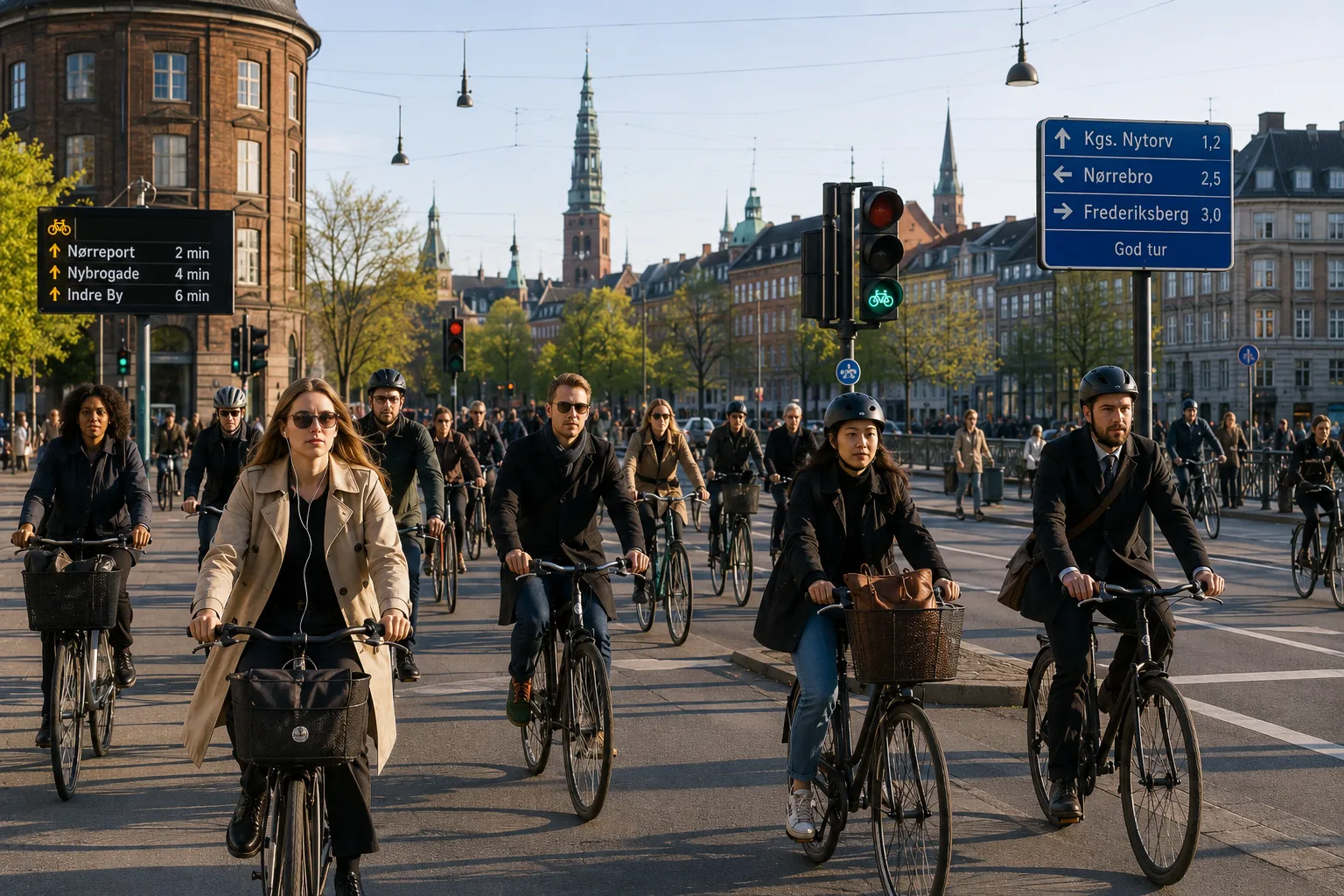
Denmark — especially Copenhagen — is one of the world's most cycling-friendly cities. Around 62% of all commutes happen by bike, and the dedicated cycling infrastructure is genuinely world-class. For international students, the bicycle is more than a cost-saving tool: it's an entry point into Danish culture itself.
| Factor | Used Bicycle | Monthly Transit Pass | E-Bike |
|---|---|---|---|
| Upfront cost | DKK 800–1,800 | None | DKK 3,000–8,000+ |
| Monthly running cost | DKK 30–80 (maintenance) | DKK 400–600 (youth discount u25) | DKK 80–150 (charging) |
| Convenience | Any time, anywhere instantly | Weather-proof, wide coverage | Fast, effortless |
| 1-year total (Copenhagen) | DKK 1,300–2,500 | DKK 4,800–7,200 | DKK 4,000–9,800 |
| Student rating | ⭐⭐⭐⭐⭐ | ⭐⭐⭐⭐ | ⭐⭐⭐ |
Bicycle Theft Is Real — Two Locks, Always
Around 20,000 bicycles are stolen in Copenhagen every year. Two locks (U-lock + chain lock combination) is the standard, not an overreaction. Lights are legally mandatory — riding without them can result in a DKK 700 fine. Register your bike immediately at politi.dk or cykelregistrering.dk to significantly improve your chances of recovery if it's stolen. Cheap bikes attract thieves just as much as expensive ones.
Working Legally & Understanding Danish Taxes 💼
Many students work part-time to help cover Denmark's high costs. Non-EU/EEA students (including South Koreans) are permitted to work a maximum of 20 hours per week during term time, with unlimited hours during official holidays. EU/EEA students have no working-hour restrictions. Danish part-time wages are set by collective agreements (Overenskomst), meaning most roles pay DKK 130–165/hour — 20 hours a week generates DKK 10,400–13,200/month before tax.
| Category | Non-EU/EEA (e.g. S. Korea) | EU/EEA Students |
|---|---|---|
| Term-time hours | Max 20 hours/week | Unlimited |
| Holiday working | Full-time permitted | Full-time permitted |
| Avg. hourly rate (2025–2026) | DKK 130–165 (varies by sector) | |
| Monthly gross (20h × 4 weeks) | DKK 10,400–13,200 | |
| Income tax rate | ~30–40% (reduced with tax card + personal allowance) | |
Where to Find Work & Which Platforms to Use
- Cafés & restaurants — English speakers are commonly hired, especially in tourist-facing areas of Copenhagen.
- Supermarkets (Netto, Rema 1000, Lidl) — Active student part-time hiring. Basic Danish helps but isn't always required.
- University campus — Library assistant, research assistant (RA), administrative roles. Student-friendly hours and environment.
- Wolt / Just Eat delivery — Cycling delivery. Verify permit conditions and tax obligations before starting.
- Platforms: Studenterjob.dk, Jobindex.dk, Graduateland, LinkedIn (Danish location filter).
Get Your Tax Card (Skattekort) Before You Start Working
This is non-negotiable: apply for your tax card at SKAT (Danish Tax Agency, skat.dk) via MitID before beginning any paid work. Without one, you'll be taxed at the maximum rate of approximately 55%. With a tax card and a student personal allowance (Personfradrag), your effective rate drops dramatically. File your annual tax return (årsopgørelse) carefully — most students end up with a tax refund, which is treated as an annual bonus by the student community. Set a reminder for February each year.
Free Healthcare — How to Use It Properly 🏥
One of the genuine advantages of studying in Denmark is access to the free public healthcare system. Once you have your CPR number and yellow health card (Sundhedskort), you can access GP consultations, public hospital treatment, and emergency care at zero cost. The exceptions are dental treatment and non-prescription medications, which are paid out of pocket.
Denmark's system works through GP gatekeeping: all specialist referrals go through your assigned GP, not direct self-referral as in some other countries. Non-urgent GP appointments typically have a 1–2 week wait, so book the moment symptoms appear rather than waiting to see if they improve.
- Medical emergency line: 1813 — For urgent non-life-threatening situations. Primarily in Danish.
- A&E (Skadestuen) — For fractures, injuries requiring immediate attention. Walk-in.
- 112 — European emergency number for life-threatening situations only.
Supplemental insurance through Sygeforsikringen "danmark" (Danish health insurance association) is highly recommended — DKK 50–150/month buys additional dental cover, physiotherapy, and travel insurance. The most popular choice among international students in Denmark.
Essential Apps & Digital Survival Tools 📱
Denmark is one of the most digitally advanced societies in the world. Banking, medical appointments, public transport, and government services are all handled through apps. Install these in your first week — without them, daily life is genuinely harder than it needs to be.
12 Danish Phrases That Will Actually Help You 🗣
English works everywhere in Denmark — Danish EF English Proficiency scores consistently rank in the world's top 2–3. You will never struggle to communicate in English at shops, universities, or with healthcare providers. But knowing even a handful of Danish phrases generates genuine warmth from locals and accelerates the friendship-building process in ways that English alone simply cannot.
Free Danish Courses — Don't Leave This on the Table
UCPH, Aarhus University, DTU, and CBS all offer free Danish language introduction courses for international students. Municipal authorities (Kommune) also provide free Danish classes (Danskuddannelse) for foreign nationals. Even if you never need to use Danish formally, learning the basics visibly delights Danish people and measurably accelerates the friendship-building process. It signals genuine respect for the culture — and Danes notice that.
Community Reactions & Student Stories
These are real experiences shared across Reddit (r/denmark, r/studyabroad, r/expats) and international student forums — curated and paraphrased to reflect the most commonly recurring themes.
The Pre-Departure Checklist ✅
Go through every item below before you leave. Missing even one of these can make your first weeks significantly harder than they need to be.
📋 Before You Leave (Home Country)
- Study Residence Permit applied for and received (non-EU/EEA students)
- Confirmed permanent address secured (required for CPR registration)
- Financial proof prepared (DKK 80,328+ balance statement or scholarship letter)
- Asian/Korean pantry staples packed (gochujang, doenjang, ramyeon — much cheaper from home)
- Initial settlement budget of DKK 20,000–30,000 ready (deposit + setup + living buffer)
- Travel insurance arranged (covers medical gap before CPR/health card arrives)
- University international orientation date confirmed and registered
- Kollegium (dormitory) application submitted — the moment you receive your admission offer
📋 First Week in Denmark
- Visit Borgerservice → register address + apply for CPR number
- Open bank account + designate NemKonto
- Activate MitID
- Set up MobilePay
- Buy a used bicycle (DBA.dk or university notice boards)
- Buy a U-lock + register the bicycle
- Get a SIM card (Hi3G, Telia, or YouSee)
- Attend international orientation + sign up for buddy programme
- Consider Sygeforsikringen "danmark" supplemental insurance
- Install: MitID, MobilePay, Rejseplanen, Too Good To Go, Sundhed.dk, PostNord
Final Thought — Denmark Gets Better the Longer You're There
The first few months will be hard. Housing stress, admin complexity, language moments, brutal winters, and prices that make you wince. But Denmark is a country that rewards the patient. Once you understand the systems, it's genuinely one of the easiest countries in the world to live in. Once you break through with Danish friends, those friendships last. And the experience itself — of learning to navigate an entirely different culture — will change how you see the world. God tur! (Safe travels!)
Hygge Culture & Social Life — Making Danish Friends 🕯
You'll encounter the word hygge (pronounced roughly "hoo-ga") constantly in Denmark. It's inadequately translated as "cosiness" — in practice, it describes the entire philosophy of comfortable togetherness: soft lighting, warm drinks, a small group of people you care about, unhurried conversation. This is the secret to Denmark's consistently high happiness rankings. And understanding it is the key to unlocking social life here.
But here's what confuses most international students: why do these supposedly happy, hygge-loving Danes seem so cold at first? The answer lies in Scandinavian cultural values around personal space and privacy. Most Danes already have close-knit friend groups formed during childhood and adolescence, and they don't actively seek to expand them with strangers. It's not rejection — it's a different social architecture. The crucial insight is that shared activity — not forced small talk — is how you actually get in.
🌑 Preparing for Winter Blues
Danish winters are genuinely challenging. From December to February, daylight lasts less than 7 hours, the sky is frequently overcast, and wind-driven rain is a constant companion. Many international students experience Seasonal Affective Disorder (SAD) in their first Danish winter. Danes know this and compensate deliberately — more candles, more indoor gatherings, more gløgg (Danish mulled wine). Take vitamin D supplements daily, maintain regular indoor exercise, and actively keep your social connections alive through winter. This is exactly the period when hygge becomes a survival strategy, not just an aesthetic choice.