If you want to wear nothing but a bralette this summer but keep worrying about one specific thing — or if 10km into a run your top starts chafing badly enough to make you wince — this guide is exactly what you need. From nipple covers for women to nipple patches for men, we dug through types, proper application, and the side effects people actually run into, based on real community reviews. If you've searched around and found dozens of brands with no idea where to start, we've pulled it all together here: pros and cons by type, price ranges, real side-effect cases, and exactly how to apply and remove them.
What Exactly Is a Nipple Patch? One Item, Many Names 🤔
Nipple patch, nipple band, nipple cover, pasties — the names vary, but they all point to the same object. Interestingly, most of these Korean names grew organically within the domestic market, while in English-speaking countries the terms "nipple cover" and "pasties" are more standard.
Naming, clarified: Whatever you call it — nipple patch, nipple band, nipple cover, or pasties — it's the same category of product, just marketed under different names by different brands.
The function is simple: it hides nipple show-through under thin or light-colored clothing, and it protects against chafing (and in severe cases, bleeding) caused by repeated friction between skin and fabric during exercise or long activity. In other words, one use case is styling, the other is functional protection — and in practice, the two overlap constantly. On a braless day out, the styling purpose dominates; the same product worn on a long run serves a purely functional purpose.
Here's the interesting part: even though this is widely perceived as a women-only item, it has a steady and growing base of male users too — runners in particular, along with men who favor thin summer clothing. Men's nipple patch products first appeared on the market around May 2012, and today they're sold everywhere from Korean discount chains like Daiso to beauty retailers like Olive Young and fashion platforms like Musinsa. They've been a fixture on convenience store shelves for years now.
The reasons people use them are more varied than you'd expect: some want to skip the discomfort of a bra entirely, some frequently wear off-the-shoulder or sleeveless tops, some just wear a plain white tee all summer, and some are marathoners and runners dealing with prolonged, repetitive friction. What ties it all together is a simple need — making the sensitive contact point between skin and fabric more comfortable.
Why write about this now? Search interest for this topic spikes every summer, and as the "no-bra" trend and bralette-forward styling have become normalized everyday looks in recent years, demand for nipple covers for women has climbed noticeably. At the same time, as the running and marathon population has grown, search interest in nipple patches for men has risen right alongside it. Major domestic marathon registrations have been selling out earlier each year, and as running-crew culture has spread, nipple patches now show up on nearly every "running essentials" list.
Distribution has broadened too. What used to be a niche item found mostly in adult shops or a handful of online stores is now a standard category at mainstream health & beauty retailers, which has lowered the barrier to entry considerably. Beauty YouTubers and influencers increasingly feature nipple patches in their "summer must-haves" content, and that exposure feeds back into rising search volume — a self-reinforcing cycle.
Zooming out further, the word "pasties" itself has roots in variety-show and stage-performance costuming in the West, long used as a fashion and performance accessory. Meanwhile, in running culture there's a distinct term — "runner's nipple" — reflecting how long-distance chafing has been a recognized issue in sports medicine circles for decades. So a nipple patch isn't some overnight Korean trend; it's the convergence of two genuinely separate histories — fashion and sport — that happen to have landed on the same solution.
To sum up: nipple patches are no longer confined to one gender or one season. They're a fashion accessory, a sports consumable, and sometimes a piece of skin protection gear, all at once — which is worth keeping in mind as we walk through how to choose one.
"Chafing between skin and fabric sounds trivial until you've run for over two hours — then you know it's a bigger threat to finishing than you'd ever guess." – a recurring sentiment in running communities
The Complete Guide to Nipple Covers for Women 👙
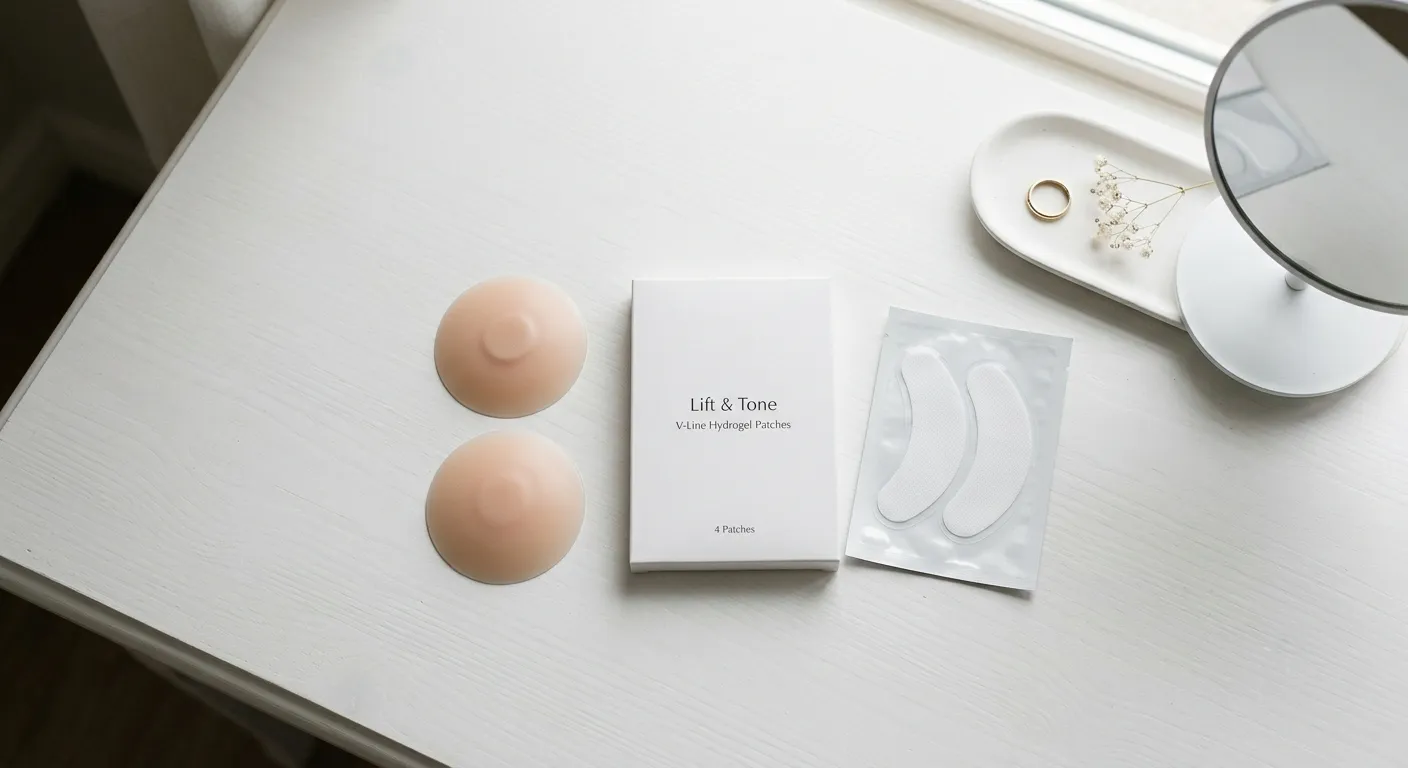
Women's nipple patches generally fall into three categories: inexpensive, thin "non-woven/paper" types; stretchy, reusable "silicone" types; and volume-enhancing "lifting" types.
The selection criteria are simpler than they seem. If you'll wear them for long stretches, prioritize breathability and gentle ingredients. If you're active, prioritize stretch and lasting adhesion. If it's for a special occasion where you want a photoshoot-ready look, prioritize the lifting function. Size matters more than people expect, too — too small and it lifts easily during movement, too large and it can show through clothing, so a diameter around 3.5–4cm tends to work well for most people. If it's your first purchase, start with a smaller pack or mixed sizes to test how your skin reacts before committing to a bulk order.
Measuring your size is straightforward: roughly gauge the diameter from the center of the nipple to the widest point, then choose a size with a bit of extra margin. Too tight and the edges can fold and lift during movement; too large and the outline may show through clothing. If you often wear close-fitting bralettes or knits, a thinner design with a slim edge will look more natural.

Recently, products backed by well-known influencers or celebrities have made headlines too — from brands famous as a makeup artist's go-to recommendation, to celebrity-developed products that sold out shortly after launch. The category has effectively become its own corner of the beauty market. Some brands have even released lower-irritation lines specifically so teenagers can use them comfortably, which shows how far the segmentation has gone.
It helps to know a bit about where to shop, too. Discount chains and convenience stores are accessible and cheap for when you need something in a pinch, but the options are limited. Beauty and fashion platforms let you compare brand reviews and ratings, which is especially useful for first-time buyers. If you're buying in bulk for regular use, marketplaces and group-buy deals for 50+ count packs tend to offer much better per-unit value than buying individually.
A few specific standouts worth knowing: one premium line, developed with direct input from a celebrity, covers a wide range of body types with a generous ~40mm diameter, and a renewed version incorporating customer feedback has since become available on major fashion platforms. A low-irritation line aimed at all ages, including teens, stands out for its slim edge design and two color options (skin and tan) to match different skin tones. And for those wanting more volume, a 3D-lift design with bands on both sides can be worn inward for a subtle lift effect — a favorite for weddings, parties, and swimwear.
Price and brand name matter less than how your own skin responds. Even a product with glowing reviews may not suit your skin type or nipple shape, so test with a small pack first, then move to bulk buying once you've found something that agrees with you.
A quick note on scenarios, too. For all-day wear on a work or date day, a thin, breathable silicone type is usually the safest bet. For special occasions in off-shoulder or halter tops, the lifting type covers both volume and coverage at once. For low-friction sweaty activities like yoga or pilates, a cheaper non-woven type is often more than enough — no need to burn through your premium stock. Keeping two or three types on hand for different situations is the most practical approach.
| Type | Price Range | Reusable | Pros | Cons |
|---|---|---|---|---|
| Non-woven / Paper | $1–$4 | Single-use | Cheap and hygienic | Weak against sweat, can irritate |
| Silicone | $8–$15 | Reusable (with washing) | Good fit, better long-term value | Higher upfront cost |
| Lifting Type | $11–$19 | Varies (usually 3–6 uses) | Volume and lift effect | Pricier, adds some bulk |
Key Takeaway
When choosing nipple covers for women, ask yourself first: how long will I wear it, and how active will I be? The right answer changes completely depending on whether it's for styling or for function.
Why Nipple Patches for Men Are More Practical Than You'd Think 🏃♂️
It might sound unusual for a man to use a nipple patch, but there are actually three distinct, well-established reasons.
First, there's the "summer etiquette" role. Thin or white clothing in summer can create an unwanted silhouette, and a single patch cleans that up instantly. This has long been a familiar tool on Korean broadcast TV too, where producers have occasionally used skin-toned tape or patches to obscure a male cast member's outline on camera.

Second — and by far the biggest use case — is running and marathon training. For anyone running longer than about two hours, regardless of gender, repeated friction between the nipple and shirt fabric can cause raw skin and, in severe cases, actual bleeding. Running forums regularly treat nipple patches as an unofficial requirement for anyone training for a half or full marathon. Petroleum jelly is one alternative for reducing friction, but in hot, sweaty conditions many runners find that patches are simply more convenient and longer-lasting.
Third is a practical choice for men with gynecomastia or otherwise sensitive chest tissue. During weight loss or strength training, that area can become temporarily more sensitive, and a patch can offer real reassurance as well as physical protection.
Men's nipple patches trace back to around May 2012, when the first dedicated product entered the market to a fairly lukewarm reception — plenty of "why would a guy need this?" reactions at the time. But as the running population exploded and thin summer clothing became more common, the category matured into something sports retailers now stock as a standard line. More recently, at least one online retailer launched a private-label men's product specifically engineered to minimize contact irritation, which found a strong following among runners and marathoners.
Prices tend to run lower than women's products — bulk packs of 50+ typically sell for around $5–$10. Brand loyalty runs surprisingly deep among male runners, with active discussion around which brand causes the least irritation and holds up best.
| Use Case | Recommended Type | What to Check |
|---|---|---|
| Summer etiquette | Low-irritation non-woven | Thin, skin-tone matched color |
| Running / marathon | Waterproof silicone | Sweat resistance, long-lasting adhesion |
| Gynecomastia care | Wide-coverage type | Larger diameter, gentle adhesive |
Note that men's products often run slightly larger (around 4–4.5cm) than women's, since a wider area needs coverage for a natural look — worth checking the actual measurements on the product page before buying.
Running crews and marathon clubs often share patches around before race day, and it's common for experienced runners to hand a first-timer a patch before their first half or full marathon — it's practically treated as the fourth essential alongside shoes, a running watch, and energy gels. The sight of runners quickly applying patches near the starting line on race morning is a familiar scene every marathon season.
There's a styling angle too. If you often wear white or pastel tones, match the patch color to your skin tone as closely as possible — a dark brown or black patch can actually stand out more under thin white fabric. If you wear close-fitting summer shirts, look for a thin, smooth-edged patch so the border doesn't show through the fabric.
Real User Reviews: What the Community Is Saying 💬
When you look at what actual users say, opinions on nipple patches split fairly cleanly into two camps.
In running communities, the dominant sentiment is "you simply can't run without one." Some runners even rank it above their shoes in priority. Anyone who's run long distances tends to only truly appreciate the need for a patch after experiencing that chafing pain firsthand. Threads asking whether a regular bandage will work, or which brand hurts less, come up constantly in running forums — a sign that nipple patches have shifted from "nice to have" to "standard gear" in that community. Beginner runners asking whether it's fine to grab "whatever's on the shelf at the drugstore" often get thoughtful, detailed answers from more experienced runners.
– summary of sentiment across running forumsBrowsing running community boards, you'll find everything from wry complaints like "even the upkeep cost on something this small adds up" to money-saving tips like "a $1.50 pack lasts me almost a year." Some runners report specific fabrics causing worse chafing than others, and some with gynecomastia say they'd have given up running entirely without patches. A few mention improvising with a regular bandage in a pinch, but the general consensus still lands on dedicated patches being far more comfortable.
On the flip side, side-effect reports aren't rare either. People with sensitive skin around the nipple often report itching or redness from the adhesive. Some with protruding nipples say the constant contact with the patch edge made the area even more sensitive over time, and others with naturally asymmetric nipples worried that repeated application and removal on one side had accumulated irritation.
– summary of anonymous workplace-community reviewsRecurring questions in these communities tend to follow a pattern:
- "Is it okay to just buy any brand?" — a common first-timer question, usually answered with "start cheap and see how your skin reacts."
- "What can I use if I don't have one?" — medical tape or a bandage works as a stopgap, but most agree it doesn't match the adhesion or stretch of a dedicated product.
- "Which brand offers the best value?" — bulk packs consistently come up as the better per-unit deal, alongside strong brand loyalty in the comments.
Fashion and beauty media have taken notice of this category as well. One fashion magazine highlighted volume-boosting lifting patches, a celebrity-developed product that made headlines, and a low-irritation line aimed at teens — calling nipple patches an essential summer beauty item. The fact that new-product roundups appear every summer season is itself a signal of how consistent demand in this category has become.
The bottom line: satisfaction tends to run high overall, but the community consistently agrees that finding the right product for your own skin takes a bit of trial and error. If your first product caused irritation, the common advice is to try a different brand with a different adhesive formulation rather than giving up on patches altogether.
Side Effects and How to Use Them Safely ⚠️
Because a nipple patch is fundamentally an adhesive product in direct contact with skin, side effects can occur regardless of how gentle the marketing claims to be. Here's what to watch for.
The nipple area and surrounding skin have a thinner outer layer and a higher concentration of nerve endings compared to areas like the face or inner arm, making it one of the more sensitive spots on the body. That means it reacts more quickly to external irritants like adhesives or friction — sometimes triggering issues that the same ingredient wouldn't cause anywhere else. Keeping this in mind helps explain why so many products emphasize low-irritation, medical-grade adhesives.
① Contact dermatitis. Adhesive ingredients can irritate the skin, causing itching, redness, or a stinging sensation. This is especially common with single-use products, and repeated inflammation in the same spot can lead to pigmentation — the skin darkening over time — which is worth knowing about in advance.
② Patches lifting or ballooning. In summer heat, or whenever moisture builds up in the area, non-waterproof patches will gradually puff up in the center over time. The problem is that this actually makes the area look more prominent than before — the opposite of the intended effect. Temperature changes or psychological arousal can cause similar lifting, so it helps to develop a habit of gently pressing the patch to check its seal periodically during activity.
③ Skin damage during removal. Ripping off a strong-adhesive patch too quickly can chafe or injure the skin. It's safer to dampen it slightly with lukewarm water, or apply a small amount of oil to loosen the adhesive, then remove it slowly.
Digging a bit deeper into why irritation recurs: the adhesive itself is, fundamentally, a foreign substance to your skin. It might be fine for a day or two, but repeated application and removal on the same spot micro-damages the outer skin layer, and continued use compounds the inflammatory response. Because nipple-area skin is thinner and more nerve-dense than most areas, it's inherently more vulnerable to this kind of irritation. Pigmentation works the same way — melanin accumulates at repeatedly inflamed sites, darkening the skin over time. It's usually temporary, but it can take a while to fade back if the irritation isn't addressed.
People often ask how nipple patches compare to petroleum jelly or a plain bandage — the right answer depends on the situation.
| Method | Durability | Convenience | Best For |
|---|---|---|---|
| Nipple patch | High | Apply and forget | Long activities, dual styling/function use |
| Petroleum jelly | Moderate (sweats off) | Needs reapplying, a bit messier | Emergency backup when no patch is available |
| Regular bandage | Low (shifts easily) | Easy to find anywhere | Short-term, one-off stopgap |
If irritation or itching has already started, don't panic — here's the sequence to follow. Remove the patch immediately, gently rinse the area with lukewarm water to clear any remaining adhesive, then apply a thin layer of a fragrance-free, gentle moisturizer to calm the skin and let the area rest completely for at least a day or two. A cold compress can help with swelling or a burning sensation, but avoid holding ice directly on the skin for long periods — wrap it in a thin cloth and use it briefly.
⚠️ Stop use immediately if:
You notice severe redness, discharge, or pain at the application site — remove the patch right away and stop using it. If symptoms don't improve within a few days, see a dermatologist. This article is for general informational purposes only and does not substitute for medical diagnosis or treatment.
Here's a safety checklist to keep in mind:
- Make sure skin is completely dry before applying: leftover moisture or oil weakens adhesion and increases irritation.
- Avoid repeated use on the same spot: give your skin a rest day after a day of wear.
- Sensitive skin should check for low-irritation labeling: look for "dermatologically tested" or hypoallergenic claims on the packaging.
- Choose waterproof options for sweaty activities: waterproof-labeled products hold up better for running, swimming, and similar activities.
Skin type matters too. If you have dry skin, adhesive can pull off with flaking skin cells and feel more irritating — prioritize thorough drying over moisturizing before application. If you're oily or sweat easily, adhesion can fail quickly, so look for waterproof, strong-adhesive labels and get in the habit of pressing the patch periodically during activity. If your skin is sensitive, start with fragrance-free, low-irritation products and do a patch test on your inner arm before applying to more sensitive skin.
How to Apply Them Correctly + FAQ 📝
Even a great product loses half its effectiveness if applied incorrectly. Community reviews point to a few recurring mistakes.
- Applying to damp or sweaty skin: adhesion barely holds and the patch falls off quickly.
- Pressing down the edges first: traps air in the center, which causes ballooning later.
- Always choosing the smallest size to save money: undersized patches shift and lift easily during activity.
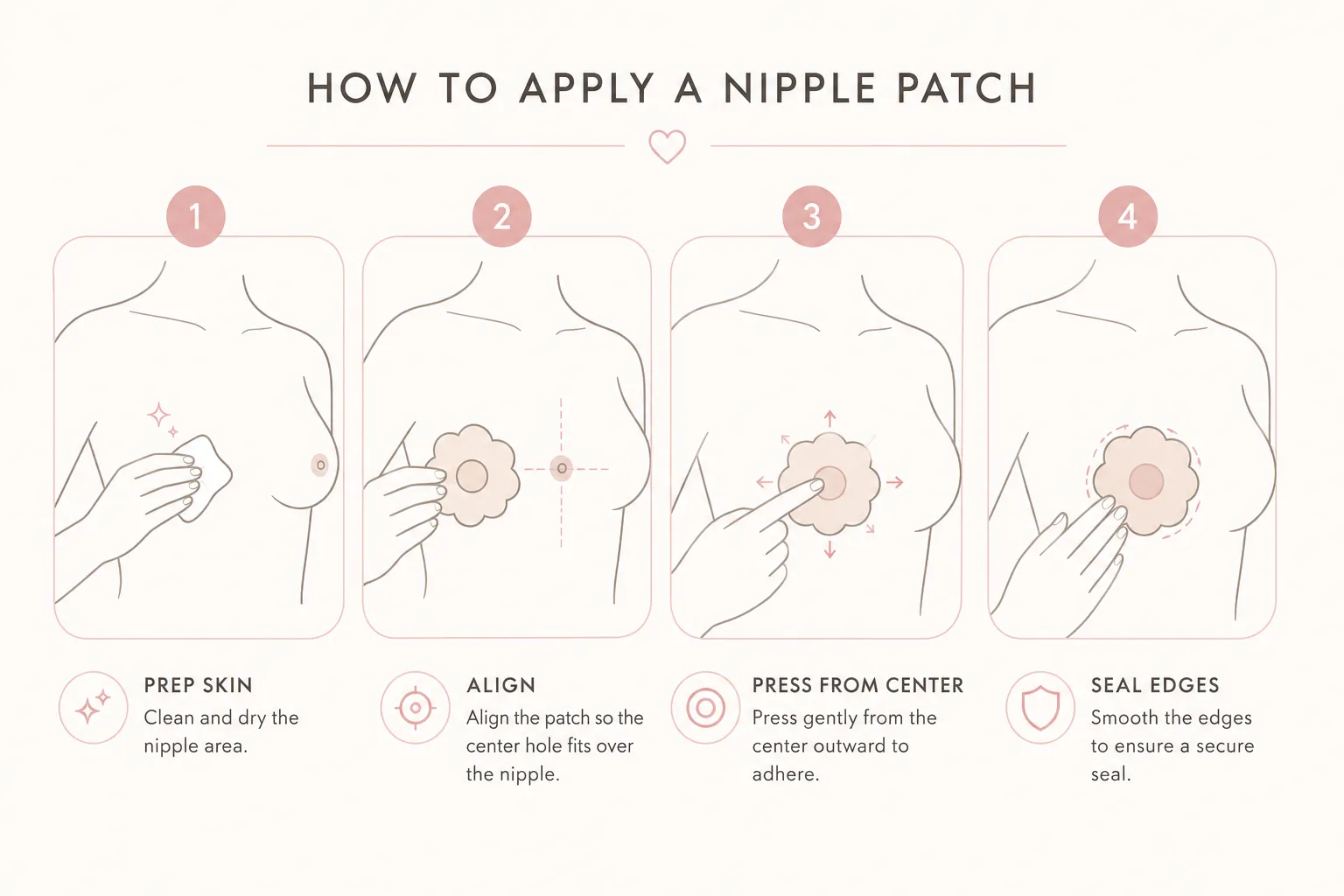
Avoiding these alone makes a big difference. Follow this order:
- Prep your skin. After showering, dry the area completely — skip lotion or oil.
- Align it. Center the patch symmetrically over the nipple. Use a mirror to check both sides match.
- Press from the center out. Push out any trapped air from the center first, smoothing outward toward the edges.
- Seal the edges. Run a fingertip around the full edge to make sure nothing is lifting.
- Check mid-activity. For sweaty activities, gently press the patch periodically to reconfirm the seal.
Removal has its own technique. Ripping it off quickly can pull at the skin along with the adhesive, causing a stinging sensation. The safest approach is to soak the area with lukewarm water in the shower, then peel slowly from the edge while gently supporting the skin underneath. For extra-strong adhesive, a small amount of baby oil or cleansing oil can loosen the bond before removal.
Storage matters more than people think, too. For reusable silicone or lifting-type patches, dry them completely after use and store them in the original film or a dedicated case to preserve adhesion. A cool, dry drawer works better than a humid bathroom.
Can I use a nipple patch every day?
Daily use is technically fine, but the adhesive can irritate skin over time with continuous use, so it's best to avoid back-to-back application on the same spot and adjust based on how your skin looks and feels. Alternating — going bra-only or wearing a looser top the next day — helps skin recover significantly.
Can I use a regular bandage instead?
Temporarily, yes — but a regular bandage isn't optimized for the adhesion and stretch that dedicated patches offer, so it can fall off easily or cause more irritation. If you use it often, a dedicated product is recommended. That said, plenty of runners do rely on a waterproof medical bandage as an emergency substitute, so it's not entirely off the table.
Are women's and men's products actually different?
The basic mechanism is the same, but women's products more often include volume and lifting features, while men's products tend to focus on simple coverage in affordable bulk packs. Choose based on your actual purpose. Sizing also tends to run slightly larger on average for men's products.
Are nipple patches waterproof?
It depends on the product. Waterproof-labeled patches hold up relatively well for swimming or sweaty exercise, while standard products are more vulnerable to moisture and can lift over time. If you're heading to a pool or water park, always check the product page to confirm it's a waterproof formulation.
How many times can I reuse a silicone patch?
It depends on the product and how well you care for it, but most are rated for roughly 3–6 uses. Rinsing gently with lukewarm water and drying completely before storage helps preserve adhesion longer. Once dust or lint sticks to the surface and adhesion noticeably drops, it's time to replace it without hesitation.
Do I need one in winter too?
Demand is overwhelmingly a summer phenomenon, but patches still come in handy in winter for thin knitwear or base layers, or for indoor workouts and winter running. Since sweat is less of a factor, prioritize low-irritation ingredients over waterproofing.
Removal always hurts — any tips?
Soaking the patch with lukewarm water in the shower before removal naturally weakens the adhesive and makes it far less painful. If it still hurts, apply a small amount of cleansing or baby oil, wait 1–2 minutes, then peel slowly from the edge. Never rip it off in one quick motion.
Finally, here's a quick-reference table mapping common situations to the right product type — treat it like a pre-purchase checklist.
| Situation | Recommended Product | What to Check |
|---|---|---|
| Everyday braless styling | Silicone or lifting type | Reusability, fit |
| Weddings, parties, special occasions | Lifting type (3D design) | Volume, slim profile under clothing |
| Running / marathon | Waterproof silicone | Sweat resistance, long-lasting seal |
| Summer etiquette item | Low-irritation non-woven | Value for bulk packs, skin-tone match |
| Sensitive skin | Fragrance-free, low-irritation label | Patch test required |
A nipple patch isn't just a passing trend — it's a genuinely useful item for anyone who wants both style and comfort at once. Whether you're shopping for nipple covers for women or nipple patches for men, what matters most is finding the product that fits your skin and your activity level. Rather than chasing a "perfect" product right out of the gate, treat trying a few different types as part of the process — it's a low-stakes way to narrow down what actually works for you.
One last thing worth repeating: price and review count matter less than how your skin actually responds. Even the most popular brand is the wrong choice if it doesn't agree with your skin — and conversely, the cheapest discount-store product might turn out to be the best option for someone else. Use the criteria in this guide, and enjoy your summer without the chafing or the second-guessing. 🌿
Quick summary: ① For styling, go with lifting or silicone types; for activity, go with waterproof silicone. ② Test with a small pack first, then buy in bulk once you find one that agrees with your skin. ③ Apply to fully dry skin, press from the center outward, and remove gently with lukewarm water — these three habits alone prevent most side effects.