If you tossed and turned again last night until well past 3 a.m., you're far from alone. Whether it's a racing mind that keeps you from falling asleep, or waking up after a full night still feeling groggy, "sleep quality" is a problem worth examining closely. Lately, microcurrent wearable sleep tech has emerged as one option people are turning to, though clear information about how it actually works, how to use it, and what to watch out for can be hard to find. This guide walks through why insomnia and poor sleep quality happen in the first place, how the wearable sleep-tech devices Sleepisol and Sleepisol Plus work, and the everyday habits worth pairing with them.
Note: This article is intended to provide general health and lifestyle information and is not a substitute for a medical diagnosis, consultation, or treatment from a licensed physician. If you have a specific condition or symptoms, please consult a qualified healthcare professional.
Why We Struggle to Fall Asleep: Common Causes of Insomnia
When sleep won't come, it's easy to blame "being wired" or "too much coffee," but the real picture behind insomnia is usually far more layered. When cortisol, the body's main stress hormone, stays elevated into the evening, the body remains stuck in "alert mode" — and in that state, closing your eyes and lying still isn't enough to help the brain actually unwind. On top of that, blue light from phones and monitors delays the release of melatonin, the hormone that signals sleep, gradually pushing the body's internal clock later and later.
Cortisol is designed to rise before waking to help you get up in the morning, then gradually taper off as the day goes on, reaching its lowest point in the evening. But chronic stress or an irregular routine can flatten that curve, or keep it from dropping enough at night. The result is a body that still thinks it needs to "stay alert" even after dark — a big part of the familiar feeling of being physically exhausted while your mind stays wide awake.
- Psychological factors: stress, anxiety, rumination (replaying the day while lying in bed)
- Circadian disruption: irregular sleep schedules, bright light exposure late at night
- Lifestyle habits: caffeine, alcohol, nicotine, intense exercise or heavy meals close to bedtime
- Environmental factors: noise, temperature, bedroom brightness, and bedding
- Physical factors: pain, hormonal changes, side effects of certain medications
If your job keeps pinging you with messages even after you've clocked out, your mind may never fully leave "work mode," even once you're physically home. That pattern tends to feed straight into bedtime, with to-do lists and unfinished tasks looping through your head just as you're trying to drift off — a textbook case of a tired body paired with a mind that won't quiet down.
Seasonal shifts and poor air quality can play a role too. During periods of big temperature swings, or on days with heavy pollution, sleep quality can dip temporarily. The nervous system adjusting to temperature changes, or simply keeping windows closed and letting bedroom air quality decline, are both cited as contributing factors. Paying closer attention to bedding temperature and ventilation during these stretches can help.
Occasional Insomnia and Chronic Insomnia Call for Different Approaches
Losing a few nights of sleep around a stressful event — an exam, a job change — is something almost everyone experiences, and it usually resolves once the stressor passes. The concern is when this pattern persists for three months or more, at least three nights a week, crossing into what's typically called chronic insomnia. At that point, it's worth doing more than adjusting habits — pairing lifestyle changes with professional input is generally recommended.
| Type | Duration | Typical Approach |
|---|---|---|
| Acute insomnia | A few days to 2 weeks | Lifestyle adjustments, stress management, rest |
| Short-term insomnia | 2 weeks to 3 months | Review sleep hygiene, consider supportive tools |
| Chronic insomnia | 3+ months, 3+ nights/week | Professional consultation recommended, consider CBT-I |
The key takeaway: sleep-tech wearables and habit changes tend to make the biggest difference at the acute and short-term stages. If insomnia has become chronic, it's worth combining these approaches with an actual diagnosis from a healthcare professional.
What Accumulated Sleep Loss Does to the Body
One late night won't derail your health. But when poor sleep piles up over days or weeks, the signs start showing up across the board. The first thing most people notice is a drop in focus and judgment — sleep deprivation dulls prefrontal cortex function, making even routine tasks feel slower and more error-prone.
Hormones that regulate appetite can also become imbalanced, driving cravings for sugary or highly processed food, which can indirectly affect weight management. Mood swings and a shorter fuse are common too. Over the longer term, chronic sleep loss has been linked to weakened immunity and added strain on blood pressure and blood sugar regulation — reasons enough to treat "I'm just tired" as more than a throwaway line, and to actively work on paying down that sleep debt.
- Cognition: reduced focus, memory, and judgment
- Emotional state: irritability, higher anxiety, mood swings
- Metabolism: disrupted appetite hormones, accumulated fatigue
- Long-term health: associations with weakened immunity and cardiovascular strain
Sleep Debt Piles Up Like Credit Card Debt
The term "sleep debt" captures how, unlike a one-off bad night, unresolved sleep loss keeps accumulating. Losing an hour or two every weeknight can add up to five to ten hours of debt by the weekend — and trying to pay that off in one long weekend lie-in doesn't fully work. Chipping away at the deficit a little each day tends to be a more sustainable way for the body to recover.
"Good sleep isn't a single habit — it's the sum of many small ones. A routine you can actually stick with matters more than a perfect night." – A sleep clinic physician
What Actually Determines Sleep Quality
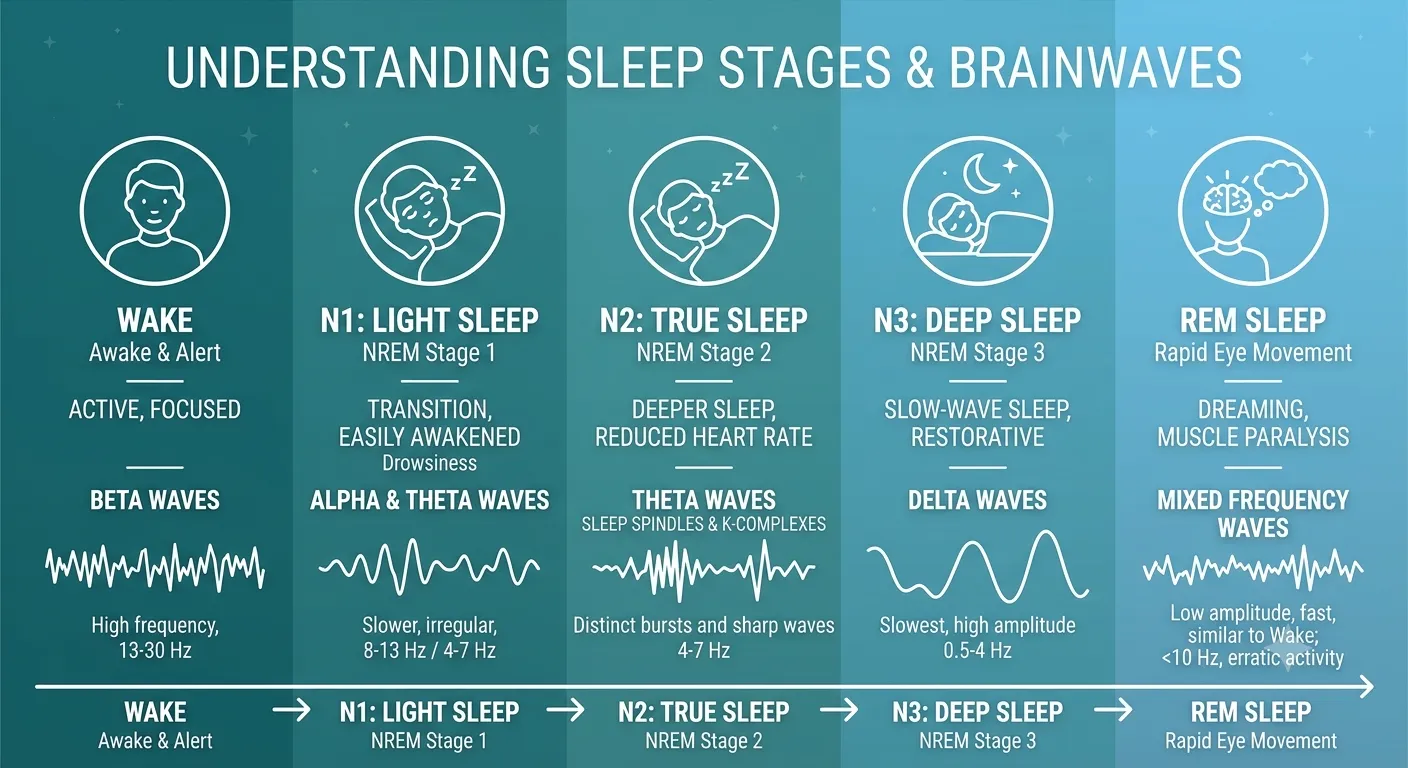
Sleeping longer doesn't automatically mean sleeping better. A night's sleep is made up of repeating cycles: light sleep (non-REM stages 1–2), deep sleep (non-REM stage 3, or slow-wave sleep), and REM sleep, when most dreaming occurs. Deep sleep plays a major role in physical recovery and immune function, while REM sleep is closely tied to memory consolidation and emotional regulation. In other words, how many hours you slept matters less than how many of these stages you actually cycled through.
A typical sleep cycle runs about 90 minutes, repeating four to five times over a full night. Interestingly, the proportion of deep sleep tends to shrink as the night goes on, while REM sleep takes up more of the later cycles. That means habitually cutting sleep short with an early alarm can disproportionately rob you of REM sleep — even if your total hours look reasonable on paper.
| Sleep Stage | Characteristics | Main Role |
|---|---|---|
| Light sleep (N1–N2) | Transition into sleep, easy to wake from | Entry point into deeper sleep |
| Deep sleep (N3, slow-wave) | Slower brain waves, relaxed muscles | Physical recovery, growth hormone release, immune function |
| REM sleep | Rapid eye movement, most dreaming occurs | Memory consolidation, learning, emotional regulation |
To keep this structure stable, sleep specialists often point to a set of basics known as "sleep hygiene." None of it is groundbreaking, but far fewer people actually follow it consistently than you might expect.
- Go to bed and wake up around the same time every day, weekends included
- Cut back on phone and screen use 1–2 hours before bed
- Avoid caffeine in the afternoon and evening
- Keep the bedroom dark, cool, and quiet
- Get enough natural daylight during the day to anchor your circadian rhythm
- Exercise regularly, but not right before bed
Your Body Clock and Melatonin: How the Body Recognizes "Night"
A "master clock" in the brain's hypothalamus regulates roughly 24-hour cycles of alertness and rest based on light exposure. As it gets dark, the pineal gland starts releasing melatonin, and rising melatonin levels naturally bring on drowsiness. The problem is that bright lighting or phone screens at night can suppress or delay that release — tricking the body into thinking it's still daytime, so drowsiness never quite arrives even once you're in bed.
This is exactly why sleep experts frequently recommend dimming the lights and cutting screen exposure for at least an hour or two before bed. Opening the curtains for natural light first thing in the morning helps "reset" the body clock, which in turn supports melatonin being released at the right time that night.
Indoor lighting matters too. Switching to warmer, dimmer lighting in the evening — instead of bright white light — helps signal "night" to the body. During the day, especially in the morning, stepping outside for even a few minutes of sunlight is known to sharpen circadian rhythm signals.
Three Common Sleep Myths 🙅
Myth 1: "A drink helps you sleep better"
Alcohol may make you feel drowsy at first, but it tends to disrupt REM sleep later in the night and cause more frequent waking — often the real reason behind feeling unrested the next morning.
Myth 2: "You must get exactly 8 hours"
Ideal sleep duration varies by person. Waking up refreshed and maintaining steady energy through the day is often a more useful gauge than hitting a specific number.
Myth 3: "Sleeping in on weekends makes up for lost sleep"
Sleeping in significantly on weekends can throw off your circadian rhythm, contributing to "social jet lag" that makes Monday mornings even harder. Keeping wake times within an hour or two of your weekday schedule is generally recommended.
Quick Self-Check: Your Sleep Habits
Before diving into changes, take a quick look at how many of these apply to you. If three or more do, tonight is a good night to start adjusting one at a time.
- ☐ You scroll your phone in bed for 30+ minutes
- ☐ Your wake time shifts by more than 2 hours between weekdays and weekends
- ☐ You still drink coffee or energy drinks after 3 p.m.
- ☐ Your bedroom tends to be bright or noisy
- ☐ It often takes you 30+ minutes to fall asleep
- ☐ You wake up feeling unrested more often than not
Naps: A Helpful Tool, or a Trap
A short nap after lunch is perfectly reasonable — the key word being short. Keeping it to 20–30 minutes matters, since anything longer risks dipping into deep sleep and waking up groggier than before, while also cutting into your nighttime sleep drive. Napping after 3 p.m. in particular can make it harder to fall asleep that night, so an earlier, shorter nap tends to work best.
Key Takeaway
What matters more than total hours is whether you're getting enough deep sleep and REM sleep. Consistent sleep/wake times and mindful light exposure are the two most fundamental levers for sleep quality.
How Microcurrent Sleep Tech Works: Inside Sleepisol
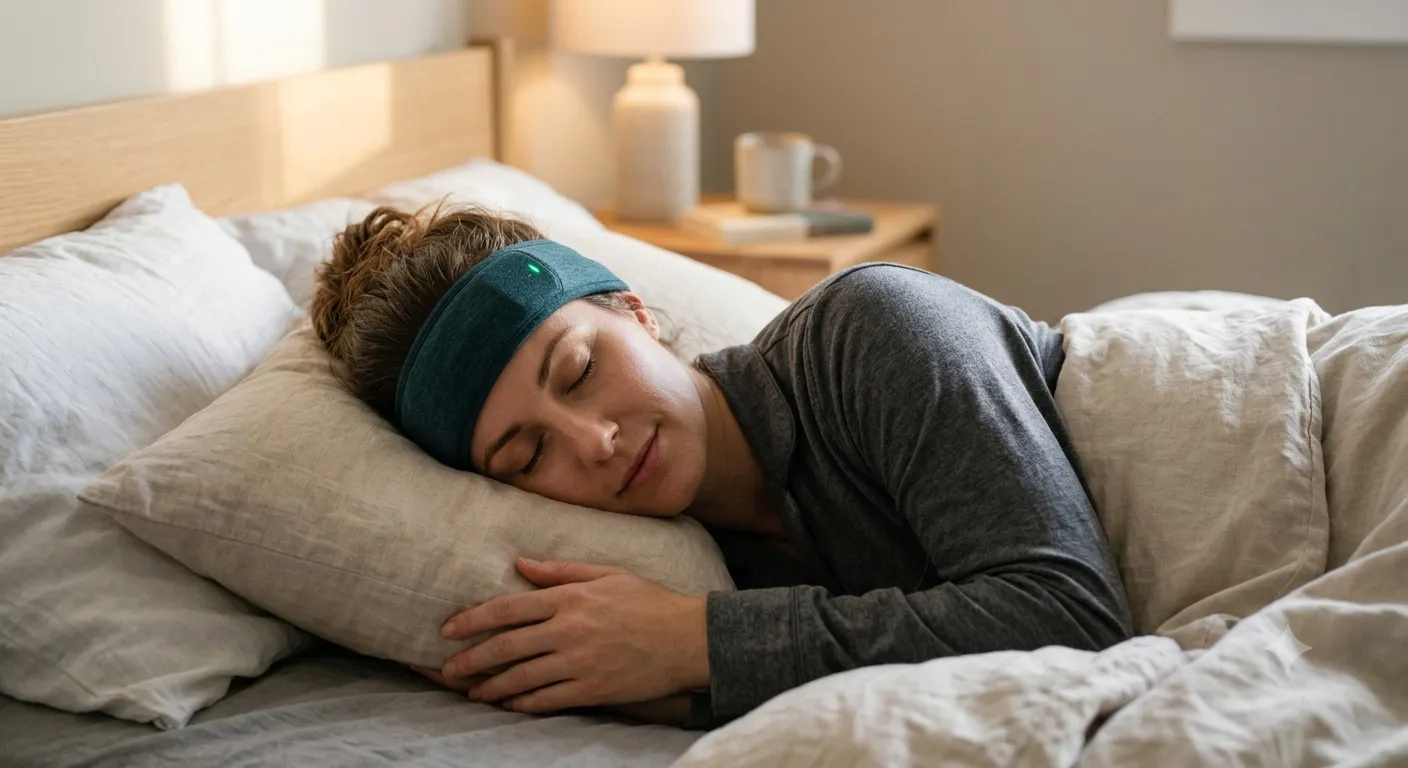
Over the past few years, a wave of "sleep-tech" wearables designed to support better sleep has emerged both in Korea and abroad. Sleepisol and Sleepisol Plus are forehead-worn bands that use microcurrent stimulation under 1mA — a level considered harmless to the body — to help users manage their own circadian rhythm. The devices combine what's broadly known as Cranial Electrotherapy Stimulation (CES) with the manufacturer's own patented brainwave-entrainment technology (CS-tACS).
In simple terms, the brain produces different wave frequencies depending on its state: fast beta waves during alert wakefulness, and comparatively slower alpha or theta waves as the brain relaxes toward sleep. Microcurrent stimulation is designed to work with this principle, supporting the brain's natural transition into a relaxed state. It's worth understanding this as an assist mechanism rather than an "instant sleep switch" — a tool that helps the body's own relaxation process along, not one that forces it.
The body's autonomic nervous system splits into the sympathetic branch, which governs alertness and tension, and the parasympathetic branch, which governs rest and recovery. Under sustained stress, the sympathetic branch tends to dominate, keeping heart rate and muscle tension elevated — a state in which the body struggles to shift into "rest mode" no matter how tired you feel. Microcurrent wearables aim to nudge that balance back toward the parasympathetic side, creating room for the body to release tension on its own. It's a similar direction to what slow breathing or meditation accomplishes, just through a different pathway — electrical stimulation rather than breath or attention.
Riisol, the company behind Sleepisol, built out the evidence base for this technology by running clinical research together with a psychiatry department at a Korean university hospital, later publishing the results in an international journal. The research focused on improvements related to depressive symptoms and insomnia, though it's worth noting that findings like these don't apply equally to everyone. How much benefit an individual notices can vary with their stress level, existing sleep habits, and how the device is used — a reasonable expectation to keep in mind.
Why the Forehead?
Sleepisol is worn as a band across the forehead and temples because that area sits close to the frontal lobe and has relatively low skin resistance, making it a practical spot for microcurrent to be delivered consistently. It's also the placement most CES-based devices have converged on. Since head shape and skin sensitivity vary from person to person, expect a short adjustment period to find the fit and positioning that feels comfortable.
CES Technology Has a Longer History Than You'd Think
Cranial Electrotherapy Stimulation isn't a brand-new idea — it's been studied abroad for decades as an approach to relaxation and stress management. Historically, though, it lived mostly in clinical or hospital-grade equipment that wasn't practical for everyday consumer use. As battery and connectivity technology advanced, it became feasible to package this approach into a light, wearable form factor, and Sleepisol is part of that broader shift. The underlying science has a long track record; what's genuinely new is turning it into something anyone can use at home.
Recognition and Certifications
The Sleepisol lineup has received a CES Innovation Award (Beauty & Personal Care category) and an IDEA Design Award honor in the Medical & Health category, and was selected for a South Korean government "baby unicorn" growth support program. None of this certifies a therapeutic effect, but it can serve as a reference point for the device's engineering quality and design maturity as a wearable.
CES Innovation Award IDEA Design Award Baby Unicorn ProgramRiisol also runs an AI-powered companion app that lets users track usage history and sleep patterns. Used alongside the device itself, the app can help you spot which days or habits tend to affect your sleep. That said, the app's analysis is a reference tool, not a medical diagnosis.
How Is This Different From Meditation, White Noise, or ASMR?
White noise, meditation apps, and ASMR are all widely used relaxation aids. These work indirectly, calming the nervous system through sound or breath, whereas a microcurrent wearable takes a more direct route, aiming to intervene in brainwave state via electrical stimulation. Neither approach is categorically superior — what works best tends to be personal. In practice, many users pair white noise or breathing techniques with a sleep-tech wearable to find a combination that works for them.
| Method | Approach | Notes |
|---|---|---|
| White noise / ASMR | Relaxation via auditory input | No setup required, effect varies widely by person |
| Meditation / breathing apps | Breath control, mindfulness training | Requires consistent practice, builds long-term stress resilience |
| Microcurrent wearables (e.g. Sleepisol) | Microcurrent-assisted brainwave relaxation | Routine forms just by wearing it, may need an adjustment period |
The point isn't to expect dramatic overnight change from any single method, but to find something that fits naturally into your life and stick with it. One practical advantage of a wearable like Sleepisol is that simply putting it on builds the routine — it doesn't rely as heavily on willpower.
How Does This Compare to Sleep Rings or Smart Mattresses?
The sleep-tech market has also seen growth in tracking-focused products — sleep rings, smart mattresses — that detect heart rate and movement to analyze sleep patterns. These are primarily observational tools. A microcurrent device like Sleepisol goes a step further, actively supporting the transition into a relaxed state rather than just measuring it. Rather than picking one category over the other, it can help to think of them as complementary tools with different strengths, combined as needed.
Comparing the Sleepisol Lineup: Lite, Original, and Plus
Sleepisol is offered in a few different tiers depending on your goals and budget. The names are similar, but the included components and use cases differ — worth reviewing before you buy.
| Model | Key Features | Best For |
|---|---|---|
| Sleepisol Lite | Entry-level set with pouch, limited number of uses included | Trying the technology before committing further |
| Sleepisol (Original) | Core model focused on sleep improvement and focus support | Managing sleep and focus together |
| Sleepisol Plus | Upper-tier model with enhanced stress-relief features and expandable accessories (bands, cradle, etc.) | Managing stress-related sleep issues |
Pricing tends to shift with bundle configuration and ongoing promotions, so rather than quoting a fixed figure here, it's best to check the official website or authorized retailers for current pricing and package contents. Sleepisol Plus in particular has a range of optional accessories — bands, cradles, electrode covers — so it's worth confirming which components you actually need.
Pre-Purchase Checklist
- Decide whether your main goal is "sleep" or "sleep + stress management"
- Check whether the model has a usage-count limit or unlimited use
- Confirm whether pouch, cable, and electrode covers are included or sold separately
- Check the latest pricing and any active promotions on the official store
- If you have sensitive skin, check what electrode-cover options are available
Warranty and Support: Worth Checking Upfront
As with any electronic device, warranty length, battery life, and support policy are easy details to overlook. Buying through the official store or an authorized retailer generally makes it easier to get warranty coverage and support, so it's worth avoiding unofficial channels just to save a little money. Hang onto your receipt or order confirmation in case you need it later.
What Do Real User Reviews Tend to Say?
Public reviews tend to fall into three rough categories: users who noticed a relaxing effect right away, users who needed a week or two of consistent use before feeling a difference, and users who didn't feel much change at all. This spread likely reflects real differences in stress levels, existing sleep habits, and how the device is used. If you're considering a purchase, it's worth approaching it with an open mind — giving it a fair trial period rather than expecting an instant, universal effect.
Getting the Most Out of Sleepisol: Usage Tips and Habits
No sleep-tech device is a magic button. Sleepisol tends to get the best reviews when it's paired with existing good sleep habits, rather than used on its own. Here are tips users commonly mention.
- Build it into a routine: Using it at roughly the same time and in the same sequence each night (wash up → dim the lights → put it on) helps your body recognize "it's time to sleep" more quickly.
- Put the phone down: Wearing the device while still scrolling your phone tends to cancel out its effect, since blue light continues to counteract the relaxation response. It helps to step away from screens as soon as you put it on.
- Watch your caffeine timing: Cutting caffeine after 2–3 p.m. helps avoid working against the device's relaxation effect.
- Consistency matters most: Rather than judging results after a day or two, plan on at least 1–2 weeks of consistent use and observe how you feel over that stretch.
- Track it with an app: If a companion app is available, log your sleep patterns alongside it. Over time, patterns emerge — which days or habits are actually affecting your sleep.
A Sample 30-Minute Pre-Bed Routine
Users who report the best results tend to have one thing in common: a set order of steps. Here's a sample routine built around Sleepisol — adjust it to fit your own schedule.
| Time | Routine |
|---|---|
| 30 min before bed | Dim the lights, put your phone somewhere out of reach |
| 25 min before bed | Light stretching or a warm shower to release muscle tension |
| 15 min before bed | Put on Sleepisol, lie down with quiet music or white noise, eyes closed |
| Bedtime | If your mind starts racing, focus on your breath instead of forcing sleep |
Charging and Storage Tips
Since it's a daily-use device, it helps to build battery management into your routine too — plugging it in first thing in the morning, for instance, so you're never caught with a dead battery at night. Store it away from direct sunlight and humidity, and keeping it in its pouch when not in use helps protect the electrode surface.
Tips for Specific Situations
How you use the device can shift a bit depending on the situation.
- Traveling: Unfamiliar environments often make it harder to fall asleep. Pack it in its pouch and try to recreate your usual routine (dim lights → put it on) once you arrive.
- High-stress periods (overtime, exams): This is exactly when keeping even a short relaxation routine matters most for next-day performance. Pay extra attention to caffeine timing during these stretches too.
- Frequently interrupted sleep (e.g. new parents): A single device won't solve everything here. Short naps to make up lost sleep, plus keeping whatever routine you can manage, are more realistic goals.
Try a 2-Week Challenge
New habits tend to stick better with a defined timeframe rather than an open-ended "someday." Try keeping a consistent bedtime, building Sleepisol into your routine, and rating how you feel each day on a simple 1–5 scale for two weeks. Looking back at that log afterward makes it much easier to see which days or habits actually affected your sleep.
Key Takeaway
Sleep-tech devices work best as a complement to good sleep habits, not a replacement for them. Pair device use with a consistent bedtime routine and mindful light and caffeine management.
Precautions to Check Before You Start
Microcurrent-based wearables are generally designed with a high safety margin, but there are common precautions worth knowing across the broader category of electrical-stimulation products. Review the following before you buy or start using one.
Consult a doctor before use if any of the following apply to you:
- You are pregnant or may be pregnant
- You use a pacemaker or other implanted electronic medical device
- You have a history of epilepsy
- You have skin conditions, wounds, or inflammation on your forehead
- You are under 19, or are currently being treated for a diagnosed neurological or mental health condition
Wellness wearables like Sleepisol are not medical devices intended to treat conditions requiring diagnosis or prescription. If insomnia symptoms persist for several weeks or noticeably disrupt daily life, it's safer to see a sleep clinic or psychiatric specialist rather than relying on the device alone.
Possible Reactions During Use
Some users of electrical-stimulation devices report a mild tingling sensation, slight headache, or skin irritation at the contact point. These reactions are usually temporary, but if discomfort is significant or persists after you stop using the device, discontinue use and consult a healthcare provider if needed. First-time users may want to start at a lower intensity or shorter duration, following the product's guidance.
Caring for the Electrode Contact Area
Because the forehead is thin-skinned and repeatedly contacts the electrodes, it helps to clean the area after each use and periodically replace or wash the electrode covers or band for good hygiene. Avoid areas with acne or broken skin, and since thick makeup or sunscreen can interfere with contact quality, using the device after washing your face is generally recommended.
If You're Taking Medication
If you're taking antidepressants, other psychiatric medications, cardiovascular medications, or receiving ongoing treatment for another condition, let your prescribing physician know before starting a wearable device and ask for their input. Whether an electrical-stimulation device interacts with a specific medication or condition can vary by individual, so it's best to get professional confirmation rather than deciding on your own.
Ease Into It
Everyone adapts to a new stimulus at a different pace. Rather than starting at a high intensity or long duration, begin with the manufacturer's default settings and a shorter session, watching how your body responds over the first few days. If a few days pass without any discomfort, you can adjust duration or intensity to suit your routine.
If you're older or have sensitive skin, start at an even lower intensity and pay closer attention to any dizziness or unusual sensations during use. If you live with family, having someone check in on how you're responding during the first few days is a reasonable extra precaution.
Other Approaches Worth Pairing With Sleep Tech
Since a device like Sleepisol isn't a cure-all, it's worth knowing what else pairs well with it. Each of the following stands on its own, but many users report a stronger combined effect when used alongside a sleep-tech wearable.
- Apply CBT-I principles: Reserving the bed strictly for sleep — no phone, no TV — reinforces the mental association between "bed" and "sleep." For chronic insomnia, structured cognitive behavioral therapy programs are a well-established, evidence-based option.
- Aromatherapy and herbal aids: Scents like lavender or chamomile are commonly used as part of a wind-down routine. Start with a small amount if you haven't used it before, in case of an allergic reaction.
- Light stretching or yoga: Five to ten minutes of stretching before bed can ease muscle tension and support parasympathetic activation.
- Optimize your sleep environment: Mattress and pillow condition, bedroom temperature (generally cooler is better), and blackout curtains all matter more than people tend to assume.
- Use built-in screen time controls: Setting up "bedtime mode" or screen time limits on your phone reduces reliance on willpower alone to cut down evening screen use.
Ultimately, it helps to think of a device like Sleepisol as one tool in a broader sleep-management toolkit. Finding the right combination for you, through some trial and error, matters more in the long run than any single tool.
Do Caffeine Alternatives Help?
When that afternoon coffee craving hits, decaf, rooibos tea, or chamomile tea are reasonable substitutes with little to no caffeine. Caffeine can take a surprisingly long time to fully clear your system depending on individual metabolism, so a cup in the late afternoon can still leave stimulant effects lingering well into the night. Knowing your own caffeine sensitivity makes it easier to set a personal cutoff time.
Choosing a Meditation or Breathing App
Sleep-focused meditation apps vary widely — if you're new to this, start with a short 5–10 minute guided session or breathing exercise. Many users combine a short breathing guide with wearing Sleepisol, eyes closed, as part of the same wind-down window.
A 3-Minute Body Scan, No Equipment Needed
You don't need an app or a device to try this one. A "body scan" is a simple relaxation technique: lying down, move your attention from your toes up to the top of your head, noticing tension in each area and consciously letting it go. It requires nothing special, and pairing it with Sleepisol can compound the relaxation effect.
- Lie down comfortably and close your eyes.
- Bring your attention to your toes, releasing any tension you notice.
- Move upward: calves → thighs → stomach → chest → shoulders → arms → neck → face, repeating the same process.
- Once your body feels loose, shift your focus to your breath and let sleep come naturally.
If Racing Thoughts Keep You Up: Try a Worry Dump
It's a familiar experience — the moment you lie down, every worry you'd been putting off all day shows up at once. Spending five minutes before bed, outside of bed, jotting down whatever's on your mind or tomorrow's to-do list can help. The act of putting those thoughts down on paper can ease some of the mental load of having to keep holding onto them.
Frequently Asked Questions
Quick Recap
- Insomnia usually results from a mix of stress, circadian disruption, and lifestyle habits, not a single cause.
- Sleep quality is better measured by how much deep sleep and REM sleep you get, not just total hours.
- Sleepisol and Sleepisol Plus are wellness wearables that use microcurrent to support the brain's transition into a relaxed state.
- They are not medical devices, so they don't replace diagnosis or treatment for conditions like narcolepsy — see a specialist for those.
- The device works best as a complement to good sleep habits, not a substitute for them.
Is Sleepisol a medical device or a treatment?
No. Sleepisol is classified as a wellness wearable that supports everyday sleep and stress management, not a medication or medical device intended to treat a diagnosed condition. If you need treatment for a specific condition, please consult a healthcare professional.
Does it help with narcolepsy?
Narcolepsy is a neurological condition that can involve excessive daytime sleepiness and sudden muscle weakness, and it requires an accurate diagnosis and specialized medical management. Sleepisol is a wellness device designed for general stress-related insomnia and sleep-quality management — it is not designed or validated for treating narcolepsy. If you suspect narcolepsy, see a sleep clinic or neurologist before considering a wearable device.
What's the difference between Sleepisol and Sleepisol Plus?
Sleepisol (Original) focuses on sleep improvement and focus support as a core model, while Sleepisol Plus adds enhanced stress-relief features and broader accessory options. Choose based on your budget and which features matter most to you.
What time of day should I use it?
Generally, using it as you begin your wind-down routine — when you dim the lights and put your phone away — supports building a consistent bedtime habit. Check the product manual for the specific recommended duration and usage instructions.
Do I need to use it every single day to see results?
It's hard to say that daily use is strictly required for results. That said, since sleep habits respond strongly to consistency, using it regularly over a set period and observing your own changes tends to be a more realistic approach than judging it after a single use.
Can I use it alongside sleep medication?
If you're taking sleep-related medication, it's safer to inform your prescribing physician about your plan to use a wearable device rather than deciding to combine them on your own. General guidance on combining medication with device use can vary depending on the specific medication and your health status.
Can children or teens use it?
Recommended age guidelines can vary by product, so always check the age requirements listed in the product manual. Since sleep issues in growing teens can have different underlying causes than in adults, it's worth consulting a pediatrician or relevant specialist first if needed.
Can I use it alongside a smartwatch's sleep tracking?
In most cases, wearing it alongside another wearable like a smartwatch isn't a problem. Just make sure the contact areas don't overlap, and check each device's manual for any specific guidance on combined use. Logging sleep-tracking data alongside your Sleepisol use can help you see which habits actually affect your sleep.
What if I feel a headache or discomfort after using it?
If you notice a headache, dizziness, skin irritation, or any other unusual discomfort during or after use, stop using the device right away. If symptoms recur or don't ease up, pause use and consult a healthcare provider.
Can I use it while traveling abroad?
As a rechargeable battery-powered device, it's generally usable abroad, but charger plug types and voltage vary by country, so packing a universal adapter is a good idea. Check the product manual for exact charging specifications and any travel-related guidance.
Where's the safest place to buy it?
Buying through the official website or an authorized retailer is recommended, since it ensures clear warranty coverage, support, and return or exchange policies. If purchasing through a marketplace, confirm the seller is an authorized retailer first.
Wrapping Up: Start Tonight
Insomnia and poor sleep quality are rarely explained by a single cause. They're usually the result of stress, an irregular routine, and light and caffeine exposure all overlapping. That's why the solution rarely comes down to one method either — building a foundation of good sleep hygiene, with a sleep-tech wearable like Sleepisol or Sleepisol Plus as a supporting tool, tends to be the most realistic approach.
Whatever device you use, be wary of any promise that it alone will "completely solve" insomnia. Rather than trying it for a few days and giving up if you're disappointed, treat it as a process of finding the routine that works for you over a longer trial period. And if symptoms persist or start affecting daily life, don't hesitate to get help from a healthcare professional.
To sum up, good sleep comes from four things working together: ① a consistent routine aligned with your circadian rhythm, ② managing stimulants like light and caffeine, ③ a supportive tool like Sleepisol where useful, and ④ professional help when symptoms are serious. Rather than expecting perfection from any one of these, start with one small habit you can actually keep tonight. 🌙
A final reminder: This article is intended to provide general health and lifestyle information and is not a substitute for a medical diagnosis, consultation, or treatment from a licensed physician. If you have a specific condition or symptoms, please consult a qualified healthcare professional.